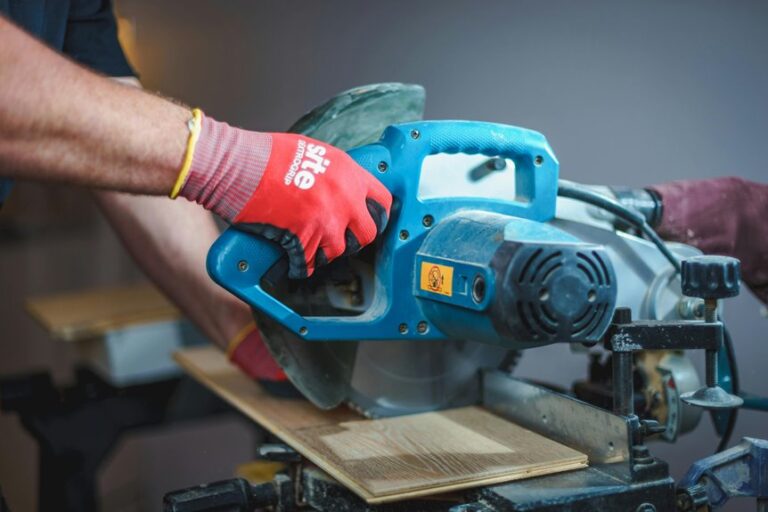
A 7-1/4-inch circular saw is the workhorse most framers, remodelers, and serious DIYers reach for first, and picking the right one means fewer stripped screws of frustration on the jobsite. The right saw balances motor torque, weight, bevel range, and dust handling without forcing you to baby it through every cut. This list sorts through five corded favorites that cover everything from all-day framing duty to clean finish carpentry, with options that suit weekend remodelers and trade pros alike.
A Snapshot Of The Selections

SKILSAW SPT77W-01 15-Amp Worm Drive Circular Saw
SKILSAW SPT77WML-01 15-Amp Lightweight Worm Drive Saw
DEWALT DWE575SB 7-1/4-Inch Circular Saw

Makita 5007Mg Magnesium 7-1/4-Inch Circular Saw

SKIL SPT70V-11 16-5/16 Inch Worm Drive Skilsaw
Why These Options Stand Out
The SKILSAW SPT77W-01 is the saw most people picture when they think “worm drive,” and for good reason. A worm drive gear arrangement (where a screw-shaped gear drives the blade at a right angle, giving higher torque at lower RPM) delivers the slow, grinding power that chews through wet lumber and pressure-treated stock without bogging down. The 15-amp motor paired with an aluminum housing keeps weight reasonable for a worm drive, and the SKIL Dual-Field design helps the motor run cooler during long rips.
For framers, remodelers, and serious DIYers cutting deck framing or subfloor plywood all day, the trade-off is the saw’s length: worm drives are longer nose-to-tail than direct-drive saws, which can feel awkward in tight cabinet work. The SPT77W-01 sits at the heavier end of this list, so for overhead work, you may want to look at lighter options like the SKILSAW SPT77WML-01 below.
Good Reasons To Consider
- 15-amp motor with high-torque worm drive gearing for slow, deliberate cuts through dense lumber
- Aluminum housing that sheds weight compared to older cast designs
- Dual-Field motor built specifically for circular saws, helping it stay cooler under load
- Proven track record on framing crews and remodel jobs where all-day reliability matters
Things To Consider
- Heavier and longer than direct-drive saws, which can feel bulky in tight spaces
- Worm drive oil requires periodic checks; owners commonly overlook this step
Who It Suits Best
Framing crews, remodelers, and serious DIYers who cut wet lumber, PT stock, or dimensional framing daily and want the torque of a worm drive without going to a full-size 16-inch model.
Where Another Pick Suits Better
The DEWALT DWE575SB is a better fit for trim carpenters who rarely rip wet lumber and want a shorter, lighter saw for cabinet and finish work.
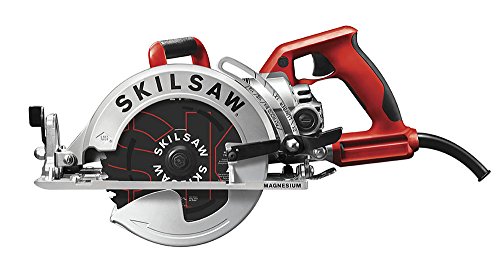
The SPT77WML-01 takes everything the original SKIL worm drive is known for and trims roughly a pound and a half out of the chassis. That weight drop comes from a magnesium housing, which also pulls heat away from the motor faster than aluminum, so the saw stays cooler during long production days. The result is a worm drive that trades some of the tank-like feel for noticeably easier handling on ladders and overhead cuts.
For pros who already trust SKIL’s worm drive platform but want less shoulder fatigue, this model slots in cleanly. It feels lighter than the SKILSAW SPT77W-01, yet still carries the same 15-amp powerplant. You may find the magnesium body shows scuffs faster than the cast aluminum on heavier saws, but that’s a cosmetic trade most users accept.
Useful Highlights
- Magnesium housing cuts weight while improving heat dissipation
- 15-amp motor retains full worm drive torque for dense lumber and PT stock
- Easier on shoulders during overhead framing or roof cuts
- Same proven SKIL worm drive gear train that crews have trusted for decades
Worth Noting
- Magnesium finish tends to scuff more visibly than aluminum on rough jobsites
- Still longer than direct-drive saws, so tight cabinet cuts remain awkward
Made For
Trade carpenters and remodelers who rack up hours on ladders or in ceilings and want worm drive power without the shoulder tax of a heavier saw.
Look Elsewhere When
You mainly cut 6x timber or posts in single passes; the SKIL SPT70V-11 brings a bigger blade and deeper cut for that kind of work.
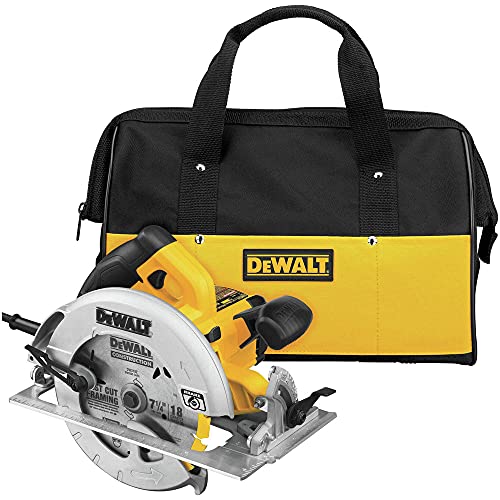
The DEWALT DWE575SB takes a different approach than the worm drives above. It uses a direct-drive motor (where the blade mounts on the same axis as the motor shaft, giving higher RPM and a slimmer body) to spin the blade fast, keeping the saw light and maneuverable. At roughly 8.8 pounds, it sits at the lighter end of the corded 7-1/4-inch class, which matters when you’re wrestling sheet goods on a jobsite.
The 57-degree bevel with a positive stop at 45 degrees gives you enough range for compound cuts on trim and rafters. The electric brake stops the blade quickly after the trigger releases, a small but meaningful safety and productivity feature when you’re repositioning between cuts. For remodelers and homeowners, this saw lands in a comfortable middle ground: lighter than the SKILSAW SPT77W-01, less expensive than the big 16-5/16-inch SPT70V-11.
Well-Handled Touches
- Lightweight direct-drive design is easier to control on long sheet-good cuts
- 15-amp motor with electric brake that stops the blade quickly after trigger release
- 57-degree bevel range covers most framing and trim applications
- Compact footprint fits tight spaces better than longer worm drive saws
Trade Offs
- Direct-drive gearing produces higher RPM and less torque than worm drive saws on dense lumber
- Dust port can clog during heavy rip cuts, requiring periodic clearing
Best Suited To
Remodelers, finish carpenters, and DIYers who want a versatile corded saw for plywood, dimensional lumber, and trim without the bulk of a worm drive.
A Better Fit Elsewhere
The Makita 5007Mg is worth a look if you want a magnesium-bodied direct drive with smoother cut quality and a reputation for long-term durability.
The Makita 5007Mg is a direct-drive saw with a magnesium body that weighs in around 10.6 pounds, balanced for long rip cuts and finish work. The 15-amp motor runs at 5,800 RPM, which keeps the blade cutting clean through plywood and trim without burning the edge. Two built-in LED lights throw a shadow-free line on the cut mark, a quietly useful feature when working in dim basement or attic spaces.
For finish carpenters and cabinet builders, the 2-1/2-inch depth of cut at 90 degrees and the 56-degree bevel range handle most on-site trim tasks. The magnesium components dissipate heat efficiently, and the saw’s reputation on commercial jobsites is for staying accurate over years of use. The trade-off is that the 5007Mg costs more than entry-level direct-drive saws, so budget-focused DIYers may prefer the DEWALT DWE575SB instead.
Everyday Wins
- Magnesium body stays cool and resists jobsite dings over years of use
- Two integrated LEDs illuminate the cut line without casting shadows from the saw body
- 15-amp motor at 5,800 RPM produces clean cuts on plywood and trim
- 2-1/2-inch depth at 90 degrees with a 56-degree bevel covers most finish work
Minor Gripes
- Priced higher than entry-level direct-drive saws like the DEWALT DWE575SB
- Carbide blade changes require a separate wrench, which can get lost on busy jobsites
Right Fit For
Finish carpenters, cabinet builders, and pros who want a long-lasting direct-drive saw with a reputation for accuracy on trim and sheet goods.
Skip It When
You mainly frame houses with wet lumber; the SKILSAW SPT77W-01 worm drive handles that grind with more torque.
The SKIL SPT70V-11 is the largest worm drive saw in this roundup, built around a 16-5/16-inch blade that cuts through 6x lumber in a single pass. For timber framers, deck builders, and anyone slicing post-and-beam material, that single-pass depth eliminates the slow, wobbly two-cut process smaller saws force on you. The magnesium housing and die-cast foot plate keep the saw square to the cut, and the brass worm drive gearing handles the slow, heavy cuts this tool is designed for.
The trade-off is weight and size: this is a big saw, and the 6-1/4-inch cutting capacity is overkill for trim or cabinet work. For crews who only occasionally cut 4x and 6x, the SKILSAW SPT77W-01 or SPT77WML-01 make more sense. But for the niche where one clean pass through a 6x post matters, the SPT70V-11 earns its place.
Features That Help
- 16-5/16-inch blade with 6-1/4-inch depth of cut handles 6x lumber in a single pass
- Magnesium housing and die-cast foot plate keep the saw square for accurate cuts
- Brass worm drive gearing built for sustained heavy-load cutting
- 15-amp Dual-Field motor manages the slow, high-torque demands of thick stock
A Few Limitations
- Bulky and heavy, making it a poor choice for trim or finish carpentry
- 16-inch replacement blades cost more than standard 7-1/4-inch options
Who Should Grab It
Timber framers, deck builders, and demolition crews who regularly cut 4x and 6x stock and want the job done in a single pass.
Another Choice May Suit
For everyday framing and remodeling, the SKILSAW SPT77WML-01 is the better match, lighter and more versatile on standard lumber sizes.
Choosing The Right Power Circular Saw For The Work Ahead
A 7-1/4-inch circular saw covers most jobsite needs, but the right saw depends on what you cut, how often, and where. The list above covers everything from light trim work to heavy timber, and a few key factors help narrow it down.
Motor And Drive Type
Corded circular saws split into two camps: worm drive and direct drive. Worm drive saws use gears oriented 90 degrees to the motor, producing high torque at lower RPM, which is ideal for wet lumber, pressure-treated stock, and long rip cuts. Direct drive saws mount the blade directly to the motor shaft, spinning faster with less torque but at a lighter weight. For framers and remodelers cutting structural lumber daily, worm drive torque pays off. For trim carpenters and DIYers, the lighter direct-drive format usually wins on comfort.
Weight And Balance
Saw weight shows up in your shoulders by lunchtime. A 2- to 3-pound difference feels small in the store and significant after four hours of overhead work. Magnesium-bodied saws like the SKILSAW SPT77WML-01 and Makita 5007Mg trim weight without sacrificing durability, and lighter direct-drive models like the DEWALT DWE575SB help reduce fatigue on long sheet-good cuts.
Bevel Range And Depth Of Cut
Standard 7-1/4-inch saws deliver around 2-1/2 inches of depth at 90 degrees, enough for 2x stock and most plywood. Bevel capacity of 50 to 57 degrees covers most compound cuts. The SKIL SPT70V-11 is the outlier: its 16-5/16-inch blade cuts 6x lumber in a single pass, which matters for timber framing but adds size and cost you’ll never use for trim.
Blade Swap And Maintenance
Quick blade changes save real time on busy days. Some saws use a spindle lock and single wrench, others need two tools. Worm drive saws also need periodic oil checks on the gear housing; skipping that step shortens saw life. A simple maintenance habit keeps any of these saws running for years.
Comparing What The Extra Money Buys
Premium saws in this category justify their cost in three areas: motor cooling, housing material, and gearbox longevity. Magnesium housings shed heat and weight better than aluminum or poly. Dual-Field motors run cooler under sustained load. Brass worm gearing outlasts the stamped gears found on budget saws. For weekend DIYers, those upgrades are nice-to-have. For pros who log hours daily, the difference shows up in fewer failures and longer service intervals.
Common Shopping Slip Ups
The most common mistake is buying a worm drive for finish work. Worm drives are long, heavy, and geared for torque, not finesse. The second slip is underestimating bevel needs: a saw that only bevels to 45 degrees limits you on compound cuts. The third is ignoring weight until the second hour on a ladder; a saw that feels fine in the store can wear you out by noon. Match the saw to the work, not the other way around.
Where The Extra Money Goes
Higher-tier saws in this category cost more for a reason. The DEWALT DWE575SB and Makita 5007Mg sit in the mid-range with magnesium components and refined ergonomics, while the SKILSAW SPT77WML-01 and SKIL SPT70V-11 push into premium territory with specialized gearing and materials. For occasional use, mid-range is plenty. For daily production work, the premium tier pays back in less downtime and longer tool life.
Frequently Asked Questions
What Is A Worm Drive Circular Saw?
A worm drive circular saw uses a gear arrangement that transmits power at a right angle to the motor, producing high torque at lower blade RPM. This makes worm drives ideal for cutting wet lumber, pressure-treated stock, and dense framing material, but they tend to be longer and heavier than direct-drive saws.
Are Corded Circular Saws Better Than Cordless?
Corded circular saws deliver consistent power without battery management, making them the go-to for long production days. Cordless saws have closed the gap in recent years, but corded models still offer better runtime for sustained heavy cutting. For jobsites with power access, corded is usually the practical choice.
What Size Circular Saw Is Best For Framing?
A 7-1/4-inch circular saw is the standard framing size, capable of cutting 2x lumber at 90 degrees and 2x lumber diagonally at 45 degrees. For larger stock like 4x and 6x, a 10-1/4-inch or 16-5/16-inch saw handles those cuts in a single pass.
How Important Is Bevel Capacity On A Circular Saw?
Bevel capacity matters for compound cuts like rafters, hip roofs, and angled trim. A 45-degree bevel covers most basic tasks, while 50 to 57 degrees opens up more complex angles. For pure framing, 45 degrees is usually enough.
How Do You Maintain A Worm Drive Saw?
Worm drive saws need periodic oil checks on the gear housing to keep the brass worm gear lubricated. Most manufacturers recommend checking the oil level every few months and topping off with the specified weight. Skipping this step is the most common cause of premature worm drive failure.
The Takeaway
Any of these five saws handles the core jobs a 7-1/4-inch circular saw is designed for, from daily framing to finish trim. Match the saw to your most common cut rather than buying for occasional specialty work, and you’ll spend less time fighting the tool and more time building.