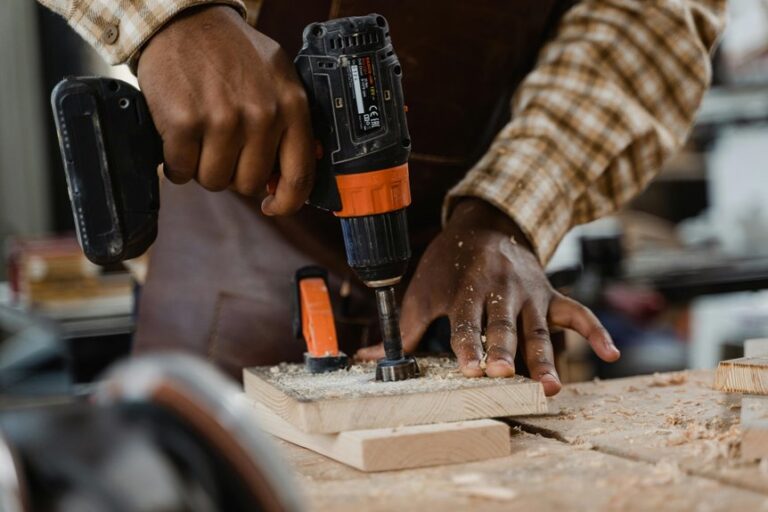
Heavy stock removal eats handheld planers alive, and that’s exactly the gap a proper benchtop or stationary power planer fills. Cabinet shops, custom furniture builders, and serious hobbyists who dimension rough lumber by the board foot need a machine that can hog out material without bogging down or leaving chatter marks on the surface. The four Powermatic planers below cover a wide range of shop scales, from a single-phase 15-inch unit that fits smaller production spaces to a 25-inch industrial mill designed for continuous duty. Each one uses a helical cutterhead, where rows of small square carbide inserts slice the wood at an angle rather than spinning straight blades, producing quieter operation and a cleaner finish with far less tearout on figured grain.
An Overview Of The Picks

Powermatic 22-Inch Planer, Helical Cutterhead, 7-1/2 HP (Model 201HH)
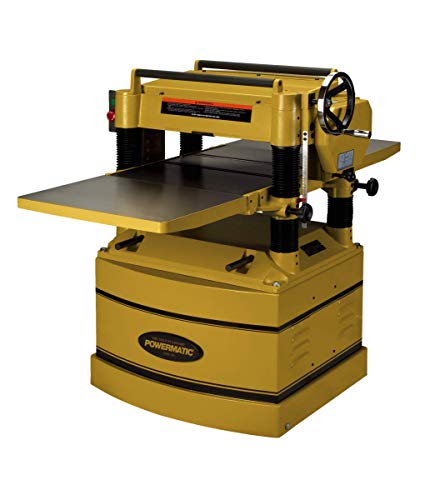
Powermatic 20-Inch Thickness Planer, Helical Cutterhead, 4-Speed (Model 209HH)

Powermatic 25-Inch Planer, Helical Cutterhead, 15 HP (Model WP2510)

Powermatic 15BHH, 15-Inch Planer, Helical Cutterhead, 3 HP, 1PH
Taking A Closer Look At The Options
The Powermatic 22-Inch Planer sits in a sweet spot that most shops underestimate. A 22-inch capacity handles the wide glued-up panels and rough-sawn slabs that overwhelm 15-inch machines, while the 7-1/2 HP motor still fits on a dedicated 230V three-phase circuit without demanding a full industrial feed. For a custom furniture shop that dimension’s slab tabletop stock all day, this is the size that lets you keep working instead of babysitting a finicky cut.
Where the 201HH really earns its place is in the cutterhead design. The helical arrangement, with 125 four-sided carbide inserts arranged in a staggered spiral, shears wood at an angle rather than chopping straight down. That geometry translates to noticeably quieter runs, longer edge life per insert, and a finish that needs far less sanding before finish work. If you’re feeding figured cherry or crotch walnut, that surface quality saves real labor downstream.
Practical Advantages
- 22-inch width accepts wide stock and glued-up panels in a single pass, eliminating the seam that smaller planers leave in the middle of a wide board.
- Helical cutterhead with 125 four-sided inserts runs quieter than a traditional straight-knife head, which matters in a small shop where the planer shares airspace with conversation and radio.
- Cast iron construction provides the mass needed to absorb vibration at deeper cuts, so finish quality stays consistent even when hogging off 1/8 inch per pass.
- 5-inch dust port connects to standard shop dust collection, keeping shavings out of the air and off the motor housing.
- Hinged top gives quick access to the rollers and knife inserts when you need to swap a chipped edge or clear a jam.
Trade Offs
- Requires a 230V three-phase electrical supply, which most home workshops don’t have and would need an electrician to install.
- The roughly 1,300-pound shipping weight means professional delivery or rigging is a practical necessity, not an optional convenience.
Who Will Love This
Production shops dimensioning wide hardwood stock daily, and custom furniture builders working with slab material who already have three-phase power in place.
Skip It When
Single-phase-only shops should look at the Powermatic 15BHH (Model 15BHH) instead, since it runs on a standard 230V single-phase circuit without rewiring the building.
Feeds per minute, or FPM, is one of those specs that looks like marketing copy until you run figured hardwood through a planer at the wrong speed. The Powermatic 209HH solves that problem by offering four feed rates (16, 20, 24, and 31 FPM) you can dial in based on the species and the depth of cut. Softwoods and shallow passes fly through at 31 FPM, while dense figured stock slows to 16 FPM for cleaner edges. Most shops settle on a single speed; having the option matters when your daily queue includes both construction lumber and decorative veneer stock.
The 5 HP motor and 100 four-sided carbide inserts handle the same kind of work as the larger Powermatic 22-Inch Planer covered above, just on a 20-inch width. The cast iron table extends to a generous 55-1/2 inch by 20 inch work area, giving long boards full support from infeed to outfeed. In a shop that runs eight hours a day, the larger table pays for itself by reducing the operator effort of guiding bowed or twisted stock through the cut.
The Case For It
- Four-speed gearbox lets you match feed rate to species, which directly affects how clean the finished surface comes out of the planer.
- Helical cutterhead with 100 four-sided carbide inserts produces smooth surfaces that often skip a sanding pass entirely on straight-grain wood.
- Extended cast iron table supports long boards through the full cut, reducing snipe and operator fatigue on heavy work.
- Chip breaker and pressure bar work together to hold down the wood at the cutterhead, minimizing the snipe that ruins the first and last few inches of every board.
Points To Note
- Three-phase power requirement, available in 230V or 460V configurations, rules out straightforward home-shop installation.
- The wider 20-inch capacity and longer table footprint demand more floor space than a typical 15-inch benchtop planer.
- Common shop practice involves routine cleaning of the dust port and chip evacuation path to keep the cutterhead feeding smoothly through dense hardwoods.
Built With In Mind
Shops that switch between softwood construction lumber and figured hardwoods within the same production day, and woodworkers who treat feed rate as a real tool rather than a fixed setting.
Look Elsewhere When
Shops that process only one species or one stock thickness should consider the simpler Powermatic 15BHH (Model 15BHH), which trades the four-speed gearbox for a more approachable single-phase footprint.
The Powermatic WP2510 is the planer you spec when downtime costs more than the machine. A 25-inch capacity, 15 HP motor, and helical cutterhead carrying 174 four-sided carbide inserts put this firmly in industrial territory, sized for shops that run two shifts and dimension thousands of board feet a month. The 3-inch diameter infeed and outfeed rollers ride on four large needle bearings each, a detail that matters far more than it sounds because those rollers take the brunt of the force as stock enters and exits the cutterhead.
Digital readouts and a PC controller take the guesswork out of table height adjustments, so the operator can set up a new dimension in seconds rather than turning a handwheel and reading a scale. The segmented infeed roller and segmented chip breakers help when feeding multiple-height stock, like a glue-up with uneven edges, because they grip uneven material without bouncing. For a cabinet shop running raised-panel doors and drawer fronts in batches, that combination of width, power, and digital precision is the difference between keeping up and falling behind.
Points In Its Favor
- 25-inch width handles the widest glued panels and rough-sawn slabs without rip cuts to reduce them first.
- 15 HP motor maintains full cutterhead speed under deep passes, so production pace doesn’t slow when the operator takes a heavy cut.
- Helical cutterhead with 174 four-sided inserts distributes the cutting load across more edges, extending time between insert changes.
- Digital readout and PC controller speed up repetitive table height changes during batch runs of identical parts.
- Segmented infeed roller and chip breakers grip uneven stock consistently, which reduces jam risk on rough lumber.
- Available in 230V or 460V three-phase configurations to match existing shop electrical service.
Honest Caveats
- The footprint and weight of a 25-inch industrial planer require dedicated floor space, reinforced flooring in some installations, and forklift delivery.
- Three-phase power is mandatory, and the 460V option requires a transformer step-down from typical commercial service.
- At this capacity, dust collection must be sized for sustained heavy stock removal; undersized extractors clog quickly.
Quick Facts
Whose Shelf It Belongs On
High-volume cabinet shops, commercial millwork operations, and any production environment where the planer runs multiple shifts and downtime translates directly to lost revenue.
Another Choice May Suit
Smaller custom shops without continuous-duty volume should look at the Powermatic 22-Inch Planer (Model 201HH), which delivers the same helical finish quality at a more manageable size and weight.
The Powermatic 15BHH is the most accessible machine in this roundup, and the one that fits in shops where three-phase power simply isn’t an option. Single-phase 230V service is common in detached workshops, barns, and converted garages, so this planer can drop into place without an electrician rewiring the building. A 15-inch width covers the bulk of hobby and small-production work, including face frames, drawer parts, and small furniture panels, while the 3 HP motor handles those dimensions without straining.
Solid cast iron infeed and outfeed tables provide the mass that cheaper pressed-steel substitutes lack, and the oversized emergency stop improves operator safety in tight shop layouts. Compared to the larger Powermatic WP2510 covered earlier, the 15BHH trades capacity and horsepower for a footprint that actually fits through a standard doorway. For a one-person shop building custom furniture in batches, that’s a worthwhile trade.
Advantages To Know
- Single-phase 230V operation drops into most home and small commercial workshops without service upgrades.
- Helical cutterhead delivers the same quiet, clean shearing cut as the larger Powermatic models, just at a 15-inch capacity.
- Solid cast iron infeed and outfeed tables absorb vibration and support long boards through the cut.
- Oversized emergency stop is easier to find under stress, which matters when a workpiece shifts mid-cut.
Small Caveats
- 15-inch width means wider panels need a rip cut or a different machine, since the cutterhead can’t accept them whole.
- 3 HP motor is well-matched to 15-inch work but will bog down on deep full-width passes in dense hardwoods.
The Right Fit
Hobby woodworkers, small custom shops, and one-person furniture builders working with 230V single-phase power and stock that fits within a 15-inch width.
Reach For A Different Pick When
Shops that need to plane wide slabs or glued-up panels in a single pass should step up to the Powermatic 22-Inch Planer (Model 201HH), which offers more width and power at the cost of three-phase electrical service.
Picking The Right Planer For Your Shop
Power planers reward buyers who match the machine to the actual workload rather than the wish-list workload. Three attributes drive the decision more than any others, and each one narrows the field quickly once you know your shop’s real numbers.
Capacity, Power, And Electrical Service
Width, horsepower, and electrical phase tend to move together, and choosing between them sets the budget and installation scope. A 15-inch planer like the Powermatic 15BHH runs on single-phase 230V and fits through a standard door, while a 25-inch industrial mill like the WP2510 demands three-phase power, a reinforced floor, and forklift delivery. Pick the smallest machine that handles your widest common workpiece; oversizing costs money in electrical service and floor space that smaller shops don’t have.
Cutterhead Design And Finish Quality
Helical cutterheads replaced the old straight-knife design for good reason across the woodworking world. The staggered carbide inserts shear wood at an angle, which leaves a cleaner surface with far less tearout on figured grain, runs quieter, and lets you rotate each insert instead of replacing an entire knife when an edge dulls. For cabinetry and furniture work where the planed surface becomes a visible finished face, that finish quality saves sanding time on every single board.
Feed Rate And Workload Pacing
Feed rate, measured in feet per minute, controls how fast stock moves past the cutterhead, and it directly affects both production pace and surface quality. Faster feeds remove material quickly but can leave visible scallop marks on figured wood, while slower feeds produce glass-smooth finishes at the cost of throughput. Shops that process a single species and dimension benefit from a fixed-rate machine, but anyone running mixed hardwoods and softwoods should look for a variable or multi-speed gearbox like the four-speed setup on the Powermatic 209HH.
Matching Budget To Real Production Volume
Pitfalls Shoppers Hit
The most common mistake is sizing a planer to the occasional wide board rather than the daily workload. A 15-inch machine forces rip cuts on wide glue-ups, costing time and creating extra edges to joint, while an oversized 25-inch mill wastes floor space and electrical capacity in a hobby shop. Measure your most common workpiece width before browsing specs, and pick the smallest machine that handles it without compromise.
Where The Extra Money Goes
Stepping up to a larger helical planer adds cost in three places: the cast iron mass that absorbs vibration, the horsepower that holds cutterhead speed through deep cuts, and the digital controls that speed up repetitive setups. In a low-volume shop, those upgrades sit idle; in a production shop running eight-hour days, they pay back through faster cycle times and longer intervals between maintenance. The right answer depends entirely on how many board feet you plane per month.
Frequently Asked Questions
What does a helical cutterhead actually do differently?
A helical cutterhead uses rows of small square carbide inserts arranged in a spiral, so each insert shears wood at a slight angle rather than chopping straight down like a traditional straight knife. That geometry produces quieter operation, a cleaner surface on figured grain, and the ability to rotate each insert when an edge dulls instead of replacing a full knife.
Can a power planer handle wide glued-up panels?
It depends entirely on the planer’s width capacity. A 15-inch planer can’t accept a 24-inch glue-up whole, while 20-, 22-, and 25-inch machines handle most wide panels in a single pass. For workpieces wider than 25 inches, a large industrial planer or a different approach like a drum sander becomes necessary.
Do I need three-phase power for a serious planer?
Most industrial-grade planers above 5 HP require three-phase power, which means either an existing three-phase service or a phase converter. The Powermatic 15BHH is the main exception in this roundup, running on single-phase 230V for shops without three-phase infrastructure.
How often do helical cutterhead inserts need replacing?
Carbide insert life depends heavily on species and the presence of grit or metal in the stock, but in a typical hardwood shop, rotating an edge every few months and full replacement once a year is common. Each insert has four usable edges, so the effective life multiplies by four compared to a single-edge straight knife.
Is dust collection really necessary for a power planer?
A planer generates fine shavings and chips faster than almost any other stationary woodworking tool, and a dust collector is effectively required to keep the cutterhead and motor housing clear. A 5-inch dust port on the 22-inch model and similar ports on the other units in this roundup connect to standard shop dust collection systems.
Bottom Line
The right power planer comes down to matching width, horsepower, and electrical service to the work your shop actually runs. Smaller single-phase shops get the most value from a 15-inch machine like the Powermatic 15BHH, mid-size production shops benefit from the 20- or 22-inch helical models, and high-volume operations need the 25-inch industrial mill to keep pace. Whichever tier fits, a helical cutterhead across the entire lineup means cleaner finishes, quieter runs, and longer edge life than the straight-knife machines this category replaced.