Swapping a tired pump is one of the smarter moves for keeping a gas pressure washer alive. Most homeowners reach this point once the original pump starts leaking, losing pressure, or refusing to build any flow at all. The right replacement depends almost entirely on your engine’s shaft size, the orientation of your current pump, and the kind of cleaning you actually do. This lineup covers horizontal and vertical shaft pumps, residential and pro-grade flow rates, and a few OEM-style fits for specific Homelite models.
A Quick View Of The Lineup
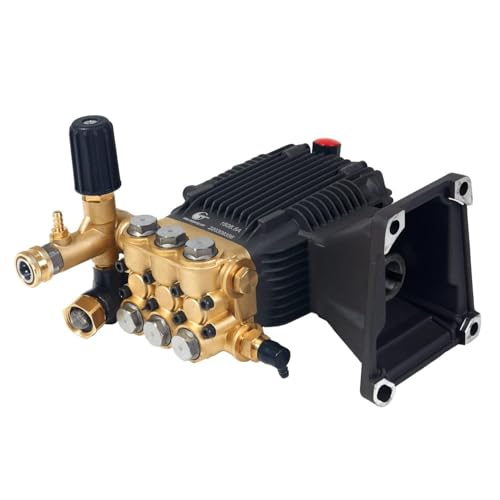
Canpump CF 3040 G Pressure Washer Pump 1-in Shaft

TOOLCY 3/4″ Shaft Horizontal Pressure Washer Pump
TOOLCY 7/8″ Shaft Vertical Pressure Washer Pump Rear Side

Himore 308653035 Pressure Washer Pump for Homelite UT80709

TOOLCY 1″ Shaft Pressure Washer Pump 4400 PSI
The Picks, Examined More Closely
Pulling a dead pump off a 1-inch shaft engine usually means you want the replacement to last more than one season, and that’s the case for the Canpump CF 3040 G. Its triplex plunger design uses three pistons instead of the wobble-plate setup you’ll find on cheaper residential units, and the 4.0 GPM flow is enough to feed most surface cleaners without starving them.
For homeowners running a larger property or anyone cleaning concrete all weekend, the 3000 PSI and SAE J609 flange make it a comfortable drop-in for most 8 hp to 16 hp horizontal engines. You’ll want to confirm your existing unloader and injector are matched to the new flow before you bolt it up.
Real-World Strengths
- Triplex plunger design holds up far better than axial wobble pumps under frequent use
- 4.0 GPM flow handles driveway and deck work without forcing long passes
- Standard SAE J609 mounting flange fits a wide range of gas engine brands
- Higher pressure ceiling for stripping paint or heavy mildew off concrete
- Cast iron body and brass manifold suit outdoor storage and rough handling
Trade Offs
- Heavier than a wobble pump, so plan for two hands during installation
- Demands oil-level checks before every use, an easy step beginners often skip
Key Specs
Best Suited To
Owners with a 1-inch horizontal shaft engine cleaning large driveways, decks, or two-story siding on a regular schedule.
Skip It When
Your engine runs a 3/4″ shaft; the TOOLCY 3/4″ Horizontal Pump is a closer match and saves you an adapter headache.
The 3/4-inch shaft is the most common size on consumer-grade horizontal engines, and this TOOLCY unit is aimed squarely at that crowd. The 2600 to 3300 PSI window and 2.5 GPM flow are typical of what came on mid-tier machines from Simpson, Homelite, and Karcher, so it’s a comfortable fit for weekend driveway and vehicle work.
You may find the 2.5 GPM flow a touch light if you’re running a wide surface cleaner, but for wand work on cars, fences, and patio furniture, it lands in a sweet spot. Owners commonly report that mounting bolts line up without adapter plates on most supported engines, which trims install time.
Everyday Wins
- 3/4″ shaft covers the most common residential engine size on the market
- 2.5 GPM flow matches mid-range wands and nozzles without overworking the unit
- Replaces OEM pumps on several popular brands, simplifying parts sourcing
- Rated lifespan supports routine homeowner cleaning through multiple seasons
Points To Note
- Not built for daily contractor use, so heavy weekly sessions shorten its life
- Confirm your engine’s bolt pattern before ordering to avoid drilling new holes
- Crankcase oil capacity is small, so monthly checks become essential
Who Will Love This
Homeowners with a 180 to 225 cc gas engine cleaning vehicles, fences, and small patios a few times each month.
Look Elsewhere When
Your engine sits on a 1-inch shaft and you want higher flow; the Canpump CF 3040 G brings 4.0 GPM for that setup.
Vertical-shaft engines sit on a lot of upright pressure washers, and the rear-inlet layout on this TOOLCY matches the most common arrangement on Honda, Briggs, and Subaru small blocks. The 7/8″ shaft and 3400 RPM rating line up with the engine’s stock redline, so you’re not pushing the bearings beyond spec.
Unlike the horizontal TOOLCY earlier in this list, the vertical mount changes how the oil sits, so you keep the unit upright during storage and use. The 3100 PSI ceiling gives a touch more cleaning bite for caked-on grime, and 2.5 GPM keeps wand work efficient.
Notable Gains
- Direct fit on rear-inlet 7/8″ vertical engines from several major brands
- 3100 PSI rating provides extra cleaning power for stubborn mildew
- Aluminum housing keeps overall weight manageable on upright frames
- Standardized inlet and outlet ports simplify hose hookup
Honest Caveats
- Not compatible with side-inlet vertical pumps, a common mix-up at checkout
- Oil capacity differs from the horizontal TOOLCY, so don’t swap parts between them
Key Specs
Built With In Mind
Owners of upright gas pressure washers with 7/8″ rear-inlet vertical engines looking for a clean OEM-style swap.
Reach For A Different Pick When
You need a direct Homelite UT80709 fit; the Himore 308653035 is matched to that specific model family.
Homelite’s UT80709 and UT80709A washers use a specific pump footprint, and generic 7/8″ vertical pumps often need adapter plates or new mounting holes. The Himore 308653035 was built around that exact bolt pattern, with a 3-bolt configuration measuring roughly 7 11/16″ by 6 3/16″ by 6 7/16″. For owners of those specific models, the install is closer to a 30-minute job than a half-day fabrication.
The 3100 PSI and 2.5 GPM numbers match what the original Homelite pump delivered, so there’s no learning curve with new nozzles or wand restrictions. Owners commonly report that the thermal relief valve and garden hose inlet match stock fittings, which keeps the swap clean.
What Pays Off
- Bolt pattern matched specifically to Homelite UT80709 and UT80709A frames
- 2.5 GPM keeps OEM nozzles and wands working as designed
- 140°F water rating allows warm inlet supply for grease-cutting jobs
- Standard garden hose inlet eliminates adapter fittings at the tap
Things To Weigh
- Limited compatibility outside the listed Homelite models, so resale value is narrow
- Same 2.5 GPM ceiling as the TOOLCY vertical, so don’t expect a flow upgrade
Key Specs
Perfect Match For
Homelite UT80709 and UT80709A owners who want a same-day swap with no fabrication or adapter plate work.
Where Another Pick Suits Better
You own a different 7/8″ vertical engine; the TOOLCY 7/8″ Vertical Rear Side Pump covers a broader brand list.
For owners who want a noticeable jump from a tired residential pump, this 1-inch shaft TOOLCY sits at the top of the consumer flow range. The 4400 PSI ceiling and 4.2 GPM flow are aimed at folks running bigger nozzles, longer hose runs, or wider surface cleaners on the end of the wand.
The built-in adjustment unloader lets you dial system pressure to match your engine and accessories, which matters when you’re pushing the upper PSI range. The recommended working ceiling sits around 3400 PSI, so leaving it pegged at the top number all day will wear the seals faster. Compared to the Canpump earlier, this one trades some cast iron mass for anodized aluminum and a slightly higher pressure ceiling.
What Earns Its Place
- 4.2 GPM flow feeds wide surface cleaners and long hose runs without starving
- 4400 PSI ceiling handles paint stripping and heavy mildew on concrete
- Adjustable unloader lets you tune pressure for the job and engine size
- 1″ shaft covers a wide range of 9 to 13 hp horizontal-shaft gas engines
Potential Sticking Points
- Rated max pressure sits well above the recommended working ceiling, so tuning is essential
- Higher flow demands matched nozzles, otherwise you waste water and heat the pump
Right Fit For
Experienced owners on 1-inch horizontal engines who want higher flow and pressure for commercial-style cleaning on residential sites.
Swap It Out When
Your engine is a 3/4″ shaft and you don’t need 4.2 GPM; the TOOLCY 3/4″ Horizontal Pump is a more comfortable match.
What To Check Before Swapping In A New Pump
A wrong fit wastes an afternoon at minimum, so start with three measurements. First, the shaft diameter on your engine: 3/4″ and 7/8″ are the consumer standard, while 1″ is the pro range. Second, the orientation: horizontal-shaft engines bolt the pump to the side, while vertical-shaft engines stand it upright, and the inlet position (rear or side) matters just as much as the mount.
Third, the bolt pattern. Pumps in this list use SAE J609-style flanges, but the exact hole spacing varies by model. The Himore unit, for example, lists a 3-bolt pattern of 7 11/16″ by 6 3/16″ by 6 7/16″, which only matches Homelite UT80709 frames. Measure across your existing pump’s bolt holes center-to-center before you order, and you avoid drilling new holes in the engine cradle.
Pressure and flow are the easy comparisons, but don’t overlook the unloader valve. A worn or undersized unloader turns a great pump into a heat trap, and many replacement pumps ship without one. Confirm the unloader and thermal relief valve are matched to your planned flow and nozzle setup, especially on the higher-flow TOOLCY 1″ and Canpump units, which run harder than the residential 2.5 GPM models.
Avoiding The Usual Shopping Mistakes
Common Slip Ups At The Pump Shelf
Most returns in this category trace back to two mix-ups. The first is buying the wrong shaft size: a 7/8″ pump won’t slide onto a 3/4″ engine shaft, and forcing it damages the keyway and the engine bearing. The second is the inlet position on vertical pumps: rear-inlet and side-inlet pumps look nearly identical in product photos, and the wrong one won’t connect to the existing hose routing.
Another common miss is the unloader. Some listings include a built-in adjustable unloader, while others ship with a basic preset version or none at all. If your existing thermal relief valve is fine, you can reuse it, but a missing or mismatched unloader will shorten the life of any pump on this list.
When Stepping Up Actually Pays Off
The jump from a 2.5 GPM residential pump to a 4.0 or 4.2 GPM unit shows up in two places. First, coverage speed: a wider surface cleaner runs at its intended pace, and long hose runs don’t drag the engine RPM down the way they do on smaller pumps. Second, nozzle flexibility: higher flow lets you run larger orifice nozzles without starving the pump, which is the difference between scraping and washing a driveway in one pass.
The trade-off is cost and component matching. A 4400 PSI pump pushed by a 6.5 hp engine will bog, and a 4.2 GPM pump on a 50-foot 1/4″ hose will feel weak. Step up only when your engine, hose, and nozzles are ready for the higher flow. The Canpump CF 3040 G and TOOLCY 1″ 4400 PSI both reward that kind of matched system, and they punish mismatched ones.
Frequently Asked Questions
How do I know if my pressure washer needs a new pump or just a repair?
Water leaking from the pump housing, oil turning milky, or zero pressure at the wand all point to a worn pump. Cracked hoses, a clogged nozzle, or a bad unloader often look like a pump failure but fix for a fraction of the cost. Drain and test with the wand removed before you order a replacement.
What’s the difference between GPM and PSI, and which matters more?
PSI is the cleaning force at the nozzle, while GPM is the volume of water flowing through. Both matter, but for residential work, GPM often decides how fast you finish a driveway or deck. Two pumps with the same PSI but different GPM ratings will feel very different in real use.
Can I install a higher-flow pump on my existing engine?
You can, but the engine needs to maintain RPM under load. A 4.0 GPM pump on a 6.5 hp engine will bog and overheat. Match flow to engine horsepower, and keep the working pressure below the engine’s sustained output, not the peak number on the box.
Do replacement pumps come with mounting hardware and oil?
Most ship partially filled or empty with break-in oil included, but mounting bolts, keyways, and couplers are usually separate. Check the product listing for each item, and keep the old hardware on hand for comparison before the new pump arrives.
How long should a replacement pump last?
Residential pumps used a few times a month commonly run two to three seasons before seals and valves need attention. Triplex pumps like the Canpump tend to outlast axial wobble pumps under frequent use, but oil changes and clean inlet water are still the biggest factors in lifespan.
Closing Remarks
The right power washer pump is the one that matches your engine’s shaft, orientation, and the cleaning workload you actually do. The picks above cover the most common homeowner swaps, from 3/4″ horizontal engines to specific Homelite models and high-flow 1″ upgrades. Measure your existing setup, confirm the bolt pattern, and match flow to your engine before you click through. A careful 20 minutes with a tape measure beats a frustrating afternoon with a pump that doesn’t fit.