


Windows are the first thing guests notice, and the last thing most people want to clean. Hard water spots, pollen film, and soap runoff from pressure washing leave glass looking cloudy long after the rest of the house sparkles. The right tool cuts that job down to a few minutes per pane, and the wrong one leaves you chasing streaks with a paper towel. This guide covers nine tools that earn their place in a window-cleaning kit, from basic microfiber basics to fully automatic robots, and explains who each one actually suits.
The Main Contenders

MW PRO Microfiber Cleaning Cloths Black (12 Pack, 12×12)
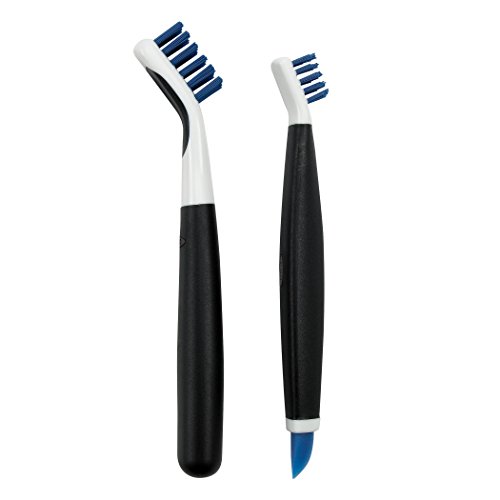
OXO Good Grips Deep Clean Brush Set

Unger Professional Stainless Steel Squeegee 12″

Unger Connect and Clean 12″ Performance Squeegee

Unger Connect and Clean 16″ Performance Squeegee
ECOVACS WINBOT Mini Window Cleaning Robot

ECOVACS WINBOT W3 Omni Robot Window Cleaner

ECOVACS WINBOT W2S Omni Window Cleaning Robot

5000PSI Electric Pressure Washer 4.0GPM 2000W
Meet The Standout Selections
Every window kit needs a dependable cloth for the final pass, and a 12-pack of 12-by-12 black microfiber squares covers the basics without overthinking it. The split-fiber weave (meaning each strand is sliced into tiny hooks that grab dust and oil) pulls residue off glass and leaves almost no lint behind, which matters when you have already done the hard work of washing and just want a clean dry finish. People who detail cars at home or manage a small cleaning routine will appreciate having enough cloths on hand to rotate through a job without stopping to rinse mid-pane.
Compared with the Unger squeegees further down the list, this is the quiet workhorse that handles what the squeegee cannot, like drying sills, buffing edges, and wiping down screens after a pressure-wash rinse. Toss them in a standard wash and they keep coming back for more, which makes the per-use cost surprisingly low over time.
A Few Highlights
- Twelve cloths in a single pack means you can rotate mid-job without stopping
- Lint-free finish protects against the fuzz streaks that ruin a clean window
- Machine-washable construction holds up through hundreds of cycles for low ongoing cost
- Black color hides grime so you can tell when a cloth is actually dirty
- 12-by-12 size fits a hand comfortably for detail work on sills and frames
Things To Consider
- Works best as a finishing cloth rather than the primary washing tool, so you will still want a squeegee or scrubber
- Fabric softener in the wash can coat the fibers and reduce pickup over time
Who It Suits Best
Homeowners and renters handling routine window care who want a reliable wipe-down cloth at a sensible per-piece cost.
Skip It When
The OXO Good Grips Deep Clean Brush Set makes more sense if your main challenge is caked grime along window tracks rather than surface film.
Window tracks, frame corners, and sill grooves collect grit that a flat cloth just smears around. The OXO Good Grips Deep Clean Brush Set ships with two brushes, a larger one for broader runs along tracks and grout, and a smaller one paired with a built-in wiper blade for tight spaces. Nylon bristles handle the scrubbing, while the soft non-slip grip keeps your hand from cramping halfway through a deep clean. If your windows are the kind that look fine from across the room but reveal a layer of grey dust up close, this is the tool that fixes the gap.
It plays a complementary role next to the microfiber cloths above. The cloths handle the glass, and the brushes dig into the places where glass meets frame. You may find the larger brush doubles as a useful shower-door track tool, which stretches the value beyond just window day.
Useful Highlights
- Two-brush design covers both wide tracks and narrow corners in one kit
- Non-slip grip stays comfortable during longer scrubbing sessions
- Integrated wiper blade on the small brush helps clear loosened debris in tight spots
Worth Noting
- Sturdy nylon bristles can scuff delicate finishes, so test on a hidden area first
- Hand-wash only, since dishwasher cycles can warp the handle shape over time
- Not a glass-cleaning tool on its own, so plan to pair it with a squeegee or cloth
Who It Suits Best
Anyone whose windows sit in dusty environments or rarely get a deep clean, and who needs to restore grimy tracks before tackling the glass.
Look Elsewhere When
The Unger Professional Stainless Steel Heavy-Duty Squeegee is a better fit for shoppers who need a dedicated glass-finishing tool rather than detail scrubbing.
Unger has been making window tools for decades, and the 12-inch stainless steel squeegee shows why the brand still shows up in the kits of professional cleaners. The stainless body resists rust even when it lives in a bucket of soapy water, and the ergonomic handle feels balanced during long passes. It works handheld for ground-level windows and threads onto a standard telescopic pole (sold separately) for second-story panes, which keeps you off the ladder more often than you might expect.
Where the OXO brushes dig into the corners, this tool clears the broad faces of glass in a single stroke, leaving a streak-free finish when the rubber edge is fresh. A 10-pack of replacement rubbers is available separately, which matters because the rubber is the part that does the real work and wears out faster than the handle.
Real-World Strengths
- Stainless steel construction shrugs off moisture and cleaning chemicals over years of use
- Pole compatibility (handle threads onto standard telescoping poles) extends reach without a ladder
- 12-inch width covers most residential panes in one or two passes
- Common 10-pack sizing for replacement rubbers keeps maintenance straightforward
Trade Offs
- Stainless body adds noticeable weight compared with plastic squeegees, so long sessions can tire the wrist
- Replacement rubber is sold separately and needs swapping once the edge nicks
Made For
Homeowners with multiple large windows or anyone cleaning outdoor glass several times a year who wants a long-lasting tool over a cheap disposable one.
Consider Something Else When
The Unger Connect and Clean 12″ Performance Squeegee is a better fit for shoppers who want a quicker channel-lock rubber swap and easier pole changes.
The Connect and Clean line updates Unger’s classic squeegee for people who swap between handheld and pole work mid-job. A channel-lock system holds the rubber in place but releases it fast, so swapping a worn blade takes seconds instead of needing a screwdriver. The 12-inch width suits standard residential windows, and the included replacement rubber means the tool is ready to go right out of the package. For multi-story homes where reaching up matters, the connection point is designed to lock onto Unger’s telescoping poles with no wobble.
Compared with the stainless steel Unger above, this version trades a bit of heft for faster blade changes. If you clean a lot of glass and hate fumbling with hardware, that tradeoff is worth it.
Notable Gains
- Quick-release channel makes rubber swaps fast, ideal for frequent use
- Includes a replacement rubber so the kit is complete on day one
- Stable pole connection for two-story or vaulted-window reach
Points To Note
- Plastic body parts are lighter than stainless but feel less substantial in the hand
- Pole is sold separately, adding to total cost if you do not already own one
Best Suited To
Homeowners with second-story windows who want a squeegee that pairs with a pole and speeds up blade changes between jobs.
Reach For A Different Pick When
The Unger Connect and Clean 16″ Performance Squeegee is a better fit for shoppers with very large picture windows who want more coverage per pass.
For floor-to-ceiling glass and oversized picture windows, a 12-inch squeegee can feel like painting a wall with a small brush. The 16-inch version of the Connect and Clean cuts the number of passes nearly in half, which is a real time-saver on a wall of glass. The same quick-release channel and replacement rubber apply, and the larger head still mounts to a standard Unger telescoping pole for those hard-to-reach upper panes.
The trade-off shows up in tighter spots, where the wider blade is harder to maneuver between muntins (the wooden or metal bars that divide a window into smaller panes) or around small fixed panels. For open spans of glass, however, the wider coverage is hard to beat.
Bright Spots
- 16-inch head covers more glass per stroke, ideal for large modern windows
- Same quick-release rubber channel as the 12-inch sibling
- Sturdy pole connection for high-reach cleaning
Worth Bearing In Mind
- Wider blade feels bulky in tight bathroom windows or divided-light frames
- Requires more pressure across the longer edge, so wrist fatigue can build on long sessions
Who Will Love This
Anyone with oversized windows, sunrooms, or modern open-floor-plan glass who wants fewer passes and faster finish work.
Swap It Out When
The Unger Professional Stainless Steel Heavy-Duty Squeegee is a better fit for shoppers who prefer a more compact 12-inch head with a heavier stainless body.
If the idea of climbing a stepladder with a squeegee sounds less appealing every year, the WINBOT Mini brings robotic cleaning to a smaller, apartment-friendly footprint. Dual ultrasonic spray nozzles (a fine, high-frequency mist that breaks up grime more effectively than a coarse spray) wet the glass ahead of the cleaning pad, and the compact body reaches small and mid-sized windows where bulkier robots struggle. A 9-stage safety system and anti-slipping drive keep the unit adhered to vertical glass, while three cleaning modes let you match the pass to how dirty the pane is. Intelligent path planning maps the surface so the robot finishes in straight, even lines rather than wandering.
For most apartments with standard-sized windows, the Mini is a meaningful upgrade over the W2S below because its lighter body is easier to position on smaller panes. The cost of that compactness, however, is reduced capacity for very large window walls.
Strong Points
- Compact size handles small and mid windows that larger robots miss
- Dual ultrasonic spray nozzles pre-treat grime so the pad does less heavy lifting
- 9-stage safety system includes anti-slip drive for stable vertical cleaning
- Three cleaning modes offer flexibility between quick touch-ups and deeper cleans
Honest Caveats
- Best suited to lighter daily dust and fingerprints rather than heavy built-up grime
- Smaller water reservoir than full-size robots, so it needs refilling on big jobs
Quick Look
Who Should Grab It
Apartment dwellers and homeowners with smaller standard windows who want automated help without the bulk of full-size units.
Where Another Pick Suits Better
The ECOVACS WINBOT W3 Omni is a better fit for shoppers who want a self-cleaning station and broader coverage for whole-home routines.
The W3 Omni pushes window robotics toward true hands-off operation. Its multi-function station not only stores the robot but actively washes the cleaning pads after use, which is the chore most people forget about. Win-SLAM 5.0 navigation (an upgraded mapping system that improves on earlier versions in recognizing frame edges and obstacles) plots efficient routes across larger panes, and the triple spray system wets the glass more evenly than single-nozzle designs. A 12-level protection system covers everything from anti-slip drive to tether redundancy (a backup safety cord in case the suction system fails), making it one of the more reassuring robots to leave running on tall windows.
Where the WINBOT Mini targets smaller, more frequent cleans, the W3 Omni is built for whole-home routines and bigger glass. The self-cleaning station means the pads stay effective run after run, and the more advanced spray system handles streaks better on larger panes.
Where It Helps
- Auto-clean station washes pads automatically, eliminating manual maintenance
- Win-SLAM 5.0 navigation handles large windows with efficient, systematic passes
- Triple spray system provides more even wetting across wide glass
- 12-level protection suite covers both adhesion and tether safety
A Few Limitations
- Larger and heavier than the WINBOT Mini, so storage needs a bit more planning
- Higher price tier may stretch beyond casual cleaning needs
Perfect Match For
Homeowners with multiple large windows or modern glass walls who want a near-hands-off routine and are willing to invest for that convenience.
Not Your Match When
The ECOVACS WINBOT W2S Omni is a better fit for shoppers who prioritize edge-cleaning precision and a smaller multifunction station footprint.
The W2S Omni focuses on a problem that often frustrates robot-window users: edges. Its TruEdge active scrubber lowers automatically near window frames and scrubs at high RPM to lift the buildup that conventional robots tend to leave behind. Quad-edge frame detection guides the robot along all four sides of the pane, so the final pass gets close to the seals without bumping them. The 6-in-1 multifunction station handles pad cleaning, storage, and tethering in a more compact form than the W3 above, which makes the W2S easier to tuck into a closet or laundry room.
Compared with the W3 Omni, this model trades some full-home automation for sharper edge performance in a tighter package. For frameless glass panels and modern floor-to-ceiling windows, that edge precision is exactly the difference between a polished result and a robot that leaves a visible border.
Advantages To Know
- TruEdge scrubber lifts buildup along frames that other robots leave behind
- Quad-edge frame detection keeps the robot aligned with all four sides of the pane
- 6-in-1 station combines pad care, storage, and tethering in a compact unit
Practical Considerations
- Edge-focused design is best on frameless or minimally framed glass, less critical on divided panes
- Pad maintenance still requires occasional manual rinsing despite the station
Built With In Mind
Homeowners with tall frameless panels or modern architectural glass who notice edge residue after every cleaning.
A Better Fit Elsewhere
The ECOVACS WINBOT Mini is a better fit for shoppers with smaller, standard residential windows who want a lighter and more compact robot.
Pressure washer window cleaning starts long before the squeegee comes out. A 5000-PSI, 4.0-GPM electric unit like this one pre-rinses siding, screens, and frames, washing away the loose grit that would otherwise smear into the glass the moment a cloth touches it. The 2000-watt motor, integrated soap bottle, and 33-foot high-pressure hose cover most driveways, patios, and two-story exteriors without dragging a cord across the yard. Once the surrounding surfaces are clean, finishing the windows with a microfiber cloth and squeegee goes much faster because there is no more falling debris to chase.
The catch is that pressure washers and window glass are sensitive partners, so a wide-spray nozzle (a nozzle that distributes water over a broader area at lower pressure per square inch) and a safe standoff distance matter. Anyone pairing this unit with a squeegee routine should plan to keep the pressure stream off the glass itself and reserve it for sashes, screens, and trim.
Where It Delivers
- 5000-PSI output handles heavy grime on siding, driveways, and patio surfaces
- Built-in soap bottle simplifies detergent application for pre-wash
- 33-foot hose reaches around vehicles and across wider driveways
- Electric power means no fuel handling and easier indoor storage
Where It May Fall Short
- High pressure can damage window seals or crack glass at close range, so technique matters
- Heavier and louder than handheld electric cleaners, so storage and runtime planning help
Whose Shelf It Belongs On
Homeowners with full exterior cleaning routines, including siding, driveways, and patio surfaces, who want a single tool that preps the area before window finishing.
Another Choice May Suit
The MW PRO Microfiber Cleaning Cloths are a better fit for shoppers focused only on the glass itself rather than the broader exterior pre-wash.
What To Weigh Before Choosing Window Cleaning Tools
The right tool depends on whether the bottleneck in your routine is height, frequency, scale, or plain old grime. For ground-level windows cleaned a few times a year, a 12-inch squeegee and a stack of microfiber cloths handle the job without spending much. For multi-story homes, a pole-compatible squeegee like the Connect and Clean models saves time and reduces ladder risk. Robotic units like the WINBOT line make sense when you have many windows and limited time, while a pressure washer earns its place when the glass shares a job with siding, driveways, and patio surfaces that need pre-rinsing anyway.
Match the Tool to the Surface
Edge-to-edge picture windows reward wide squeegees or edge-precise robots. Divided-light panes with small fixed panels handle better with a 12-inch head. Frames and tracks need a stiff brush, not a cloth, which is where the OXO set earns its spot.
Frequency Drives the Build
Occasional cleaning tolerates lighter plastic tools. Weekly or seasonal routines justify stainless steel or pole-ready hardware that holds up over years. A robot only pays off when you would otherwise skip the job.
Safety and Reach
Anything above the first floor benefits from a telescoping pole or a robot with tether redundancy. Standing on ladders to drag a squeegee across a second-story window is a long-term injury risk, and the tools above exist to keep your feet on the ground.
Key Considerations Across These Picks
Common Shopping Slip Ups
The most common mistake is buying a wide squeegee for narrow divided panes and then fighting the head in every corner. Another is treating a pressure washer as a window cleaner, when in reality it is a pre-wash tool that should stay off the glass itself. A third is grabbing a robot without checking the frame style, since some robots handle frameless glass far better than divided-light windows.
What The Higher Tier Buys
Premium robots like the WINBOT W3 Omni add self-cleaning stations, more advanced spray systems, and multi-stage safety tethers. Higher-end squeegees swap plastic for stainless and add quick-release rubber channels. The upgrade usually pays off when the tool gets used weekly rather than a few times a year, and when the windows in question are large or hard to reach.
Frequently Asked Questions
Can a pressure washer clean windows safely?
A pressure washer works well for rinsing siding, frames, and screens around windows, but the high-pressure stream should stay off the glass itself. Use a wide-spray nozzle at a safe distance, then finish with a squeegee or microfiber cloth for a streak-free result.
What is the best squeegee size for home windows?
A 12-inch head covers most residential panes in one or two passes and is easier to maneuver than wider options. Homeowners with floor-to-ceiling glass or oversized picture windows often prefer a 16-inch head to cut down on passes.
Are window cleaning robots worth the cost?
Window cleaning robots make sense for homes with many windows, hard-to-reach glass, or limited time for routine cleaning. They are less useful in homes with only a few small, easy-to-reach windows where a squeegee does the job quickly.
How often should microfiber cloths be replaced?
Quality microfiber cloths can be machine-washed hundreds of times before losing effectiveness. Replace them when the fibers feel smooth, the cloth leaves streaks, or the edges start to fray.
Do I need a special soap for window cleaning?
A few drops of dish soap in plain water handle most routine window jobs. For hard water spots or exterior buildup, a dedicated window cleaning solution helps, but avoid anything that leaves a residue, since residue is what causes streaks after the squeegee pass.




