


A clean car always reads as cared for, and the right washer turns a weekend chore into something almost satisfying. This lineup covers plug-in electric units, handheld battery models, foam-cannon kits, and a simple hose nozzle, so you can match the tool to your driveway, your car, and how much effort you actually want to spend.
A Closer Look At The Lineup

Greenworks 1800 PSI Electric Pressure Washer (1.1 GPM)

Adam’s Polishes Active Pressure Washer 2.0 Foam Kit

ZestZenith Cordless Handheld Pressure Washer

YYGGGGHH 6-in-1 Cordless Pressure Washer 1300 PSI
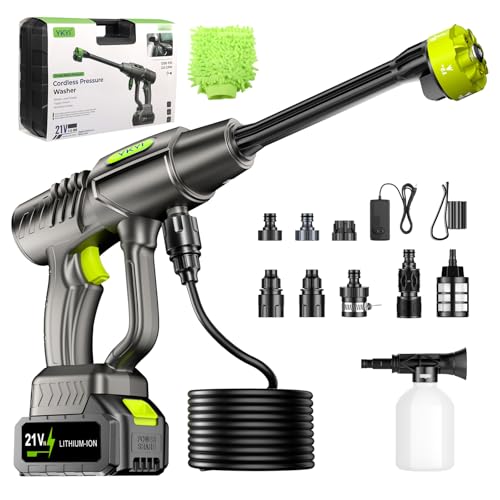
YKYI Cordless Pressure Washer 1200 PSI

FOTING 5000 PSI Touch-Screen Pressure Washer

Purellent 1100 PSI Handheld Car Washer

GAOQIYAO High Pressure Hose Nozzle (2-Pack)
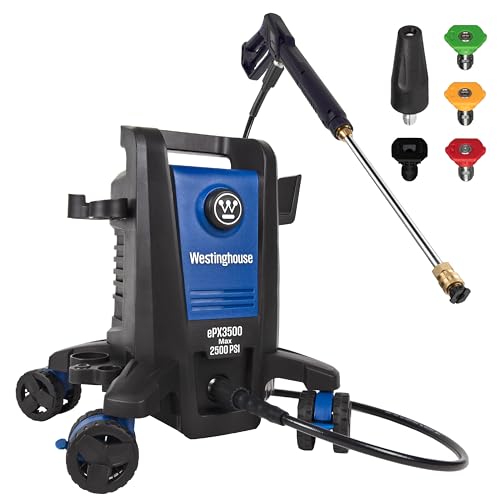
Westinghouse ePX3500 Electric Pressure Washer
A Breakdown Of The Leading Choices
The Greenworks unit trades the fuss of gas engines for a clean plug-and-go setup that suits a typical driveway. The push-button start (a small thing until you compare it to yanking a pull cord) means less ceremony before a Saturday wash. PSI (pounds per square inch) measures how forcefully water leaves the nozzle, while GPM (gallons per minute) tracks how much water flows through, and at 1800 PSI with 1.1 GPM, this lands squarely in the light-duty residential zone.
You’ll find the integrated GFCI plug (a ground-fault safety switch that cuts power instantly if it senses a short) genuinely handy for outdoor outlets. The 35-foot power cord covers most two-car driveways without needing an extension, though a long extension cord may be needed for detached garages. The maintenance-free promise (no oil, no spark plugs, no air filters) shows up as actual time saved over years of ownership, not just a marketing line.
Where It Delivers
- 1800 PSI paired with 1.1 GPM handles weekly car washes and patio rinsing without strain.
- Push-button start removes the pull-cord hassle common to gas units.
- Zero routine maintenance means no oil changes, no spark plug swaps, no air filter cleaning.
- 35-foot cord plus built-in GFCI keeps most driveways within reach and adds outlet safety.
- Light-duty frame stores easily in a garage corner between washes.
Points To Note
- At 1800 PSI, caked-on mud or oily concrete may need pre-treatment and more time.
- Corded design means you stay tethered to an outdoor outlet, so reel-in storage matters.
Key Specs
Made For
Homeowners with a standard 15-amp outdoor outlet and a car or two to keep clean on weekends.
Consider Something Else When
You regularly wash a large truck or caked-off road grime, where the Westinghouse ePX3500 Electric Pressure Washer’s 2500 PSI output gives you more room to breathe.
Adam’s Polishes builds this kit for people who treat the weekend wash like a small ritual. The Active Pressure Washer 2.0 ships as part of a five-piece foam setup, so you get a foam cannon (a siphon-fed nozzle that mixes soap and air into a thick, clingy lather) and the matching soap in one box. At roughly 24 pounds with a footprint of about 17 by 7 by 8 inches, it’s the kind of unit you actually carry to the car rather than wheel out.
The 1800 PSI peak with 1100 working PSI handles rinses and pre-wash passes, though the real draw is the foam coverage. The Mega Foam soap clings long enough to loosen road film before you touch the paint with a mitt, which is the whole point for a swirl-conscious owner. A 250-hour pump life rating suggests several years of regular weekend use before wear becomes a concern, depending on your habits.
Strong Points
- All-in-one foam cannon and soap bundle removes the guesswork of matching equipment to detergent.
- Lightweight 24-pound body makes single-handed carrying realistic for most adults.
- Foam coverage clings long enough to lift grime before contact washing.
- Compact footprint stores on a garage shelf without hogging floor space.
Honest Caveats
- Working PSI sits lower than peak, so heavy degreasing still needs follow-up by hand.
- The pump’s 250-hour lifespan favors moderate weekend use over daily commercial duty.
Right Fit For
Car enthusiasts who want a foam-first wash and don’t need driveway-grade power.
Skip It When
You also clean a long gravel driveway, where the Greenworks 1800 PSI Electric Pressure Washer trades foam luxury for everyday reach.
Battery-powered washers solve a problem corded units can’t: the lack of an outdoor outlet. The ZestZenith runs on a 21V battery and delivers up to 1100 PSI from a 775 motor, which lands in the gentle rinse range rather than stripping-strength territory. The whole unit reads more like a power tool than a traditional washer, and that’s the appeal if you live somewhere with no garage spigot.
Handheld ergonomics mean you can carry it to a parking lot, a campground, or a curb without dragging a hose reel behind. Owners commonly report that the runtime window suits a single compact car or a quick patio pass before the battery needs a swap. The GlowYellow-Black finish helps you spot it on a cluttered workbench, a small touch that matters in a busy garage.
Reasons It Performs
- Cordless 21V platform lets you wash where there’s no outdoor outlet available.
- Up to 1100 PSI handles light dust and pollen on daily-driver cars.
- Handheld form factor travels well to apartments, rentals, and tailgate events.
- Tool-style design feels familiar to anyone with a drill or impact driver collection.
Practical Considerations
- Battery limits continuous run time, so larger vehicles may need a second pack on hand.
- 1100 PSI is gentle; sticky road grime usually needs a separate mitt-and-bucket pass.
Whose Shelf It Belongs On
Renters, apartment dwellers, and condo owners who wash at a community lot or street parking.
Swap It Out When
You want longer sessions on a single charge, where the YYGGGGHH 6-in-1 Cordless Pressure Washer 1300 PSI ships with two batteries for back-to-back work.
Where most handheld washers ship with one battery and a single nozzle, this YYGGGGHH kit doubles down on both fronts. The 6-in-1 nozzle cluster lets you swap between mist, fan, jet, and soap settings without buying extras, and two 4.0Ah batteries keep a long session from stalling halfway through. The 1300 PSI output pairs with a 400W brushless motor (a motor that uses electronic commutation rather than brushes, meaning less friction heat and a longer service life).
For most people, two batteries change the rhythm of a wash day: rinse the car, swap, soap the wheels, rinse again, all without a charging pause. The 3 GPM flow claim (a generous number for a handheld) keeps the rinse moving quickly. In our view, the kit works best for someone who treats their car regularly and wants fewer interruptions.
The Upside
- Two 4.0Ah batteries extend runtime far beyond a single-battery washer.
- 6-in-1 nozzle covers rinse, soap, jet, and fan without buying attachments separately.
- 400W brushless motor typically outlasts brushed designs under regular use.
- 1300 PSI gives you a real cleaning edge over single-battery entry units.
Less Ideal Details
- Two batteries add carry weight and require charging station space.
- Higher PSI demand means shorter per-battery runtime than the ZestZenith handheld.
Best Suited To
Drivers who wash weekly and want cordless convenience without mid-wash charging breaks.
Reach For A Different Pick When
You’d rather stay with a single, simple battery, where the Purellent 1100 PSI Handheld Car Washer keeps things lighter and more straightforward.
The YKYI leans into adjustability, offering 30 pressure levels from a 300W motor spinning at 20000 RPM. That sounds like overkill until you consider what you’re washing: car paint hates a single high-pressure setting, while patio concrete wants just the opposite. The 1200 PSI ceiling sits in the middle of the handheld range, comfortably above the ZestZenith but a touch under the YYGGGGHH.
The draw-water feature (an internal pump that pulls liquid from an open bucket rather than a pressurized tap) is a quietly useful touch for anyone without a hose bib nearby. You may find the extra pressure levels unnecessary on day one and quietly essential once you start cleaning windows, grilles, and tires at different intensities.
Everyday Advantages
- 30 pressure levels give finer control than fixed-setting handhelds.
- Draw-water capability lets you run from a bucket, not just a spigot.
- 1200 PSI output splits the difference between gentle and heavy rinse needs.
Worth Noting
- Single-battery design means you’ll want a backup pack for longer sessions.
- Pressure-level dialing takes some trial and error to match each surface.
Who It Suits Best
First-time cordless washer shoppers who want a single unit that can handle cars, bikes, and patio chairs without swapping equipment.
Where A Sibling Pick Shines
You foam-cannon wash on a regular basis, where Adam’s Polishes Active Pressure Washer 2.0 Foam Kit bundles the soap and cannon together.
The FOTING skips the dial and gives you a touch screen for selecting one of eight power levels, which feels more like a kitchen appliance than a washer. The 1800W motor drives a high-pressure stream intended for everything from car paint to fence slats to driveway concrete, and the 5000 PSI ceiling means it has the headroom for the toughest jobs in a typical home. At 34 inches tall, it stands as a full-size unit rather than a tabletop.
The 25-foot hose reaches around most vehicles and garden features without dragging the body across the driveway. The 500ml foam cannon covers a full pre-wash pass, and the four quick-connect nozzles swap without tools. One thing worth considering: the touch screen needs a dry finger, so wet weather washing can mean a quick towel-off before changing modes.
What Makes Sense
- Touch screen with 8 power levels offers a clear, modern control layout.
- 5000 PSI ceiling handles grime that overwhelms residential-tier units.
- 25-foot hose stretches around larger vehicles and patio layouts.
- Foam cannon and 4 quick-connect nozzles cover pre-wash through rinse.
Some Limits To Know
- Touch screen requires a dry finger, awkward during wet-hand use.
- 5000 PSI demands respect near car trim, decals, and window seals.
Perfect Match For
Owners of full-size trucks, SUVs, or long driveways who want one tool for car, fence, and concrete cleaning.
A Better Fit Elsewhere
You mainly wash a single sedan in a small driveway, where the Greenworks 1800 PSI Electric Pressure Washer handles the job with less power-management fuss.
The Purellent reads like a cordless drill that washes your car, and for a lot of people that’s exactly the form factor that works. Up to 1100 PSI from a brushless motor covers a quick weekly rinse without pulling out a hose. The included elastic hose adds reach without dragging a heavy rubber coil across your sneakers, which matters more than it sounds during a longer wash.
The 6-in-1 nozzle cluster gives you jet, mist, and fan patterns for everything from wheel wells to windows. Owners commonly report that the brushless motor holds output more consistently as the battery drains, which keeps a partial-charge wash from turning into a frustrating trickle near the end. For most balconies and small parking pads, this lands as a tidy little problem-solver.
Notable Gains
- Brushless motor keeps pressure steadier as battery level drops.
- Elastic hose is lighter and more flexible than a standard rubber hose.
- 6-in-1 nozzle handles jets, mist, and fan patterns in one attachment.
- 1100 PSI suits a quick rinse without risking paint damage.
Trade-Offs To Consider
- 1100 PSI sits at the gentle end, so oily film usually needs contact washing too.
- Battery runtime favors one compact car per charge, longer for larger SUVs.
Who Should Grab It
Car owners in apartments, condos, or shared parking with no outdoor spigot and limited storage space.
Not Your Match When
You wash two vehicles in a row without recharging, where the YYGGGGHH 6-in-1 Cordless Pressure Washer 1300 PSI’s two-battery kit gives you the runtime headroom.
Not everyone needs an electric pump. The GAOQIYAO is a hose-end nozzle that turns your existing garden hose into something closer to a pressure washer, with adjustable spray patterns ranging from a focused jet to a wide mist. The 2-pack value means you can keep one in the garage and one near an outdoor spigot, which sounds trivial until you misplace a nozzle mid-summer.
The Pagoda interface fits standard garden hose threads, so no adapters are needed for most homes. The trade-off shows up in raw cleaning force: a hose nozzle is only as strong as your home water pressure, so deep grime still needs elbow grease. For quick rinses, bike washes, and window cleaning, though, the convenience is hard to argue with.
Practical Advantages
- 2-pack gives you a spare for a second spigot or as a backup.
- Adjustable spray covers jet, mist, and fan patterns in one nozzle.
- No power or batteries required, so it’s ready whenever the hose is.
- Pagoda interface fits standard garden hose connections without adapters.
Factors To Consider
- Cleaning power is limited by household water pressure, not a built-in pump.
- Not a substitute for heavy grime, oil stains, or thick mud on vehicles.
Built With In Mind
Casual car owners, renters, and casual rinsers who want a low-cost, no-electricity option for light cleaning.
Look Elsewhere When
You want genuine pressure-washer cleaning without the elbow grease, where the Westinghouse ePX3500 Electric Pressure Washer delivers real pump-driven power.
The Westinghouse sits at the muscle end of this list. With up to 2500 PSI max and 1.76 max GPM, it covers cars, fences, driveways, and patio furniture in a single tool. The anti-tipping design (a wider, lower stance that resists tipping when you yank the hose hard) solves a small but real annoyance during heavy passes, and the pro-style steel wand feels notably more rigid than the plastic wands on lighter units.
The onboard soap tank removes the need to juggle a separate detergent bottle and siphon hose, which is the kind of feature that pays off over years of ownership. The 5-nozzle set covers a wide PSI range, from a delicate 0-degree pinpoint to a broad 40-degree fan for siding. For most home driveways, you may find that two or three nozzles cover 95% of real work.
Everyday Wins
- 2500 max PSI gives genuine cleaning headroom for grime beyond car paint.
- Steel wand holds up to repeated hard pulls without flexing like plastic.
- Anti-tipping base keeps the unit planted during aggressive sweeping motions.
- Onboard soap tank removes the separate siphon-bottle juggling act.
Points To Keep In Mind
- Heavier than cordless handhelds and less convenient to store on a shelf.
- Higher PSI demands careful distance management on delicate trim and decals.
Key Specs
Who Will Love This
Homeowners with multiple cleaning tasks who want one washer that handles cars and everything around them.
Another Choice May Suit
You’re a one-task car washer, where the lighter Greenworks 1800 PSI Electric Pressure Washer keeps storage simpler and cost lower.
What Really Matters In A Car Pressure Washer
Pressure and flow rate get all the attention, but the everyday experience comes down to where the unit draws water, how you store it, and how it survives a few seasons outdoors. For car work specifically, anything above 1500 PSI is usually enough to lift road film, and going much beyond 2500 PSI means you’ll be standing further back to protect paint and trim.
Cordless handhelds shine for renters and apartment dwellers, while corded electrics like the Greenworks and Westinghouse serve a fixed driveway better. Foam cannon support is a quiet upgrade for swirl-conscious owners, since pre-soap cuts down on contact washing. A GFCI plug on any corded unit is non-negotiable outdoors, and a longer hose saves you from dragging the body across the lawn.
Storage footprint is the most overlooked spec. A 30-pound full-size unit on wheels eats garage space, while a 5-pound handheld slides onto a shelf. Match the tool to your parking spot first and your engine size second; you’ll use the washer more if it stays out of the way between washes.
Smart Habits For A Smarter Purchase
Mistakes Worth Dodging
Buying more PSI than your car needs leads to stripped decals and frustrated weekends, since car paint rarely benefits from anything above 2500 PSI. Skipping the foam cannon and using dish soap by accident is the other classic slip: household dish detergent strips existing wax and dries out trim over time. Forgetting to check your outdoor outlet’s amperage matters too, since most residential electric washers need a dedicated 15-amp circuit to avoid tripping breakers mid-rinse.
Where The Extra Money Goes
Higher-tier models in this category typically spend the premium on a longer-lived pump, a steel wand instead of plastic, and an anti-tipping or wheel kit that holds up over years of use. You also tend to get a true soap tank, a wider nozzle set, and a GFCI plug already built into the cord. The upgrade is worth it for anyone washing more than once a month, since the small daily frustrations (wand flex, tip clogs, flimsy wheels) add up faster than the price difference suggests.
Frequently Asked Questions
How much PSI do you actually need to wash a car?
Around 1500 to 2000 PSI handles the vast majority of car-washing tasks without risking paint damage. Heavier output (up to 2500 PSI) is useful for wheel wells and undercarriage grime, but anything beyond that requires a longer working distance to stay safe on clear coat and trim.
Are cordless pressure washers strong enough for a car?
Yes, in the 1100 to 1300 PSI range, modern cordless units handle a routine weekly rinse well, especially when paired with a pre-wash foam. For thick mud or road film, a corded electric or a higher-output battery model gives you more headroom and a shorter job.
Can a garden hose nozzle replace a pressure washer?
A high-quality hose nozzle covers light rinses, dust, and pollen, but it can’t match a real pump for stuck-on grime, oily film, or wheel-well debris. If your car stays mostly clean between rains, a nozzle is a tidy solution, otherwise an electric washer pays for itself in saved time.
Is a foam cannon worth the upgrade?
A foam cannon (a siphon-fed nozzle that mixes soap and air into a thick lather) is worth it for anyone serious about swirl-free washing, since it lets detergent dwell on paint before contact washing. Casual rinsers can usually get by without one, but detailers and enthusiasts tend to consider it essential.
How do you store a pressure washer between uses?
Drain residual water from the pump and hose, store the unit in a dry spot above freezing temperatures, and keep the nozzles in a small bag so they don’t get lost in a drawer. A quick visual check of the cord and GFCI plug before each season catches wear before it becomes a problem.
Wrap Up
The right car washer matches your parking situation, your cleaning frequency, and your patience for setup. Cordless handhelds work beautifully for quick weekly rinses, while corded electrics handle deeper grime and bigger vehicles with less runtime worry. Pick the tool that fits the driveway you actually have, not the driveway you imagine, and you’ll find yourself using it more than you expect.




