Soldering copper joints is a skill, but it’s also a fire starter on a job site. Press-fit (or “pro press”) connections replace the torch with a hydraulic crimp, which speeds up repairs, cleans up remodels, and lets you work in tight wall cavities where a flame simply can’t reach. The picks below cover everything from compact cordless units for occasional fixes to heavy-duty kits for daily plumbing runs, plus a manual option for the budget-minded.
The Shortlist At A Glance
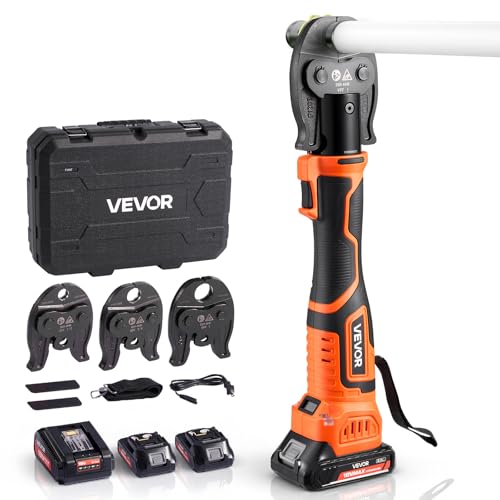
VEVOR 18V Press Tool, 1/2″–1″ PEX Stainless Rings

VEVOR 18V Cordless Mini Press Tool, Copper Rings

KF CPTEC PEX Crimping Tool, 1/2″ & 3/4″ Copper Ring

DJYIYEW Hydraulic Copper Pipe Crimping Tool, 1/2″–1″

VEVOR 18V Press Tool, 1/2″–2″ Copper Pipes

VORXEON 8-Ton Pro Press Crimper, VUS Dies 1/2″–1″

AMZCNC 18V Press Tool, Copper & PEX

Amflo 855 Hose Crimping Tool
Inside Each Recommended Option
Most PEX retrofits in finished walls demand one thing above all: speed without a flame. VEVOR’s 18V cordless press tool tackles that head-on, pairing a brushless motor with 24 kN of pressing force and a compact body that fits where full-size kits won’t. The 2 Ah twin-battery setup means you can keep moving through a long day of manifold work without camping near an outlet.
Three VPF jaws cover 1/2″, 3/4″, and 1″ PEX with stainless sleeves, so the kit arrives ready for the most common residential runs. Compared to the VEVOR cordless mini covered next, this one trades a slightly bigger footprint for higher daily cycle counts.
Notable Gains
- Brushless motor holds consistent pressing force across hundreds of daily crimps, reducing the fatigue that slows down handheld presses.
- Two 2 Ah batteries and a fast charger keep the workflow moving through a full day of manifold hookups.
- Three VPF jaws cover the standard 1/2″ to 1″ PEX range, so you can start a job without buying extra dies.
- A 24 kN output handles stainless press sleeves cleanly, which matters because undersized presses deform sleeves and cause leaks.
Worth Noting
- Stainless ring compatibility is specific, so double-check your fitting brand before committing.
- Toolbox and dual-battery kit add weight; expect some forearm fatigue during overhead crimps.
Quick Facts
Best Suited To
Remodelers and PEX-focused plumbers who need a reliable cordless press that handles 1/2″ to 1″ stainless sleeves without swapping platforms.
Look Elsewhere When
You primarily crimp copper rather than PEX. The VEVOR 18V Cordless Mini Press Tool in the next slot is set up specifically for copper-ring work.
Crawlspaces, van cabinets, and tight chase walls punish bulky press tools. This mini unit from VEVOR keeps the same 18V brushless platform as its larger sibling but trims the frame so it slips into spaces where a full-size press simply won’t fit. The 1″ dovetail die seat means a single 1″ jaw covers what usually requires a separate adapter.
Two press jaws (1/2″ and 3/4″) and the dovetail seat combine to cover three common copper-ring sizes, and the kit meets the ASTM F1807 standard, which is the spec most inspectors look for on residential PEX-to-copper transitions. It also includes a fast charger and a hard case, so it travels cleanly between calls.
Where It Helps
- Compact head reaches into joist bays and behind finished fixtures where a standard press cannot fit.
- ASTM F1807 compliance keeps copper-ring work code-friendly on most residential jobs.
- Dovetail seat for the 1″ jaw means one extra die covers the largest common size without a separate adapter.
- Hard carrying case and fast charger make it a tidy grab-and-go option for service plumbers.
Some Limits To Know
- The smaller frame and 1″ dovetail limit how aggressive the cycle count can be on heavy commercial runs.
- Copper-ring focus means you’ll want a different kit for PEX stainless sleeve work.
Right Fit For
Service plumbers and remodelers who work in tight cavities and need a copper-ring press that meets residential code without a bulky body.
Swap It Out When
You’re doing longer copper runs or full-house repipes. The VEVOR 18V Press Tool covered in slot 5 handles copper up to 2″ with more sustained output.
For one-off water-line repairs and small remodel jobs, a battery-powered press can feel like overkill. The KF CPTEC is a hand crimper built specifically for 1/2″ and 3/4″ copper rings, and it ships with a Go/No-Go gauge so you can confirm each connection at a glance. The ASTM F1807 designation keeps it code-friendly for the most common residential fittings you’ll meet.
There’s no battery, no hydraulic pump, and nothing to charge. The trade is hand strength: you supply the squeeze, and on a long day of manifolds that’s a real consideration. For homeowners tackling a bathroom repipe or a single fixture swap, that trade feels reasonable.
Benefits That Matter
- Hand-powered design means zero batteries, no charging downtime, and a tool that works in any weather.
- Go/No-Go gauge in the box gives you a quick visual confirmation that each ring is properly compressed.
- ASTM F1807 standard keeps the work acceptable for most residential plumbing inspections.
Trade Offs
- No 1″ jaw, so it stops short of the larger residential lines the cordless kits cover.
- Hand force is the limiting factor; expect forearm fatigue on multi-fixture manifold work.
Feature Card
Whose Shelf It Belongs On
Homeowners and DIY fixers handling the occasional water-line repair or single-fixture repipe who don’t need 1″ capacity.
Another Choice May Suit
Plumbers who need 1″ reach and a faster cycle. The VORXEON 8-Ton Pro Press Crimper in slot 6 covers the same sizes with hydraulic assist and a rotating head.
If your daily work means copper rather than PEX, battery kits can feel like overkill. The DJYIYEW hydraulic hand press is a manual pump-style tool built from grade steel and aluminum alloy, designed specifically for 1/2″ to 1″ copper press fittings. Compatibility with Viega propress fittings is a key selling point since Viega dominates the commercial press-fit category in many regions.
You squeeze the handle rather than pulling a trigger, which sounds old-school but trades battery anxiety for predictable mechanical force. It’s a workhorse pattern, similar in feel to the manual hydraulic cutters many plumbers still carry on the truck.
Strengths Worth Knowing
- Steel and aluminum construction handles the daily drops of a job-site truck bed better than all-plastic housings.
- Viega propress compatibility lets you join most commercial copper systems without owning a separate press.
- Three jaw sizes in the box cover the standard 1/2″ to 1″ residential and light-commercial range.
Honest Caveats
- Manual pump action takes longer per press than a battery-driven kit on big projects.
- Heavier than compact cordless options, which matters on ladder work or overhead runs.
Core Details
Perfect Match For
Plumbers who run copper-heavy jobs, especially those working with Viega fittings and who prefer manual hydraulic reliability over battery maintenance.
Consider Something Else When
You’re primarily crimping PEX rings on retrofit work. The VEVOR 18V Press Tool in slot 1 handles PEX stainless sleeves on battery power.
Most residential press kits stop at 1″ and leave the bigger mains to soldering. VEVOR’s 1/2″ to 2″ copper press stretches that range significantly, making it useful for whole-house repipes and light commercial feed lines. The fully enclosed electric hydraulic system completes a press in roughly 3 to 6 seconds, which changes the pace of any large copper job.
The trade is straightforward: bigger jaws cost more, and not every residential job needs 2″ reach. Where the wider range pays off is when a contractor handles both residential and small commercial work with one kit.
Positive Points
- Crimps copper up to 2″, which covers residential mains and most light-commercial feed lines.
- Cycle time of roughly 3 to 6 seconds per press keeps large repipe projects moving at a steady pace.
- Fully enclosed hydraulic system reduces the chance of site contamination fouling moving parts.
Less Ideal Details
- Other tube types need separate press jaws purchased individually, which adds cost if you work across materials.
- The wider jaw range means a larger overall tool, which can be awkward in tight wall cavities.
Key Specs
Built With In Mind
Contractors handling full-house repipes or small commercial copper runs who need 2″ reach without owning a second press platform.
Skip It When
Your work fits inside 1″. The VORXEON 8-Ton Pro Press Crimper in slot 6 is a tighter, more compact option for the standard residential range.
When you swap between 1/2″ copper and 1″ stainless in the same hour, die changes eat your time. The VORXEON 8-Ton crimper solves that with a one-button release and a head that rotates 360 degrees, so the jaw can face any angle the joint demands. The 8-ton hydraulic output also pushes it beyond the typical 24 kN range you see in compact cordless units.
Three VUS dies (1/2″, 3/4″, 1″) are made from 40Cr steel, which is a chromium alloy that resists wear better than softer die materials. Storage case included, and the rotating head alone is worth the upgrade for anyone working in ceiling cavities or behind tubs.
The Value In It
- 8-ton hydraulic output handles copper, carbon, and stainless steel lines without swapping tools.
- One-button die release means fast changeovers between sizes during mixed-diameter runs.
- 360-degree rotating head keeps the tool body out of your way in tight cavities and overhead work.
- 40Cr steel dies hold up to repeated daily cycles without rounding off the crimp profile.
Points To Keep In Mind
- Heavier than compact battery kits, so ladder and overhead work can wear you down faster.
- Manual hydraulic pump means each press takes a few hand strokes before the cycle completes.
Who Should Grab It
Plumbers, electricians, and HVAC techs who move between copper, carbon, and stainless lines and need fast die swaps in cramped spots.
Reach For A Different Pick When
You need battery-driven speed for high-cycle commercial work. The AMZCNC 18V Press Tool in slot 7 offers electric hydraulic pressing with 11 dies for similar coverage.
Hybrid plumbers who run copper and PEX on the same call usually end up owning two presses. AMZCNC’s 18V kit folds both into one platform, with 11 interchangeable dies covering the common 1/2″ to 1″ copper and ASTM F1807 PEX sizes. The 3-second hydraulic cycle is genuinely fast, which matters when you’re making a hundred connections on a commercial rough-in.
The dual focus means the kit can feel like a jack-of-all-trades, and you may rarely use the full set of dies. For pros who bounce between materials daily, though, that breadth is exactly the point.
What Pays Off
- 11 dies cover copper and PEX in one platform, removing the need to own separate presses.
- 3-second hydraulic cycle keeps the pace up on large rough-ins where press count climbs fast.
- 18V battery power avoids the manual pumping of hydraulic hand tools during long days.
Practical Considerations
- Larger die collection means more weight to carry between truck and job site.
- More dies also mean more setup time before the first press of the day.
At A Glance
Made For
Plumbers who switch between copper and PEX throughout the week and want one platform with enough die variety to skip second-tool purchases.
Not Your Match When
You only work one material. The VEVOR 18V Cordless Mini Press Tool in slot 2 is a tighter, lighter pick for copper-only PEX transitions.
Not every press tool touches potable water. The Amflo 855 sits in a different lane, focused on air hose and hydraulic ferrule crimping for shop and home garage use. Hardened steel dies and ductile iron castings make it a long-lasting bench tool, and the pre-loaded die setup means no fussing with separate inserts.
It’s a manual hand crimp, so each squeeze is your own muscle, but for occasional air-line assemblies, automotive hydraulic work, or fabricating custom hose assemblies, the simplicity is the appeal. The honest read is that it isn’t a substitute for any of the plumbing presses above; it just lives in a different corner of the shop.
Useful Touches
- Hardened steel dies and ductile iron castings hold up to garage and shop abuse for years.
- Pre-loaded dies remove setup steps, so the tool is ready the moment it leaves the box.
- Universal fit works across common air hose and hydraulic ferrule sizes for fabrication work.
Small Caveats
- Not designed for potable plumbing, so it can’t replace a residential press on water lines.
- Manual operation limits how many crimps a session can include before forearm fatigue sets in.
Who Will Love This
Home mechanics, fab shop owners, and anyone building custom air or hydraulic hose assemblies for non-potable use.
Where A Sibling Pick Shines
For residential water-line work, the KF CPTEC PEX Crimping Tool in slot 3 is the right entry-level plumbing option.
What to Weigh Before Choosing a Press Tool
Picking the right press tool comes down to matching the kit to your daily work, not chasing the most features. Start with the material you crimp most: copper, PEX with stainless sleeves, or PEX with copper rings each have different fitting standards and jaw types, and not every kit covers all three. Then think about cycle count. A homeowner doing one bathroom can live with a hand crimp, while a plumber running two hundred connections a week needs the trigger speed of a brushless 18V hydraulic press.
The standard question worth asking is whether your fittings meet a recognized code standard. ASTM F1807 covers copper-ring PEX work, while stainless press sleeves fall under different specs depending on the manufacturer. Compatibility affects both inspection approval and long-term leak resistance, so verify the brand and standard before you buy. Finally, consider the working environment. Tight wall cavities, ladder work, and overhead runs all punish heavy tools, and the lightest 18V kit in the roundup may actually save you more time than the strongest one.
Smart Choices Across the Press Tool Category
Mistakes Worth Dodging
The most common shopping slip-up is picking a kit by jaw count rather than by material compatibility. A six-die kit is useless if none of the dies match your fitting brand, so cross-check before you commit. Another trap is underestimating weight on ladder and overhead work. A two-pound difference feels like ten pounds when your arm is overhead, and battery kits are not always lighter than hand hydraulic tools. Always check the working environment, not just the spec sheet, before you click.
Where The Extra Money Goes
Higher-tier press tools earn their cost in three places: motor quality, die material, and cycle count. Brushless motors and 40Cr steel dies outlast brushed motors and softer alloys by a wide margin, which is why pro-grade kits cost more upfront but break less often. Premium platforms also tend to share batteries and chargers across tools, so the upgrade pays off again on the second or third tool you add to the kit. For pros running daily volume, that long-term math usually beats the savings of an entry-level pick.