


Tightening a lug nut feels simple until the spec calls for exactly 95 ft-lbs and your torque wrench drifts. A loose fastener can warp a brake rotor, snap a head bolt, or leave an axle stub walking out of the housing. The right tool takes that risk off the table, and the picks below cover the range, drive sizes, and tech most home mechanics and working technicians actually need.
The Choices Worth Comparing

SK Hand Tool Micrometer Torque Wrench Set, 1/2″ & 3/8″
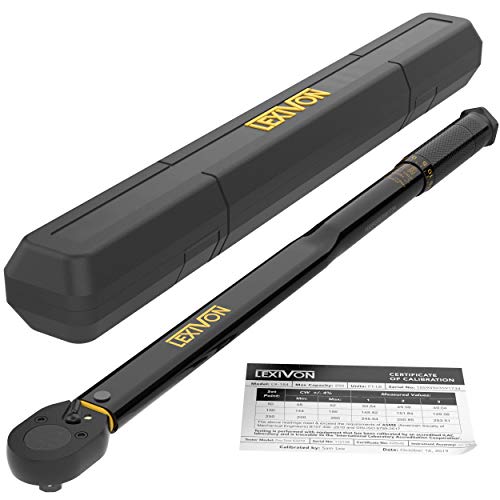
LEXIVON 1/2-Inch Drive Click Torque Wrench (LX-184)

HAZET 5122-2CT 1/2-Inch Torque Wrench
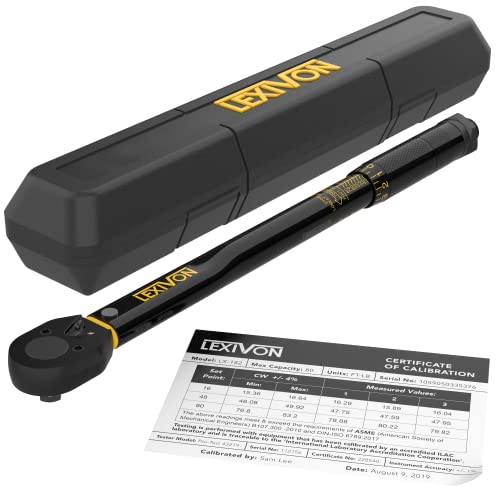
LEXIVON 3/8-Inch Drive Click Torque Wrench (LX-182)

LEXIVON 1/2-Inch Drive Click Torque Wrench (LX-183)
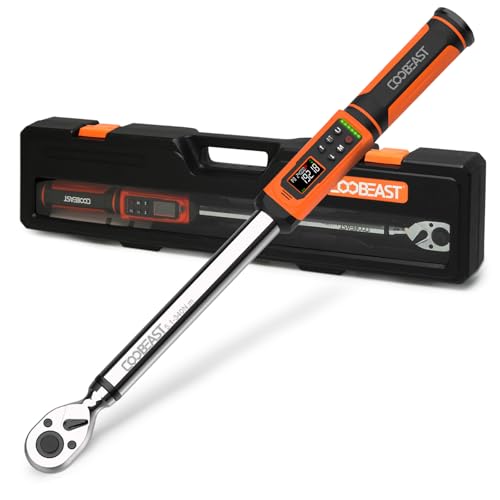
coobeast 1/2 Drive Digital Torque Wrench

Digital Torque Wrench 1/2 Drive Preset Value

coobeast 3/8 Drive Digital Torque Wrench
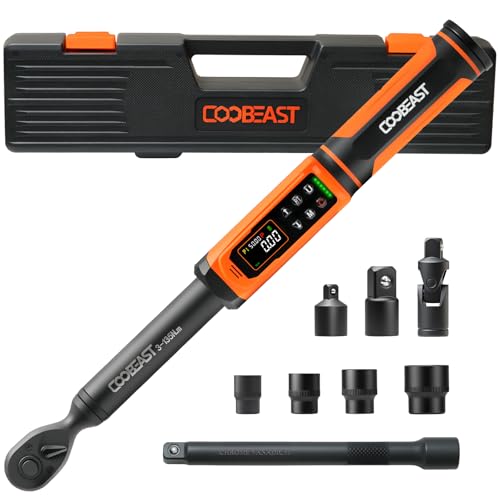
Digital Torque Wrench 3/8 Drive Preset Value
Why These Options Stand Out
A micrometer-style torque wrench (the kind with a twist barrel and a numbered scale) still earns its keep in shops that prefer tactile feedback over glowing screens. This SK Hand Tool bundle pairs a 1/2″ drive covering 30-250 ft-lbs with a 3/8″ drive covering 10-100 ft-lbs, so one locker covers everything from suspension arms to cylinder head bolts without swapping tools mid-job.
The dual scale reads SAE and metric at the same time, which saves a step when an import service manual lists Newton meters and the domestic one lists foot-pounds. You twist the handle, watch the line, and listen for the click. Compared with the single-wrench LEXIVON picks further down, the value here is range and redundancy rather than portability.
Notable Upsides
- Two-drive set covers almost every fastener on a car, light truck, or motorcycle without compromises.
- Fine increments on the smaller drive help you land exact torque on aluminum engine hardware where being a few ft-lbs off matters.
- Mechanical click feedback works in freezing temps, dark bays, and with gloves on, no batteries or screens required.
- Built and spec’d in the United States, which matters for shops that prefer domestic manufacturing for calibration traceability.
Things To Consider
- Owners commonly report that micrometer wrenches drift after a year of daily use, so plan a yearly calibration check.
- Two full-size wrenches plus cases take up more drawer space than a single 1/2″ drive, which is a real issue in cramped home garages.
Feature Snapshot
Who Will Love This
Working techs and serious home mechanics who want two calibrated, mechanical wrenches in a single order and don’t mind the storage footprint.
Consider Something Else When
Pick the LEXIVON 1/2-Inch Drive Click Torque Wrench (LX-184) if you only need a single 1/2″ tool and want a lighter chrome-vanadium build.
LX-184 sits at the top of the LEXIVON click-style line, stretching from 25 ft-lbs all the way up to 250 ft-lbs on a 1/2″ drive. That window covers everything from small block fasteners to lug nuts on a one-ton truck, which makes it a natural fit for general repair shops that want one tool in the drawer.
Where the SK bundle in pick 1 is two mechanical wrenches, this is one geared ratchet head built from hardened chrome-vanadium alloy with an electro-black finish to fight corrosion. The included calibration certificate with a traceable serial number is the kind of paperwork an inspector actually looks for.
What Stands Out
- Ships pre-calibrated to roughly +/- 4% accuracy out of the box, so you can put it to work without a trip to a calibration bench.
- Reinforced ratchet head holds up to daily abuse better than stamped-steel budget wrenches in the same class.
- Electro-black finish resists rust in humid shop floors and cold northern garages alike.
- Wide 25-250 ft-lbs range means a single tool covers light brackets and big suspension hardware.
Worth Noting
- At 25 ft-lbs, the lower end can feel coarse for engine-internal work, where 5-10 ft-lb steps matter more.
- Like most click wrenches, the internal spring can drift if the tool is left at a set value for months, so reset to the minimum before storing.
Made For
Technicians and advanced home mechanics who need one reliable 1/2″ wrench for trucks, trailers, and chassis work.
Not Your Match When
Choose the LEXIVON 3/8-Inch Drive Click Torque Wrench (LX-182) if most of your fasteners are small engine and motorcycle hardware, where 3/8″ reach is friendlier than a 1/2″ head.
HAZET has been building German shop tools long enough that the 5122-2CT carries an old-school feel. The reversible ratchet head (32 teeth, 11.25-degree actuating arc) works in tight engine bays where a swing of more than 12 degrees simply won’t clear a frame rail or firewall. For bicycle work, that same tight swing matters on frame bolts where room is measured in millimeters.
Compared with the LEXIVON LX-184 in pick 2, this trades wide top-end range for a more compact, service-friendly head. Spec’d tolerance is 4%, and the optimized sealing ring helps the mechanism stay clean around coolant and shop oil.
Strengths Worth Knowing
- 32-tooth ratchet head turns with only 11.25 degrees of swing, ideal in tight spaces and on small frame hardware.
- Reversible mechanism handles both tightening and loosening without flipping sockets, which speeds bench work.
- 4% stated tolerance keeps the wrench in spec for warranty-sensitive auto and bicycle repairs.
- Ergonomic handle shape transmits force cleanly to the head, so you don’t have to white-knuckle a high-torque pull.
Trade Offs
- Heavier and longer than a typical budget click wrench, which wears on your wrist over a full day of overhead work.
- Premium German tooling commands a higher shelf price, and the warranty path runs through specialty distributors rather than a generic return counter.
Best Suited To
Auto techs and bike mechanics who prioritize tight-clearance ratcheting and European build quality over absolute lowest cost.
A Better Fit Elsewhere
Pick the coobeast 1/2 Drive Digital Torque Wrench if you’d rather see exact torque on a screen than rely on a click in a noisy shop.
The LX-182 is the smaller sibling to the LX-184, swapping the 1/2″ drive for a 3/8″ and trimming the top end to 80 ft-lbs. That window maps almost perfectly to motorcycle work, small-block engine hardware, and suspension bits on compact cars where a 1/2″ wrench would just overpower the fastener.
Build story mirrors the larger LEXIVON: hardened chrome-vanadium gear head, electro-black finish for rust resistance, and a calibration certificate in the box. The compact head is the real reason to choose this over the 1/2″ version, since 3/8″ sockets let you work on smaller fasteners without adapter stacks.
Points In Its Favor
- 10-80 ft-lb range is well-matched to motorcycle, scooter, and lawn-equipment torque specs.
- Smaller drive head reaches fasteners buried behind fairings and frame tubes where a 1/2″ wrench won’t physically fit.
- Same pre-calibration and traceable serial number as the bigger LEXIVON line, which simplifies shop paperwork.
Honest Caveats
- 80 ft-lbs is the ceiling, so lug nuts and large suspension bolts are firmly out of range for this tool.
Quick Facts
Right Fit For
Motorcycle owners, small engine techs, and home mechanics whose driveway projects rarely involve anything bigger than a compact car.
Skip It When
Step up to the LEXIVON 1/2-Inch Drive Click Torque Wrench (LX-183) if you split time between light engine work and full-size vehicle wheel and suspension jobs.
The LX-183 fills the middle of the LEXIVON trio: 1/2″ drive, 10-150 ft-lbs, single wrench. That ceiling is lower than the LX-184’s 250 ft-lbs, but it covers most passenger car and light-truck wheel torque specs in a slimmer, lighter package that fits a kitchen drawer or a small toolbox.
Where the SK set in pick 1 wants to be a shop flagship and the LX-184 in pick 2 wants to be a heavy-duty bench tool, this one is the everyday carry. It still ships pre-calibrated with a traceable serial number, so the paperwork story holds up.
The Case For It
- 10 ft-lb lower end lets you torque small fasteners like oil-pan bolts and intake brackets without a second tool.
- 150 ft-lb top end covers most passenger car wheel specs, which is the most common torque task in any garage.
- Same hardened chrome-vanadium ratchet head construction as the larger LX-184 for shared serviceability.
Points To Note
- 150 ft-lbs caps out short of larger truck and trailer lug nuts, which need the LX-184’s extra headroom.
- Click feedback takes practice to hear in a loud shop with an air gun running nearby.
Who Should Grab It
Home mechanics who do their own brakes, wheels, and routine engine work and want a single wrench for the whole job.
Look Elsewhere When
Reach for the HAZET 5122-2CT 1/2-Inch Torque Wrench if you work in cramped engine bays and need a tight-swing reversible ratchet head.
Digital torque wrenches trade the audible click for a number on a screen and a tone when the target is hit. The coobeast 1/2 drive model runs from roughly 3.76 ft-lbs up to 250.8 ft-lbs, so it covers nearly everything an LX-184 handles, plus the very small fasteners where a click can be hard to feel.
Accuracy is rated at +/- 2% in the clockwise direction, which is a step tighter than the +/- 4% on most mechanical click wrenches in this list. For shop owners logging torque values for warranty paperwork, that matters: the screen is a paper trail.
Real Benefits
- Live digital readout removes the guesswork from precise spec lines like 18 ft-lbs on a plastic timing cover.
- Wide 3.76-250.8 ft-lb range covers both light engine work and full-size wheel lugs on one tool.
- Dual-direction ratchet head and quick-release chuck speed socket changes on production-style work.
- Visual and audible target alerts make it usable in a noisy shop where click feedback gets drowned out.
Where It Is Less Suited
- Digital modules need batteries, and a dead battery mid-job means the wrench is just a heavy ratchet.
- LCD screens can be hard to read in direct sun on an outdoor job site without shading the display with your hand.
- Internals are more sensitive to drops than a fully mechanical wrench, so a case or foam drawer liner is worth the extra effort.
Built With In Mind
Working techs and serious hobbyists who want precise readings and are willing to manage batteries and a slightly more delicate tool.
Reach For A Different Pick When
Pick the SK Hand Tool Micrometer Torque Wrench Set if you’d rather have two mechanical wrenches that work forever on hearing and feel alone, no batteries required.
Where the coobeast in pick 6 reads live numbers, this model leans into preset behavior: dial in a target value, lock it, and the wrench fires a sound and visual alert when the fastener hits that exact value. That workflow mirrors how production lines do torque, where repeatability matters more than seeing a climbing number.
The 1/2″ drive and 3.76-250.8 ft-lb range match the previous digital pick. For a shop running the same wheel torque spec across a fleet, switching from manual click to a preset alert is a meaningful speed upgrade.
Positive Takeaways
- Preset-and-lock workflow makes it easy to repeat the same torque value on every fastener in a batch.
- Combined sound and visual alerts cut through background shop noise better than a mechanical click alone.
- Large LED screen stays readable in dim garage lighting, which helps when the workspace doubles as a parking spot.
Practical Considerations
- Preset function adds a step before each job; it’s not ideal when you bounce between wildly different torque specs all day.
- Electronics and buttons can be harder to operate with cold, greasy, or gloved hands than a simple twist barrel.
Specs At A Glance
Whose Shelf It Belongs On
Small shops and serious enthusiasts doing repeated torque work, like a wheel set across a season, where preset values speed up the job.
Swap It Out When
Choose the LEXIVON 1/2-Inch Drive Click Torque Wrench (LX-183) if you prefer a traditional click and don’t want to fuss with presets or batteries.
The 3/8″ version of the coobeast digital line trades drive size for finesse. The 1.5-99.5 ft-lb range is built for trim panels, bicycle components, and small engine hardware, where applying 80 ft-lbs through a 1/2″ wrench would be like using a sledgehammer to tap in a finish nail.
Accuracy rating mirrors the 1/2″ coobeast at +/- 2% clockwise, and the dual-direction ratchet head plus quick-release chuck speed up socket swaps. Compared with the LEXIVON LX-182 in pick 4, you trade mechanical simplicity for a screen you can glance at mid-torque.
Useful Touches
- 1.5 ft-lb lower bound is gentle enough for carbon fiber bicycle parts where over-torque cracks the component.
- 3/8″ drive head reaches into tight frame spaces on bikes and small engine brackets where a larger wrench simply won’t fit.
- Digital readout takes the reading-the-line-at-an-angle challenge out of micrometer-style wrenches.
Factors To Consider
- At roughly 99.5 ft-lbs top end, it cannot handle lug nuts or any heavy suspension bolt.
- Electronics in a 3/8″ tool often mean a shorter handle, which can make reaching higher torque values awkward without a breaker bar first.
Perfect Match For
Bicycle mechanics, motorcycle owners, and hobbyists who want digital precision for small fastener work around the home and shop.
Where A Sibling Pick Shines
Step up to the coobeast 1/2 Drive Digital Torque Wrench if you also need a digital tool for full-size wheels and suspension hardware.
This rounds out the list with the preset version of the 3/8″ coobeast, dialing in a target value and waiting for the chime on small fasteners. For shop or home use, that means consistent results on every bolt, which matters most for warranty-covered engine work and aerospace-style bicycle builds.
Compared with the LEXIVON LX-182 in pick 4, you give up the tactile click in exchange for a screen and an alert tone. For quiet, low-torque jobs, that can be a real upgrade: hearing the click on a 6 ft-lb bolt through a glove can be harder than watching a counter tick up to the right number.
What Earns Its Place
- Preset-and-lock workflow delivers repeatable torque on small fasteners across many repetitions.
- Large LED display stays readable in dim garages and well-lit shop floors alike.
- 3/8″ drive body is compact enough to live in a saddlebag or a small tool roll for mobile work.
Small Limitations
- 99.5 ft-lb ceiling keeps it out of the running for wheels, axles, and large suspension fasteners.
- Preset menus take a moment to learn, so the first few jobs feel slower than a simple twist-and-click wrench.
Technical Sheet
Right Fit For
Home mechanics who do the same small-torque job on many fasteners and want a digital workflow that supports repeatability.
Another Choice May Suit
Pick the LEXIVON 3/8-Inch Drive Click Torque Wrench (LX-182) if you’d rather skip batteries and read a stamped scale with a click.
What To Weigh Before Buying a Professional Torque Wrench
Drive Size Sets The Ceiling
A torque wrench is only useful if the socket actually fits. 1/2″ drive handles the lion’s share of automotive work, from lug nuts to control arm bolts, while 3/8″ drive is friendlier on motorcycle engines, small brackets, and bicycle components where space runs out fast. Most home mechanics end up owning both: a 1/2″ for wheels and suspension, a 3/8″ for engine internals. Buying a single 1/2″ wrench covers the common case, but a 3/8″ companion saves a lot of swearing on small fasteners.
Range And Increment Decide Precision
A wrench rated 25-250 ft-lbs can technically do 25 ft-lbs, but the increments might be 2 ft-lbs, which is coarse for a 27 ft-lb timing cover bolt. Look for the lower bound and the smallest increment the wrench can set. Mechanical micrometer wrenches typically hit 0.5-1 ft-lb steps; digital wrenches often display 0.1 ft-lb increments even at low values. Tightening an aluminum cylinder head or a carbon fiber seatpost is where fine increments turn into real-world peace of mind.
Accuracy Tolerance And Calibration Path
Most shop-grade wrenches ship with a stated accuracy tolerance, commonly +/- 3% to +/- 4% for click wrenches and around +/- 2% for digital models. That number is only as good as the last calibration, so a wrench with a traceable certificate and a published service interval is worth the modest premium. Mechanical wrenches can drift after a year of daily use, especially if left stored at a set value, so a yearly check is a sensible habit.
Mechanical Vs Digital Feedback
A click wrench tells you torque is reached through sound and feel. A digital wrench tells you through a screen and a tone. Mechanical wrenches need no batteries and shrug off drops, while digital wrenches offer a paper trail, tighter accuracy, and easier use at very low torque values. For a noisy shop with lots of repetition, digital reads can be the friendlier choice. For a cold driveway in winter, mechanical still wins on ruggedness.
Picking Through The Noise
Common Shopping Slip Ups
Treating a torque wrench like a breaker bar is the fastest way to ruin it; the internal spring stretches, accuracy drifts, and the warranty claim becomes a non-starter. Storing a click wrench at a set value all winter does the same thing over months. Many first-time shoppers also pick a 1/2″ wrench and try to do 3/8″ work with adapters, which adds slop and can throw off the final torque reading.
Where The Extra Money Goes
Premium wrenches earn their premium through tighter ratchet gearing for tight spaces, hardened alloy construction that survives daily drops, and corrosion-resistant finishes that hold up in humid shops. German or American-made tools often come with stronger warranty paths and easier calibration service. The upgrade is worth it for daily working techs, less critical for the person who pulls a torque wrench out twice a year for a brake job.




