


A pressure washer that loses its pump is a paperweight, and the wrong replacement turns a quick rinse into a guessing game. Whether you are reviving a tired gas rig, building a contractor-grade cleaning setup, or chasing a single stubborn fitting, the right pump swap changes how every job feels. This list covers thermal relief valves, axial replacements, and triplex workhorses so you can match the pump to the engine, the workload, and the budget.
A Fast Comparison Of The Options

Homelite 1/4″ Thermal Release/Relief Valve for Pressure Washer Pumps
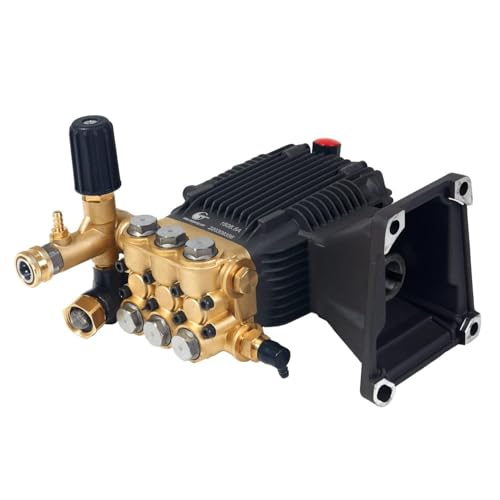
Canpump CF 3040 G 3000 psi Triplex Pump (1″ Shaft)

TOOLCY 3/4″ Shaft Horizontal Pressure Washer Pump 2600-3300 PSI @ 2.5 GPM
TOOLCY 7/8″ Shaft Vertical Pressure Washer Pump 3100 PSI 2.5 GPM

Himore 308653035 3100 PSI Pump for Homelite UT80709
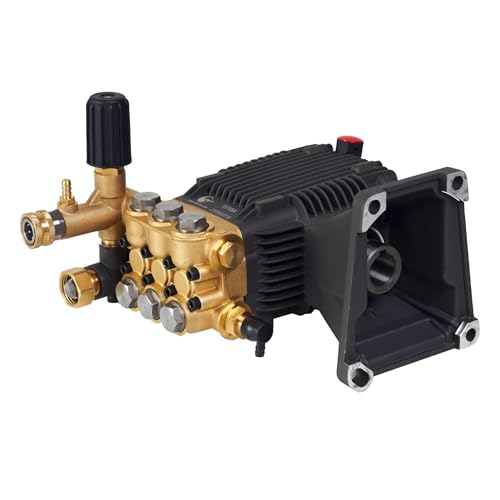
Canpump CF 3647 G 3600 psi Triplex Pump (1″ Shaft)

Canpump CF 4040 G 4000 psi Triplex Pump (1″ Shaft)

TOOLCY 1″ Shaft Pressure Washer Pump 4400 PSI with Adjustment Unloader

Canpump CF 3030 G 3000 psi Triplex Pump (3/4″ Shaft)
More On The Choices That Made The List
A thermal relief valve is a small, inexpensive fitting, but skipping one is how pumps cook themselves on a hot afternoon. This 1/4-inch Homelite valve opens when water in the pump gets too warm, typically because the spray gun has been idle but the engine keeps running, and dumps the heated fluid before seals and pistons are damaged.
It is a service part rather than a full pump, so it slots into a maintenance routine rather than a build. The standard 1/4″ thread is widely used, and it gives older machines a sensible form of insurance. Treat it as preventive gear for any rig that sits between jobs.
Well-Handled Touches
- Standard 1/4″ thread fits a wide range of pump heads and replacement setups
- Releases overheated water before seals deform, extending pump life on hot days
- Compact size, easy to tuck beside an existing manifold without rerouting hoses
- Low cost compared to a full pump rebuild, making it an easy add-on
Trade-Offs To Consider
- Only a fraction of full pump assemblies, so it does nothing on its own for a worn-out unit
- Owners commonly report the fitting requires thread sealant to avoid slow weeping
Whose Shelf It Belongs On
Homeowners and light pros who already run a gas pressure washer and want a cheap insurance policy against heat-related pump failure during long jobs.
Skip It When
The Canpump CF 3040 G is a better match for anyone replacing the entire pump rather than adding a small protective fitting.
Triplex pumps use three plungers instead of the wobble-plate design in cheaper axial pumps, which is why they run cooler and last longer under load. The Canpump CF 3040 G puts that design in reach of serious residential and light commercial users with 3000 psi and 4 gallons per minute on a 1-inch shaft.
The standard SAE J609 mounting flange fits most 8 hp to 13 hp direct-drive horizontal-shaft gas engines, so a refresh on a tired unit is often a bolt-on job. Compared to the Homelite valve, this is the actual muscle behind the machine. For a contractor rinsing a fleet of trucks or stripping concrete, that flow matters more than a couple hundred extra psi.
The Case For It
- Triplex design outlasts axial pumps in continuous daily use, especially in warm weather
- 4 GPM flow moves rinse water fast, cutting time on large flatwork jobs
- Standard SAE flange keeps the swap mechanical for most 8 to 13 hp horizontal-shaft engines
- Anodized components resist corrosion when stored in a damp trailer or shed
Where It Is Less Suited
- Heavier than axial replacements, so smaller frames may need a check of mount clearance
- Higher up-front cost than an entry-level pump, with break-even tied to actual work hours
Key Product Details
Best Suited To
Contractors and serious homeowners with 8 to 13 hp horizontal-shaft engines who want daily-use durability over the cheapest swap.
Reach For A Different Pick When
The Canpump CF 3030 G is a smarter fit for smaller engines on a 3/4″ shaft, where this pump would not bolt up directly.
Most homeowner gas pressure washers sit in the 6 to 8 hp range with a 3/4-inch shaft, which is exactly the TOOLCY 3/4″ replacement pump’s sweet spot. It targets 2600 to 3300 psi at 2.5 GPM, the same general envelope the original OEM unit usually delivered, and it lists compatibility with Simpson, Homelite, Honda, and Karcher among others.
The horizontal orientation matches standard direct-drive setups, and the brand advertises a 150-hour service life, which is a useful yardstick for thinking about replacement cycles. Where the Canpump CF 3040 G above is a step up in flow and duty cycle, this is the practical refresh for a machine that mostly cleans a driveway on Saturday mornings.
What Makes Sense
- Direct replacement for the most common 180 to 225cc residential engines on the market
- 2.5 GPM flow keeps pressure washer nozzles in their normal operating range
- Lower price than commercial-grade triplex pumps, making it a realistic weekend project
- Listed compatibility covers several big brands, which simplifies confirmation before ordering
Honest Caveats
- Service life sits below a true triplex, so heavy weekly use will shorten the timeline
- Owners commonly need to double-check inlet orientation, since not every direct-drive frame matches
Perfect Match For
Homeowners refreshing a tired residential rig with a 180 to 225cc engine who want a near-OEM fit at a friendlier cost.
Consider Something Else When
The TOOLCY 7/8″ vertical pump is the right call for rear-inlet frames, where this horizontal unit will not line up.
Rear-inlet vertical pumps are easy to confuse with their horizontal cousins, and the wrong shape will not bolt to a frame designed for the other. The TOOLCY 7/8″ vertical unit is built specifically for that layout, with 3100 psi and 2.5 GPM at 3400 RPM, and it lists Honda, Briggs and Stratton, Subaru, PowerStroke, Craftsman, Simpson, and Homelite among its compatible engines.
Compatibility always depends on the actual frame, so checking the existing inlet and outlet positions before ordering pays off. Stepping up from the 3/4″ TOOLCY covered earlier, this one targets a beefier engine class while keeping a homeowner-friendly price. It is the kind of pump that restores confidence on a washing job without crossing into contractor pricing.
Practical Advantages
- Designed for rear-inlet frames, so the swap is a clean fit where horizontal pumps will not work
- 7/8″ shaft matches many 7 to 8 hp vertical-shaft engines, a common residential size
- 3100 psi ceiling offers headroom for tougher grime without crossing into industrial ratings
Less Ideal Details
- Limited to rear-inlet frames, which rules out a chunk of older side-inlet designs
- Owners commonly need a quick check of the outlet orientation to avoid hose routing headaches
- Service life still trails a true triplex, so daily heavy use will outpace its comfort zone
Feature Rundown
Who Should Grab It
Owners of rear-inlet 7 to 8 hp vertical-shaft washers who need a replacement that lines up with the existing plumbing without a custom adapter.
Another Choice May Suit
The Himore 308653035 is a closer match for Homelite UT80709 owners who want a drop-in style replacement with brand-specific compatibility.
Older Homelite models have a way of sticking around long after newer brands cycle through, which is where a direct-fit replacement earns its keep. The Himore 308653035 is sold as a swap for Homelite UT80709 and UT80709A frames, with 3100 psi, 2.5 GPM, and a 7/8″ vertical shaft that lines up with the original geometry.
The bolt pattern is spelled out in the spec sheet, so the install is closer to a wrench job than a fabrication project. A standard garden hose inlet keeps hookup familiar, and the 140°F water temperature limit is in line with most residential detergents and warm rinse water. Compared to the TOOLCY vertical pump, this one prioritizes Homelite compatibility over broad cross-brand fit.
What Earns Its Place
- Listed compatibility with Homelite UT80709 and UT80709A removes the guessing game
- Standard garden hose inlet keeps the swap straightforward for most owners
- Documented bolt pattern helps confirm fit without pulling the pump apart first
Things To Weigh
- Best for Homelite frames, so it is less useful on other brand engines even if the spec overlaps
- Owners commonly recommend adding thread tape to inlet fittings to prevent slow drips
Right Fit For
Homelite UT80709 or UT80709A owners looking for a direct-replace pump that matches the original specs without adapter plates.
Look Elsewhere When
The TOOLCY 7/8″ vertical pump is a broader match for non-Homelite engines that still use a rear-inlet 7/8″ vertical shaft.
When flow and pressure both need to climb, the Canpump CF 3647 G is the pump to look at first. It puts out 3600 psi at 4.7 GPM on a 1-inch horizontal shaft, with a standard SAE J609-A mounting flange that fits most 13 hp (390cc class) direct-drive gas engines. That combination pushes it past the CF 3040 G into territory where a single machine can power a long hose run and still clean at the nozzle.
The triplex design keeps operation smoother than axial alternatives under load, which matters when a crew is running the washer for hours at a stretch. The trade-off is weight, since more displacement and bigger bearings add up. For serious cleaning work, that weight is a feature rather than a complaint.
Bright Spots
- 4.7 GPM flow supports longer hose runs without big pressure drops at the nozzle
- 3600 psi ceiling handles heavy grime, oil stains, and stripping jobs
- Triplex design extends service intervals compared to axial pumps at this output level
Points To Keep In Mind
- Needs a 13 hp class engine to reach full potential, so smaller setups will not see the rated output
- Heavier and longer than compact pumps, which can complicate mounting on tight frames
- Cost rises with capability, and the value depends on regular heavy use
Spec Overview
Who Will Love This
Contractors and serious property managers running 13 hp class engines who need both high flow and high pressure on long jobs.
Not Your Match When
The Canpump CF 3030 G is a smarter pick for smaller engines on a 3/4″ shaft where this pump will not physically mount.
The Canpump CF 4040 G pushes the spec sheet into territory that most residential pumps never reach, with 4000 psi and 4 GPM on a 1-inch shaft. The headline feature is an external, detachable unloader valve with extended bypass, which gives hot water more room to dissipate during trigger-gun downtimes. That detail is what separates a pump that lasts from one that doesn’t on a hot summer afternoon.
This sits above the CF 3647 G in the lineup, trading a touch of flow for higher pressure and better heat management. It is built for prosumer and commercial cleaning jobs that run for hours. For a homeowner with a one-car driveway, the spec is overkill; for a mobile detailing crew, it is the right tool.
What Stands Out
- Extended bypass unloader handles heat better than compact unloaders on long cycles
- 4000 psi handles tough jobs like paint stripping, heavy mildew, and oil stain lifting
- External unloader design is serviceable without pulling the pump apart
Some Limits To Know
- Spec sheet leaves little room for error on matching inlet fittings and plumbing
- Heavier than the CF 3040 G and similar, so frame stiffness becomes a factor on lighter carts
Made For
Mobile detailing operators, contractors, and serious prosumers who run a washer through long cycles and need heat management built in.
Swap It Out When
The Canpump CF 3040 G is a better value pick for users who do not need 4000 psi or the extended-bypass unloader design.
Higher pressure is the whole point of the TOOLCY 1″ shaft pump, which tops out at 4400 psi with 4.2 GPM and a recommended working pressure of 3400 psi at 3400 RPM. The anodized body and an adjustable unloader give it a more refined feel than a basic axial replacement, and the 1-inch shaft matches many horizontal-shaft gas engines in the 9 to 14 hp range.
For residential and light commercial jobs like driveways, decks, fences, sidewalks, and vehicles, that pressure headroom is meaningful. The adjustable unloader lets you dial back the output for softer surfaces, which protects wood and paint while still letting you crank it up for concrete. Compared to the Canpump CF 4040 G, this is a higher-pressure alternative with a more adjustable design.
Features That Help
- 4400 psi ceiling gives plenty of headroom for stubborn grime and surface prep work
- Adjustable unloader lets you tune pressure for wood, paint, and concrete jobs
- Anodized finish resists corrosion during outdoor storage and trailer use
Potential Compromises
- Higher pressure demands more from hoses and nozzles, so older accessories may need replacement
- Owners commonly report the included unloader setup benefits from a careful initial tune
Quick Facts
The Right Fit
Homeowners and prosumers with 1-inch shaft gas engines who want adjustable pressure for mixed surfaces like wood, paint, and concrete.
A Better Fit Elsewhere
The Canpump CF 4040 G is the more commercial-oriented choice for crews that prioritize heat management over peak pressure.
The Canpump CF 3030 G fills the gap between light residential pumps and the bigger 1-inch shaft models. It puts out 3000 psi at 3.1 GPM on a 3/4-inch shaft, with a standard SAE J609 mounting flange that fits up to 6.5 hp direct-drive gas engines. That makes it a smart middle ground for machines that are too big for an axial replacement but too small for a 1-inch shaft pump.
The triplex design is the real story here, since most pumps in this engine class are axial. For homeowners with a slightly heavier residential rig, the smoother operation and longer service life are a noticeable upgrade. Compared to the TOOLCY 3/4″ horizontal pump earlier, this one trades a bit of pressure ceiling for triplex durability.
Useful Strengths
- Triplex design in a 3/4″ shaft package, unusual at this engine class
- 3.1 GPM flow improves rinse speed over typical 2.5 GPM residential pumps
- Mounting flange keeps install mechanical for most 6.5 hp direct-drive engines
Room For Improvement
- Spec ceiling is gentler than 1-inch shaft Canpump models, so very heavy jobs may want more
- Costs more than axial 3/4″ replacements, so the upgrade has to be justified by use hours
Who Should Grab It
Homeowners with 6.5 hp class 3/4″ shaft gas washers who want a triplex upgrade without jumping to a 1-inch shaft setup.
Where A Sibling Pick Shines
The TOOLCY 3/4″ horizontal pump is the more affordable refresh for tighter budgets where a triplex design is not required.
Key Specs And Fit Details Before You Commit
Matching the pump to the engine is the first job, and that starts with shaft diameter and orientation. A 3/4″ horizontal shaft, a 7/8″ vertical shaft, and a 1″ horizontal shaft are three distinct fitments, and the wrong one simply will not bolt up. After that, look at the engine’s horsepower class, since a 6.5 hp motor will not push a 4000 psi pump to its rated output.
Pressure and flow tell different stories, and understanding the trade-off matters. Pressure, measured in psi, drives the cutting force at the nozzle, while flow, measured in gallons per minute, sets how fast rinse water moves. Higher flow supports longer hose runs and faster cleaning on flat surfaces, while higher pressure helps with stubborn grime on smaller areas. Most residential jobs sit comfortably in the 2600 to 3100 psi range at 2.5 to 3 GPM.
Pump type changes longevity more than any single spec. Axial pumps use a wobbling plate to drive pistons, which keeps them compact and affordable. Triplex pumps use three plungers in a more linear motion, which runs cooler and lasts longer. For weekend use, axial is often enough; for daily or commercial work, triplex is the more reliable choice.
Mounting, plumbing, and accessories round out the practical side. The SAE J609 flange is the most common standard, but checking bolt pattern and inlet orientation prevents surprises on install day. Plan on replacing high-pressure hose and nozzles when stepping up pressure, since older accessories can become the weak link in the new setup.
Smart Choices Before You Click
Pitfalls Shoppers Hit
The most common mistake is matching pressure or flow without confirming shaft size and orientation. A pump with the right numbers on paper but the wrong shaft simply will not mount, and returns are a hassle on heavy parts. Always cross-check shaft diameter, orientation, and bolt pattern against the existing unit before ordering.
Another trap is buying a commercial-grade pump for light home use. Higher output demands more from the engine, the hose, and the nozzles, and it shortens the life of components that were never built for that pressure. Matching the pump to the engine class and the workload keeps the whole system in balance.
Why Top Tier Costs More
Stepping up to a triplex pump means more metal, more machining, and a longer service life. The unloader valves on premium models are typically external and adjustable, which adds cost but also adds serviceability and better heat management during long jobs. For daily or commercial use, those upgrades pay for themselves in uptime and reduced replacements.
Anodized finishes, brass manifolds, and heavier bearings all add weight and price, but they also resist corrosion and wear in trailer or outdoor storage. For users who run a washer hard, the higher initial spend is offset by fewer rebuilds and more consistent output over time. For occasional home use, the basic triplex or quality axial replacement usually hits the right balance.
Frequently Asked Questions
What does a triplex pump do differently from an axial pump?
A triplex pump uses three plungers driven in a more linear motion, while an axial pump uses a wobble plate. Triplex designs typically run cooler, last longer, and handle continuous duty better than axial designs.
How do I know which shaft size my pressure washer uses?
The shaft diameter is usually stamped on the engine spec plate or measurable with calipers at the output end. Common sizes are 3/4″, 7/8″, and 1″, and they are not interchangeable without an adapter.
Can I use a higher-pressure pump on my existing engine?
You can install one, but the engine may not produce enough horsepower to reach the pump’s rated pressure and flow. Running a pump below its rated RPM shortens its life and reduces cleaning performance.
Do I need a thermal relief valve on a new pump?
A thermal relief valve protects the pump when the spray gun is closed but the engine keeps running, which can overheat the water. Adding one is a low-cost safeguard for any gas-powered pressure washer.
How often should pump oil be changed?
Pump oil change intervals depend on use, but a common rule is every 50 hours of run time or every three months for occasional users. Checking the oil level before each session helps catch small leaks before they become bigger problems.




