


A solid bench vise quietly does the heavy lifting in any workshop, holding steel stock steady while you cut threads, bending copper without it springing back, and keeping small parts exactly where you left them. For hobbyists running a garage setup, weekend woodworkers shaping chair legs, or machinists dialing in tooling on a lathe, the right vise turns frustrating jobs into repeatable ones. The picks below cover everyday shop duty, fine-detail hobby work, and dedicated metalworking, so you can match the vise to how you actually work rather than chasing a spec sheet.
The Main Contenders

Forward 30505 5 Inch Bench Vise Heavy Duty (360° Swivel Base)

ArtyMaster 360° Rotating Bench Vise WT117B (4 Inch)

Forward CR60A 6.5 Inch Bench Vise Heavy Duty (210° Swivel)
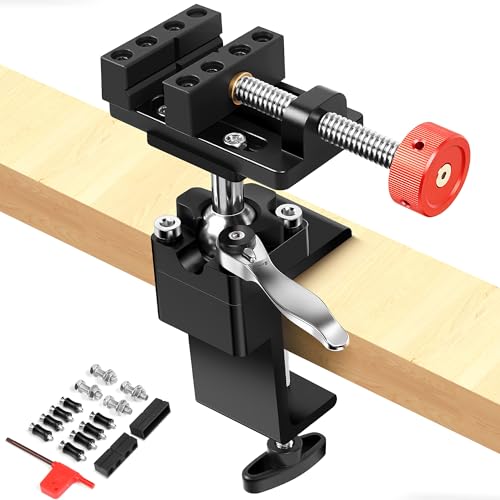
ArtyMaster 360° Rotating Mini Bench Vise WT104C (2.48″)
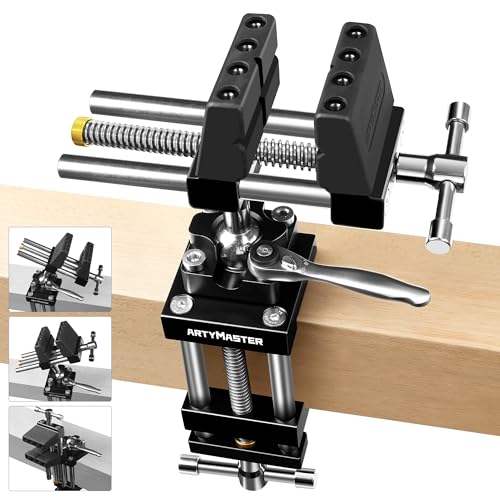
ArtyMaster 360° Rotating Bench Vise WT117A (4 Inch)

Capri Tools 10515 Ultimate Grip Forged Steel Bench Vise (4″)

WILLONE Stop-Loc Lathe Stop & Milling Vise Tool (3/4″ Width)
The Details Behind The Selections
The Forward 30505 sits in that comfortable middle ground where a vise is large enough to grip 2x4s, small steel bar, and odd-shaped pipe, yet still compact enough to mount on a standard workbench without dominating it. Its 5-inch jaw width matches the sweet spot most home shops reach for, and the integrated anvil on the tail gives you a place to flatten, peen, or tap material without hunting for a separate block.
For someone setting up a first serious workbench or replacing a tired cast-iron vise, the 360-degree swivel base is the quiet star. You can rotate the body to bring a long workpiece parallel to the bench edge for planing, then swing it back for cross-grain work without unbolting anything. The bright orange finish also makes it easy to spot among a sea of black tools.
Good Reasons To Consider
- Ductile iron body (a stronger, more flexible form of cast iron) holds up to repeated clamping cycles without cracking the way brittle gray iron can.
- Replaceable jaw inserts let you swap in softer faces for finished work, protecting delicate parts from tooth marks.
- The built-in anvil handles light forging and straightening tasks that would otherwise need a separate surface.
- 5,500 lb clamping force is generous for general metalwork, sawing, and drilling.
Things To Consider
- The 2-3/4 inch throat depth limits how far back from the jaw you can set a tall workpiece, which may feel tight for some bending tasks.
- Owners commonly report the orange paint chips near high-contact zones after a season of heavy use, so plan on touching up exposed spots to prevent surface rust.
- At roughly 30 lb, mounting requires a stout bench; bolting to a thin MDF top will flex under load.
Key Specs
Who Will Love This
Garage hobbyists, DIYers, and first-time vise shoppers who want one tool that handles wood, metal, and pipe without specialization.
Look Elsewhere When
Step up to the Forward CR60A if you regularly work with stock wider than 5 inches or need the extra throat depth for taller assemblies.
The ArtyMaster WT117B breaks the bench-vise mold with a ball-joint head that tilts and rotates 360 degrees, letting you angle the jaws toward you rather than crouching around a fixed body. For fine-detail work like carving, jewelry repair, or model assembly, that freedom of orientation often matters more than raw jaw width.
The 4-inch jaw size puts it in lighter territory than the Forward 30505, so it suits hobbyists more than production shops. The quick-release ratchet handle is a genuine time-saver on repeat clamping, snapping the jaws open without the dozen turns a traditional screw handle demands.
A Strong Showing
- 360-degree ball head frees you to hold work at the most comfortable angle, not the most convenient one for the vise.
- Quick-release ratchet handle cuts setup time on repetitive clamping cycles.
- Suction-cup or clamp mounting opens installation on tables where bolting through isn’t an option.
Trade Offs
- 4-inch jaw capacity won’t swallow the chunky steel stock a 6-inch shop vise handles without complaint.
- The ball joint, while clever, adds a small amount of play under heavy hammer blows, so it suits controlled cuts more than aggressive forming.
Best Suited To
Woodcarvers, model builders, and small-parts tinkerers who prize angle flexibility over raw holding power.
Another Choice May Suit
Reach for the ArtyMaster WT104C instead if you mainly work on miniature parts and need an even smaller tabletop footprint.
The Forward CR60A is what you buy when hobbyist sizing stops being enough. Its 6.5-inch jaw width, 6-inch jaw opening, and 3.8-inch throat depth mean it can hold the wide steel bar, the long gun-stock blank, and the bulky pipe fitting without complaint, and the built-in pipe jaws in the rear handle round stock from about half an inch to 3-1/2 inches.
Like the smaller 30505, the body is ductile iron at roughly 60,000 psi tensile strength, but the 210-degree swivel is a deliberate choice for serious metalworking. You usually want to position once, lock, and work, and a full 360-degree base can drift under heavy hammer blows. The forward-tilted handle position also keeps knuckles clear of the bench edge.
Practical Pluses
- Wide 6.5-inch jaws accept larger stock than most home-shop vises, cutting down on awkward offset clamping.
- Triple jaw configuration (flat, slotted, and pipe) covers metal, wood, and round bar in one tool.
- 3.8-inch throat depth gives tall workpieces room to sit without tipping out of the jaws.
- Ductile iron body resists the kind of chip-and-crack failures common in cast iron under sudden impact.
Honest Caveats
- At over 50 lb, the CR60A demands a heavy bench; mounting it on a lightweight surface is a setup for rocking and vibration.
- The 210-degree range, while safer for hammer work, lacks the full rotation some woodworkers want when switching between ripping and crosscutting.
Feature Snapshot
The Right Fit
Metalworkers, fabricators, and serious woodworkers handling wide boards, heavy stock, or repetitive pipe work who need capacity over compactness.
Skip It When
The Forward 30505 is the better match for tighter benches and lighter shop duty, where the CR60A’s bulk would feel like overkill.
The ArtyMaster WT104C is the vise you reach for when the workpiece is a guitar tuning peg, a watch bracelet link, or a small resin casting, not a length of 2×4. Its 2.48-inch jaw width and lightweight aluminum body make it the smallest item in this roundup by a comfortable margin.
What makes it useful despite the size is the same 360-degree rotating ball head and ratchet handle found on its bigger WT117 siblings. You can position a tiny part under a magnifying lamp at the most comfortable working angle, then lock the head and start work. Mounting is typically a clamp-on or suction-cup affair, so it lives on a desk, not a bench.
What Works In Its Favor
- Aluminum construction keeps the weight down enough to relocate around a small workspace without rebolting.
- Ball head orientation matches the larger ArtyMaster models, so the feel is familiar across the line.
- Clamp or suction mounting means no permanent bench commitment.
Softer Spots
- 2.48-inch capacity rules out anything beyond jewelry, miniatures, and fine electronics work.
- Aluminum, while light, deforms under heavy clamping pressure, so aggressive metal bending is off the table.
- Suction mounting can drift on textured or porous surfaces; a flat, smooth desktop is the reliable home for it.
Perfect Match For
Hobbyists, jewelry makers, and electronics tinkerers who need precision holding on parts the size of a coin or smaller.
Reach For A Different Pick When
The ArtyMaster WT117B is the better fit when you want similar angle flexibility but need to hold pieces closer to 4 inches across.
The ArtyMaster WT117A shares most of its DNA with the WT117B, including the 360-degree rotating head and quick-release ratchet handle, but the WT117A leans further into the metalworking side with integrated pipe-jaw capability. For a small home shop where you might cut copper one afternoon and sand a chair leg the next, that hybrid build removes the need for a second dedicated tool.
The 4-inch jaw size still places it in hobbyist territory, so you won’t be flattening wide steel plate here. What you get is a flexible middle-ground vise that handles odd-shaped stock most ordinary vises fumble.
What Earns Its Place
- Combined flat and pipe jaws cover both woodworking and basic plumbing or metal round-bar tasks.
- Ball head adjustment is a real advantage for soldering, gluing, or carving where work angle drives comfort.
- Ratchet quick-release speeds up repetitive clamping, which matters on assembly-line-style hobby builds.
Some Limits To Know
- Light-duty 4-inch frame is not the right tool for high-impact hammer work on heavy steel.
- Pipe-jaw geometry is a compromise, so for serious plumbing you may still want a dedicated yoke vise.
Right Fit For
DIYers and small-shop hobbyists who jump between wood projects, light metalwork, and occasional pipe repairs on the same bench.
Where Another Pick Suits Better
Pick the Forward CR60A when your day-to-day work centers on heavy steel stock and you need wider, deeper jaws with serious clamping force.
The Capri Tools 10515 earns its premium label by skipping cast iron entirely in favor of drop-forged steel at roughly 90,000 psi tensile strength. Forged steel (steel shaped under extreme pressure rather than poured into a mold) has a tighter grain structure, which translates into a vise that resists cracking, holds alignment longer, and shrugs off the kind of hammer impacts that chip cheaper bodies.
At 4 inches, the jaw capacity matches the ArtyMaster WT117A, so this is not a capacity play. It is a longevity play. Adjustable guide rails help keep the jaws tracking smoothly over years of use, and the corrosion-resistant black-oxide handle and finish hold up to shop humidity better than paint alone.
The Helpful Details
- Drop-forged steel body outlasts cast iron under repeated impact and heavy clamping cycles.
- Adjustable guide rails let you dial out slop as the vise ages, keeping jaw tracking precise.
- Integrated anvil and 5,500 lb clamping force match the Forward 30505 in pure holding power, with a stronger frame behind it.
Points To Note
- The forged-steel body costs more than ductile-iron alternatives of similar jaw size.
- 4-inch capacity is modest, so heavy plate work still calls for a wider shop vise.
- Owners commonly note the heavier body demands solid bench mounting; thin tops will flex under load.
Quick Facts
Whose Shelf It Belongs On
Pros, serious hobbyists, and anyone who wants a bench vise to outlast multiple other tools on the same bench.
Swap It Out When
The Forward CR60A makes more sense if you need wider jaws and greater throat depth, since capacity outranks frame strength in that scenario.
The WILLONE Stop-Loc is a different animal from the rest of this list. Rather than clamping general shop work, it functions as a repeatable depth stop for a lathe turret, letting you change dull drills (up to 3/4 inch in diameter) and lock in a consistent Z-axis position run after run.
With a 3/4-inch width and gage lengths up to 5-1/2 inches, the device lives on a CNC or manual lathe bed. It is not a bench vise in the conventional sense, but for machinists running production cuts where consistency is everything, it is the kind of tool that quietly removes the most common source of scrapped parts.
A Favorable Mix
- Repeatable stop depth eliminates the trial-and-error that wrecks stock and patience on long runs.
- Works on both CNC and manual lathes, which broadens its place in a small machine shop.
- Compact 3/4-inch footprint tucks into a turret without crowding neighboring tools.
Some Limits To Know
- Specialty tooling means it is the wrong purchase for general wood or metal workholding.
- Setup assumes a lathe or milling machine in the shop, so without one the tool has nowhere to live.
Feature Card
Made For
Machinists running repeated cuts on a lathe or milling machine who need to swap dull drills without losing zero.
Consider Something Else When
None of the other picks in this roundup cover lathe stop duty, so for general shop workholding the Forward CR60A or Capri Tools 10515 fits the bill instead.
Picking The Right Bench Vise For Your Shop
Choosing a bench vise is really about matching three numbers to your work: jaw width, jaw opening, and throat depth. Jaw width sets the widest flat stock you can clamp across, jaw opening defines how far the jaws spread to swallow thick pieces, and throat depth dictates how far back from the jaws a tall workpiece can sit without tipping. For a first home-shop vise, 4 to 6 inches of jaw width covers most tasks without overpowering a standard bench.
Material And Build
Cast iron is the traditional choice, but ductile iron offers noticeably better impact resistance for the same general price. Drop-forged steel sits at the top tier, with a tighter grain structure that holds alignment longer under heavy hammer work. The trade-off is weight: a forged-steel vise will test your bench before it ever tests the workpiece.
Mounting And Swivel
A swivel base is a quality-of-life feature you appreciate within an hour of mounting the vise. Look for a positive lock (a physical collar that grips, not just friction) so the body does not drift when you tighten the jaws. For shops where the vise is shared across multiple tasks, a wider swivel range saves real time; for hammering-focused work, a partial range with a sturdier lock usually beats full rotation.
Specialty Vises And Hybrid Tools
Ball-head vises like the ArtyMaster WT117 series prioritize angle flexibility over raw holding power, which makes them ideal for carving, soldering, and detail work. Lathe stops, like the WILLONE Stop-Loc, solve a different problem entirely: repeatable depth in production machining. Knowing which category your work falls into is what separates a useful purchase from a dust-collecting one.
Key Considerations Across These Picks
Pitfalls Shoppers Hit
The most common mistake is buying a vise sized for the work you imagine doing rather than the work you actually do. A 4-inch vise feels generous until you try to clamp a 6-inch board, and a 6.5-inch vise is a wasted footprint on a bench that only ever sees small parts. Match the vise to your current stock sizes and most frequent projects, not a hypothetical future shop.
When Paying More Pays Off
Stepping up to a forged-steel body like the Capri Tools 10515 buys you alignment longevity and impact resistance, which matters most if you hammer, bend, or form metal on a regular basis. The premium also tends to show up in smoother guide rails, better finish coatings, and tighter machining tolerances, all of which keep the vise tracking true over years rather than months. For light hobby use, the upgrade is harder to justify, but for daily shop work the extra cost is paid back in fewer adjustments and longer service life.
Frequently Asked Questions
What jaw width should a home-shop vise have?
A 4 to 6 inch jaw width covers most home-shop work, from hobby metalwork to general carpentry. Smaller vises work for detail and craft tasks, while anything over 6 inches is built for fabrication and heavy stock.
How much clamping force do I need?
Around 5,500 lb of clamping force handles most home-shop tasks, including sawing, drilling, and light metalwork. The number matters less than how evenly the force is applied across the jaws, so look for vises with well-machined jaw faces.
Can one vise handle both wood and metal?
Yes, hybrid vises like the ArtyMaster WT117A pair flat jaws with pipe jaws, and many shop vises accept replaceable jaw inserts to switch between metal and finished wood surfaces. Using softer jaw covers on finished work prevents tooth marks on visible faces.
Do I need a swivel base?
A swivel base saves significant time on jobs where the workpiece orientation changes, like switching between ripping and crosscutting. For hammering-focused work, a partial swivel range with a positive lock is often more useful than full 360-degree rotation.
What is the difference between cast iron and forged steel vises?
Cast iron is poured into a mold and tends to be brittle under sharp impact, while forged steel is shaped under pressure and resists cracking. Forged-steel vises last longer under heavy hammer blows but cost more and weigh more than cast or ductile iron alternatives.




