


A random orbital sander is the kind of tool that quietly changes how a project feels under your hands. Stripping old paint off a thrift-store dresser, leveling a tabletop before refinishing, or smoothing a woodworking joint all share the same need: controlled abrasion that doesn’t leave visible swirl marks. The category splits fairly cleanly between corded workshop staples and cordless jobsite options, with palm-grip and full-grip body styles for different hand sizes and sanding times. Variable speed matters more than people think, because dense hardwoods and soft pine want different pad velocities. Dust collection is the other sleeper feature, and it decides whether your shop looks like a sandstorm after a single pass. The nine picks below cover the spread: classic DEWALT corded models, one cordless DEWALT XR, the Makita workhorse, and three Bosch sanders including a 6-inch dual-mode option. Each is sized for a specific kind of user, and the trade-offs are spelled out honestly.
The Main Contenders

DEWALT 5-Inch Variable Speed Random Orbit Sander (DWE6423)
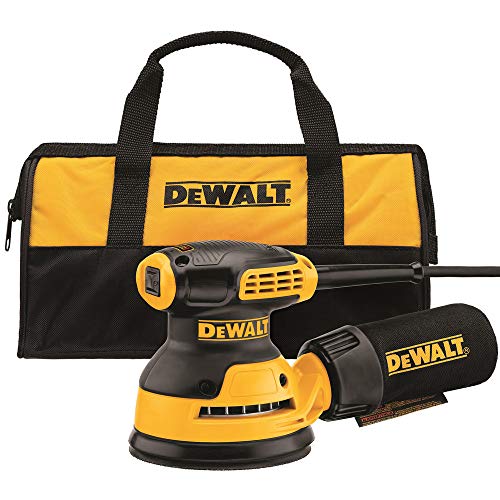
DEWALT 5-Inch Corded Random Orbit Sander Kit (DWE6421K)

DEWALT 5-Inch Palm Random Orbit Sander (DWE6421)

DEWALT 5-Inch Variable Speed Sander Kit (DWE6423K)

DEWALT 20V MAX Cordless Random Orbit Sander (DCW210D1)

Makita BO5041K 5″ Random Orbit Sander

BOSCH ROS10 5-Inch Palm Random Orbit Sander

BOSCH GET75-6N 6-Inch Dual-Mode Sander

BOSCH ROS20VSC 5-Inch Palm Random Orbit Sander
Meet The Standout Selections
The DEWALT DWE6423 sits in the sweet spot of the corded category for most home workshops. It runs on a 3-amp motor with a variable-speed dial spanning roughly 8,000 to 12,000 OPM, which is the range you want when you bounce between soft pine and dense maple in the same project. The shorter body height lets your hand sit closer to the workpiece, a real benefit on horizontal panels where a taller sander feels tippy.
For hobby woodworkers running a bench grinder, miter saw, and sander off the same outlet, the corded power delivery matters. You get consistent pad speed under load without worrying about a battery running low mid-pass. The hook-and-loop pad accepts standard 5-inch discs, and the dust port accepts most shop vac hoses with a common adapter.
What Makes Sense
- Variable speed dial covers most materials without changing discs or technique
- Low-profile housing improves control on flat panels and tabletops
- Counterweight balance reduces the wrist fatigue that builds up on long refinishing jobs
- 5-inch hook-and-loop pad accepts the most widely available disc selection
- Rubber overmold grip stays comfortable during extended sanding sessions
Things To Consider
- Corded design limits reach around large workpieces
- Stock dust bag fills quickly on heavy removal work, so shop vac hookup is the practical choice
- No carrying case included in the bare-tool listing
Key Specs
Whose Shelf It Belongs On
Garage and basement hobby woodworkers who want one corded sander for almost every project, from stripping paint to finish sanding.
Where Another Pick Suits Better
The DEWALT 20V MAX Cordless Random Orbit Sander (DCW210D1) is a smarter fit when working far from outlets on remodel or jobsite tasks.
The DWE6421K is the single-speed sibling to the DWE6423 above, sold as a kit with a carrying bag and starter accessories. For people buying their first random orbit sander, the kit format removes a separate trip to the store for a bag and a few sample discs. The 3-amp motor holds 12,000 OPM consistently, which is enough speed for finish sanding on furniture and cabinets.
Compared to the DWE6423’s variable speed, this model commits to one pad velocity. That’s a meaningful trade-off when working on heat-sensitive finishes, where slower speeds prevent gum-up, or on veneers where aggressive speed can blow through the thin top layer. For raw wood prep, however, single speed is straightforward and predictable.
What Stands Out
- Kit includes storage bag, reducing the need for separate accessories
- Simpler single-speed operation, helpful for new users who don’t yet know which speed to pick
- Counterweight design tames the vibration common to cheaper sanders
- Locking dust bag attaches with one hand, a small but real time-saver on a ladder or scaffold
Points To Note
- Single speed limits control on heat-sensitive finishes and thin veneers
- No variable speed dial means you trade flexibility for the lower kit price
Best Suited To
First-time sander owners building a starter kit who want the bag and accessories included without a second purchase.
Consider Something Else When
The DEWALT DWE6423 is the better match when sanding veneered plywood or working with finishes that soften under heat, since its variable speed dial gives the control the kit version lacks.
The bare DWE6421 strips away the kit bag and ships the same single-speed 12,000 OPM motor in the palm-grip body. For furniture refinishers who already own a stack of discs and a shop vac, paying for a kit they don’t need makes little sense. The compact palm footprint fits under shelves and inside cabinet boxes where a full-grip sander won’t reach.
Where the corded DWE6423 above gives you variable speed, this one gives you the same DEWALT counterweight balance and dust collection at a simpler feature set. The trade-off lands cleanly: a tighter grip, a lighter body, and predictable behavior on a single speed setting.
Useful Highlights
- Palm-grip body reaches into cabinet interiors and tight corners where larger sanders can’t maneuver
- Lower weight reduces forearm fatigue during long refinishing sessions on chairs and spindles
- One-handed dust bag attachment speeds up setup and teardown
- 3-amp motor sustains pad speed during heavy material removal
Honest Caveats
- No variable speed, so softer finishes need lighter touch rather than dial-down control
- Stock dust bag is small for big projects, so plan on a vacuum hookup
- Bare tool only, so discs and bag must be sourced separately
Who It Suits Best
Furniture refinishers working on chairs, cabinets, and small decorative pieces who value compact grip over dial-in speed.
Look Elsewhere When
The Makita BO5041K is the stronger pick when finish quality on showpiece furniture matters, because its lower speed range opens up gentler sanding on tricky surfaces.
The DWE6423K is the kit version of the variable-speed DWE6423 reviewed first, packaged with a hard-shell carrying case. For shop owners who move between locations or store their sander in a roll cabinet, the case keeps the tool, dust bag, and a few sample discs together. Otherwise, the motor, pad size, and 8,000 to 12,000 OPM range mirror the bare version exactly.
Where the bare DWE6423 forces a separate case purchase, this kit arrives ready to store. The case also protects the hook-and-loop pad from contamination by dust and debris, which matters because a contaminated pad loses grip on discs and slows disc changes.
Useful Strengths
- Hard case protects the pad and motor housing during transport and storage
- Variable speed dial covers the same broad material range as the bare version
- Counterweight balance and rubber overmold grip match the workshop-grade DEWALT feel
- Kit format makes it a sensible gift for a new homeowner learning woodworking
Factors To Consider
- Carrying case adds bulk that some users won’t use
- Kit price is higher than the bare tool with no change in sanding performance
Made For
Workshop owners who want a stored, protected, and portable sander ready to grab for any project on the schedule.
Swap It Out When
The DEWALT 20V MAX Cordless Random Orbit Sander is the right call for work that happens away from a workbench, where a cord and a case become a hassle.
The DCW210D1 is the only cordless entry in the DEWALT random orbit lineup covered here, and it ships with a 20V MAX 2.0Ah battery, charger, and storage bag. The brushless motor delivers the same 8,000 to 12,000 OPM range as the corded DWE6423 above, which is impressive for a battery-driven tool. The variable speed dial sits right where your thumb rests, so you can slow the pad when you hit a soft veneer or a sticky finish.
For remodelers sanding drywall patches in occupied homes, or for deck work far from a GFCI outlet, cordless changes the workflow. You also avoid dragging a cord through fresh paint or across a wet lawn. The 2.0Ah battery is on the smaller side, so heavy production work demands a spare.
Why It Works Well
- Cordless design opens up sanding on ladders, scaffolds, and far corners of yards
- Brushless motor matches corded pad speed while running on a battery
- Variable speed dial delivers the same range as the corded DWE6423
- Battery and charger included, so no separate platform investment
Worth Bearing In Mind
- 2.0Ah battery drains faster than larger packs under continuous heavy use
- Battery platform lock-in: a 20V MAX tool assumes you own or will buy other DEWALT 20V gear
- Higher upfront cost than corded models with similar performance
Feature Snapshot
Who Should Grab It
Remodelers, deck refinishers, and homeowners who already use DEWALT 20V tools and want cordless freedom on sanding tasks.
Reach For A Different Pick When
The DEWALT DWE6421K kit makes more sense for stationary workshop sanding, where the cord never gets in the way and battery cost is wasted.
The Makita BO5041K is the 3.0-amp workhorse that contractors tend to keep in their vans for years. The 4,000 to 12,000 OPM range is the widest in this roundup, opening up slow, controlled speeds for heat-sensitive finishes and full-throttle material removal on the same tool. The rubberized palm grip and side handle both earn their keep during long production shifts.
Where the DEWALT models above target homeowners and DIYers, the Makita leans pro. The build feels denser in the hand, and the balance lands closer to the pad, which means more sanding pressure reaches the workpiece with less arm strain. It also comes as a kit with a carrying case.
Benefits That Matter
- Widest speed range in the roundup, 4,000 to 12,000 OPM, handles delicate finishes and rough sanding
- 3.0-amp motor runs cooler under heavy load than smaller 2.5-amp sanders
- Ergonomic palm grip and side handle reduce hand fatigue on production days
- Kit case keeps the tool and accessories together in a busy van or shop
Practical Considerations
- Heavier than palm-grip models, which can tire out users with smaller hands
- Higher price point reflects the pro-tier build
Quick Facts
Right Fit For
Pros and serious hobby woodworkers who sand often enough to justify the heavier, more capable tool.
Where A Sibling Pick Shines
The DEWALT DWE6423 is the lighter, more approachable option for hobby woodworkers who don’t need the Makita’s extreme low-end speed control.
The Bosch ROS10 is the most affordable pick in the roundup, and it covers a narrower use profile than the DEWALT models above. It’s a single-speed, palm-grip sander aimed at light refinishing and polishing work, where the integrated pad-dampening braking system helps prevent the swirl marks that ruin a finish. For a thrift-store furniture flip or a small paint-stripping project, the ROS10 does the job without the variable-speed cost.
It’s worth noting that the ROS10 sits at the entry level, with a less robust feel than the Makita BO5041K reviewed just above. The hook-and-loop pad holds discs fine, but the dust collection is the more modest setup in this comparison. Heavy production work would push past its comfort zone, but occasional DIY fits it well.
Useful Touches
- Pad-dampening braking system reduces swirl marks on finish work
- Lower price point for a Bosch-branded random orbit sander
- Palm-grip body suits smaller hands and overhead work
- Doubles as a polisher when paired with a foam pad
Trade-Offs
- Single speed limits control on heat-sensitive materials
- Light-duty build isn’t suited for daily production sanding
- Stock dust collection is basic compared to higher-tier options
Perfect Match For
DIYers on a tighter budget who want a brand-name sander for occasional refinishing and polishing work around the house.
Skip It When
The BOSCH ROS20VSC reviewed below is the better fit when variable speed matters for dialing in pad velocity on different materials.
The GET75-6N is the only 6-inch sander in this roundup, and the dual-mode design sets it apart. In standard random orbit mode, it finishes like any other high-end sander. In turbo mode, the pad switches to a direct-drive action that Bosch rates at roughly five times the normal material removal rate, which is what you want when stripping a hardwood floor or roughing down a glue-covered panel.
The trade-off is size and weight: a 6-inch pad and the beefier motor make this sander heavier than the 5-inch options above. For shop-based work on large flat surfaces, that weight actually helps. For overhead sanding or refinishing a small table, the lighter Makita BO5041K reviewed earlier is the easier reach.
Well-Handled Touches
- Dual-mode action covers both finish sanding and aggressive stock removal
- 6-inch pad covers more surface per pass on floors and tabletops
- Turbo mode cuts down the time spent on heavy material removal
- Solid build quality typical of Bosch’s professional line
Where It May Fall Short
- Heavier and bulkier than 5-inch sanders, tiring on overhead work
- Higher price than single-mode 5-inch alternatives
- Overkill for small furniture projects
Technical Highlights
Built With In Mind
Contractors and serious woodworkers refinishing floors, doors, and large furniture pieces who want a single tool for both rough and finish work.
Not Your Match When
The Makita BO5041K is the smarter pick for typical furniture and cabinet sanding, where the lighter 5-inch body is easier to control on smaller pieces.
The ROS20VSC rounds out the Bosch trio as the variable-speed palm-grip option, sitting between the budget ROS10 and the heavy-duty GET75-6N. The hook-and-loop disc system uses a high hook count, so discs stay put during aggressive sanding rather than peeling off mid-pass. The variable speed dial matches the DEWALT DWE6423’s range, so the two feel familiar in the hand.
For detail work where you want control over pad velocity on small parts, the ROS20VSC earns its place. The dust port is well-positioned, and the vacuum adapter makes shop vac hookup clean. The 2.5-amp motor is a touch lighter than the Makita’s 3.0-amp, but it covers the same finish-sanding territory without complaint.
Good Reasons To Consider
- Variable speed dial covers the same range as the DEWALT DWE6423
- Hook-and-loop system with high hook count keeps discs firmly attached
- Palm-grip body fits small to medium hands comfortably
- Vacuum adapter integrates with most shop vacs for clean work
Points To Keep In Mind
- 2.5-amp motor is slightly less robust than the Makita’s 3.0-amp
- No carrying case in the bare-tool listing
- Single dust port size may need an adapter for some shop vacs
Feature Rundown
Who Will Love This
Detail-oriented finish sanders who want variable speed control in a palm-grip body for furniture, cabinets, and trim work.
A Better Fit Elsewhere
The DEWALT DWE6421K is a stronger match when a kit bag, included accessories, and a single-speed simplicity matter more than variable speed.
What Matters Most When Choosing Random Orbital Sanders
Pad Size and Project Scale
The 5-inch pad dominates the roundup, and for good reason. A 5-inch disc covers enough area to make a tabletop pass move quickly while staying maneuverable on chair legs and cabinet doors. The 6-inch BOSCH GET75-6N is the exception, and it earns the extra inch by pairing a larger pad with dual-mode action, a setup that pays off on floors and big panels. For most home workshops, 5-inch is the right size, and you’ll find the broadest disc selection at that diameter.
Variable Speed vs. Single Speed
Variable speed sanders like the DEWALT DWE6423, Makita BO5041K, and BOSCH ROS20VSC let you tune pad velocity to the material. Slow speeds prevent heat buildup on finishes, while high speeds chew through rough stock. Single-speed sanders like the DEWALT DWE6421K and BOSCH ROS10 are simpler and usually less expensive, but they don’t give you that dial-in control. For most DIY users, variable speed is worth the small premium the first time you sand a heat-sensitive finish.
Corded vs. Cordless Power
Corded sanders deliver consistent power under load, which matters when stock removal slows the pad. Cordless sanders like the DEWALT DCW210D1 trade that consistency for freedom from outlets and cords. The deciding factor is your work location: a stationary shop rewards corded, while a jobsite or a large outdoor deck project rewards cordless. Battery size also matters, because a 2.0Ah pack on heavy work drains faster than larger packs on longer projects.
Dust Collection Reality
The stock dust bag on any of these sanders fills fast, so plan on a shop vac hookup for serious work. The dust port on every pick here accepts a common adapter, and most shop vac hoses fit with a step-down ring. If you sand indoors, dust collection isn’t optional: it’s the difference between a clean room and a sandstorm that settles into every surface.
Vibration, Grip, and Fatigue
The counterweight designs on the DEWALT and Makita models are worth more than they seem. Over an hour of sanding, an unbalanced sander makes your wrist and forearm ache. Rubber overmold grips keep the tool planted when your hand gets sweaty. The Makita’s side handle adds another control point, which helps on large panels but feels excessive on small parts.
Pitfalls Shoppers Hit and Where The Extra Money Goes
Common Shopping Slip Ups
The most common mistake is buying a single-speed sander for finish work on heat-sensitive surfaces, then blaming the sander for gummed-up discs and burned veneer. Match the tool to the work: variable speed for finish work, single speed for rough stripping. Another trap is overlooking dust collection until the first project coats the entire room in fine dust. A shop vac hookup is part of the real cost of any random orbital sander, not an optional extra.
Why Top Tier Costs More
The jump from a budget sander like the BOSCH ROS10 to a pro-grade Makita BO5041K buys you a stronger motor, a wider speed range, better vibration damping, and a build that survives years of daily use. Whether the upgrade is worth it depends on how often you sand. A hobbyist refinishing one dresser a year won’t feel the difference. A contractor sanding floors every week will feel it within the first month. The BOSCH GET75-6N’s dual-mode action is a similar story: it’s a specialty tool that pays for itself only when stock removal is a regular task.
Frequently Asked Questions
What Is A Random Orbital Sander Used For?
A random orbital sander is used for sanding wood, metal, and finished surfaces where swirl-free results matter. The pad moves in both an orbit and a rotation, which prevents the consistent scratch pattern that straight-orbital or belt sanders leave behind.
Can A Random Orbital Sander Remove Paint?
Yes, a random orbital sander can remove paint, especially with coarse-grit discs in the 60 to 80 range. For thick layers or lead-based paint, a chemical stripper is the safer first step, and the sander then handles the cleanup pass.
What Grit Sandpaper Should I Use With A Random Orbital Sander?
Coarse 60 to 80 grit works for paint and heavy stock removal, medium 100 to 150 grit handles surface prep and leveling, and fine 180 to 220 grit preps finishes. Going finer than 220 on a random orbital sander usually polishes rather than sands.
Are Cordless Random Orbital Sanders As Powerful As Corded Models?
Modern brushless cordless random orbital sanders, like the DEWALT DCW210D1 covered here, match corded pad speed in the 8,000 to 12,000 OPM range. The trade-off is battery runtime under continuous heavy use, not raw sanding power.
How Do I Control Dust When Sanding?
The most effective method is to connect the sander’s dust port to a shop vac with a matching adapter. The stock dust bag works for short sessions but fills quickly on big projects, and a vacuum hookup is the practical long-term solution.




