A reciprocating saw earns its keep in awkward places, behind drywall, between joists, deep in overgrown branches. The right tool turns a frustrating afternoon into a quick one, while the wrong blade on the wrong saw wastes time and leaves ragged cuts. This roundup pairs three capable saws with six blade sets built for real cutting tasks, so you can match the tool to the job instead of the other way around.
The Choices Worth Comparing
PickWhy We Picked ItBest ForAction

Workshop Pick
CRAFTSMAN Reciprocating Saw 7.5-Amp 11-Piece Kit
Corded power with bundled blades
Home workshops and demos

Compact Choice
DEWALT 20V MAX Cordless Reciprocating Saw Kit (DCS387P1)
Fits tight between studs
Cordless convenience and trim work

Performance Leader
Makita DJR187Z LXT Brushless Reciprocating Saw 18V Bare
Brushless motor with two speeds
<DJR187Z tool-only for LXT owners
Heavy Duty Pick
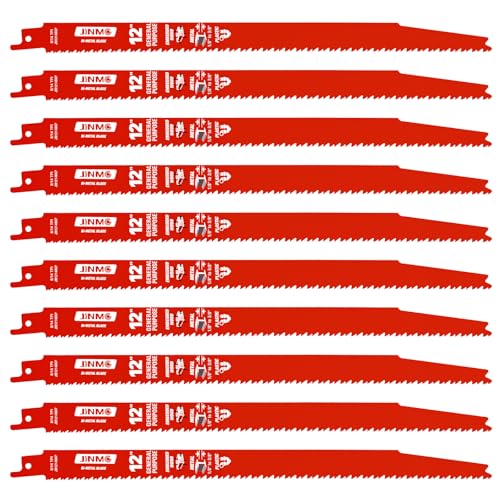
jinmg 10-Pack 12 Inch 8/14TPI Reciprocating Saw Blades
Bi-metal blades for demo work
Nail-embedded wood and metal

Garden Choice
SEDY 15 Inch Japanese Teeth Pruning Blades 3-Pack
Long reach for thick branches
Tree trimming and yard cleanup

Storage Saver
SEDY 12 Inch Japanese Teeth Pruning Blades 5-Pack with Box
Includes a storage case
Organized pruning kits and sheds

Outdoor Ready
SEDY 15 Inch Japanese Teeth Pruning Blades 5-Pack
Bulk pack for big cleanups
Storm damage and orchard work

Flexible Favorite
SEDY 6-Piece Japanese Teeth Blade Set 12 and 15 Inch
Mixed lengths in one set
Versatile yard and tree work
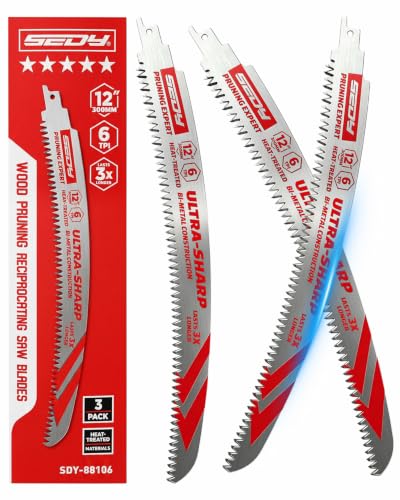
Practical Pick
SEDY 12 Inch Japanese Teeth Pruning Blades 3-Pack
Compact size for small branches
Light yard maintenance and shrubs
Why These Options Stand Out
This corded Craftsman saw is built for people who want one tool that handles rough demo days without hunting for the right blade first. The 7.5-amp motor and 1-1/8 inch stroke (the distance the blade travels per cycle) give it enough aggression to push through framing lumber, and the variable speed trigger lets you slow things down for cleaner cuts in trim or PVC.
What makes the kit appealing is that you get a carrying case and a handful of bi-metal blades right in the box, so it works the day it arrives. Homeowners tackling a bathroom remodel or a small deck tear-down will get plenty of use out of it. If you already run a 20V MAX or LXT platform, the cordless picks later in this list may suit you better.
Strong Points
- ✓7.5-amp motor handles framing and remodeling without bogging down
- ✓1-1/8 inch stroke length helps the blade clear material quickly
- ✓Variable speed trigger from 0 to 3,200 RPM (revolutions per minute) gives you control across wood, metal, and plastic
- ✓Bi-metal blade construction resists flexing and lasts longer than basic carbon steel
- ✓Carrying case and starter blade assortment included in the kit
Points To Note
- •Corded design limits reach compared to battery-powered saws
- •Heavier than compact cordless options for overhead work
Key Specs
| | Feature | Specification | Why It Matters |
|---|
| Motor | 7.5 amp corded | Delivers consistent power for long cuts |
| Stroke Length | 1-1/8 inch | Longer stroke clears more material per pass |
| Speed Range | 0 to 3,200 RPM | Matches speed to material for cleaner results |
Whose Shelf It Belongs On
Homeowners and DIYers who want a ready-to-use corded reciprocating saw for remodels and demolition without buying extra accessories.
Reach For A Different Pick When
Anyone already invested in the DEWALT 20V MAX platform will find the cordless DEWALT 20V MAX Cordless Reciprocating Saw Kit (DCS387P1) a smarter add-on.
DEWALT built the DCS387P1 for tight spaces where full-size saws simply do not fit. At 14.5 inches long overall, the saw slips between wall studs and inside cabinet cavities, which is exactly the situation plumbers and electricians run into daily. The 1-1/8 inch stroke keeps cut speed competitive, and the variable speed trigger runs up to 2,900 strokes per minute.
The four-position blade clamp is the sleeper feature, letting you rotate the blade for flush cuts against a floor or ceiling. With a 5Ah battery in the box, you have the runtime to get through a workday of trim cuts and light demo. For people who already own DEWALT 20V MAX batteries, this is a clean addition. If you need raw cutting power over portability, the corded Craftsman saw above may serve you better.
What Stands Out
- ✓Compact 14.5-inch length reaches into stud bays and tight cavities
- ✓1-1/8 inch stroke delivers fast cuts without a bulky body
- ✓Four-position blade clamp enables flush cutting in awkward spots
- ✓Tool-free blade changes speed up workflow on the job
- ✓5Ah battery included for solid runtime per charge
Trade Offs
- •Smaller than full-size saws, so aggressive demo work can feel underpowered
- •20V MAX platform means extra batteries add to the cost of ownership
Who Will Love This
Tradespeople and DIYers who already run DEWALT 20V MAX tools and need a saw that fits where larger reciprocating saws cannot reach.
Consider Something Else When
Homeowners who do not already own DEWALT batteries may prefer the Makita DJR187Z for brushless efficiency or the corded CRAFTSMAN kit to avoid extra battery costs.
The Makita DJR187Z is a brushless reciprocating saw, meaning its motor uses electronic controls instead of carbon brushes, which extends runtime and reduces wear. It targets existing Makita LXT owners who already have batteries and want a tool-only upgrade. The two-speed electronic selector lets you match the cutting pace to the material, while the lock-off lever and electric brake add a layer of safety on the job site.
An LED job light and tool-less shoe adjustment make this a comfortable saw for plumbing and HVAC work in dim basements and crawl spaces. The trade-off is real: this is the bare tool only, so you need to supply an 18V battery and charger. If you are not already in the Makita ecosystem, stepping in for a bare saw is hard to justify over the bundled CRAFTSMAN or DEWALT kits above.
Notable Upsides
- ✓Brushless motor delivers longer runtime per battery charge
- ✓Two-speed electronic selector adjusts stroke rate to material
- ✓Tool-free blade changes reduce downtime between cuts
- ✓LED job light improves visibility in dark work areas
A Few Limitations
- •Bare tool only, so a battery and charger are required if you do not already own them
- •Pricier entry point for first-time Makita shoppers
Quick Facts
| | Feature | Specification | Why It Matters |
|---|
| Motor Type | Brushless | Longer runtime and motor life |
| Speed Selection | Electronic two-speed | Tune stroke rate to wood or metal |
| Blade Change | Tool-free | Swap blades quickly on site |
| Safety Features | Lock-off lever, electric brake | Stops the blade quickly when released |
Right Fit For
Existing Makita LXT users who want a brushless reciprocating saw without re-buying batteries and chargers they already own.
Look Elsewhere When
Shoppers without an LXT battery platform will get more value from the CRAFTSMAN 7.5-Amp Reciprocating Saw kit, which ships ready to work out of the box.
These jinmg blades are aimed at people who treat their reciprocating saw as a demolition tool. The 8/14 TPI (teeth per inch) pattern is a versatile combo: the 8 TPI side chews through nail-embedded lumber, and the 14 TPI section gives a cleaner edge on thinner metal. Ten blades in a pack means you can run hard for a full weekend tear-down without worrying about a dull edge.
At 12 inches long, these are sized for cutting pipe, conduit, and rough framing. The bi-metal construction bends without snapping when the blade hits a hidden nail, which owners commonly report as the main reason they prefer bi-metal over carbon steel. For clean pruning cuts, the Japanese-tooth blade sets below are a better match.
Noteworthy Benefits
- ✓Dual 8/14 TPI design handles both rough wood and sheet metal
- ✓Bi-metal build resists shattering when striking hidden nails
- ✓Ten-blade pack keeps a fresh edge on hand for extended work
- ✓12-inch length clears standard 2×4 and small-diameter pipe cuts
Worth Bearing In Mind
- •Coarser tooth pattern leaves rougher cuts in finish-grade wood
- •No dedicated pruning geometry for green wood
Made For
Contractors and homeowners demolishing framing, pulling subfloor nails, or cutting thin metal pipe who want a sturdy bi-metal blade that will not snap on hidden fasteners.
A Better Fit Elsewhere
For tree trimming and clean branch work, the SEDY 15 Inch Japanese Teeth Pruning Blades 3-Pack cuts greener wood far more efficiently than a bi-metal demo blade.
Pruning blades are a different animal from demo blades, and these SEDY 15-inchers lean into the differences. The Japanese tooth geometry uses a triple-ground offset design, which means each tooth is sharpened at multiple angles to slice rather than tear the wood fibers. The arc edge curve adds three cutting angles along the blade, lowering friction so the saw glides through green branches instead of chattering.
The 6 TPI coarse pattern is well suited to wet or green wood, where a finer tooth count would clog. Three blades in the pack are enough for a moderate storm cleanup or a season of orchard pruning. If you have a long reach task and want a heavier stockpile, the 5-pack version further down the list is worth a look.
What Works In Its Favor
- ✓Triple-ground offset teeth cut cleaner than standard pruning blades
- ✓6 TPI coarse pattern clears green and wet wood without clogging
- ✓15-inch reach handles thicker limbs up high
- ✓Arc edge design reduces binding in curved cuts
Practical Considerations
- •Longer blade is harder to control in tight spaces between branches
- •Only three blades in the pack, so heavy users will burn through them quickly
Who Should Grab It
Homeowners with mature trees, overgrown hedges, or orchards who need a long-reach pruning blade for occasional cleanups.
Where A Sibling Pick Shines
Users with bigger storm-damage jobs may prefer the SEDY 15 Inch Japanese Teeth Pruning Blades 5-Pack, which provides more blades for extended yard work.
What separates this set from the 15-inch pruning blades is the shorter 12-inch length, which gives you more control in dense shrubs and closer to the trunk. The included storage box is a small touch that pays off the first time you clean the garage and find all five blades in one place instead of scattered in a drawer.
With five blades and the same 6 TPI Japanese-tooth pattern, you have spares on hand when one dulls out halfway through a job. The arc edge design still helps reduce binding in curved cuts, so the saw tracks where you point it. For taller trees where you need extra reach, the 15-inch SEDY 5-Pack below is the better match.
The Case For It
- ✓12-inch length improves control for shrub and branch work
- ✓Storage box keeps the full set organized in the shop or shed
- ✓Five blades give you spares when one dulls mid-project
- ✓Arc edge geometry helps the blade track along curved cuts
Less Ideal Details
- •Shorter blade limits reach on high limbs without a ladder
Feature Snapshot
| | Feature | Specification | Why It Matters |
|---|
| Length | 12 inches | More control in tight branch work |
| Tooth Pattern | 6 TPI Japanese teeth | Cuts green wood with less chatter |
| Pack Size | 5 blades plus storage box | Keeps spares organized and ready |
Best Suited To
Homeowners with shrubs, small trees, and mid-sized branches who want organized storage and a controllable blade length for everyday yard maintenance.
Not Your Match When
Tree work that requires reach into tall limbs is better handled by the SEDY 15 Inch Japanese Teeth Pruning Blades 5-Pack further down the list.
This is the same blade design as the 12-inch set, scaled up for length and packed five at a time. The 15-inch reach matters when you are reaching into an overgrown hedge or cleaning up after a storm, because the longer blade can arc through thicker limbs without burying the saw’s nose into the cut.
You get the same triple-ground offset Japanese teeth and arc edge geometry, so the cutting feel is consistent if you own multiple SEDY sets. Five blades is the sweet spot for property owners who prune regularly and want enough spares to finish a job without a supply run. For shorter shrubs, the 12-inch set above gives you better maneuverability.
The Practical Payoff
- ✓15-inch reach handles thicker limbs and storm damage
- ✓Five-blade pack suits frequent pruning and bigger jobs
- ✓Arc edge geometry reduces binding on curved cuts
- ✓6 TPI pattern clears green wood without clogging
Honest Caveats
- •Longer blade is harder to maneuver in tight spaces
- •No storage box included, unlike the 12-inch version
Built With In Mind
Property owners with larger yards, mature trees, or storm cleanup who need extended reach and a stockpile of blades to finish the work in one session.
Skip It When
Shrubs and ornamental trees call for the 12-inch SEDY 5-Pack with the included storage box, which is easier to control in close quarters.
The 6-piece mixed set is built for the kind of yard that does not fit one blade length. You get both 12-inch and 15-inch Japanese-tooth blades in a single order, so you can swap lengths as the work moves from low shrubs to overhead limbs without a second purchase.
Both sizes share the same arc edge and 6 TPI geometry, so cut quality stays consistent across the set. For people who only own one reciprocating saw and want a single purchase that covers most residential pruning tasks, this combination pack removes the guesswork. If you know you lean toward longer cuts, the dedicated 15-inch 5-pack above may be the simpler choice.
Standout Benefits
- ✓Mixed 12 and 15-inch lengths cover low and high pruning in one set
- ✓Consistent Japanese tooth geometry across both sizes
- ✓Arc edge design keeps cuts tracking smoothly
- ✓One purchase replaces two separate blade orders
Things To Consider
- •Fewer blades per size than dedicated single-length packs
- •No storage box for keeping the set organized
At A Glance
| | Feature | Specification | Why It Matters |
|---|
| Blade Lengths | 12 inch and 15 inch | Two sizes for varied pruning tasks |
| Tooth Pattern | 6 TPI Japanese teeth | Cuts green wood cleanly |
| Total Blades | 6 pieces | Covers typical yard work in one set |
Perfect Match For
Homeowners who want a single set that handles both small shrubs and taller trees without buying two separate blade packs.
Another Choice May Suit
If your property leans heavily toward tall trees, the longer SEDY 15 Inch Japanese Teeth Pruning Blades 5-Pack gives you more spares at the length you actually use.
This is the most accessible entry point in the SEDY pruning lineup, with three 12-inch Japanese-tooth blades at a lighter commitment. The shorter length makes the saw feel balanced in the hand, which matters when you are above shoulder height on a ladder trimming a small ornamental tree.
You get the same 6 TPI arc edge design used across the rest of the pruning family, so cut quality is consistent. Three blades are enough for a light seasonal cleanup, though heavy users will want to size up to the 5-pack for more headroom. The shorter 12-inch reach will not replace a pole saw for very tall branches.
Reasons It Performs
- ✓12-inch length keeps the saw balanced for overhead work
- ✓Japanese tooth geometry slices green wood with less vibration
- ✓Arc edge design reduces binding in curved cuts
Where It May Fall Short
- •Only three blades per pack means frequent replacements for heavy users
- •Limited reach compared to 15-inch pruning options
- •No storage box included with the smaller pack
The Right Fit
Homeowners with small ornamental trees and shrubs who want a manageable blade length and only need a few replacements per season.
Where Another Pick Suits Better
Anyone clearing mature trees or larger limbs will get more reach and more spares from the SEDY 15 Inch Japanese Teeth Pruning Blades 5-Pack.
Choosing the Right Recip Saw for Your Tasks
Match the Power Source to Your Workspace
Corded saws like the CRAFTSMAN 7.5-Amp kit run as long as you can supply an outlet, with no battery fade mid-cut. For most home workshops, that is a real advantage during long demo sessions. Cordless models such as the DEWALT 20V MAX kit trade a little runtime for the freedom to work anywhere, and they shine on ladders, rooftops, and remote job sites. If you already own batteries for a particular brand, sticking with that platform usually costs less than starting a new one.
Understand Stroke Length and TPI
Stroke length is how far the blade travels in one cycle, and most of the saws here sit at 1-1/8 inches. Longer strokes move more material per pass, which speeds up rough cuts in wood. TPI, or teeth per inch, sets the cut character. Coarse 6 TPI pruning blades clear green wood without clogging, while finer 14 TPI sections leave cleaner edges on metal and trim. A 6/14 or 8/14 combo blade covers both ends reasonably well.
Choose Blades for the Material
Bi-metal demo blades such as the jinmg 10-Pack bend without snapping when they hit hidden nails, which is why contractors reach for them in framing tear-outs. Japanese-tooth pruning blades like the SEDY sets are ground to slice wood fibers instead of tearing them, so green branches come out cleaner and the saw tracks more smoothly. For most homeowners, a 12-inch pruning set covers routine yard work, and a longer 15-inch set earns its place when trees dominate the property.
Think About Length and Reach
A 12-inch blade is easier to control in tight shrubs and overhead positions. A 15-inch blade reaches deeper into thick branches and lets you cut from a safer distance on ladders. The mixed 6-piece set exists for people who want both without buying two separate packs. Match the blade to where the work actually happens, not just to the saw you own.
Key Considerations Across These Picks
Where Shoppers Go Wrong
The most common slip is buying a cordless saw without checking which battery platform you already own. A bare tool like the Makita DJR187Z is a great value for someone with LXT batteries, but it is a poor choice for a first-time buyer who then has to add a charger and battery to the total. Another trap is choosing blade length by saw size rather than by the work. A 15-inch blade on a small reciprocating saw feels unwieldy in tight shrubs, even though the saw itself is compact.
When Paying More Pays Off
The jump to brushless motors in the Makita DJR187Z delivers longer runtime and less motor wear, which matters for daily professional use. Higher-tier bi-metal blades hold an edge longer through nail-embedded lumber, so a contractor finishes more cuts between blade changes. For occasional homeowners, mid-tier Japanese-tooth blades usually outperform the cheapest carbon steel without the price jump of premium demo sets. Spend up when the saw runs all day, not when it comes out twice a year.
Frequently Asked Questions
QWhat is the difference between a reciprocating saw and a jigsaw?
A reciprocating saw uses a long, straight blade that pushes and pulls through rough material like framing lumber or pipes, while a jigsaw uses a shorter blade that cuts curves in thinner stock. Reciprocating saws are built for demolition and pruning, where weight and aggression matter more than precision.
QCan a reciprocating saw cut tree branches?
Yes, with the right blade. Japanese-tooth pruning blades with a coarse 6 TPI pattern, like the SEDY sets in this roundup, are designed for green and wet wood. A standard bi-metal demo blade will work but tends to tear the fibers and clog faster in live wood.
QHow do I change a blade on a reciprocating saw?
Most modern saws use a tool-free blade clamp. You typically rotate or pull a collar near the blade shoe, slide the old blade out, insert the new one with the teeth facing the right direction, and release the clamp. Always unplug the saw or remove the battery before swapping blades.
QAre cordless reciprocating saws powerful enough for demolition work?
For light to medium demo, a 20V cordless saw like the DEWALT 20V MAX kit is plenty. Heavier commercial demolition still favors corded 15-amp saws, which deliver constant power without battery limits. For most home projects, cordless power is more than enough.
QWhat TPI blade should I use for pruning?
A coarse 6 TPI blade is the standard for green and wet wood because the larger gaps between teeth clear sap and debris without clogging. Finer 10 to 14 TPI blades are better for clean cuts in dry lumber or metal, where a smoother edge matters more than clearing speed.