Cordless reciprocating saws have quietly become the most-used demolition tool in the garage. A good one chews through old PVC drain lines, prunes thick branches, and slices drywall for a remodel without tripping breakers or hunting for an outlet. The trick is matching the tool to the work, because these saws split into roughly three camps: compact one-handers for tight spaces, full-size brushless models for daily job-site abuse, and budget-friendly kits that get the occasional weekend project done without complaint.
This shortlist pulls nine solid options from three well-known brands, mixing corded workhorses, bare tools for existing battery systems, and complete kits. Whether you tear out kitchens for a living or just need to cut a few chair legs down to size, there is something here worth a look.
How The Shortlist Stacks Up

CRAFTSMAN 7.5-Amp Reciprocating Saw 11-Piece Kit

DEWALT 20V MAX XR Brushless Reciprocating Saw (DCS367B)

DEWALT ATOMIC 20V MAX One-Handed Reciprocating Saw (DCS369B)
DEWALT 20V MAX Compact Reciprocating Saw (DCS387B)

DEWALT 12 Amp Corded Reciprocating Saw (DWE305)
WORX 20V 2-in-1 Reciprocating & Jigsaw Saw (WX550L)
NANWEI 20V Brushless Reciprocating Saw (2×2.0Ah)

NANWEI 20V Brushless Reciprocating Saw (2×4.0Ah)

NANWEI 18V-Compatible Brushless Reciprocating Saw (Bare)
Taking A Closer Look At The Options
The CRAFTSMAN 7.5-Amp kit is the kind of tool that ends up in the back of a closet and somehow keeps getting pulled out. A 1-1/8 inch stroke length is enough to clear most wood and light metal cuts in a single pass, and the variable-speed trigger sweeps from 0 to 3,200 RPM so you can creep through a nail-embedded stud or sprint through clean lumber without swapping tools. For homeowners who already have an extension cord but no battery platform, that combination removes a whole layer of decision-making.
What sells the package is the included case and eleven bi-metal blades, which means you’re working the day you unbox it. Build-wise, the bi-metal blade construction helps resist shattering when you nick a hidden pipe, and the motor housing is assembled in Shelbyville, Kentucky, from globally sourced components, which matters to some shoppers. The trade-off is the cord itself: any corded saw keeps you tethered to an outlet, so second-floor window work calls for planning.
What Pays Off
- Variable-speed trigger from 0 to 3,200 RPM gives you real control on dirty demo cuts
- 1-1/8 inch stroke clears most residential framing members in one pass
- Eleven bi-metal blades and a hard case included, no accessory shopping required
- Bi-metal blade construction resists tooth loss when you hit a hidden nail or screw
Things To Consider
- Corded design limits reach, so outdoor or rooftop jobs need an extension cord
- Heavier than brushless cordless alternatives, which matters during overhead work
Who It Suits Best
Outlet-powered DIYers tackling weekend demo, plumbing repairs, and the occasional limb trimming.
Look Elsewhere When
The DEWALT DCS367B makes more sense if you’ve already invested in the 20V MAX battery platform and need cordless freedom.
The DEWALT DCS367B sits in that sweet spot where the tool feels light enough to wield one-handed but still has the runtime to keep going. A brushless motor (no carbon brushes to wear out) stretches battery life compared to brushed designs, and the variable-speed trigger tops out at 2,900 strokes per minute, which is plenty fast for cutting pressure-treated 4x4s and cast-iron drain stacks. The pivoting shoe, the metal guard at the base of the blade, lets you lean into a cut without the blade flexing, and the LED work light is a small touch that pays off in basement ceilings and crawlspaces.
For anyone already running the DEWALT 20V MAX ecosystem, this is the obvious next addition. It’s sold as a bare tool, so you’ll need a battery and charger, but if your shop or truck already has those, the entry cost is just the saw. The compact body fits between studs where a full-size saw can’t reach, and the keyless blade clamp swaps blades in seconds.
Real-World Strengths
- Brushless motor extends runtime per charge, useful on long demo days
- Pivoting shoe stabilizes the blade during plunge cuts into drywall or framing
- Keyless blade change gets you back to cutting in seconds
- Compact footprint reaches between studs where full-size saws can’t fit
- LED work light improves visibility in ceilings, crawlspaces, and tight corners
Honest Caveats
- Tool only, so you supply the 20V battery and charger
- Not the lightest option here, the Atomic model below sheds more weight
Key Specs
Made For
Tradespeople and serious DIYers already running the 20V MAX platform who need a reliable daily-use saw.
Swap It Out When
The DEWALT ATOMIC DCS369B is the better call for overhead plumbing or electrical work where every ounce on the wrist matters.
At roughly 3.13 pounds without a battery, the DEWALT ATOMIC DCS369B is built for the moments when the bigger saw is just too much tool. The reduced weight makes a real difference when you’re reaching above shoulder height to slice through a ceiling joist or trimming PVC pipe while balanced on a stepladder. Despite the small frame, you still get a brushless motor, a pivoting shoe for control during plunge cuts, and up to 2,800 strokes per minute, which is more than enough for trim, drywall, and small-diameter pipe.
Compared to the DCS367B above, the Atomic is lighter and noticeably easier to maneuver in awkward positions, but you give up a little raw cutting aggression. There’s also a built-in LED for dim work areas and a belt hook so you can hang it on a tool belt when switching between tools. Like the other DEWALT 20V picks, this is sold as a bare tool only.
What Makes Sense
- 3.13-pound tool weight reduces fatigue on overhead and ladder work
- Brushless motor keeps the size efficient without sacrificing power
- Pivoting shoe gives you a stable reference point during awkward cuts
Trade Offs
- Bare tool only, so factor in the cost of a battery if you don’t have one
- Lower SPM than the DCS367B, which can feel slow on thick framing
- Smaller shoe provides less leverage on aggressive demolition cuts
Right Fit For
Remodelers, electricians, and plumbers who spend a lot of time cutting overhead or in tight cavities.
Where Another Pick Suits Better
The DEWALT DWE305 corded saw is a better match if you want maximum cutting power and don’t need to be cordless.
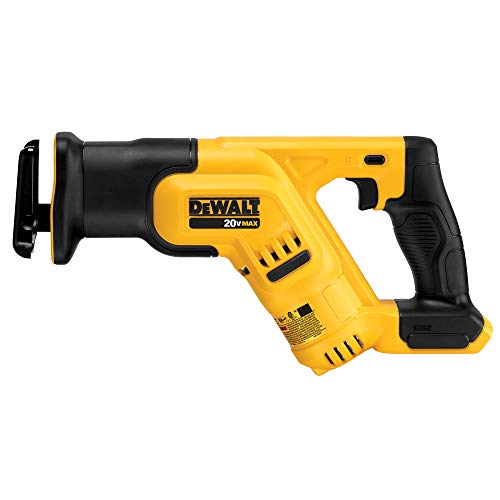
The DEWALT DCS387B is the value pick in the 20V MAX family, a compact brushed-motor saw that gets the job done without the price premium of a brushless model. A 1-1/8 inch stroke length and up to 2,900 strokes per minute give you the same general cutting speed as the XR brushless saw above, and the keyless four-position blade clamp accepts standard reciprocating blades. For weekend warriors, this is often the smarter buy.
The brushed motor is the main trade-off. It’ll run a bit shorter on a charge and has internal brushes that will eventually wear, though owners commonly report years of service before that becomes a concern. The compact body still slips between studs, and the included LED helps when working in dark corners. Sold as a bare tool, you’ll want a battery if you don’t already own 20V MAX packs.
What It Does Well
- Lower entry price for the 20V MAX platform than the XR brushless models
- Compact design reaches tight spaces that full-size saws cannot
- Keyless four-position blade clamp speeds up blade swaps
Worth Noting
- Brushed motor means shorter runtime per charge than brushless alternatives
- Bare tool only, so budget for a battery and charger
Who Should Grab It
Homeowners and DIYers who want a 20V MAX reciprocating saw at the lowest possible entry cost.
A Better Fit Elsewhere
The DEWALT DCS367B is worth the stretch if you want brushless efficiency and run the saw multiple times a week.
The DEWALT DWE305 is the corded answer to a simple problem: batteries die, but a 12-amp motor plugged into the wall does not. That motor drives up to 2,900 strokes per minute with a 1-1/8 inch stroke length, and the variable-speed trigger lets you slow down for metal or push hard on demo lumber. The keyless four-position blade clamp is the same proven system DEWALT uses on its cordless saws, so blade swaps feel familiar if you already own other DEWALT tools.
For crews tearing out kitchens or cutting cast-iron stacks all day, the corded design trades mobility for unlimited runtime. The 12-amp draw means a standard 15-amp household circuit handles it fine, though you won’t want to share that circuit with a vacuum or compressor. The body is heavier than the cordless options above, which is the natural cost of all that brute strength.
What Helps Most
- 12-amp motor delivers sustained cutting power without battery fade
- Unlimited runtime means no charging breaks during long jobs
- Keyless four-position blade clamp handles flush cuts and standard cuts
Points To Keep In Mind
- Corded design limits mobility and requires an extension cord for outdoor work
- Heavier than the cordless DEWALT options in the lineup
Quick Facts
Built With In Mind
Tradespeople and remodel crews who need a hardworking saw for all-day jobs in spaces with power available.
Not Your Match When
The DEWALT DCS369B Atomic fits better for overhead plumbing or finish work where battery freedom and lighter weight matter more than raw power.
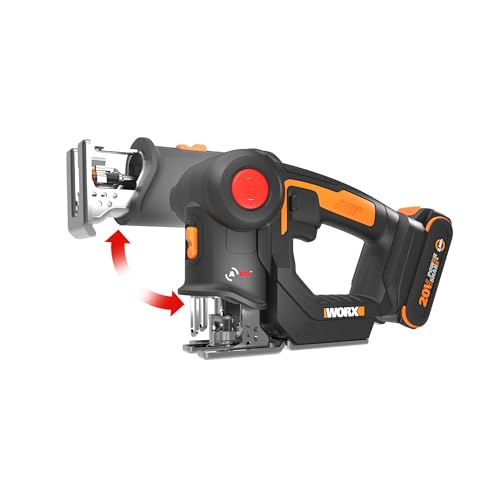
The WORX WX550L pulls double duty by swapping between reciprocating saw mode and jigsaw mode in seconds, and that flexibility is genuinely useful in small workshops. In reciprocating mode, the 3/4 inch stroke handles straight cuts through wood, metal, ceramic tile, plastic, and tree limbs. Switch the shoe and blade orientation, and you’re in jigsaw territory for curved cuts and detailed woodworking like cutting out a sink opening or trimming a decorative panel. The compact 20V body keeps fatigue down on longer projects.
The trade-off is power. A 3/4 inch stroke is shorter than the 1-1/8 inch stroke of full-size reciprocating saws, so expect to take a few more passes on thick lumber. For a hobbyist or apartment dweller who needs both tools but has nowhere to store them, though, the WX550L solves a real problem. Four included blades cover the common materials.
Everyday Perks
- Two tools in one body saves shelf space and money
- Compact and lightweight design suits smaller hands and overhead work
- Four included blades let you start cutting wood, metal, and tile right away
Room For Improvement
- 3/4 inch stroke is shorter than dedicated reciprocating saws, so cuts take more passes
- Not designed for heavy demolition or continuous framing work
Perfect Match For
Hobbyists and apartment dwellers who want a single tool for light renovation, crafts, and occasional yard cleanup.
Reach For A Different Pick When
The DEWALT DCS367B is the stronger choice for full-time remodeling work where the longer stroke and brushless runtime really pay off.
The NANWEI 20V brushless saw is the budget entry that still manages to include the headline features most people actually want. The brushless motor (no carbon brushes to wear out) runs up to 3,500 strokes per minute, and the stepless variable-speed trigger gives you precise control rather than a few fixed speed settings. Two 2.0Ah batteries ship in the box along with six blades, so this is a true ready-to-cut kit rather than a bare tool.
For shoppers new to cordless tools without a battery platform, that’s a meaningful difference. The kit includes a charger, two compact batteries for hot-swapping, and blades for wood, metal, and PVC. Tool-free blade change keeps workflow smooth. Where it falls short of premium brands is build polish: the plastic housing feels lighter in the hand, and long-term durability under daily job-site abuse is less proven than the DEWALT entries above.
The Helpful Details
- Brushless motor with 3,500 SPM top speed at a budget-friendly price
- Two 2.0Ah batteries and charger included, no separate battery purchase
- Tool-free blade change and six included blades cover common materials
- Built-in LED work light for dim workspaces
Less Ideal Details
- Plastic housing feels less substantial than premium-brand reciprocating saws
- 2.0Ah batteries run shorter than the 4.0Ah kit below on demanding cuts
Whose Shelf It Belongs On
First-time cordless tool shoppers who want a complete brushless kit without paying for a premium brand name.
Where A Sibling Pick Shines
The NANWEI 4.0Ah kit below is the better choice for longer sessions where battery runtime matters more than initial cost.
The 4.0Ah version of the NANWEI brushless saw addresses the main shortcoming of the 2.0Ah kit above: battery life. With two larger batteries in the box, you can hot-swap through long cutting sessions without waiting for a charge. The 3,500 SPM brushless motor, tool-free blade change, and built-in LED are the same proven features, so the upgrade is purely about endurance.
For DIY renovators running a multi-day project, that extra capacity means fewer interruptions. The 4.0Ah packs add some weight compared to the 2.0Ah version, but the trade-off is worth it if your work involves more than a quick afternoon cut. Owners commonly report the larger batteries being more comfortable to grip during longer cuts, since the heavier pack shifts balance slightly in the handle.
Useful Touches
- Two 4.0Ah batteries extend runtime for longer cutting sessions
- Same 3,500 SPM brushless motor as the smaller kit, no power compromise
- Tool-free blade change keeps you moving between cuts
Some Limits To Know
- Higher price than the 2.0Ah kit for the same motor performance
- Heavier battery pack may tire smaller hands during overhead work
Best Suited To
DIY renovators and homeowners who run the saw for extended sessions across multiple weekends.
Consider Something Else When
The DEWALT DWE305 is a stronger match for daily professional use where build quality and brand support matter most.
The third NANWEI option is a bare tool only, no battery or charger included, but the hook is its compatibility with Makita 18V batteries. For shops and homeowners who already own Makita packs like the BL1850, BL1840, or BL1830, that means adding a reciprocating saw without buying a second battery system. The brushless motor still hits 3,500 SPM with the same stepless variable-speed trigger, and tool-free blade change is standard.
The value calculation depends entirely on what batteries you already have. Without a compatible pack, this saw isn’t useful at all, since nothing ships in the box. For Makita owners, though, it’s a smart way to expand a system without doubling up on chargers and batteries. Four included blades cover wood, metal, and PVC cutting.
Benefits That Matter
- Works with common Makita 18V batteries you may already own
- Brushless motor with 3,500 SPM keeps pace with name-brand saws
- Tool-free blade change simplifies blade swaps mid-job
Potential Compromises
- Battery and charger not included, so this saw only makes sense with existing Makita packs
- Brand compatibility claims should be confirmed against your specific battery model before relying on them
Who Will Love This
Makita 18V owners who want to add a reciprocating saw without investing in a separate battery platform.
Skip It When
The DEWALT DCS367B is the better fit if your shop runs on 20V MAX batteries rather than 18V Makita packs.
What To Weigh Before Choosing A Cordless Reciprocating Saw
Stroke Length And Cutting Speed
Stroke length is the distance the blade travels per cycle, and longer strokes remove more material per pass. A 1-1/8 inch stroke handles framing lumber in a single sweep, while a 3/4 inch stroke, like the WORX 2-in-1, takes more passes on thick material. Top speed, measured in strokes per minute (SPM), tells you how fast the blade reciprocates. For most homeowners, anything in the 2,800 to 3,500 SPM range covers the work.
Battery Platform And Runtime
Cordless reciprocating saws either come as bare tools (you supply the battery) or as complete kits. A 2.0Ah battery is lighter and cheaper, but a 4.0Ah pack runs roughly twice as long between charges. If you already own batteries from a brand like DEWALT or Makita, a bare tool makes sense. If you’re starting fresh, a complete kit saves the hassle of sourcing batteries separately.
Brushless Vs. Brushed Motors
Brushless motors use electronics to control the motor rather than physical carbon brushes, which generally means longer runtime per charge and less wear over the tool’s life. Brushed motors cost less upfront but have brushes that eventually need replacement. For occasional use, brushed is fine. For weekly or daily cutting, brushless is worth the stretch.
Size, Weight, And Handling
A compact one-handed saw like the DEWALT ATOMIC weighs around 3 pounds and reaches where full-size saws can’t. Full-size models handle aggressive demolition better but tire your wrist faster on overhead work. Think about the cuts you do most: tight plumbing repairs favor compact, while framing demo favors full-size.
Key Considerations Across These Picks
Common Shopping Slip Ups
The most common mistake is buying a bare tool when you don’t already own the matching battery platform. A 20V MAX saw at a low sticker price suddenly costs far more once you add a battery and charger. Check whether the listing includes both before assuming. Another slip-up is overlooking stroke length: a compact saw with a 3/4 inch stroke will frustrate anyone trying to cut 4x4s in a single pass.
What The Higher Tier Buys
Premium-tier saws earn their price with brushless motors, longer stroke lengths, and tougher internal components. For weekly professional use, that translates to longer battery life, faster cuts, and a tool that survives drops and dust. For occasional weekend projects, the premium tier is harder to justify, and a value pick like the NANWEI brushless kits handles the work without straining the budget. The honest read is that paying more mainly buys durability and runtime, not fundamentally different cutting capability.