


A reciprocating saw only performs as well as the blade clamped into it. Cutting through nail-embedded studs, old cast iron, or PVC trim demands a tooth pattern and blade body that match the task. Demolition crews, remodelers, plumbers, and weekend DIYers all lean on these blades to get through the day. The nine sets below cover the common cutting scenarios you’ll hit on the job, from rough demo work to clean metal slices.
An Overview Of The Picks

Milwaukee 49-22-1129 12-Piece Ultimate Demolition Blade Set

Milwaukee 49-22-1129 Sawzall 12-Piece Blade Set

DEWALT DW4892 12-Piece Bi-Metal Blade Set

Bosch 2607010902 Saber Saw Blade Set 20-Piece

Milwaukee 48-00-5026 The Ax 9-Inch 5 TPI 5-Pack
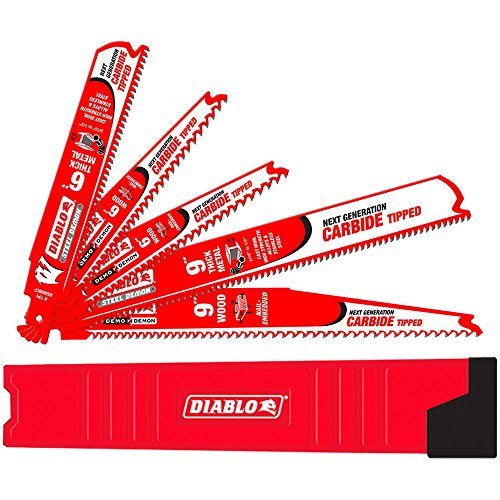
Diablo Steel Demon/Demo Demon 5-Piece Set

CRAFTSMAN 11-Piece Reciprocating Saw Blade Kit (2058838)

Diablo Bi-Metal 14-Piece 6-Inch and 9-Inch Set

Milwaukee 48-00-5782 The Torch 6-Inch 14 TPI 5-Pack
Inside Each Recommended Option
Demo jobs eat ordinary blades for breakfast, and this Milwaukee set bundles three purpose-built demolition profiles into one box. The package includes The Ax for nail-embedded lumber, The Wrecker for general rough cutting, and The Torch for metal work, so swapping blades mid-tear-out takes seconds rather than trips back to the truck.
For full-day framing tear-outs or kitchen gut jobs, the thicker blade bodies and taller profile hold a straight line when the material fights back. Remodelers who switch between wood and metal all afternoon will appreciate not juggling separate sets.
Notable Gains
- Three demolition blade styles in one bundle covers wood, general demo, and metal without buying separate packs.
- Thicker blade bodies reduce flex and wandering cuts when pushing through stubborn materials.
- Taller blade height promotes straighter cuts in heavy stock, useful when plumb lines matter.
- Buying the dual-pack doubles the on-hand count for crews that burn through blades fast.
Honest Caveats
- Carbide-tipped options like the Diablo set may outlast these in pure cast-iron and rebar scenarios.
- Heavier blade bodies can feel sluggish in tight, overhead cuts where lighter blades track better.
Feature Snapshot
Who It Suits Best
Remodeling crews and demolition contractors who cycle between wood, drywall, and metal in a single shift will get the most from this set’s versatility.
A Better Fit Elsewhere
Shops that mostly slice thin-wall pipe and angle iron should reach for the Milwaukee 48-00-5782 The Torch 5-Pack, which targets metal work specifically.
This earlier Milwaukee set earned its reputation by leaning into brute strength over finesse. The blades come in 0.042-inch and 0.062-inch thicknesses, putting them on the heavy end of the spectrum for extreme cutting work where thinner stock would fold.
The 1-inch blade height adds rigidity, which pays off when you’re chasing long, straight cuts through heavy-gauge steel or thick structural members. Crews who push tools hard day after day tend to gravitate here because the bodies resist bending when the cut binds.
The Good Stuff
- 0.062-inch thick body is among the thickest in the category, ideal for abusive cuts.
- 1-inch tall profile keeps the cut tracking straight in thick stock.
- Wide blade base slips into tight spaces where competing tall blades won’t fit.
Small Limitations
- Thick bodies make finer scroll cuts harder to control in thin sheet metal.
- The 12-piece assortment skews toward heavy work, leaving fewer options for clean finish cuts.
Right Fit For
Industrial tradespeople and ironworkers running through thick steel and heavy demolition who prioritize blade survival over cutting speed.
Look Elsewhere When
Homeowners tackling light remodeling should consider the CRAFTSMAN 11-Piece Reciprocating Saw Blade Kit, which costs less and suits occasional use.
DEWALT engineered this 12-piece set around its patented tooth geometry, which is the angled tooth pattern on each blade. The design clears chips quickly, keeping the cutting edge cooler and extending usable life compared to older DEWALT generations.
A tall, thick blade profile gives the set its backbone in heavy metal and demo applications, while the included storage case keeps the assortment organized in a crowded tool drawer. Garage tinkerers and small-shop fabricators get a good balance of metal and wood coverage here.
What Makes Sense
- Patented tooth form evacuates chips efficiently, helping blades run cooler during long cuts.
- Tall body profile helps maintain straight cuts when pushing through thick metal stock.
- Included storage case keeps mixed assortments sorted by tooth count.
- Bi-metal construction balances flexibility with edge retention for varied work.
Points To Note
- Doesn’t include specialized demolition profiles like the Ax or Wrecker for heavy nail-embedded work.
- Blade count is split across materials, so heavy wood users may burn through the wood-rated blades quickly.
Feature Snapshot
Best Suited To
Garage fabricators and small-shop pros who regularly switch between metal and wood work and want one organized kit rather than scattered packs.
Skip It When
Dedicated demolition specialists will get more value from the Milwaukee 49-22-1129 Ultimate Demolition set with its purpose-built blade profiles.
Bosch packs a generous 20 blades into this set, covering both wood and metal cutting scenarios in one purchase. The high count makes it appealing for workshops that burn through blades or for stocking a multi-user environment where everyone needs ready access.
The assortment works well for general remodeling, plumbing repairs, and trim work, giving you enough variety to handle most residential jobs without buying specialty blades separately. Just note that international shipping can apply since this set ships through the Global Store program.
Good Reasons To Consider
- 20-piece count offers strong per-blade value compared to smaller 5- or 6-packs.
- Mixed wood and metal assortment covers typical household repair scenarios.
- Bosch engineering reputation for clean, accurate cuts in trim and finish work.
Factors To Consider
- International product sourcing means warranty terms and packaging may differ from domestic Bosch offerings.
- Lacks heavy demolition profiles designed for repeated nail strikes.
- Storage case is not always included, depending on the specific listing.
Who Should Grab It
Homeowners and light-duty users who want a comprehensive starter assortment at a modest per-blade cost.
Swap It Out When
Contractors running daily demolition will find the Milwaukee 49-22-1129 Blade Set better suited to the abuse.
The Ax is Milwaukee’s answer to rough demo work where nails and bolts hide in every stud. The 5 teeth per inch geometry rips material quickly, removing a lot of wood per stroke when speed matters more than finish quality.
At 9 inches long, the blade reaches into deep cuts where shorter blades bottom out, useful for slicing through doubled-up framing members. The extra-thick body holds up when encountering hidden fasteners, and the bi-metal build helps resist shattering on impact.
Practical Advantages
- 5 TPI geometry removes wood aggressively for fast rough cutting.
- 9-inch length reaches into deeper cuts than 6-inch blades allow.
- Thick body resists bending when striking hidden nails or bolts.
- Bi-metal construction lowers the risk of tooth snapping under shock loads.
Less-Strong Areas
- Coarse 5 TPI leaves rough edges unsuitable for finish trim work.
- 5-pack count may run short for crews doing whole-house tear-outs.
Feature Snapshot
Made For
Framing contractors and remodelers who regularly cut through nail-embedded lumber and need fast material removal without babying the blade.
Another Choice May Suit
Plumbers and HVAC techs focused on metal pipe should pick the Milwaukee 48-00-5782 The Torch 5-Pack for cleaner metal cuts.
Diablo built this set around carbide teeth rather than standard bi-metal, which is the difference between a blade that dulls after a few cast-iron pipes and one that keeps cutting. The TiCo Hi-Density carbide formulation claims significantly longer life than bi-metal in extreme conditions.
Three Demo Demon blades handle nail-embedded wood while two Steel Demon blades tackle thick metal, cast iron, and stainless steel. For users who routinely hit rebar, cast iron drains, or hardened alloys, the carbide upgrade justifies the higher per-blade cost.
Advantages To Know
- Carbide tooth construction outlasts bi-metal in extreme metal and demo scenarios.
- Steel Demon blades handle cast iron, stainless, and thick tubing in one blade type.
- Demo Demon blades chew through nail-embedded wood faster than standard tooth designs.
Practical Considerations
- Carbide blades command a higher price per piece than bi-metal alternatives.
- Small 5-piece count may not sustain a full demolition job without restocking.
- Overkill for homeowners doing occasional light repair work.
Feature Snapshot
Perfect Match For
Professionals cutting cast iron, rebar, and hardened alloys who need blades that survive contact with materials that destroy standard bi-metal.
Reach For A Different Pick When
Casual users will find the Milwaukee 49-22-1129 set more cost-effective for general demolition without the carbide premium.
CRAFTSMAN positions this 11-piece kit as a general-purpose starter set, and the included storage case keeps everything in one place for homeowners who don’t want loose blades rattling around the garage. The bi-metal construction offers solid durability for the price point.
The assortment covers common household cutting tasks like pruning, light pipe work, and trim removal. For someone who reaches for a reciprocating saw a few times a year rather than daily, this kit delivers a reasonable spread of blade types without the professional-tier pricing.
Notable Upsides
- Hard storage case included for organized transport and storage.
- Bi-metal construction extends blade life over carbon steel alternatives.
- General-purpose assortment fits typical homeowner repair scenarios.
Possible Compromises
- No specialized demolition or carbide blades for extreme cutting conditions.
- Light-duty compared to contractor-grade options for daily professional use.
Whose Shelf It Belongs On
Homeowners and DIYers building a first blade assortment who want organized storage and general-purpose coverage without overspending.
Consider Something Else When
Tradespeople running blades hard every day should step up to the Milwaukee 49-22-1129 12-Piece set for heavier-duty construction.
Diablo loads this 14-piece set with a thoughtful TPI spread. TPI stands for teeth per inch, and a higher number means finer cuts while a lower number means faster, rougher cuts. The mix here covers fine metal slicing at 14/18 TPI, general-purpose work at 8/14 TPI, and aggressive wood cutting at 6/12 TPI.
Having both 6-inch and 9-inch lengths in the same box gives users reach options for shallow trim cuts and deeper plunge work. The bi-metal construction is rated for significantly longer life than entry-level blades, making this a solid middle-ground investment for active DIYers and small crews.
The Value In It
- Wide TPI range from 6/12 to 14/18 covers fine metal through rough demolition.
- Mix of 6-inch and 9-inch lengths handles both shallow and deep cutting scenarios.
- Bi-metal build extends working life compared to standard carbon steel blades.
- 14-piece count provides solid value for the assortment breadth.
Some Limits To Know
- Bi-metal wears faster than carbide in extreme cast iron or rebar scenarios.
- No specialized demolition profiles like the Milwaukee Ax or Wrecker.
Feature Snapshot
Built With In Mind
Active DIYers and small remodeling crews who want one well-rounded kit for varied cutting tasks without buying multiple specialized packs.
Where Another Pick Suits Better
Users cutting cast iron and rebar daily should consider the Diablo Steel Demon/Demo Demon set for carbide-level endurance.
The Torch focuses squarely on metal cutting, which is the 14 teeth per inch geometry that produces clean slices through pipe, tubing, channel iron, and angle iron. The 1-inch blade height gives it rigidity for straight cuts while still allowing flex in tight quarters.
Plumbers, HVAC installers, and metalworkers will find this blade well-suited to repeated cuts through black pipe, conduit, and thin-gauge steel. Milwaukee subjects these blades to a heat-treating process that hardens the cutting edge, helping them hold up under continuous use.
Why It Works Well
- 14 TPI geometry creates clean cuts in metal pipe, tubing, and angle iron.
- 1-inch tall body promotes straight cuts while flexing in tight spots.
- Heat-treated edge extends working life over standard metal-cutting blades.
- 6-inch length fits comfortably in confined plumbing and electrical boxes.
Things To Weigh
- Single-purpose design means wood and demo jobs require a different blade.
- 14 TPI cuts slower through thick stock than coarser-toothed alternatives.
Who Will Love This
Plumbers, electricians, and metalworkers who cut pipe, conduit, and thin steel regularly and want clean, repeatable metal cuts.
Not Your Match When
Remodelers handling mixed materials should pick the Milwaukee 49-22-1129 set for broader wood and metal coverage.
What Matters Most Before Choosing Reciprocating Saw Blades
Blade selection comes down to matching tooth geometry, blade body, and length to the material and cutting environment.
Tooth Count and Material Match
TPI is the single most important spec on the box. Coarse 5 to 8 TPI blades rip wood and demolition materials fast but leave rough edges. Fine 14 to 18 TPI blades deliver clean metal cuts but bog down in thick lumber. Mid-range 8 to 12 TPI blades handle general-purpose work where you switch between materials. Picking the wrong TPI leads to either agonizingly slow cuts or ragged, splintered finishes, so match the teeth to the dominant material on your jobs.
Blade Body Thickness and Height
Thicker 0.042 to 0.062-inch bodies resist bending during heavy cuts and survive hidden nails, while thinner 0.035-inch bodies track better in curved or scroll cuts. Taller 1-inch blades cut straighter, while shorter 3/4-inch profiles reach into tighter spaces. The trade-off is always rigidity versus maneuverability: heavier bodies hold a line but fight you in confined areas.
Length and Reach
A 6-inch blade handles most trim, pipe, and shallow cuts, while 9-inch or 12-inch blades reach into deep plunge cuts and extended demolition work. Going longer than needed reduces control and increases the chance of blade flex. Pick the shortest blade that still reaches the cut.
Specialty Materials and Carbide Upgrade
Carbide-tipped blades like the Diablo Steel Demon line cost more but survive cast iron, stainless steel, and rebar that destroy bi-metal teeth in minutes. For occasional light metal work, bi-metal handles the job. For daily professional cutting in extreme materials, carbide pays for itself in fewer blade changes.
Key Considerations Across These Picks
Common Shopping Slip Ups
Picking a blade by tooth count alone ignores the body construction that determines survival. A 14 TPI blade with a thin body snaps the first time it hits a hidden screw, while a thick 0.062-inch body in the same TPI lasts through repeated abuse. Buyers also underestimate how quickly coarse demo blades dull when pushed into clean metal work, so buying one general-purpose set and expecting it to cover everything leads to frustration.
Where The Extra Money Goes
Premium carbide blades cost more per piece because the tooth material resists wear far longer than bi-metal, especially in cast iron and stainless steel. That longer life means fewer blade changes per job, which adds up quickly for professional users. For occasional DIYers, bi-metal offers the better value since the absolute number of cuts stays low. The honest read is that carbide pays off only when you’re pushing blades hard enough to wear through bi-metal in a single project.




