A reciprocating saw is one of those tools that quietly earns its spot in a garage or job site, pulling double duty as a demolition workhorse and a precision trim cutter when the right blade is clamped in. The challenge is that the category has split into a few clear directions: corded beasts, brushless cordless platforms, compact one-handers, and a swarm of specialty blades and accessories that pair with them. This roundup sorts through seven strong options across those lanes so you can match the tool to the work in front of you.
The Choices Worth Comparing

CRAFTSMAN Reciprocating Saw 7.5-Amp 11-Piece Kit with Case

DEWALT 20V MAX XR Reciprocating Saw Cordless Brushless (DCS367B)

DEWALT ATOMIC 20V MAX One-Handed Reciprocating Saw (DCS369B)

FRITZFURT 15-Inch Japanese Teeth Reciprocating Saw Blades (6TPI)

FRITZFURT 65-Piece Laminate Flooring Tools Kit
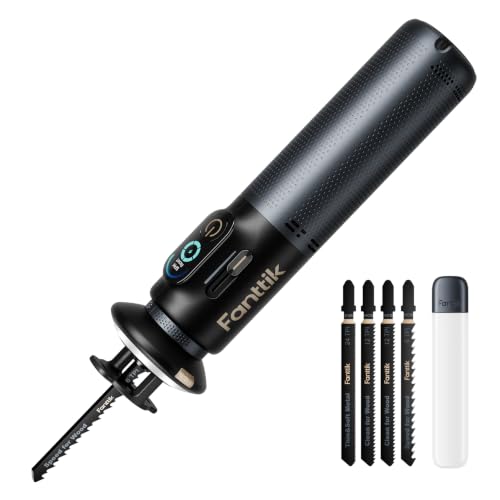
Fanttik R11 Pro Cordless Mini Reciprocating Saw

FRITZFURT Heavy-Duty Portable Drill Guide (0°–60°)
A Closer Look At Each Pick
Corded saws skip the battery anxiety, and this CRAFTSMAN kit leans into that simplicity for homeowners who already have an outlet within reach. The 7.5-amp motor drives a 1-1/8-inch stroke, which is the length the blade travels in each pass, and that stroke length is a sweet spot for slicing through old framing, PVC pipe, and stubborn roots without bogging down.
The package arrives with eleven accessories, including wood and metal-cutting blades that cover most homeowner projects on day one. The carrying case is a quiet win for anyone who tosses tools in a trunk or closet, keeping the blade stash organized. Compared to the cordless options ahead, the trade is tethering yourself to an extension cord, but in return you get steady power and zero battery management.
Notable Upsides
- Variable speed trigger from 0 to 3,200 RPM, which is rotations per minute, gives you fine control when starting a cut in finish material or pushing hard through wet lumber.
- Bi-metal blade construction (two metals bonded together) tends to hold up longer when you bounce between wood and nail-embedded wood, reducing the swap-out rhythm mid-project.
- The included case and eleven-piece accessory load means you can grab it for a kitchen demo Saturday morning without a separate blade run.
- Assembled in Shelbyville, KY with globally sourced materials, which is a small but real plus for shoppers who weigh domestic assembly.
Worth Noting
- Being corded, you are tied to an outlet or a heavy-gauge extension cord, which gets awkward on rooftops or far corners of a yard.
- The 1-1/8-inch stroke is solid but not class-leading, so aggressive demo work on thick beams will feel slower than the brushless cordless picks reviewed ahead.
Whose Shelf It Belongs On
Homeowners and rental-property renovators who want a reliable plug-in saw and a complete starter kit without buying batteries separately.
Reach For A Different Pick When
Step up to the DEWALT 20V MAX XR (DCS367B) if you already own 20V batteries and need cordless freedom on job sites.
The DCS367B is the workhorse cordless option in DEWALT’s XR line, built around a brushless motor that swaps the physical brushes of a traditional motor for electronic control, extending motor life and runtime. For someone already invested in the 20V MAX battery platform, this saw slots in without buying a new charger, a battery, or a second ecosystem of accessories.
The compact body and pivoting shoe help you angle the blade for flush cuts against a floor or wall, and the LED work light is one of those small features that pays off in a basement with one bulb. The trigger-driven variable speed lets you ease into a cut rather than slam into it, which matters when the workpiece has a finish you want to preserve. The trade-off is that the bare tool ships without a battery, so first-time platform shoppers need to budget for a pack and charger.
Useful Touches
- Brushless motor design typically delivers longer runtime per charge and a longer overall motor life compared to brushed units.
- Tool-free blade change lets you swap blades quickly when moving from wood demo to PVC trim without hunting for a hex key.
- Compact footprint and pivoting shoe make flush cuts and stud-to-stud slices easier than full-size corded saws.
- LED work light improves visibility in joist bays, basements, and the shadow side of a deck.
Trade Offs
- Battery and charger are sold separately, so the true entry cost climbs once you add a 5Ah pack and a charger.
- For continuous heavy demo, battery cycle time may interrupt workflow, which is where the CRAFTSMAN corded pick from earlier wins.
Made For
Contractors, remodelers, and serious DIYers already committed to the DEWALT 20V MAX platform who need a reliable cordless recip on the truck.
Consider Something Else When
Pick the DEWALT ATOMIC (DCS369B) instead if most of your cuts happen overhead or inside cabinets, where its lighter weight matters more than raw power.
The ATOMIC series is DEWALT’s answer to the question, “how much saw can I hold in one hand for an hour?” At roughly 3.13 pounds, the DCS369B is about 37 percent lighter than the DCS367B covered above, and that gap shows up the moment you hold either above your shoulder.
The pivoting shoe angles the blade for cleaner cuts against surfaces, and the variable speed trigger gives you the same control as its bigger sibling. The LED does the same job in dark joist spaces, and the tool-free blade change is a feature shared with the full-size XR. For most homeowners, the ATOMIC is the more practical daily carry, with the full-size XR reserved for heavier demo days.
The Upside
- Sub-3.5-pound body reduces arm fatigue during long sessions cutting old pipe, drywall, or tree roots.
- One-handed operation opens up scenarios where the other hand is bracing a workpiece or steadying a ladder.
- Pivoting shoe supports both straight and angled cuts without forcing awkward wrist positions.
- Same 20V MAX battery compatibility as the larger DEWALT, so packs and chargers carry over between tools.
Points To Note
- Shorter stroke and lighter motor mean slower cuts in thick beams, where the DCS367B pulls ahead.
- Bare tool only, so the upfront cost assumes you already own or are buying 20V batteries and a charger.
Feature Snapshot
Best Suited To
Plumbers, electricians, and homeowners doing overhead work in tight spaces, where shaving every ounce off the tool makes a long afternoon bearable.
Look Elsewhere When
Turn to the CRAFTSMAN 7.5-Amp corded kit if you are tackling full-day demolition and want unlimited runtime over portability.
These FRITZFURT blades are not a saw at all, but they change what a saw can do once clamped in. The 15-inch length, 6TPI (teeth per inch) curved profile, and triple-ground tooth geometry are aimed squarely at live wood, the green branches and sap-heavy limbs that a generic wood blade tends to grab and tear.
The arc shape increases contact with the cut face, which tends to produce a smoother slice and less vibration in fresh material. They share a 1/2-inch shank (the tang that clamps into the saw), so compatibility with most full-size recip saws including the CRAFTSMAN and DEWALT picks above is straightforward. Storing them dry after yard work keeps the tooth edges from dulling prematurely, a small habit that pays off across multiple storm seasons.
A Few Strong Suits
- Long 15-inch reach extends your cutting envelope, helpful when limbs sit just past where a 9-inch blade can reach.
- Curved arc profile is tuned for green wood, reducing the grabbing and splintering that straight blades cause on sap-heavy limbs.
- 6TPI balance cuts fast while still clearing chips, which matters when you are working through a stack of branches.
Honest Caveats
- Not suited for metal, so these belong alongside your other blades rather than replacing them.
- Triple-ground teeth cut aggressively, and operators commonly report faster wear when these are pushed into dry hardwood by mistake.
Who It Suits Best
Homeowners with mature trees, orchards, or storm-prone yards who already own a corded or cordless recip and want to expand it into a pruning tool.
Skip It When
Skip this if you do not yet own a saw body. The Fanttik R11 Pro covered next is a friendlier entry into a light-duty cutting setup.
Flooring jobs live or die by the small tools, and this 65-piece kit bundles the full spread in one purchase. The pull bar, tapping block, double-faced mallet, knee pads, and sixty spacers cover the workflow of locking planks together without gouging the tongues or leaving inconsistent gaps along the walls.
Paired with a reciprocating saw for undercutting door jambs and trimming the final row, the kit turns a weekend floor install into a manageable project. The reinforced Q235 steel pull bar is the part that gets the most stress, and a heavier-gauge bar tends to hold its shape after dozens of hard pulls. The knee pads and spacers are the unglamorous parts you only appreciate halfway through a 300-square-foot room.
Everyday Advantages
- All-in-one package removes the guesswork of matching pull bars and spacers from different brands, which often don’t sit flush together.
- Double-faced mallet handles both soft and firm taps, useful when working with vinyl plank that scratches easily and laminate that needs a firmer nudge.
- Two knee pads and sixty spacers support a full-room install without a mid-project hardware run.
Where It Is Less Suited
- This kit focuses on the install side, so you still need a separate saw for undercutting jambs and ripping the final row.
- Storage can get awkward with sixty loose spacers; a small bin is worth keeping nearby.
Spec Overview
Perfect Match For
First-time flooring installers and homeowners tackling a single-room laminate or vinyl plank project who want one box and done.
A Better Fit Elsewhere
If your project is mostly demolition rather than install, the CRAFTSMAN 7.5-Amp corded saw from earlier is the more relevant starting point.
The Fanttik R11 Pro is the smallest saw in this roundup and targets a different job than the rest. Designed around T-shank jigsaw blades in the 3 to 4-inch range, it leans into detail work, short crosscuts, and PVC trim where a full-size recip saw feels like using a sledgehammer to tap in a finish nail.
For crafters, model makers, and homeowners doing small repairs, the saw’s compact body and cordless convenience make it easy to grab for a quick cut without setting up a workstation. The recommended maximum cut depth is around 3/4 inch, which sets a clear ceiling on what the tool is meant to do. The blade clamp accepts T-shank jigsaw blades up to 1.4mm thick, so picking blades that match that spec avoids clamp slip and vibration during cuts.
Well-Handled Touches
- Compact size slips into drawers and small job-site bags where full-size saws are awkward to carry.
- Jigsaw-blade compatibility opens access to a wider range of fine-tooth and scroll blades, which is unusual for the recip category.
- Light body weight makes it approachable for first-time users who find full-size saws intimidating.
Small Caveats
- Maximum cut depth is around 3/4 inch, so this is not a tool for framing lumber or thick branches.
- Blade clamp gap of 1.4mm means very thin aftermarket jigsaw blades may not seat securely; matching spec matters here.
Right Fit For
DIYers, crafters, and apartment dwellers who need a small cordless saw for PVC trim, model work, and shallow repair cuts.
Not Your Match When
Choose the CRAFTSMAN 7.5-Amp corded saw instead for any project involving dimensional lumber, roots, or repeated heavy cuts.
Closing the list with a non-saw that fits naturally alongside reciprocating saw work: a portable drill guide. The FRITZFURT jig clamps your existing handheld drill and turns it into a quasi drill press, with a 0 to 60 degree angle range for straight-in or angled holes.
Self-centering jaws line the bit up on your mark, and the 1/4-inch hex shank accepts common drill bits from 3/64 inch up to about 25/64 inch (1 to 10mm). For hobbyists and small-shop workers without room for a full drill press, this guide bridges the precision gap without claiming a permanent bench footprint. It is the kind of accessory that pays for itself the first time you need a clean, plumb hole in a workpiece that will be visible.
A Favorable Mix
- Wide angle range handles straight holes plus common compound angles for furniture joinery and metal fabrication.
- Self-centering jaws reduce bit wander on round stock and small workpieces, which is where freehand drilling typically fails.
- 1/4-inch hex shank and broad bit compatibility mean most common drill bits fit without adapter fuss.
Practical Considerations
- Heavy-duty body adds weight to handheld work, so longer sessions can tire the wrist despite the improved accuracy.
- Clamping range limits workpiece size, so very large boards may need a bigger benchtop solution for repeatable results.
Quick Facts
Who Should Grab It
Garage and small-shop workers who need drill-press accuracy without dedicating bench space to a full stationary press.
Where Another Pick Suits Better
For the cutting side of a project rather than the drilling side, the DEWALT DCS367B reciprocating saw from earlier remains the stronger tool.
What To Weigh Before Choosing a Reciprocating Saw
Corded saws keep their power consistent from the first cut to the last, which matters during long demo days. Cordless saws trade some of that consistency for the freedom to roam, and brushless motors (motors that run electronically without physical carbon brushes) tend to stretch each battery charge further while lasting longer overall.
Stroke length and SPM (strokes per minute) decide how aggressively the saw chews through material. Longer strokes move more wood per pass, while higher SPM keeps the cut smooth in thinner stock. Variable speed triggers let you start slow in delicate cuts and ramp up in demolition, which is more useful than a single fixed speed.
Blade compatibility is the quiet factor that decides whether a saw grows with your projects. Most full-size recip saws use a 1/2-inch shank (the tang that locks into the blade clamp), while compact saws like the Fanttik R11 Pro use T-shank jigsaw blades. Matching blades to the workpiece, such as wood, metal, pruning, or ceramic, matters more than the saw’s sticker features.
Weight and ergonomics shape how long you can keep cutting. A one-pound difference between a full-size and compact model is the difference between a comfortable hour and a fatigued arm. For overhead work, plumbing cuts, or electrical box openings, lighter tools usually beat more powerful ones.
Key Considerations Across These Picks
Traps First Timers Fall Into
A common slip is buying a bare tool without checking whether a battery and charger come in the box. The two DEWALT saws reviewed here are tool-only, which trims the upfront cost but assumes you already own or are budgeting for 20V MAX batteries. First-time platform shoppers should price a kit version or a starter battery bundle to avoid surprise accessory runs.
Another mistake is choosing a blade based on tooth count alone. TPI (teeth per inch) matters, but the blade’s profile, length, and intended material matter just as much. A 6TPI pruning blade excels in green wood, while a 10 to 14 TPI metal-cutting blade is the right call for pipe and thin steel.
The Case For Spending Up
Higher-tier reciprocating saws usually earn their price with brushless motors, longer stroke lengths, and better vibration control. For occasional DIY, a brushed corded saw like the CRAFTSMAN covered above is plenty. For daily job-site use, the brushless efficiency of the DEWALT XR pays back through longer battery life and fewer motor replacements over the years.
Frequently Asked Questions
What Is a Reciprocating Saw Best Used For?
A reciprocating saw handles demolition, rough cutting, and pruning tasks where a clean edge is not the priority. It is the tool to grab for cutting framing, pipe, drywall, and tree limbs quickly.
Corded vs Cordless Reciprocating Saw: Which Should I Choose?
Corded saws deliver consistent power without battery management, which suits long sessions near an outlet. Cordless saws trade some runtime for portability, which suits job sites, yards, and anywhere an extension cord would be a hassle.
What Does Stroke Length Mean on a Reciprocating Saw?
Stroke length is how far the blade travels in each direction during a cut. Longer strokes remove more material per pass and tend to cut faster, while shorter strokes offer finer control for detailed work.
Can One Reciprocating Saw Blade Cut Wood and Metal?
Some multi-material blades handle both, but dedicated wood or metal blades usually cut cleaner and last longer. Switching blades by material is standard practice for anyone cutting both regularly.
How Do I Keep a Reciprocating Saw Blade From Wandering?
Starting the cut at low speed, bracing the shoe firmly against the workpiece, and using a blade matched to the material all help keep the cut on line. A pilot hole or scored starting line also prevents blade drift on smooth surfaces.