Picking the right crimping tool shapes every patch cable you make, every keystone jack you terminate, and every panel install you finish. Network techs, DIY smart-home owners, and small office admins all run into the same wall: a solid ratcheting pass-through for clean Cat6 work, a heavy-duty terminal crimper for panel builds, and a compact cutter-stripper combo for quick repairs. The lineup below sorts nine real options, including dedicated RJ45 kits, electrician-grade terminal crimpers, and ferrule sets, so you can match the tool to the job instead of buying a one-size-fits-nothing compromise.
A Closer Look At The Lineup

Channellock 909 9.5-Inch Wire Crimping Tool

Klein Tools 1005 Cutting/Crimping Tool

Klein Tools J1005 Crimping and Cutting Tool

Klein Tools 34060 Ferrule Crimping Tool Set
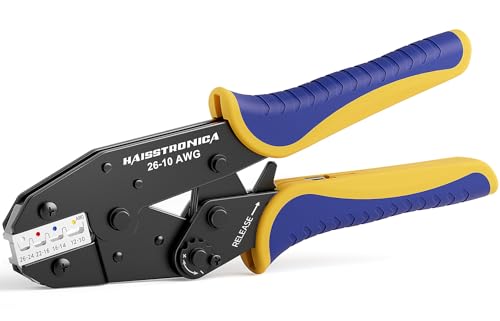
haisstronica Crimping Tool for Heat Shrink Connectors
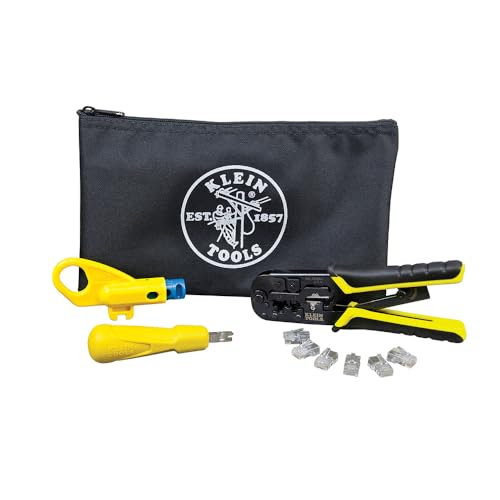
Klein Tools VDV026-212 Coax Installation Kit

Pass Through RJ45 Crimp Tool Kit

RJ45 Crimp Tool Pass Through Ethernet Crimping Tool Kit

RJ45 Crimp Tool Kit Pass Through Ethernet Crimping Tool
A Deeper Look At The Lineup
The Channellock 909 earns its place on the bench when your day mixes panel wiring, equipment repairs, and odd electrical odds and ends. The centered cutting edges sit directly behind the pivot, which gives you extra leverage when slicing through 10-22 AWG conductors. That same geometry tends to make longer cuts feel less like a wrestling match and more like a deliberate stroke.
Unlike the dedicated RJ45 kits later in this roundup, this tool is built for terminal and connector work on standard electrical wire. You’ll handle both insulated and non-insulated terminals, and the laser heat-treated edges (the brand’s term for a hardening process that extends edge life) hold up well under daily use. It’s a solid generalist, not a network specialist.
What Makes Sense
- Centered cutting edges improve leverage on tougher cuts
- Handles 10-22 AWG wire for both insulated and non-insulated terminals
- Heat-treated cutting edges resist dulling during heavy runs
- 9.5-inch body gives a comfortable grip for larger hands
Worth Bearing In Mind
- Not designed for RJ45 pass-through connectors, so network jobs need a separate tool
- No ratcheting mechanism, so crimp force depends on your hand strength
Quick Facts
Right Fit For
Electricians and maintenance techs who want a reliable terminal crimper for panel wiring and on-site electrical repairs.
Look Elsewhere When
Your work centers on Cat6 patch cables, where the Pass Through RJ45 Crimp Tool Kit offers the right geometry and pass-through connector support.
The Klein Tools 1005 leans into a simple, almost old-school formula: a forged body, a hardened nose cutter, and dies marked clearly for both insulated and non-insulated terminals. The plastic-dipped cushioned handles take some bite out of long runs in the field, and the tapered nose reaches into crowded junction boxes where a bulkier crimper would block your view.
Compared with the Channellock 909 covered above, this one is built in the USA and the slim profile makes it friendlier in tight enclosures. The trade-off is the same one most terminal crimpers share, namely no ratcheting action, so you rely on feel for a proper crimp. For 10-22 AWG work, the die profile is versatile enough to cover most residential and light commercial wiring jobs.
What Earns Its Place
- Tapered nose design fits where bulkier crimpers cannot reach
- Crimps 10-22 AWG insulated and non-insulated terminals
- Specially hardened wire cutter in the nose adds durability
- Cushioned handles reduce fatigue during long termination sessions
Points To Note
- No ratcheting mechanism, so crimp quality depends on consistent hand pressure
- Not designed for RJ45 pass-through connectors or modular plugs
- Die markings can wear down with heavy professional use, so keep an eye on them
Key Product Details
Best Suited To
Field electricians and telecom installers who want a USA-made terminal crimper with a slim, tight-space-friendly profile.
Reach For A Different Pick When
Your daily work revolves around Cat6 and Cat6A modular plugs, where the Pass Through RJ45 Crimp Tool Kit is purpose-built for the job.
The Klein Tools J1005 takes everything useful about the 1005 and adds a contoured thumb area that gives you better control during repetitive crimping. The hot-riveted joint (a manufacturing method where the pivot is heated and pressed, rather than just pinned) keeps handle wobble to a minimum, so the action stays smooth even after months of daily use.
Where the 1005 is a clean workhorse, the J1005 adds a touch of refinement: a more deliberate handle shape, slightly improved feel, and the same tapered nose for working in confined spaces. For 10-22 AWG solderless terminals and connectors, it covers the bulk of residential and light commercial work. In our view, the upgrade makes most sense if you crimp dozens of terminals a day rather than a few each week.
The Helpful Details
- Contoured thumb area gives better grip during long jobs
- Hot-riveted joint keeps handle wobble in check over time
- Tapered nose reaches into tight electrical boxes
- Hardened cutter in the nose handles 10-22 AWG wire cleanly
Some Limits To Know
- Priced above simpler terminal crimpers due to refinements
- Not suited for RJ45 modular plug crimping
Feature Snapshot
Whose Shelf It Belongs On
Experienced techs and electricians who crimp regularly and want a smoother, more controlled tool than entry-level models.
Skip It When
Your work is mostly network cable terminations, where the RJ45 Crimp Tool Kit Pass Through Ethernet Crimping Tool is a better fit.
The Klein Tools 34060 is a different animal from the terminal crimpers above: it’s a ferrule crimper, meaning it’s built for crimping small metal sleeves (called ferrules) onto stranded wire ends to keep them tidy inside terminal blocks. The ratcheting mechanism releases only when full crimp pressure is reached, which is the real quality-of-life win on this set.
The package includes 1,200 wire terminals covering 10-22 AWG, plus a soft carrying case that keeps everything organized. The square crimp profile (where the die presses a square shape into the ferrule for a 360-degree connection) works well with European-style terminal blocks. The ratcheting action makes this set more repeatable than the Channellock 909 or Klein 1005.
Well-Handled Touches
- Ratcheting mechanism ensures consistent crimp pressure every cycle
- Square die profile delivers a four-sided crimp on stranded wire
- 1,200 included terminals cover 10-22 AWG projects
- Soft carrying case keeps the tool and terminals together on the job
Honest Caveats
- Not designed for RJ45 modular plugs, so network installers still need a separate tool
- Carrying case takes up more space than a bare crimper
- Overkill for quick one-off household repairs
Who Should Grab It
Control panel builders, industrial electricians, and anyone who regularly terminates stranded wire into European-style terminal blocks.
Consider Something Else When
You mainly make Ethernet patch cables, where the Pass Through RJ45 Crimp Tool Kit is built for that exact workflow.
The haisstronica HS-8327 is purpose-built for heat-shrink connectors, the kind with adhesive-lined tubing that seals a connection against moisture. The ratcheting jaws close evenly across the connector, which gives a uniform crimp from end to end, and the forged steel body holds up to repeated pressure cycles. For marine, automotive, and RV wiring, that consistency is a real advantage.
Where the Klein 1005 and J1005 focus on terminal work, this haisstronica tool lives in the 26-10 AWG range, covering everything from small signal wires up to heavier accessory leads. The jaw geometry suits the slightly larger barrel of heat-shrink terminals rather than standard open-barrel lugs. For most vehicle wiring repairs, it’s a more thoughtful tool than a general terminal crimper.
Standout Benefits
- Ratcheting jaws deliver repeatable, even crimps on heat-shrink connectors
- 26-10 AWG range covers automotive signal and accessory wiring
- Forged steel jaws resist wear under repeated use
- Works well with solder-seal and adhesive-lined heat-shrink terminals
Less Ideal Details
- Not a fit for RJ45 modular plug crimping
- Best paired with a separate wire stripper for clean, even insulation removal
Made For
Car audio installers, marine techs, and DIYers rewiring trailers, boats, or off-grid solar setups where sealed connections matter.
Not Your Match When
Your projects center on structured network cabling, where the RJ45 Crimp Tool Pass Through Ethernet Crimping Tool Kit is purpose-built for Cat5 through Cat6A work.
The Klein Tools VDV026-212 takes a different approach: instead of a single-purpose crimper, it bundles a coax crimp tool, a cable cutter, a stripper, and a set of F connectors into a single kit with a storage bag. For cable TV, satellite, and antenna installs, that consolidation means you carry one pouch to the job instead of four loose tools rattling around a bag.
The crimp tool is sized for F connectors rather than RJ45 plugs, so this kit is not a substitute for the dedicated Ethernet crimpers in this roundup. Where it shines is in coax-heavy work where strip length, compression fit, and connector quality all matter. The stripper and cutter are calibrated to common RG6 and RG59 cable dimensions, which removes a lot of trial-and-error.
Useful Strengths
- Bundle covers cutting, stripping, and crimping for coax runs
- Storage bag keeps all four tools organized in one place
- Stripper and cutter are tuned for typical RG6 and RG59 dimensions
- F connectors included so you can start a job without extra parts
Trade-Offs
- Not a fit for RJ45 Ethernet connectors, so network jobs need a separate crimper
- F-connector focus limits use outside coax installations
Built With In Mind
Cable installers, satellite technicians, and homeowners running new coax lines for TVs or over-the-air antennas.
A Better Fit Elsewhere
You terminate Ethernet regularly, where the Pass Through RJ45 Crimp Tool Kit is the more appropriate daily carry.
The Pass Through RJ45 Crimp Tool Kit earns its spot by solving the most common beginner frustration with Ethernet terminations: getting all eight wires in the right order before crimping. The pass-through connectors let each conductor extend through the front of the plug, so you can verify the sequence visually before you squeeze the handle. That one feature alone can save an hour of trial-and-error on a first install.
The kit includes the crimp tool, a network cable tester, a wire cutter, two strippers, 50 Cat6 pass-through connectors, and 50 strain relief boots. For Cat5, Cat5e, and Cat6 work, that covers the full workflow from raw cable to tested patch lead. The tester is a nice touch for verifying continuity without a full cable certifier.
What Helps Most
- Pass-through connectors let you check wire order before crimping
- Includes cable tester for quick continuity verification
- 50 connectors and 50 boots cover a typical home network run
- Two strippers handle different cable jacket thicknesses
A Few Limitations
- Cable tester uses a 9V battery that you supply separately
- Pass-through design adds a small trimming step some pros prefer to skip
Perfect Match For
First-time installers and homeowners running Cat6 throughout a house or small office who want a forgiving learning curve.
Swap It Out When
You’re a professional installer making hundreds of cables a day, where the RJ45 Crimp Tool Kit Pass Through Ethernet Crimping Tool’s higher connector count and broader cable range may serve you better.
The RJ45 Crimp Tool Pass Through Ethernet Crimping Tool Kit covers a slightly broader cable range than the kit before it, working comfortably with Cat5, Cat5e, Cat6, and Cat6A. That’s a real difference for anyone running mixed-spec networks, where the ability to terminate older and newer cable with the same tool removes one more variable from the install.
The package mirrors the previous pick: 50 Cat6 pass-through connectors, a network cable tester, a wire stripper, diagonal pliers, and a user manual. The pass-through design still anchors the value proposition, with the wires sliding through the front of the plug for visual verification. If your projects mix Cat5e legacy runs with newer Cat6A drops, this kit handles both without a second crimper on the bench.
Useful Touches
- Works across Cat5, Cat5e, Cat6, and Cat6A cables
- Pass-through connectors reduce misfire rate on first attempts
- Diagonal pliers and stripper handle cable prep without extra tools
- Tester confirms wiring sequence after each crimp
Where It May Fall Short
- 9V battery for the tester is not included
- Strain relief boots not bundled, so add those separately for high-movement runs
Who Will Love This
Small office admins and home network enthusiasts handling mixed cable generations across a single project.
Where Another Pick Suits Better
You need ferrule crimping on top of RJ45 work, where the Klein Tools 34060 Ferrule Crimping Tool Set covers the terminal-block side of the equation.
The RJ45 Crimp Tool Kit Pass Through Ethernet Crimping Tool rounds out the Ethernet side of this list with a small but meaningful extra: 50 connector covers in addition to the standard pass-through crimper, connectors, stripper, diagonal pliers, and tester. Those covers (the soft boots that slip over the plug) protect the latch and reduce strain on the cable, which extends the life of patch leads in busy racks or home entertainment setups.
The all-in-one tool handles wire stripping, cutting, and crimping in a single body, which makes it easy to throw in a drawer or a small service bag. For Cat5, Cat5e, Cat6, Cat6A, and even Cat7 cable, the jaw profile is wide enough to seat the larger pass-through connectors used on higher-spec runs. Beginners following the included manual can move from raw cable to a tested, booted patch lead in one session.
Why It Works Well
- 50 connector covers protect plugs in high-movement setups
- All-in-one tool reduces drawer clutter
- Compatible with Cat5 through Cat7 cable generations
- Included manual helps first-time installers avoid common mistakes
Potential Drawbacks
- 9V battery for the cable tester must be purchased separately
- Boots are sized for standard RJ45 plugs and may not fit shielded variants
The Right Fit
Home users, students, and small office staff who want a complete starter kit with strain relief included for everyday LAN maintenance.
Another Choice May Suit
Your work runs to industrial control panels where ferrule crimping matters, where the Klein Tools 34060 Ferrule Crimping Tool Set handles that specific task more cleanly.
What To Weigh Before Choosing Rj45 Crimping Tools
Match The Tool To The Cable Type
Rj45 crimping tools fall into two broad families. The first handles standard electrical terminals and works with wire sizes measured in AWG (American Wire Gauge), where lower numbers mean thicker wire. The second family is built around RJ45 modular plugs, and within that group, pass-through designs have changed the workflow by letting wires extend through the connector for visual confirmation. Picking the right family up front saves a lot of money and frustration, since a terminal crimper cannot seat an RJ45 plug, and a plug crimper will not give a clean crimp on a fork terminal. Run through a quick mental check of the cable and connector types you use most often before adding anything to the cart.
Look For Ratcheting Action And Replaceable Dies
A ratcheting mechanism, which only releases once full crimp pressure is reached, makes a noticeable difference in consistency. Without it, crimp quality depends on how hard you squeeze on a given day, and that variability shows up in failed connections months later. Replaceable dies extend the tool’s life, since you can swap a worn die rather than retire the whole plier. For occasional DIY use, a fixed-die tool is fine. For daily work, the ratchet is the feature that pays for itself.
Consider The Kit Contents And Aftermarket Support
Bundled kits often include cable testers, strippers, and a starter pack of connectors, which is convenient for first-timers. The honest read is that bundled accessories are usually adequate, not exceptional, so plan to upgrade the tester or stripper later if you get serious. Check that replacement connectors are easy to source in your area, since a kit that ships with 50 plugs will not last a career of network work. Strain relief boots, the soft covers that protect plug latches, are worth seeking out if your cables move around a lot.
Think About Handle Ergonomics And Storage
Crimping is repetitive motion work, and handle shape matters more than people expect. Look for cushioned grips and a handle width that matches your hand size, especially if you crimp dozens of connections in a session. A storage case or pouch keeps the tool and accessories together, which sounds minor until you spend twenty minutes looking for a missing boot in a job-site toolbox. For portable use, a slim profile that fits in a laptop bag or service pouch is a real advantage.
Key Considerations Across These Picks
Where Shoppers Go Wrong
The most common slip-up is buying a general terminal crimper and expecting it to seat RJ45 plugs, then realizing the die profile is wrong for modular connectors. The reverse mistake is just as common, where someone picks up a pass-through Ethernet kit and tries to crimp a fork terminal, only to deform the connector. Reading the listed cable range and connector compatibility up front prevents both headaches. Another trap is assuming a cheaper kit includes everything, when in reality the cable tester often needs a separate 9V battery, and boots or extra connectors may not be in the box at all.
What The Higher Tier Buys
Stepping up to a ratcheting model brings repeatable crimp pressure, which directly improves connection reliability and reduces rework. Better jaw materials, like forged steel instead of cast, hold alignment longer under heavy use and tend to keep edge geometry sharper. A ratcheting ferrule crimper, like the Klein 34060, costs more because the mechanism is more complex, but the tradeoff is fewer failed crimps on stranded wire. For occasional home use, a basic kit is plenty, and the upgrade really earns its keep once crimping becomes a daily task.
Frequently Asked Questions
What is the difference between ratcheting and non-ratcheting crimping tools?
A ratcheting crimper only releases once full pressure is reached, which produces more consistent crimps with less hand fatigue. A non-ratcheting crimper relies on the user squeezing to the right depth, which can vary from cycle to cycle. For high-volume or professional use, ratcheting is generally the smoother experience.
Can one crimping tool handle both RJ45 plugs and standard electrical terminals?
Most tools are designed for one family or the other, so a single tool rarely covers both. RJ45 plug crimpers use a specific die profile for modular connectors, while terminal crimpers are sized for insulated and non-insulated electrical lugs. Some pros carry two tools rather than compromise on either job.
What does AWG mean on a crimping tool?
AWG stands for American Wire Gauge, a standardized system where smaller numbers represent thicker wire. A tool rated for 10-22 AWG covers a wide range from heavier branch circuit wiring down to smaller signal conductors. Always match the tool’s AWG range to the wire you plan to terminate.
Are pass-through RJ45 connectors better than standard ones?
Pass-through connectors let the wires extend through the front of the plug, so you can confirm the wiring order visually before crimping. They reduce misfires for beginners and speed up the workflow once you build the habit. The trade-off is a small trimming step to cut the excess wire flush after crimping, which some experienced installers prefer to avoid.
Do crimping tool kits usually include a cable tester?
Many bundles do, but the tester is often a basic continuity model that confirms wiring order rather than full cable certification. Check whether the tester needs a 9V battery, since that is a common omission. For home and small office use, a basic tester is enough; for commercial installations, a calibrated certifier is a different category of equipment.