


A good roller turns drywall mud from a backbreaking chore into something close to satisfying. The right one lays compound down evenly, hugs inside corners without gouging, and cuts your sanding time in half. The wrong one leaves streaks, sheds fibers, or wears out halfway through a single room. This roundup covers the rollers, corner tools, and specialty applicators that actually earn their place on a drywall job, from weekend patchers to full-time finishers.
Your Options, Compared

Sheetrock USG Outside 90° Corner Bead Roller
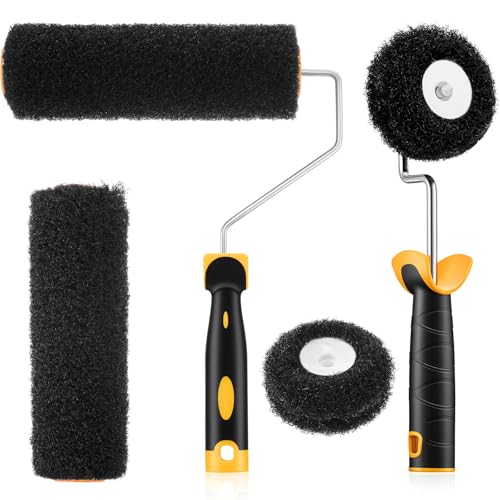
Chumia 9 Inch Drywall Roller Kit with Corner Roller
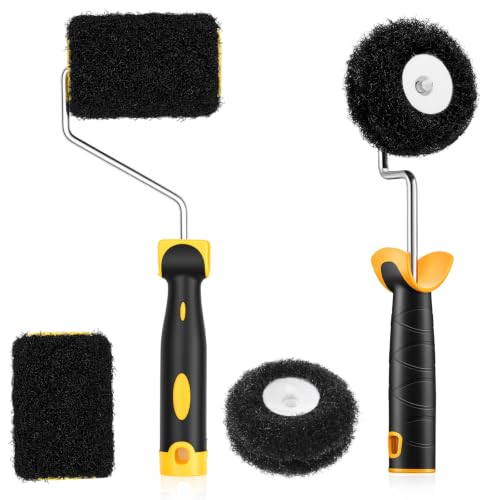
Chumia 4 Inch Drywall Roller Kit with Corner Roller
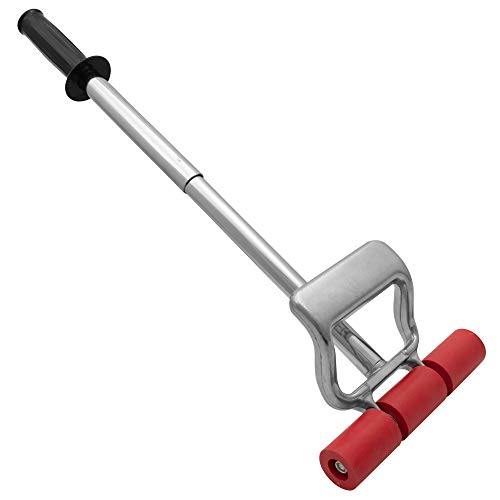
Peachtree Extendable Heavy Duty Floor and Wall Roller

Mister Rui 2 Inch Foam Roller Kit 10-Pack

Threlaco 3 Pcs 4″ Drywall Compound Roller with Frame

Threlaco 3 Pcs 12″ Drywall Compound Roller with Frame

Threlaco 3 Pcs 9″ Drywall Compound Roller with Frame
More On The Choices That Made The List
This roller does one job, and it does that job with real authority. The Sheetrock USG corner tool is built around a stainless steel head, which means it shrugs off the wet mud and constant wiping that would eat a cheaper roller over time. A four-foot fiberglass handle lets you work an outside corner while staying on the floor, sparing your knees when you have a full house to wrap.
You will see this tool mostly on paper-faced outside corner bead installs, where the goal is firm, even pressure along the entire 90-degree crease. The soft grip wheels give the bead a uniform press without slipping, so you get clean adhesion on both faces of the corner at once. For finishers hanging dozens of corners a week, that consistency matters far more than versatility. In our view, beginners tackling their first full-room drywall job will find it worth the spend if their project is heavy on outside corners.
Everyday Wins
- Stainless steel head holds up to repeated mud exposure and wipe-downs
- Four-foot fiberglass handle covers most ceiling-height corners from floor level
- Soft grip wheels press both faces of an outside corner evenly in a single pass
- Purpose-built design makes it the right shape for paper-faced corner bead
Worth Noting
- Specialized for outside corners, so it sees little use on flat seams
- Best suited to finishers with a stack of corners to install in one session
Key Product Details
Whose Shelf It Belongs On
Pro finishers and serious remodelers who install paper-faced outside corner bead on a regular basis.
Consider Something Else When
Casual weekend patchers should look at the Threlaco 9″ Drywall Compound Roller with Frame, which covers general flat seams and small corners in a single tool.
The Chumia 9-inch kit is the kind of bundle that earns a permanent spot in your drywall bag. It pairs a standard 9-inch roller frame with a dedicated corner frame, and throws in a replacement cover for each, so you are not hunting for parts mid-job. The frames look built from steel, with a polypropylene fleece cover designed to hold joint compound without shedding.
Mid-size rollers like this one hit a useful middle ground: wide enough to cover seams quickly, narrow enough to manage in a stairwell or short wall run. Compared to the Sheetrock tool above, which is a one-trick corner specialist, this kit handles flat seams, butt joints, and inside corners without a tool change. For homeowners finishing a basement or retexturing a room, that flexibility is a real win. You may find the corner frame less satisfying on outside corners than a dedicated bead roller.
Useful Strengths
- Two frames and two covers cover seams, inside corners, and detail patches
- Polypropylene fleece holds compound without flooding your tray
- Steel frames give the kit a sturdy feel for the price
- Spare covers mean you can swap mid-project without waiting for cleanup
Trade Offs
- Corner frame is best on inside corners, not outside bead installs
- Cover quality may need gentle cleaning to extend lifespan
Feature Snapshot
Made For
DIYers finishing a full room or homeowners who want one kit that handles both flat and corner work.
A Better Fit Elsewhere
Very small patch jobs may be easier with the Chumia 4 Inch Drywall Roller Kit, since a 9-inch frame can feel oversized in tight spots.
The 4-inch version of the Chumia kit trades coverage for control. It is the same two-frame, two-cover setup, just shrunk down to a width that slips behind a toilet, inside a closet, or along a window return where a 9-inch frame would be a wrestling match. The compact size also makes it easier to feather compound across a small patch without telegraphing the edges.
Where the 9-inch Chumia covers main seams on open walls, this kit is built for the leftovers. It handles tight corners, narrow patches, and detail bands where you want to lay a thin coat and walk away. The trade-off shows up in speed: a 4-inch nap covers a fraction of the area per pass, so you do not want to roll a full ceiling with it. For most homeowners, that is the right division of labor, and owning both kits covers a renovation top to bottom.
Noteworthy Benefits
- Reaches spots where a 9-inch frame cannot fit
- Corner frame handles inside corners in tight enclosures
- Polypropylene covers lay a thin, even coat for blending patches
- Lightweight frame reduces hand fatigue on detail work
Points To Keep In Mind
- Slow on large open walls compared to a 9-inch or 12-inch roller
- Best paired with a wider roller for full-room projects
Right Fit For
Homeowners patching nail holes, small dings, and narrow wall sections where a wider roller is awkward.
Skip It When
You are coating long flat seams on open walls, where the Threlaco 12″ Drywall Compound Roller covers ground far faster.
The Peachtree extendable roller is not a mud roller in the traditional sense, but it shows up on a lot of drywall jobs where pressing and bonding matter as much as spreading. Its segmented roller body extends from roughly 17 to 27 inches, so you can adjust width on the fly for flooring seams, wall coverings, and large veneer sheets. The heavy-duty frame is built to push hard without flexing under pressure.
On drywall specifically, you will reach for this tool when you need firm, even pressure across a wide area, like burnishing a freshly laid texture or seating a vinyl wallcovering over a skim coat. Compared to the Chumia kits above, this is a different animal: a pressure tool with adjustable width, not a coverage roller. For most drywall mud work, it is a complement rather than a replacement, but for anyone doing floors and walls in the same renovation, it pulls double duty.
Everyday Perks
- Extends from 17 to 27 inches for adjustable coverage
- Heavy-duty frame stands up to firm pressing without flex
- Works on floors, walls, laminates, and large veneer sheets
- Segmented roller body conforms slightly to uneven surfaces
Honest Caveats
- Not a coverage roller for spreading joint compound on seams
- Overkill for a small patch-only project
Feature Rundown
Who Should Grab It
Renovators who handle both flooring and wall installations and want one roller that covers wide pressing tasks.
Not Your Match When
You only need to spread mud on drywall seams, where the Threlaco 9″ Drywall Compound Roller is a more direct fit.
The Mister Rui 10-pack is the disposable end of the drywall roller spectrum, and that is exactly its appeal. You get ten 2-inch foam covers, a small plastic tray, tray liners, and a mini frame, all aimed at quick touch-ups rather than full-room work. Foam covers like these are best for thin coats on small patches, where you want a smooth, light finish without nap texture showing through.
For drywall mud specifically, foam works on very light skim coats and final feathering, but it is not the right tool for filling a recessed seam on a full wall. Compared to the Threlaco sets below, which use fleece covers meant for heavier compound, this kit is for the finish details and the last 10 percent of cleanup. The honest read is that most of the value comes from the volume: ten covers means you can toss one mid-job without thinking about it.
What Earns Its Place
- Ten foam covers keep fresh ones on hand for repeated touch-ups
- Compact 2-inch size fits trim edges and small patches
- Disposable foam eliminates cleaning between coats
- Included tray and liners speed up small paint or mud jobs
Some Limits To Know
- Foam covers are too light for filling deep or wide seams
- Not a substitute for a fleece roller on structural drywall work
Perfect Match For
Anyone keeping a dedicated touch-up kit for small drywall patches, scuffs, and trim work around the house.
Another Choice May Suit
For larger patches and seams, the Threlaco 4″ Drywall Compound Roller holds and lays compound far more efficiently.
Threlaco leans into a simple promise: three rollers, three frames, no extras to figure out. The 4-inch model sits at the narrow end of their line, sized for short seams, small patches, and tight corners where a wider nap would slop compound onto adjacent surfaces. The frames are built to take repeated cleaning without the handle loosening up.
Three identical rollers in a single pack make sense on a real jobsite, where one is rolling, one is drying, and one is a backup when a cover gets torn on a screw head. That kind of rotation keeps you moving. Where the Mister Rui foam kit above is for disposable touch-ups, these are working rollers you rinse and reuse. The catch is speed: a 4-inch nap simply does not cover ground like a 12-inch model, so this is a detail tool, not a main-coat roller.
Strengths Worth Knowing
- Three-pack format supports rotation between coats and projects
- 4-inch size handles detail seams without overloading adjacent areas
- Frames feel solid enough for repeated wash-and-reuse cycles
- Reusable covers cost less per job over time than disposable foam
Less-Strong Areas
- Not efficient on long flat seams on open walls
- Requires prompt cleaning to keep covers from hardening with mud
Built With In Mind
Remodelers and homeowners who need a reliable narrow roller for patches, closets, and short seam runs.
Reach For A Different Pick When
Wide open wall coverage is the priority, and the Threlaco 12″ Drywall Compound Roller is the better match.
The 12-inch Threlaco is the wide-coverage workhorse in the lineup, and the three-pack format makes it feel like an honest jobsite kit rather than a single-use purchase. A 12-inch nap lays compound across full butt joints and wide seams in fewer passes, which matters most when you are floating a long wall or a ceiling run that would otherwise eat an entire afternoon.
Compared to the 4-inch Threlaco above, this one trades precision for speed, and you will likely grab a smaller roller to handle the corners and edges the wide nap cannot reach cleanly. That is normal: a wide roller handles the field, a narrow one handles the boundaries, and both are usually in the bag. The three-pack also means you can hand one to a helper and keep moving instead of waiting on a wash cycle.
What Stands Out
- 12-inch width covers wide seams and full wall fields quickly
- Three-pack keeps a clean roller ready during long finishing days
- Reusable covers hold up across multiple rooms of work
- Frames feel balanced and reduce wrist strain on long passes
Details To Watch
- Awkward in tight corners and short patch areas
- Requires a smaller roller to finish edges cleanly
Technical Highlights
Best Suited To
Finishers floating long walls, ceilings, and large rooms where a wider nap saves real time per pass.
Where A Sibling Pick Shines
For tighter interior work and smaller patches, the Threlaco 4″ Drywall Compound Roller handles detail areas the 12-inch cannot reach.
The 9-inch Threlaco lands at the most flexible point in the size range, and that is exactly why it tends to get used first on a mixed job. It is wide enough to make quick work of standard seams, narrow enough to manage in a typical bedroom or hallway, and paired with a three-pack that is forgiving on a long day. The covers handle joint compound without flooding, and the frames rinse clean enough to reuse across rooms.
Where the 12-inch Threlaco above is built for wide open fields, this one is the everyday carry, the roller that lives on the mud pan and gets used on almost every pass. It is the kind of tool that quietly does 80 percent of the work on a typical renovation without needing a second thought. For most homeowners and remodelers, owning this 9-inch set plus a smaller detail roller covers the bulk of drywall finishing tasks.
A Favorable Mix
- 9-inch size hits a practical middle ground for most rooms
- Three-pack format supports rotation and continuous work
- Reusable covers offer good value over disposable alternatives
- Frames feel sturdy enough for repeated cleaning and reuse
Potential Compromises
- Slower than a 12-inch roller on very large open walls
- Still needs a narrower roller for the tightest corners
Who It Suits Best
Homeowners and remodelers looking for one reliable mid-size roller set to cover most general drywall finishing tasks.
Look Elsewhere When
Outside corner bead installs are the main task, and the Sheetrock USG corner tool handles that work with more authority.
What To Weigh Before Choosing Your Drywall Roller
Width And Coverage
A wider nap lays compound faster across open walls, while a narrow nap controls detail work in tight corners. Most room-scale projects benefit from a 9-inch roller, which is wide enough for efficient coverage and narrow enough to stay maneuverable. Smaller patches and tight closets call for a 4-inch frame, and large open walls go faster with a 12-inch. Buying a three-pack in your most-used width gives you a working roller, a drying roller, and a backup.
Cover Material And Nap
Polypropylene fleece covers hold joint compound well and resist matting, making them a common choice for mud work. Foam covers lay thinner coats and suit final touch-ups, but they are not the right tool for filling recessed seams. The nap length affects how much compound the cover carries: longer nap holds more material for heavy fills, shorter nap leaves a finer texture for finish coats.
Frames And Handle Feel
A steel frame gives the roller rigidity for firm pressure, which matters when you are forcing compound into a seam. A comfortable handle reduces fatigue on long finishing days, especially with a wide nap. Soft grip wheels on corner rollers, like the Sheetrock tool above, prevent slippage on wet paper-faced bead and keep the press consistent.
Matching The Tool To The Job
Corner bead installs need a dedicated corner roller, while seam work calls for a flat roller in a useful width. Pressure-sensitive tasks like seating wall coverings or veneers benefit from an extendable heavy-duty roller. Keeping a small foam roller for touch-ups rounds out a kit without much added cost.
Key Considerations Across These Picks
Where Shoppers Go Wrong
Picking a roller width that does not match the project is the most common slip-up: a 12-inch nap is wasteful on a closet patch, and a 4-inch nap is a slog across a full wall. Foam covers also get misused as primary mud rollers, which leaves shallow fills and a textured finish. Treating a corner roller like a flat roller, or vice versa, produces sloppy edges that take longer to sand down than they saved in the first place.
The Case For Spending Up
A stainless steel head, a sturdy steel frame, or a multi-pack format costs more up front but pays off across multiple rooms of work. Cheaper rollers tend to flex under pressure, shed fibers into the mud, and lose their grip after a few cleaning cycles. Spending a little more on the roller you will reach for most often is usually a better return than saving on a tool you replace halfway through a renovation.
Frequently Asked Questions
What size roller works best for drywall mud?
A 9-inch roller is the most versatile size for general room work, since it covers seams quickly without feeling oversized. Narrow 4-inch rollers handle tight spots and patches, while 12-inch rollers speed up wide open walls.
Can you use a regular paint roller for drywall mud?
Standard paint rollers can apply mud, but covers designed specifically for joint compound hold the thicker material better and shed less. Mud-specific fleece covers give a smoother result and last longer through repeated cleaning.
How do you clean a drywall mud roller?
Rinse the cover under warm water immediately after use, working the compound out with your fingers. Avoid letting mud dry on the cover, since hardened compound shortens the lifespan of even a good fleece nap.
What is the difference between a corner roller and a flat roller?
A corner roller has a shaped head that presses one or both faces of a corner at once, while a flat roller lays compound along straight seams on open wall areas. Corner rollers shine on inside corners and outside bead, while flat rollers handle the field work.
Do you need a special roller for outside corner bead?
Paper-faced outside corner bead installs go much faster with a dedicated corner bead roller, which applies even pressure along both faces of the 90-degree crease. A flat roller cannot replicate that consistency on an outside corner.




