


Painting a ceiling is one of those jobs where the right roller setup changes everything. The cover nap (the fuzzy fiber length on the roller) controls how much paint gets laid down and how smoothly it spreads, while the pole dictates whether you stay on the floor or end up wrestling a ladder. Most DIYers reach for mismatched gear and end up with lap marks, drips, and sore shoulders. The picks below focus on covers, extension poles, and a full kit, so you can match the tool to your ceiling height, paint type, and finish quality.
The Leading Options At A Glance

Wooster SR055 Sherlock Extension Pole, 4 Foot

Purdy Jumbo Mini White Dove Roller 6-Pack

Wooster SR054 Sherlock Extension Pole, 2-4 ft

Wooster Pro/Doo-Z Roller Cover 3/8-Inch Nap 9-Inch

Wooster SR053 Sherlock Extension Pole, 1-2 ft

VOOMEY Paint Roller Kit with 17-35 Inch Pole
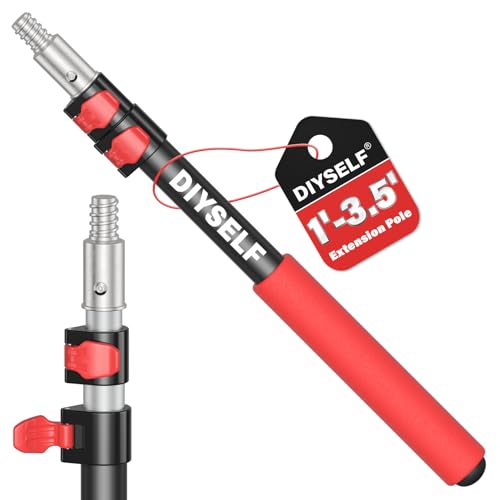
DIYSELF 3.5 FT Paint Roller Extension Pole

DIYSELF 8 FT Paint Roller Extension Pole

DIYSELF 12 FT Paint Extension Pole
Why These Options Stand Out
The 4-foot Sherlock pole hits the sweet spot for a typical eight or nine-foot ceiling, giving you enough reach to roll flat stretches without dragging out a stepladder. Its hexagonal aluminum core stops the sections from spinning mid-stroke, so the cover stays pointed where you want it. The fiberglass outer sleeve adds rigidity without piling on weight, which matters during long ceiling runs.
Homeowners tackling a single room or a basement remodel get the most from this length, since it pairs with both 9-inch frames and smaller mini-rollers. The locking collar uses a thumb lever rather than a twist mechanism, so adjusting between strokes stays fast.
What Makes Sense
- Hexagonal inner shaft prevents twisting while paint is loaded on the cover
- Fiberglass outer layer resists flex on long extension strokes
- One-handed thumb lever locks length quickly between passes
- Universal threaded tip fits most roller frames and brushes in your kit
- Built in the USA, which often means tighter tolerances on the locking mechanism
Worth Noting
- Fixed 4-foot length will not reach vaulted or two-story ceilings without a ladder
- Heavier than all-aluminum poles, so overhead fatigue can show up on larger jobs
Key Product Details
Right Fit For
DIYers rolling a single room or modest ceiling area who want a rigid pole without overspending on professional gear.
Look Elsewhere When
Tall foyers or stairwells call for the DIYSELF 8 FT Paint Roller Extension Pole, which clears two-story drops without a ladder.
Purdy’s White Dove covers are a contractor favorite for a reason: the woven white fabric lays down a smooth, even film on drywall and texture-free ceilings. This 6-pack gives you enough spares to keep rolling when one cover gets loaded up or starts shedding (a common frustration with cheaper naps). The 3/8-inch nap handles most flat and lightly textured ceilings without leaving heavy stipple.
These covers run on a 4-1/2-inch mini frame, so they shine in tight zones, around light fixtures, and along ceiling edges where a full 9-inch roller is clumsy. Pair one with a Sherlock pole and you can edge a ceiling without ever stepping onto a ladder.
The Practical Payoff
- Woven white fabric leaves a noticeably smooth finish on flat ceilings
- Six-pack pricing spreads the cost across multiple rooms or coats
- Compatible with both latex and oil-based paints, primers, and stains
- Compact 4-1/2-inch width lets you navigate ceiling fans and recessed lights
Honest Caveats
- Mini size means more passes across large open ceiling areas
- 3/8-inch nap is too short for popcorn or heavy orange-peel texture
Best Suited To
Homeowners painting smooth or lightly textured ceilings who value a clean final look over raw speed.
Swap It Out When
Large flat ceilings go faster with the Wooster Pro/Doo-Z Roller Cover 3/8-Inch Nap 9-Inch, which covers more area per stroke.
Sliding between two and four feet, the SR054 covers a lot of awkward scenarios where a fixed-length pole falls short. Vaulted ceilings, stair landings, and angled soffits all benefit from being able to shorten the pole to roll closer to the surface. Like the longer SR055, the hexagonal core keeps the roller from spinning, so the cover stays aligned with the ceiling line.
This is the pick to keep in the truck if you flip between short walls and tall ceilings on the same project. It is also a smart add-on if you already own the 4-foot SR055, since you can swap poles mid-job without changing frames.
Useful Touches
- Telescoping range handles angled ceilings and stairwells that fixed poles cannot
- Same fiberglass-over-aluminum construction as the rest of the Sherlock line
- Universal thread pairs with any standard roller frame or brush adapter
- Adjusts in 6-inch increments for fine-tuned reach
Points To Keep In Mind
- Maximum 4-foot reach still leaves tall foyers out of reach without a ladder
- Telescoping joints require occasional cleaning to prevent paint buildup in the locking collar
Who It Suits Best
Painters and homeowners who work on a mix of room heights, stairwells, and angled ceilings in the same project.
Where Another Pick Suits Better
Flat, single-story ceilings are faster to cover with the longer Wooster SR055 Sherlock Extension Pole, 4 Foot, which saves time on locking adjustments.
For open ceiling spans in a living room or primary bedroom, a 9-inch cover is the fastest way to lay down a uniform coat. The Pro/Doo-Z uses a high-density woven fabric that resists matting (the tendency for nap fibers to flatten and lose pickup) and sheds very little lint into the wet paint, which is the usual giveaway of a cheap cover. The 3/8-inch nap handles most residential ceilings with light to moderate texture.
Pair this cover with any 9-inch frame and a 4-foot or longer pole, and you can paint the average bedroom ceiling in well under an hour. The golden pinstripe weave is the visual marker for the Pro/Doo-Z fabric, so look for it if you are comparing covers in a store.
Everyday Perks
- Shed-resistant weave keeps lint out of fresh paint on overhead work
- High-density fabric holds its shape across full-room projects
- Works across latex, oil-based paints, enamels, and primers
- 9-inch width cuts the number of passes needed on open ceilings
Small Caveats
- 3/8-inch nap will not load enough paint for heavy popcorn or knockdown texture
- Single-cover pack means you will want a spare on hand for multi-room projects
Feature Snapshot
Made For
Homeowners and pros rolling large flat or lightly textured ceilings who want a clean finish and faster coverage per stroke.
Consider Something Else When
Tight ceiling edges and detail work call for the smaller Purdy Jumbo Mini White Dove Roller 6-Pack, which slips into corners more easily.
The SR053 is the shortest Sherlock, and that is exactly the point. When you are cutting in along a ceiling-to-wall line, rolling out a stairwell soffit, or just want extra leverage on a 4-inch trim roller, a stubby pole beats a full-length extension every time. The same fiberglass-over-aluminum build means you are not trading rigidity for size.
Think of it as the ceiling-painting equivalent of a detail brush: not the tool for the whole job, but the tool that finishes the job cleanly. It also works as a comfortable handle for hand-rolling small wall sections without bending at the waist.
Good Reasons To Consider
- Compact length gives precise control along ceiling edges and inside closets
- Same locking mechanism as longer Sherlock poles for consistent feel
- Light enough for overhead work without straining wrists
- Universal tip accepts mini and standard roller frames
Practical Considerations
- Not a stand-alone tool for any room-sized ceiling
- Short range means you will still need a ladder for tall walls
Perfect Match For
Finish work and edge cutting around ceiling fixtures, fans, and crown molding where a full-size pole is unwieldy.
Skip It When
Whole-room ceiling rolling is faster with the Wooster SR055 Sherlock Extension Pole, 4 Foot, which provides the reach you actually need for open spans.
First-time painters often need everything in one box: pole, frame, covers, tray, liners, tape, brush. The VOOMEY kit delivers that bundle, with an aluminum flip-lock pole that adjusts from roughly 17 to 35 inches. The included 9-inch woven cover handles main ceiling areas while the 4-inch sponge roller handles the spots where a bigger cover is too clumsy.
The aluminum pole is lighter than the fiberglass Sherlock series, which keeps fatigue down on a first attempt. Disposable tray liners also mean less cleanup at the end of the day, which matters when you are still learning how much paint to load.
Positive Takeaways
- Complete kit removes the guesswork of matching frame, cover, and tray sizes
- Two roller widths cover both open ceiling areas and edges
- Disposable tray liners cut cleanup time significantly
- Lightweight aluminum pole suits beginners and short ceilings
Things To Weigh
- 35-inch maximum reach will not clear standard ceiling height without a step
- Sponge roller cover leaves more texture than woven fabric on smooth ceilings
- Kit covers are entry-grade compared to standalone Pro/Doo-Z or White Dove options
Who Will Love This
First-time DIYers and apartment renters painting one or two rooms who want a single box instead of piecing parts together.
Another Choice May Suit
Homeowners with a standard eight-foot ceiling get a more satisfying finish by combining the Wooster SR055 with the Pro/Doo-Z 9-inch cover.
Aluminum poles are noticeably lighter than fiberglass, and that matters when you are holding a roller overhead for an entire afternoon. The DIYSELF 3.5-foot telescoping pole adjusts from about 1.5 to 3.5 feet, so you can dial in the right reach for garage ceilings, basement rec rooms, and standard bedrooms. The flip-lock collar is the common style on entry-level poles and is easy to operate with paint-covered gloves.
For ceilings under nine feet, this length is enough to keep most of the rolling on the floor, though you may still need a step for the final edges.
What Works In Its Favor
- Aluminum construction keeps weight low for overhead work
- Telescoping range covers most standard residential ceilings
- Flip-lock mechanism adjusts quickly between sections
- Budget-friendly way to add reach to an existing roller frame
Where It Is Less Suited
- Aluminum flexes more than fiberglass under heavy paint loads
- Locking collar benefits from a rinse after each use to prevent paint seizing the joint
Built With In Mind
Occasional DIYers painting a single ceiling or a small renovation who want a lighter pole and do not need contractor-grade rigidity.
A Better Fit Elsewhere
Full-room repaints where flex becomes noticeable benefit from the Wooster SR055, whose fiberglass sleeve resists that bow.
Once ceilings clear ten feet, a stepladder starts to feel like an obstacle course. The DIYSELF 8-foot pole telescopes from 3.2 feet up to 8 feet, so you can roll most of a tall ceiling while your feet stay planted. The aluminum alloy body keeps total weight reasonable, which is the main thing you notice during long overhead passes.
This is also a good multi-task pole for cleaning gutters, dusting high transoms, or swapping in a duster head between paint jobs. The flip-lock collar is the one weak link, so a quick wipe-down after each use keeps the adjustment smooth.
What Earns Its Place
- 8-foot reach clears standard two-story foyers from the floor
- Aluminum alloy body balances weight and rigidity for tall work
- Useful beyond painting for dusting, cleaning, and seasonal chores
- Telescoping range lets you collapse it for closet storage
Factors To Consider
- Fully extended, even aluminum flexes slightly under a loaded roller
- Flip-lock collars need cleaning to prevent paint from gumming the joint
- Not as rigid at full extension as the shorter Sherlock fiberglass poles
Quick Facts
Whose Shelf It Belongs On
Homeowners with tall entryways, vaulted living rooms, or stairwells who want to skip the ladder for most rolling.
Not Your Match When
Cathedral ceilings above 14 feet need the DIYSELF 12 FT Paint Extension Pole to reach without a scaffold.
At 12 feet fully extended, this pole is built for ceilings that normal ladders struggle to reach: great rooms with two-story windows, open commercial lobbies, and barn-style ceilings. The aluminum alloy body keeps total weight manageable, and the telescoping design collapses down for transport in a car trunk. The whole point is staying on the ground while the roller does the climbing.
You will notice some flex at maximum extension with a fully loaded cover, so working in shorter sections and reloading more often keeps the finish clean. For most home ceilings this length is overkill, but for the projects that need it, nothing else in the list comes close.
Where It Excels
- 12-foot reach handles cathedral, vaulted, and commercial ceilings from the floor
- Telescoping design folds down for storage in closets and vehicle trunks
- Lightweight aluminum reduces shoulder strain on long overhead sessions
- Universal thread accepts roller frames, dusters, and cleaning heads
Things To Weigh Up
- Visible flex at full extension when the cover is heavily loaded with paint
- Overkill for standard eight or nine-foot ceilings where shorter poles work better
The Numbers That Matter
Right Fit For
Property owners with very tall ceilings or small commercial spaces who want to avoid ladders and scaffolding for routine repaints.
Reach For A Different Pick When
Standard single-story homes are easier to roll with the Wooster SR055, whose rigidity gives a noticeably smoother finish.
What To Match Between Roller Cover And Pole
Picking gear for ceiling work comes down to three questions: how high is the ceiling, how smooth is the surface, and how much load can the cover hold. Nap length drives paint pickup: a 3/8-inch nap suits flat or lightly textured ceilings, while popcorn or heavy orange-peel texture needs 1/2-inch or 3/4-inch nap to push paint into the valleys. Shorter naps lay down a smoother finish, but they starve on rough surfaces and force you to reload constantly.
Pole length matters more than most people expect. A pole that is too short sends you back to the ladder, while a pole that is too long flexes and ruins your control. For standard eight to nine-foot ceilings, a four-foot pole clears the surface with a normal arm extension. Vaulted ceilings, stairwells, and two-story spaces need eight feet or more, and a 12-foot pole is worth considering for any ceiling over 14 feet.
Cover width and frame size should match. A 9-inch frame paired with a 9-inch cover covers the most ground per pass, but it is unwieldy in tight spots. A 4-1/2-inch mini cover slides around ceiling fans, light boxes, and crown molding without smearing. Most pros keep both sizes on the truck and switch between them as the room demands.
Picking The Right Setup Before You Start
Common Shopping Slip Ups
The most common error is matching a soft, lint-prone cover to a ceiling job, where fibers end up stuck in the wet paint and become visible once it dries. Shed-resistant woven covers, like the Pro/Doo-Z or White Dove, almost eliminate this problem and are worth the small premium on ceiling work. Another frequent miss is underestimating pole length: a 4-foot pole feels fine for a single room but leaves you climbing for every high stairwell.
Buyers also tend to ignore the locking mechanism. Twist locks seize up when paint dries in the threads, while flip-locks are easier to rinse and keep operating. Skipping a quick wipe-down of the collar at the end of the job is what usually kills an otherwise decent pole, regardless of brand.
Where The Extra Money Goes
Spending more on a fiberglass pole buys rigidity, which translates to cleaner roller strokes and less wrist fatigue. The hexagonal core in the Sherlock series is what keeps the cover from drifting off-line mid-stroke, and that detail shows up most on long overhead passes. Higher-end woven covers resist matting, hold their shape across multi-room projects, and release paint more evenly than entry-level naps.
For a single-room ceiling, an entry-level pole and a mid-grade cover are usually enough. For whole-house repaints or any job with tall or textured ceilings, the upgrade to fiberglass and a shed-resistant cover pays off fast in finish quality and time saved on re-rolls.
Frequently Asked Questions
What nap size works best for ceiling rollers?
For smooth or lightly textured ceilings, a 3/8-inch nap delivers a clean finish without starving. Heavy popcorn or knockdown texture needs 1/2-inch to 3/4-inch nap to push paint into the recesses.
How long should a ceiling roller extension pole be?
For eight or nine-foot ceilings, a four-foot pole clears the surface without a ladder. Vaulted or two-story ceilings need eight feet, and ceilings above 14 feet benefit from a 12-foot reach.
Can the same roller cover work for both walls and ceilings?
Yes, as long as the nap suits the texture. A 3/8-inch woven cover handles both flat ceilings and most interior walls, making it the most versatile choice for whole-room repaints.
Why does my ceiling roller leave lint in the paint?
Cheap covers shed fibers into wet paint, which then dry into the surface. Woven shed-resistant covers, like the Pro/Doo-Z or White Dove, keep lint out of the finish and are worth using on ceilings.
Do I need a mini roller for ceiling edges?
A 4-1/2-inch mini roller slips into corners and around fixtures where a 9-inch cover is clumsy. Many painters keep both sizes handy and switch as they move between open spans and edges.




