


Working with polyurethane is unforgiving. The finish grabs every stray fiber, every lint ball, every uneven pass, so the roller you choose quietly decides whether your project looks hand-rubbed or hand-me-down. Foam naps push polyurethane out smooth and thin on flat surfaces, while fabric naps in short lengths handle the same chemistry on larger panels. The picks below lean into that reality, mixing trim-sized foam sleeves, full-wall covers, and pressure rollers for glue-down work.
How The Shortlist Stacks Up
How The Shortlist Stacks Up
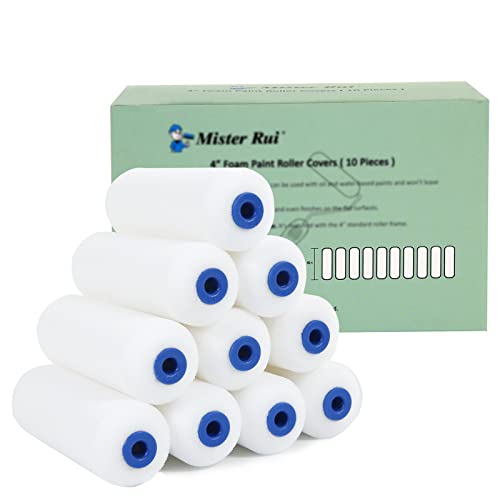
Mister Rui Mini Foam Paint Roller 4-Inch, 10 Pack

FoamPRO 5R 3-Inch Trim Roller Refills

Dynamic HM005314 Mini Foam Roller Refill 4-Inch, 10-Pack
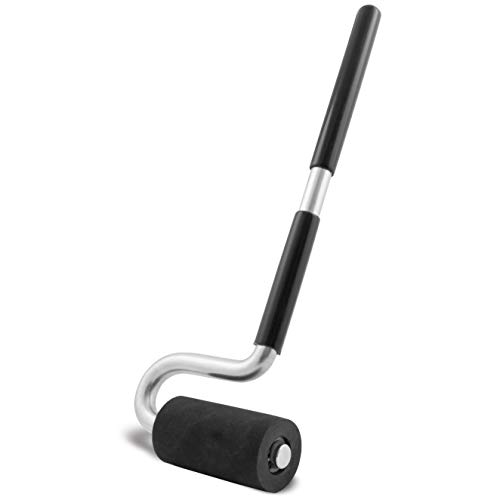
Fulton Long Handle J Roller for Veneer and Laminate

Great Andrew 3-Pack 9-Inch Roller Covers, 3/8″ Nap

WHIZZ Premium Foam Concave Roller 4-Inch, 10 Pack
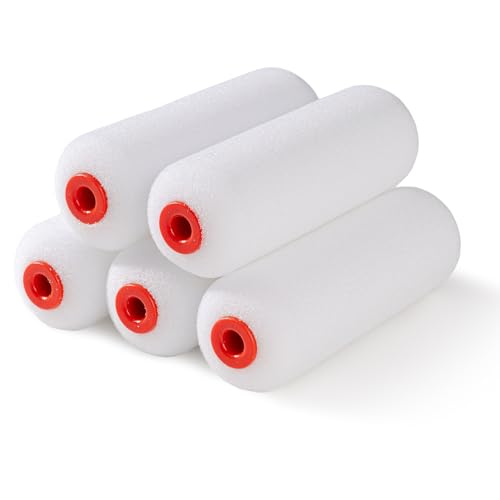
Mister Rui 4-Inch Foam Roller Covers 30 kg/m³, 5 Pack

Great Andrew 18-Pack 9-Inch Roller Covers, 3/8″ Nap

Great Andrew 6-Inch Roller Covers 1/2″ Nap, 10 Pack
More Details On Our Top Picks
Polyurethane on small craft and trim pieces punishes anything that sheds fiber. These Mister Rui sleeves are dense foam rather than knit fabric, which means the nap (the fuzzy surface of the cover) lays down thinner and smoother, a behavior that usually helps oil-modified finishes glide instead of stipple.
At 4 inches across, they fit standard mini frames and work for everything from narrow door edges to furniture drawer fronts. Coming in a 10-pack means a fresh sleeve is always on hand when one starts breaking down mid-coat, and most users find the foam rinses cleanly with the right solvent for the finish being used.
A Few Strong Suits
- Dense foam surface leaves minimal lint, so the finish dries without embedded fuzz
- Compatible with most water-based and oil-based paint systems, which covers common polyurethane formulas
- Small 4-inch size reaches into cabinet faces and tight trim lines that a 9-inch cover cannot
- 10-pack value keeps a backup ready for the day the foam starts checking or tearing
Things To Consider
- Foam naps tend to break down faster than fabric on large flat areas, so expect more sleeve swaps on long runs
- Cleaning for reuse is straightforward with water-based finishes, but oil-based poly calls for the appropriate solvent and a longer rinse
Made For
DIYers finishing cabinets, trim, doors, or small craft pieces where a smooth, lint-free pass matters more than speed.
Consider Something Else When
You are rolling a full wall of polyurethane. The Great Andrew 3-Pack 9-Inch Roller Covers, 3/8″ Nap covers broader flat planes with fewer seams per square foot.
The FoamPRO 5R sleeves are built for the tight corners where the Mister Rui set already runs small. At 3 inches, they slip along cupboard rails, furniture edges, and the inside faces of cabinet doors where a wider nap drags or skips.
These are refill covers, so a 3-inch frame is needed separately. Once mounted, the foam holds enough finish to lay down a full pass without re-dipping every few inches, which keeps wet edges cleaner on small parts.
The Good Stuff
- 3-inch width reaches into narrow rails and recessed panels that wider covers cannot navigate
- High-capacity foam holds more finish, reducing the stop-and-go that causes lap marks on small parts
- Lint-free foam surface suits both polyurethane and other low-viscosity coatings
Worth Noting
- Refills only, so a compatible mini frame is required to actually use them
- For large flat panels the small width becomes a productivity tax, often better handled by a 6-inch cover
Right Fit For
Furniture refinishers and cabinet owners working on detailed trim work where a 3-inch footprint is the difference between clean coverage and roller marks.
Look Elsewhere When
You need a J-style pressure roller for glue-down veneer, since that is a different tool entirely. The Fulton Long Handle J Roller for Veneer and Laminate fills that role.
Many foam naps form bubbles the moment latex enamel hits the surface. The Dynamic HM005314 sleeves are formulated to push out that air so the coat levels instead of cratering, which matters when you are rolling over cured enamel or melamine-coated panels.
Coming in a 10-pack, the value is similar to the Mister Rui set, but the chemistry is what sets them apart. Doors, window frames, and built-in cupboards all benefit from the controlled release this foam provides, especially in second and third coats.
A Few Highlights
- Designed to lay down latex enamels without trapping bubbles in the film
- Compatible with melamine, semi-gloss, and enamel paint systems for varied interior work
- 10-pack pricing helps when sleeves wear out on a multi-room project
Trade Offs
- The same fine-cell foam that resists bubbles can soak up thinner finishes more aggressively, sometimes forcing a second pass for full coverage
Best Suited To
Anyone refinishing door frames, kitchen cupboards, or built-ins where bubble-free enamel coats are the goal.
A Better Fit Elsewhere
You want a washable cover you can use across multiple sessions. The Mister Rui 4-Inch Foam Roller Covers 30 kg/m³, 5 Pack is built for repeated rinsing and reuse.
The Fulton J Roller sits in a different lane from the foam and fabric sleeves above. Instead of spreading finish, it applies firm, even pressure to bond veneer, laminate, and contact paper to a substrate, a job where trapped air or weak adhesion ruins the whole sheet.
The thick rubber barrel concentrates force on a narrow line, and the long handle gives enough leverage to flatten large panels without crawling across the workpiece. For woodworkers, that combination tends to replace the usual household workaround of a rolling pin or block of wood.
The Helpful Details
- Thick rubber barrel delivers firm, concentrated pressure along glue lines for solid contact
- Long handle keeps hands off wet adhesive while still reaching across cabinet sides
- Useful on veneer, laminate, and even wall-covering projects where adhesion matters most
Minor Gripes
- Not a finish roller, so it has no role in actually applying polyurethane to a surface
- Single-piece construction with no replacement parts, so once the rubber hardens the whole tool retires
Perfect Match For
Woodworkers and DIYers pressing down veneer, laminate, or wall coverings before a topcoat goes anywhere near the project.
Swap It Out When
You are rolling the actual finish and not bonding sheet goods. The FoamPRO 5R 3-Inch Trim Roller Refills is a better fit for spreading polyurethane on tight trim.
The 4-inch foam rollers above are quick on small surfaces, but polyurethane on a wide tabletop or interior wall calls for a wider nap. These Great Andrew sleeves are 9 inches across with a 3/8-inch nap, which sits in the middle of the nap range and handles smoother substrates without leaving heavy texture.
Polyester fabric resists shedding, so fibers are not the issue here. What matters more is the dense weave that holds a generous amount of finish, letting you cover more area per dip and reducing the lap marks that show up when a coat starts drying mid-pass.
Practical Pluses
- 9-inch width covers broad flat panels, doors, and full walls far faster than mini sleeves
- 3/8-inch nap lands in the middle of the pile range, suitable for surfaces with light to moderate texture
- Polyester fibers resist shedding during rolling, which keeps lint out of the wet film
Room For Improvement
- Not as smooth as foam on glass-flat surfaces, so a follow-up foam pass may be needed for high-gloss work
- Only 3 covers per pack, so larger projects may run out before the final coat
Who Should Grab It
Homeowners rolling polyurethane across doors, tabletops, or interior walls where a fabric nap holds enough material to keep up.
Reach For A Different Pick When
You have a multi-room repaint coming. The Great Andrew 18-Pack 9-Inch Roller Covers, 3/8″ Nap offers the same nap in a higher-count box.
Most rollers in this list have a straight barrel. The WHIZZ 29193 is concave, meaning the center of the foam is slightly recessed, which keeps the edges of the roller off the work and lets you finish inside curves and rounded moldings without leaving lines.
Made in Germany, the foam has a denser hand than typical disposable covers, and a 10-pack means you can use a fresh sleeve for every coat without worry. Polyurethane on shaped chair legs, curved aprons, or routed trim benefits most from the controlled edge contact.
Well-Handled Touches
- Concave foam profile keeps the edges off the work, which matters on inside curves and routed trim
- 4-inch width still fits a standard mini frame, so it pairs with handles you likely already own
- 10-pack lets you start each coat with a fresh sleeve, avoiding contamination from earlier passes
Points To Note
- Specialty shape costs more per sleeve than a straight foam cover of the same size
- Less useful on broad flat panels where the straight Mister Rui Mini Foam Paint Roller 4-Inch, 10 Pack lays down finish more evenly
Whose Shelf It Belongs On
Refinishers and trim carpenters rolling polyurethane along routed edges, chair legs, or any profile where a straight barrel would catch and leave a ridge.
Skip It When
You only roll flat panels. The Dynamic HM005314 Mini Foam Roller Refill 4-Inch, 10-Pack is a more general-purpose straight foam at a friendlier cost.
Where most foam sleeves in this list are treated as single-use, the Mister Rui 30 kg/m³ covers are designed to be rinsed and reused, with the manufacturer stating they hold up across five or more cycles for water-based finishes. The medium density strikes a balance between softness that glides and firmness that resists tearing.
At a 1.5-inch core, they snap onto the same standard 4-inch mini frames you may already own. The trade-off comes with oil-based poly, which can degrade the foam over time, so for solvent-heavy projects, swap in a fresh sleeve instead.
Useful Highlights
- 30 kg/m³ density sits in a balanced middle, soft enough to glide but firm enough to resist tearing mid-coat
- Stated reusability up to five or more sessions for latex and acrylic finishes, which trims replacement cost over time
- 1.5-inch core fits standard 4-inch mini frames you may already own
Honest Caveats
- Oil-based poly is not recommended by the maker and may shorten sleeve life
- Only five covers per pack, so a large project still needs backup sleeves nearby
Key Product Details
Who Will Love This
Water-based finishers running a multi-coat project who would rather rinse a sleeve than throw it away after every pass.
Where A Sibling Pick Shines
You only need short bursts of foam for a quick touch-up. The Mister Rui Mini Foam Paint Roller 4-Inch, 10 Pack is the more disposable option in the same size.
The 3-pack Great Andrew sleeve already handled broad surfaces, but bigger projects run through covers fast. This 18-pack keeps the same 3/8-inch nap, same 9-inch width, and same polyester build, just at a count that survives a full-room job.
Polyurethane tends to get thick as the can sits, and a sleeve loaded with partially gelled finish can leave drag marks. Swapping to a clean cover every coat is the simple fix, and an 18-count box removes the temptation to keep pushing a tired nap.
Everyday Advantages
- 18 sleeves per box leaves enough for fresh covers on every coat of a multi-room project
- 3/8-inch nap handles lightly textured walls and doors without leaving heavy stipple
- Polyester fibers resist shedding, so the wet film stays free of stray threads
Some Limits To Know
- Storage space becomes a factor with an 18-pack sitting in the workshop
- Worth confirming the core size matches your existing frame, since not all 9-inch covers share the same core
Feature Snapshot
Built With In Mind
Homeowners taking on a full interior repaint or refinishing multiple doors, where sleeve changes between coats are part of the workflow.
Not Your Match When
You only need to finish a single piece of furniture. The Mister Rui Mini Foam Paint Roller 4-Inch, 10 Pack is the smaller, more focused option.
Somewhere between the 4-inch foam and the 9-inch wall sleeves sits the 6-inch cover, and that is the gap this Great Andrew pack fills. The 1/2-inch nap (the length of the fibers sticking out from the roller core) is longer than the 3/8-inch picks above, so it carries more finish and forgives slight surface texture.
Acrylic construction gives the nap a soft, dense feel that absorbs paint quickly and reduces drips on doors, cabinets, and furniture. The 10-pack count lines up with typical project size, and the covers rinse for reuse with the right cleaning approach.
What It Does Well
- 6-inch width lands between trim and wall sizes, useful on cabinet doors, tabletops, and similar mid-scale panels
- 1/2-inch nap holds more finish, helpful on slightly textured or porous substrates
- Acrylic fibers feel soft and dense, absorbing finish quickly with reduced drip on the leading edge
Practical Considerations
- The longer nap can leave more texture on glass-smooth surfaces than a foam sleeve would, so a final foam pass may help for high-gloss work
- Crack-proof claims depend on careful rinse and dry cycles, so a worn cover still needs replacing on schedule
Product At A Glance
The Right Fit
Finishers working on cabinet doors, smaller tables, or furniture where a 9-inch cover is too wide but a 4-inch sleeve is too narrow.
Another Choice May Suit
You need the smoothest possible film on a glass-flat surface. The WHIZZ Premium Foam Concave Roller 4-Inch, 10 Pack is the cleaner foam option for shaped or flat work.
What Matters Most Before Choosing Rollers For Polyurethane
Nap Material And Surface Compatibility
Polyurethane behaves differently from wall paint, so the nap material matters as much as the size. Foam lays down thinner films and resists fiber shedding, which suits cabinet faces, trim, and any high-gloss topcoat. Fabric naps, especially polyester or acrylic, carry more finish and tolerate slightly textured surfaces, so they earn their keep on doors, tabletops, and broader flat work. The 3/8-inch nap on the Great Andrew 9-inch sleeves, for example, covers lightly textured walls without leaving heavy stipple, while the Mister Rui foam sleeves push out a near-spray finish on flat panels. Choosing between them is really choosing how much texture you can live with and how smooth the surface is to start.
Width And Frame Compatibility
The roller width should match the panel size. Foam sleeves in 3- and 4-inch sizes handle trim, cupboards, and routed profiles, while 6- and 9-inch covers pick up speed on doors, walls, and tabletops. Refills like the FoamPRO 5R need a compatible frame, so it pays to check the core diameter (1.5 inches is the common mini-roller size) before ordering. The WHIZZ concave sleeve also mounts to a standard 4-inch frame, which keeps the specialty profile from requiring a separate handle.
Project Scale And Sleeve Count
A 3-pack runs out fast on multi-coat work, since sleeves tend to wear down, mat, or load with partially cured finish by the second or third pass. Multi-room projects benefit from the 18-pack Great Andrew 9-inch covers, while smaller trim jobs make sense with the Mister Rui 10-pack foam. The right count keeps a fresh sleeve available when a tired cover would start leaving drag marks in the wet film.
Key Considerations Across These Picks
Pitfalls Shoppers Hit
The most common slip-up in this category is matching roller width to the wrong surface, and the second is mixing oil-based poly with foam not rated for solvent exposure. Foam sleeves often advertise compatibility with both water- and oil-based finishes, but the Mister Rui 30 kg/m³ covers, for example, are explicitly not recommended for oil-based formulas. Another trap is reaching for a long-nap cover on a glass-flat panel. The 1/2-inch nap on the Great Andrew 6-inch set holds more finish but leaves more texture, so a follow-up foam pass is usually required for the final coat. Foam naps, by contrast, can drag and tear on rough substrates where fabric naps absorb the abuse better.
What The Higher Tier Buys
Stepping up in this category mostly buys foam quality, frame compatibility, and pack count. A denser foam like the Mister Rui 30 kg/m³ covers offers rinse-and-reuse cycles that cheaper single-use sleeves cannot match. A larger pack like the Great Andrew 18-pack 9-inch covers removes the temptation to keep rolling with a tired nap on coat three. Specialty profiles like the WHIZZ concave foam add contour control for routed trim, which a straight barrel cannot deliver. None of those upgrades change the basic chemistry of polyurethane, but they do reduce the chance of lap marks, embedded lint, and uneven sheen across the finished surface.
Frequently Asked Questions
Can foam rollers be used with oil-based polyurethane?
Some can, but the safer answer depends on the maker’s guidance. Many foam sleeves in this list are designed primarily for water-based finishes, and oil-based formulas can shorten sleeve life or break down the foam over time. For oil-based projects, it is worth checking the product description for solvent compatibility or reaching for a fabric nap.
What nap length works best on smooth surfaces?
Shorter naps around 1/4 inch or foam sleeves with no nap at all give the smoothest film on glass-flat panels. The Mister Rui Mini Foam Paint Roller 4-Inch, 10 Pack is a good example of a smooth-surface option, since the dense foam leaves very little stipple compared to a 3/8-inch fabric cover.
How do I avoid lap marks when rolling polyurethane?
Keep a wet edge by rolling into the previous pass before it tacks off, and swap to a fresh sleeve when the current one starts to drag. Larger pack counts like the Great Andrew 18-Pack 9-Inch Roller Covers, 3/8″ Nap make sleeve changes easier, which is one of the most reliable ways to keep lap marks out of the final film.
Are J rollers used for applying polyurethane?
J rollers like the Fulton Long Handle J Roller for Veneer and Laminate are pressure tools, not finish applicators. Their job is to bond sheet goods such as veneer, laminate, and contact paper to a substrate, not to spread the topcoat. For applying polyurethane, a foam or fabric nap sleeve is the right tool.
How long do foam roller covers last?
Single-use foam sleeves typically last one or two coats before the nap starts to break down. Reusable foams like the Mister Rui 4-Inch Foam Roller Covers 30 kg/m³, 5 Pack are stated to handle five or more cycles with water-based finishes when rinsed and dried between uses. Oil-based poly shortens that lifespan regardless of construction.




