


Working at height turns into a calculated risk the moment a ladder, a roof edge, or a beam comes into play. The right anchor quietly does its job so you can think about the task, not the fall. This list covers residential roofers, weekend DIYers cleaning gutters, and tradespeople who need a reusable setup they can move job to job. Each pick leans on the manufacturer’s stated compliance with OSHA (Occupational Safety and Health Administration) and ANSI (American National Standards Institute) standards, the two benchmarks that govern fall protection equipment in the U.S.
The Lineup, Simplified

Guardian 00510 Double D Ring Ridge-It Roof Anchor (18″)
KwikSafety GIBBON 6ft Cross Arm Strap Anchor

TRSMIMA Safety Strap Fall Protection Cross Arm Anchor

KwikSafety GATOR Reusable Roof Anchor (7-Pack)
KwikSafety GIBBON 3ft Cross Arm Strap Anchor

Super Anchor Safety 2815 RetroFit Permanent Roof Anchor

Guardian 00101 Beamer 2000 Horizontal Beam Anchor
KwikSafety Lemur 6′ Cable Anchor Sling (PVC Coated)
Peakworks Temporary Reusable Roof Anchor Bracket
The Strengths Of Each Pick
For homeowners who climb onto the roof once a season and contractors who treat the anchor as a permanent fixture, the Guardian 00510 fits the bill. The 18-inch body straddles the ridge line and is built from zinc-plated and stainless steel, so rust stays out of the picture for years of weather exposure. A butyl strip sits underneath the plate, sealing the fasteners against the sheathing to keep water out of the install.
Two D rings give you a true 360-degree tie-off, which is the kind of geometry that matters when you pivot around a chimney or step off a ladder mid-task. The anchor ships with twelve 3-inch 16d stainless spiral nails, enough to seat it firmly into a standard rafter pair without a hardware store run. You may find the included nails overkill on thinner sheathing, so pre-drilling is worth a thought.
What Pays Off
- Zinc-plated and stainless steel build resists corrosion in wet climates.
- Butyl sealing strip keeps the install watertight without extra flashing work.
- Twin D rings offer 360-degree tie-off geometry for repositioning on the roof.
- 18-inch length reaches across standard ridge framing without modification.
- Fastener kit is included, so you can install right out of the box.
Trade-Offs To Consider
- Permanent install leaves a visible plate on the ridge, which may bother aesthetic-minded homeowners.
- Not reusable; the design assumes the anchor stays put for the life of the roof.
Made For
Homeowners and contractors installing a long-term fall-arrest point on a standard residential shingle roof.
Consider Something Else When
The KwikSafety GATOR reusable bracket suits you better if you want to move the anchor from job to job without leaving a permanent mark on the ridge.
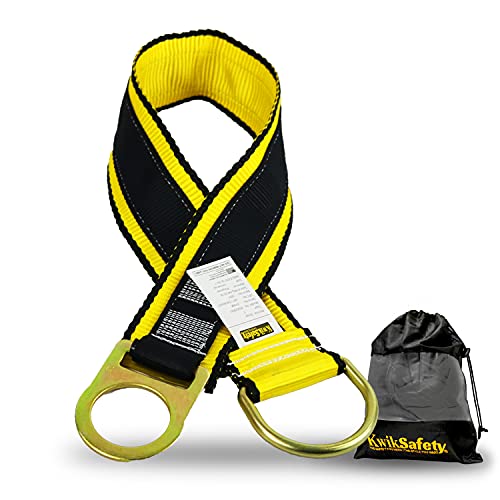
Cross arm straps earn their keep in steel erection, HVAC, and any task where the anchor wraps around a horizontal I-beam rather than bolts to a roof surface. The KwikSafety GIBBON at 6 feet handles wider flange spans and gives the user room to choke off around larger structural members. The webbing slides around the beam and cinches through a D ring, creating a choker-style anchor point that travels with you if you re-position.
You can think of it as a belt for the beam, and the length keeps the geometry forgiving on industrial jobs. Setup is intuitive enough that a first-time user gets the hang of it within a couple of wraps, though the strap should always be inspected for fraying or chemical damage before each use. The trade-off is that a textile anchor of this length is bulkier to store than a compact metal bracket.
Where It Helps
- 6-foot length reaches wider beams that shorter straps cannot choke.
- Textile wrap avoids scratching painted or coated structural steel.
- Lightweight compared to rigid metal beam anchors in the same category.
- Pairs with any standard D ring carabiner or snap hook on the harness end.
Points To Keep In Mind
- Webbing can absorb water, chemicals, or paint overspray on industrial sites.
- Bulkier to coil and store than the shorter GIBBON variant.
Who It Suits Best
Ironworkers and HVAC technicians wrapping wide steel beams who need a portable choker-style tie-off.
A Better Fit Elsewhere
Reach for the KwikSafety GIBBON 3ft instead if your beams are narrow and you want a tighter, more compact setup that stows in a small bag.
TRSMIMA leans into flexibility by offering a single listing that covers 3-foot, 4-foot, and 6-foot cross arm strap configurations. For a homeowner or solo contractor who bounces between attic beams, garage rafters, and outdoor structures, having all three lengths in one purchase removes the guesswork. The D ring on the end ties into a standard full-body harness with a snap hook.
The webbing behaves much like the GIBBON straps covered earlier, and the multi-length approach is the real hook here. You may find the listings themselves a touch confusing at first glance because the SKU covers three different sizes, so double-check what arrives before climbing. The trade-off is that a single strap length still has a single maximum span, so plan your anchor point accordingly.
The Practical Payoff
- Three length options reduce the need to buy separate straps per job.
- Light enough to toss in a truck or garage shelf between uses.
- D ring on the end keeps the harness attachment standard and quick.
Honest Caveats
- SKU covers multiple sizes, so verify your order matches the length you need.
- Strap inspection before each climb remains the user’s responsibility, as with any textile anchor.
- Not a substitute for a fixed roof anchor on permanent fall-arrest setups.
Right Fit For
DIYers and light-trade users who want one strap that handles narrow rafters, mid-span beams, and wider cross members.
Look Elsewhere When
The KwikSafety Lemur 6′ cable sling is a smarter pick if you need a more abrasion-resistant anchor for rough steel or concrete edges.
Crew-scale work demands gear that moves with the team, and the GATOR 7-pack answers that call. Each hinged bracket fastens over a ridge or peak and stays in place using the shingle and sheathing sandwich, rather than relying on dedicated fasteners. The hinge keeps the bracket flat during transport and pops up for install in seconds, which keeps a roofing day moving.
The case-pack format suits small roofing companies, multi-crew contractors, and even serious DIYers with outbuildings, sheds, and several structures to maintain. A D ring tops each bracket, so the connection to your harness or lanyard stays familiar. Note that the brackets ship without screws or nails, so sourcing your own fasteners based on the roof material is a must.
What Earns Its Place
- Hinged design folds flat for transport between job sites.
- 32 nail holes per bracket give installers flexibility over framing layout.
- Bulk 7-pack lowers the per-unit cost for crews.
- Compatible with any standard hook, harness, or self-retracting lifeline.
A Few Limitations
- Fasteners are not included, so plan a separate hardware purchase.
- Reusable nature means periodic inspection for bent plates or worn holes.
- Less discreet than a low-profile permanent anchor on finished roofs.
Best Suited To
Roofing crews and contractors running multiple short-cycle jobs who need a reusable anchor that deploys fast.
Swap It Out When
Switch to the Peakworks temporary anchor bracket if a single adjustable-pitch install is more your speed than a multi-unit crew pack.
When the beam is narrow and the gear bag is small, a 3-foot GIBBON strap is the easy call. The shorter span cinches tight around standard I-beams, scaffolding tubes, and attic rafters without leaving a lot of loose webbing to manage. It carries the same choker design as its 6-foot sibling, just in a more compact package that drops into a tool belt pouch.
For HVAC techs working overhead in mechanical rooms, residential electricians fishing wire through attic spaces, and homeowners doing one-off repairs, the size difference matters. The trade-off is real though: on wider flange beams, a 3-foot strap simply does not have the length to wrap fully. Buyers working in industrial settings should size up.
Reasons It Performs
- 3-foot length wraps narrow beams without excess slack.
- Pocket-friendly form factor for tool belts and small bags.
- Same D ring carabiner compatibility as the longer GIBBON strap.
Where It May Fall Short
- Limited reach on wider flanges and large structural members.
- Textile construction still requires pre-use inspection for frays or cuts.
Who Should Grab It
Electricians, HVAC techs, and homeowners working on narrow beams, rafters, and scaffolding tubes.
Where A Sibling Pick Shines
The 6-foot GIBBON handles industrial-scale beams where this compact version runs out of length.
Older homes rarely come with roof anchors, and the Super Anchor 2815 is purpose-built to fix that gap. Installation removes only a small section of ridge, drops the anchor into place, and seals it with butyl flashing and stainless fasteners. The low profile keeps the finished mount close to the shingle line, so it does not turn the roofline into an eyesore.
The retrofit approach works on asphalt shingle, wood shake, and many standing-seam metal roofs, which broadens the appeal for homes built before modern fall protection codes. You may find the install more involved than a temporary bracket, since it requires shingle work and proper flashing to avoid leaks. The honest read is that this is a one-afternoon project for a careful DIYer, or a quick visit for a roofing contractor.
Useful Touches
- Low profile keeps the finished mount visually subtle on the ridge.
- Stainless fasteners and butyl flashing included for a complete install.
- Suits retrofits on homes that never had a fall-arrest point.
Things To Consider
- Install requires lifting shingles and sealing flashing, which adds time.
- Permanent nature means it stays as part of the roof for the long haul.
Perfect Match For
Homeowners with older roofs that need a permanent, code-friendly fall-arrest point added without a full tear-off.
Not Your Match When
The Guardian 00510 ridge anchor suits newer builds better if you want a permanent install with dual D rings for greater tie-off flexibility.
Slide-on beam anchors earn their reputation on construction sites, and the Beamer 2000 leans into tool-free installation. The oversized locking lever clamps onto flanges from 3.5 to 14 inches wide and up to 1.25 inches thick, with bronze-manganese hooks that glide along the beam without chewing up the finish. Nylon bushings keep the D ring movement smooth, even under load shifts.
For ironworkers, riggers, and warehouse maintenance crews, the speed of repositioning matters as much as the anchor strength. The Beamer 2000 walks along the beam by unclipping, sliding, and reclamping, with no tools or loose hardware to lose on a catwalk. The trade-off shows up on tasks where the anchor must stay put for hours at a time; a temporary pin or secondary tie-off is worth adding for total confidence.
What Stands Out
- Tool-free clamp design cuts install time during repetitive repositioning.
- Wide flange range covers most I-beam, W-beam, and S-beam sizes in the field.
- Bronze hooks resist slag, sparks, and weld spatter on metalworking sites.
- Smooth D ring action reduces snag points on the harness lanyard.
Some Limits To Know
- Locking lever is a wear item that benefits from periodic inspection on high-cycle sites.
- Not designed for vertical surfaces or non-flange structural shapes.
Whose Shelf It Belongs On
Ironworkers, riggers, and steel erectors who need a sliding anchor along horizontal flange beams.
Reach For A Different Pick When
The KwikSafety Lemur cable sling fits the bill better for wrap-around anchoring on non-flange structural shapes like tubular columns.
Cable slings are the workhorses of fall protection on rough surfaces, and the Lemur 6-foot model brings a galvanized steel core wrapped in a PVC (polyvinyl chloride) jacket. That jacket shields the cable from abrasion when it rubs against concrete edges, rebar, or rough steel, which is where textile straps start to fray. Two pass-through alloy steel O rings at the ends give you flexibility in how you connect to the structure.
The combination works well for tower climbers, bridge inspectors, and concrete workers dealing with exposed rebar mats. You may find the cable stiffer to coil than a webbing strap, and the weight is noticeably higher in a tool bag. The honest read is that the durability is the trade-off, and for abrasive environments it is a worthwhile one.
Everyday Perks
- Galvanized steel cable core handles rough edges better than textile webbing.
- PVC coating protects the cable from nicks, cuts, and corrosion.
- Two O rings let you choose pass-through or choke configurations on site.
- 6-foot length covers a wide range of structural tie-off scenarios.
Practical Considerations
- Heavier and stiffer to coil than fabric strap anchors of similar length.
- PVC jacket can hide cable damage, so pre-use inspection needs a careful eye.
Built With In Mind
Tower climbers, bridge inspectors, and concrete crews who tie off on rough or abrasive structural surfaces.
Skip It When
Stick with the KwikSafety GIBBON strap for narrow steel beams where webbing wraps cleaner and lighter weight matters more.
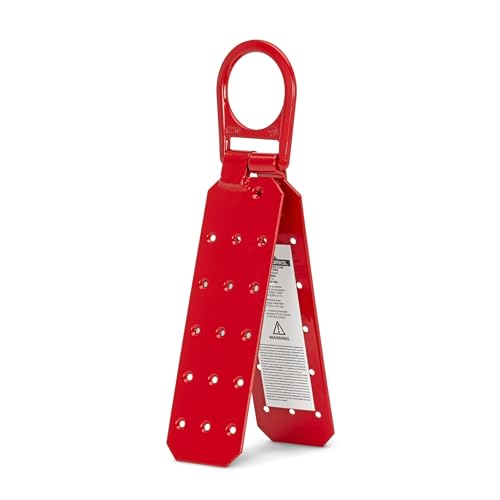
Roofs rarely sit at a single pitch, and the Peakworks bracket adjusts to match. The hinged plate works with the rafter or sheathing to seat the anchor on low-slope and steep pitches alike, while the forged steel D ring sits high enough to give a clean lanyard path. The red, corrosion-resistant paint over the steel body keeps the bracket serviceable across many reinstall cycles.
Single-worker use is the sweet spot here, which covers gutter cleaning, shingle repair, satellite dish work, and chimney inspections. The bracket is rated to handle one worker including tools, with a stated capacity ceiling of 310 pounds. You may find the bracket’s footprint larger than a low-profile permanent anchor, so plan for some shingle compression if you leave it in place for extended jobs.
The Helpful Details
- Adjustable pitch range handles common residential roof slopes.
- Forged steel D ring provides a robust harness tie-off point.
- Corrosion-resistant paint extends service life across many reuse cycles.
Things To Weigh Up
- Single-worker rated; not designed for crew-scale tie-off.
- Larger footprint than a permanent low-profile mount.
Who Will Love This
Solo roofers, homeowners, and inspectors who need a quick-deploy anchor that adapts to different pitches.
Where Another Pick Suits Better
Choose the KwikSafety GATOR 7-pack if your work spans multiple structures and the crew needs more than one anchor on hand at a time.
Picking The Right Anchor For The Job
A roof anchor earns its keep by matching the work, the surface, and the duration of use. Start with the substrate. Permanent ridge anchors like the Guardian 00510 and Super Anchor 2815 work on shingle or shake roofs where you want a long-term tie-off point. Steel and beam jobs call for textile straps, cable slings, or sliding beam anchors depending on the surface finish and span. Reusable brackets shine when the work is short-cycle and the anchor moves with the crew.
Compliance matters too. OSHA and ANSI ratings are not marketing fluff: they indicate the equipment has been independently tested to handle the load and arrest forces of a real fall. Pairing the anchor with a full-body harness, a shock-absorbing lanyard (a lanyard with a built-in decelerator that reduces arrest force on the body), or a self-retracting lifeline (a device that pays out and retracts the lanyard as the user moves) keeps the system within the standards that govern work-at-height safety. For most home users, a single anchor plus a basic harness and lanyard is enough; trade crews typically build out a fuller system with multiple anchors and dedicated connectors.
Real-world ownership comes down to inspection. Steel anchors should be checked for bent plates, cracked welds, and rust pitting, while textile straps and cable slings need a careful eye for frays, chemical damage, and PVC jacket wear. Storing gear dry and out of direct sunlight extends the service life of every component on this list.
Key Considerations Across These Picks
Mistakes Worth Dodging
A common slip is choosing an anchor based on the job you picture rather than the work you actually do. A permanent ridge anchor does nothing for a steel beam, and a textile strap is a poor match for abrasive concrete. The other trap is skipping the harness and lanyard that complete the system; the anchor is one-third of the equation, and pairing it with substandard connectors defeats the purpose of compliance ratings.
When Paying More Pays Off
Higher-tier anchors generally bring stainless hardware, sealed butyl flashing, forged D rings, and tougher finishes. On a permanent install that lives on a roof for twenty years, the upgrade pays back in leak prevention and reduced inspection cycles. For a single weekend gutter clean, the basic tier is usually enough, and overspending buys features that never get used.




