


Upgrading a router table starts with the surface your bit cuts through. A flat, well-aligned plate keeps profiles consistent, reduces tear-out, and turns bit changes from a contortion act into a quick twist. The picks below cover full benchtop tables, dedicated insert plates, router lifts, fences, and a cast-iron extension wing so you can build the setup that matches your shop. Each item earned its place because it solves a real problem woodworkers hit when their stock plate flexes, fights them on dust collection, or refuses to line up flush with the surrounding surface.
An Overview Of The Picks
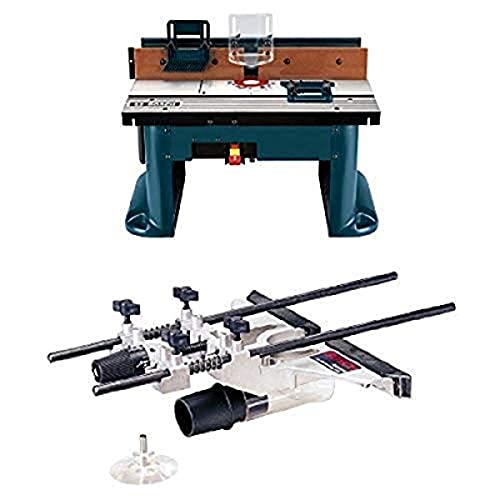
Bosch Benchtop Router Table with Dust Hood

BOSCH RA1181 Benchtop Router Table

Kreg PRS5000 Precision Router Lift

O’SKOOL MDF Router Table Top 32×24

Kreg PRS4036 Insert Plate for PC and Bosch

O’SKOOL Router Table Fence System 24″

Trend RTI/PLATE/A Aluminum Insert
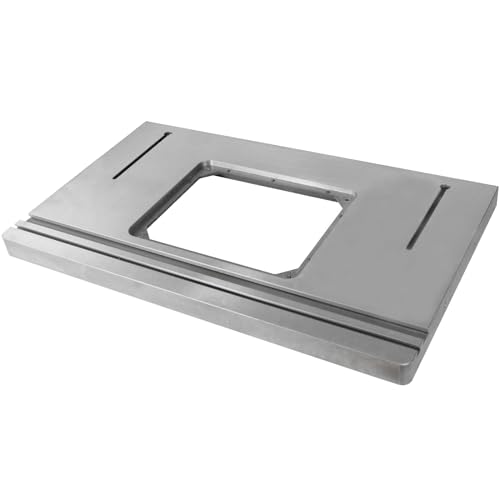
O’SKOOL Cast Iron Extension Wing 27×16

JessEm Mast-R-Lift II Router Lift Kit
A Deeper Look At The Lineup
This Bosch benchtop setup arrives as a ready-to-mount station rather than a bare plate. The aluminum fence with replaceable MDF faces gives you a workable surface right out of the box, and the bundled dust hood plus vacuum adapter address the chips and dust that plague enclosed router work. It clamps to a standard workbench, which keeps the footprint manageable in a smaller shop.
Two adjustable featherboards come along for the ride, which saves a separate purchase. The dual-outlet switch and 6-foot power cord simplify how you add a shop vacuum into the system. For a woodworker who wants a complete starter surface without mixing brands, this package hits most of the basics.
The Value In It
- Aluminum fence with swappable MDF faces lets you refresh the wearing surface instead of replacing the whole fence.
- Bundled dust hood and vacuum adapter pull chips away from the bit area, which is the real difference between a clean cut and a dusty one.
- Two featherboards included, so fence-side hold-downs are covered from day one.
- Aluminum router mounting plate keeps the base flat and resists sag over years of use.
Things To Consider
- Compatibility is limited to specific Bosch routers (1617, 1618, 1619 series and a handful of others), so it may not fit the motor you already own.
- The MDF face plates will scuff and burn with heavy use, and replacements need to be sourced separately.
Feature Snapshot
Who It Suits Best
Shop owners running compatible Bosch routers who want a full benchtop solution without sourcing every component separately.
Consider Something Else When
The JessEm Mast-R-Lift II makes more sense for anyone needing above-table bit changes on a fixed-base motor that is not on Bosch’s compatibility list.
The RA1181 has been a fixture in hobby shops for years, and it earns that reputation through practical details. A built-in storage pocket keeps wrenches and accessories within reach, while the accessory slot accepts standard 3/4-inch featherboards and a miter gauge. The dedicated 2-1/2 inch dust port matches most shop vacuum hoses without adapters.
For a woodworker buying their first router table, this is a forgiving platform. Compared to the Bosch benchtop above, the RA1181 trades the integrated dust hood for a more universal vacuum port, which means a wider range of routers drop in. Cord-wrap storage and the storage pocket keep the workbench tidy between sessions.
Standout Benefits
- Storage pocket holds wrenches and small bits so they stop disappearing into the shop floor.
- Standard 2-1/2 inch dust port fits common shop vacuum hoses without a reducer.
- Accessory slot accepts featherboards and a miter gauge, so you can dial in repeatable setups.
- 6-foot cord wraps neatly on integrated hooks, which keeps the bench area safer.
Worth Noting
- The stock fence can deflect under heavy side pressure, so plan to add a reinforcing accessory if you push the limits.
- At 30+ pounds with packaging, it is heavier than some compact benchtop units.
Built With In Mind
Beginners and weekend woodworkers setting up a first dedicated routing station who want a forgiving, well-documented platform.
Not Your Match When
The Kreg PRS5000 Precision Router Lift fits better for anyone producing high volumes of identical cuts and needing above-table bit changes.
Where the Bosch benchtop and RA1181 give you a surface and a fence, the PRS5000 changes how you interact with the router itself. A router lift raises and lowers the motor through the insert plate from above, so depth changes happen with a twist of a handle instead of crouching under the table. That matters when you are tuning a profile in 1/64-inch increments across multiple test cuts.
The hard-anodized aluminum plate measures 3/8 inch thick and resists sag and scratches, which keeps the cutting surface flat over years of use. Anti-backlash gearing (a design that takes up the slack in the threads so adjustments stay accurate) holds the height steady once you lock it in. For production runs of door panels or matched joints, the time saved compounds fast.
Where It Excels
- Above-table height adjustment removes the crawl-under-the-table routine that wears out your back during long sessions.
- Hard-anodized aluminum plate resists sagging and holds up to repeated bit changes without warping.
- Fits 20+ routers including Kreg tables and several competitive brands, so you are not locked into one ecosystem.
Trade Offs
- You still need a router table to mount it in; this is an upgrade, not a complete station.
- Some fixed-base routers require adapter rings, which add a step to the install process.
Best Suited To
Production-minded woodworkers and serious hobbyists who run matched setups all day and need repeatability more than a quick one-off.
Look Elsewhere When
The O’SKOOL MDF Router Table Top suits anyone wanting to build a custom bench around a standard plate rather than upgrade an existing table.
Not everyone wants a packaged benchtop table. The O’SKOOL MDF top gives a woodworker a flat melamine-laminated surface (MDF is medium-density fiberboard; melamine is a hard plastic coating that reduces friction and resists glue) to build their own enclosure around, which matters when your shop layout does not match a stock product. At 32 by 24 inches with a 1-11/32 inch thickness, it has the mass to stay put during heavy cuts.
The top accepts standard 11-3/4 by 9-1/4 inch plates, so the Kreg PRS5000 from earlier and the O’SKOOL RTS02A both drop straight in. The melamine layer makes the surface slippery enough to push stock across and easy to wipe clean of pitch and dust.
A Strong Showing
- Melamine laminate reduces friction, so pushing wide panels takes less effort.
- Standard plate opening matches common insert plates, which means you are not locked into one vendor.
- Generous 32 by 24 inch footprint handles long workpieces without overhang issues for most cuts.
Minor Gripes
- MDF edges are vulnerable to moisture, so keep the shop dry or seal exposed edges.
- You supply the cabinet, fence, and dust collection, which means more up-front planning.
The Right Fit
Woodworkers building a custom router table enclosure to match a specific shop layout or workstation height.
Skip It When
The O’SKOOL Cast Iron Extension Wing fits shops that already own a table saw and want to integrate routing into that footprint.
Sometimes the fix is as targeted as the problem. The PRS4036 arrives predrilled for Porter-Cable 690 and 890 series routers and the Bosch 1617, which covers a wide swath of motors that have lived in shops for decades. Level-Loc insert rings twist in and out by hand, so swapping bit profiles is fast.
The 3/8 inch phenolic plate (a dense, moisture-resistant laminate often used in machining fixtures) stays rigid under cut loads and absorbs less vibration than thinner aluminum plates in some setups. Built-in centering marks help you align the router base so the bit runs true to the plate opening. For shop owners who already have a table and a router, this is the kind of upgrade that tightens every cut.
Reasons It Performs
- Predrilled mounting holes for two of the most common router families in woodworking shops.
- 3/8 inch phenolic plate resists sagging and dampens vibration for smoother cuts.
- Level-Loc rings snap in and out without tools, which speeds up bit swaps.
Points To Keep In Mind
- The predrilled pattern fits a specific list of routers, so check your model number before ordering.
- Plate leveling on first install takes patience to get the plate perfectly flush with the table surface.
Quick Facts
Made For
Owners of Porter-Cable 690/890 or Bosch 1617 routers who want a plate that drops in without drilling custom mounting holes.
Reach For A Different Pick When
The Trend RTI/PLATE/A serves woodworkers who need a blank aluminum plate to drill to fit a router not on the Kreg compatibility list.
A wobbly fence undermines every cut a router table makes, which is why a dedicated fence upgrade often pays for itself. The O’SKOOL 24-inch system uses an aluminum alloy body with T-tracks on the front face, giving you a slot for hold-downs, stops, and featherboards. The package includes the fence, a featherboard, an adjustable stop, a bit guard, a dust port, and a measuring tape.
For shop owners who built their own table from the O’SKOOL MDF top above, this fence bolts on as a complete system rather than as separate parts. The aluminum body resists deflection during heavy profiling cuts, which is where a plastic-bodied fence can bow and ruin a match.
Useful Touches
- T-tracks on the front face accept standard 1/4 inch hold-down hardware.
- Aluminum alloy body stays stiff during aggressive cuts.
- Included featherboard and dust port save a separate parts run.
Honest Caveats
- 24-inch length may feel short for very wide panel work, so wider stock may need a different approach.
- Assembly is required, and a few extra minutes of setup go into aligning the fence to the plate.
Whose Shelf It Belongs On
DIY builders and hobbyists wanting a complete fence system that bolts to a shop-built or upgraded router table.
Swap It Out When
The Bosch RA1181 makes more sense for someone who wants a turnkey benchtop rather than separate components to assemble.
Pre-drilled plates work for common routers, but the Trend RTI/PLATE/A takes the opposite approach: a rigid aluminum alloy blank you drill to fit your exact motor. Two snap-in insert rings come along, sized for typical bit openings, so the surface around the bit stays close to the workpiece for safer cuts.
For a woodworker who owns an unusual fixed-base router or wants a plate tailored to a specific table opening, this is the most flexible option on the list. The aluminum holds shape well and machines cleanly with standard drill bits, though you will want a drill press for clean mounting holes.
Positive Points
- Blank aluminum plate fits routers that no pre-drilled plate covers.
- Two snap-in rings accommodate common bit diameters without extra purchases.
- Aluminum alloy construction holds up to repeated bit changes without cracking.
Where It Is Less Suited
- You need to drill mounting holes yourself, which requires layout skills and a drill press for accuracy.
- Not ideal for anyone who wants a drop-in, no-tools solution.
Feature Snapshot
Best Suited To
Custom shop builders who own a router no pre-drilled plate fits and are comfortable drilling their own mounting pattern.
A Better Fit Elsewhere
The Kreg PRS4036 drops in without drilling for anyone running a Porter-Cable 690/890 or Bosch 1617 router.
Most router tables live as separate stations, but this cast-iron wing takes a different route: it replaces a table saw extension wing to add a dedicated routing surface next to the saw. At 1-1/2 inches thick and 50+ pounds, the mass alone damps vibration in a way that lighter tables struggle to match. Long workpieces ride across the cast surface without chatter.
For shops that already own a table saw and want a routing station without sacrificing floor space, this is the unusual option. Mounting-hole patterns vary by saw, so confirming fit before ordering saves a return.
Practical Advantages
- Cast-iron mass dampens vibration, which shows up as cleaner cuts on hardwoods and large profiles.
- Replaces a table saw extension wing to consolidate two tools into one footprint.
- Heavy 50+ pound body stays planted without clamping during heavy cuts.
A Few Limitations
- Mounting pattern is saw-specific, so fit must be confirmed before ordering.
- The weight makes installation a two-person job, especially on a freestanding saw.
Technical Reference
Perfect Match For
Shops with a table saw that want routing integrated into the existing footprint rather than a separate benchtop table.
Where Another Pick Suits Better
The BOSCH RA1181 fits a shop that needs a freestanding benchtop unit instead of a saw-mounted extension.
The Mast-R-Lift II sits at the premium end of the list, and the build shows it. The 3/8 inch hard-anodized aluminum plate installs in JessEm, Kreg, Bosch, Rockler, and shop-built router tables that use the standard 9-1/4 by 11-3/4 opening. Ten leveling screws and three cam locks bring the plate dead flush with the table surface, so the workpiece rides across without catching an edge.
Above-table bit changes happen in seconds because the collet (the collet is the clamping sleeve inside the router that grips the bit shank) raises through the plate to release the bit. Adjustable clamping blocks fit most fixed-base router motors including Porter-Cable 7518/7519, Bosch 1617/1618, DeWalt 616/618, and Triton, so you can share one motor between table and handheld work. Three Tab-Loc insert rings (1-3/8, 2, and 2-1/2 inch) twist out by hand.
The Helpful Details
- Above-table bit changes eliminate crawling under the table with a bent wrench.
- Adjustable clamping blocks fit many popular fixed-base routers without an adapter collar.
- Hard-anodized aluminum plate resists wear and stays flat over years of use.
- Cam locks and leveling screws deliver a flush fit that supports clean cuts.
Potential Compromises
- You supply the table, so this is an upgrade to an existing setup rather than a complete station.
- Some router models still need an adapter plate to fit the clamping blocks.
Key Product Details
Who Should Grab It
Woodworkers producing repeated cuts in a busy shop who want above-table bit changes and a plate that holds alignment over time.
Where A Sibling Pick Shines
The Kreg PRS5000 Precision Router Lift suits anyone who already runs a Kreg table and wants a streamlined lift system designed for that ecosystem.
Choosing Router Table Insert Plates That Match Your Shop
The right plate depends on three things: the router you already own, the kind of cuts you make, and how often you swap bits. Start with compatibility. A pre-drilled plate like the Kreg PRS4036 saves hours if your router is on its list. If you run an unusual motor, a blank aluminum plate such as the Trend RTI/PLATE/A is the more practical choice.
Plate material shapes how the surface behaves under load. Phenolic (the dense resin-laminate material used in the PRS4036) dampens vibration and resists moisture, which matters in humid shops or shops that run dust collection. Hard-anodized aluminum (a surface-hardening treatment that creates a slick, wear-resistant skin on the metal) holds shape well and stays flat across years of use, which is why lift kits like the JessEm and Kreg PRS5000 lean on it. Cast iron, as used in the O’SKOOL extension wing, brings mass to the table that lighter surfaces cannot match.
The third decision is how you change bits. Above-table bit changes through a router lift save real time on production runs and reduce the contortion of reaching under the table. For a hobbyist running occasional cuts, a fixed insert plate with twist-out rings is plenty.
Finally, think about shop layout. A freestanding benchtop like the RA1181 fits a corner. An MDF top like the O’SKOOL 32 by 24 lets you build a custom cabinet at the right height. A cast-iron extension wing integrates routing into a table saw footprint. Pick the form factor that matches how your shop actually flows, not just the one with the longest feature list.
Picking Router Table Insert Plates Without The Usual Missteps
Where Shoppers Go Wrong
The most common mistake is choosing a plate before checking the router base pattern. Pre-drilled plates only fit the routers listed in the compatibility chart, and a return costs more time than a five-minute measurement. Keep your router’s model number handy when you order.
Another trap is underestimating the role of leveling. A plate that sits 1/32 inch proud of the table catches the workpiece at the start of every cut, which is the kind of thing you only notice after a spoiled panel. Plan to spend real time on the leveling screws and cam locks during install.
What The Higher Tier Buys
Premium router lifts like the JessEm Mast-R-Lift II and Kreg PRS5000 cost more because they add a moving carriage, precision gearing, and above-table access. For a hobbyist running a few joints a month, the time savings may not justify the cost. For a shop producing matched doors or running a small production schedule, the saved minutes per bit change add up to hours each week.
Hard-anodized aluminum and phenolic plates cost more because they hold their flatness longer than stamped or thin aluminum. If you cut hardwood daily, that stiffness shows up as cleaner edges and fewer re-cuts. For occasional softwood work, a mid-range plate performs just as well.
Frequently Asked Questions
What Size Router Table Insert Plate Do I Need?
Most modern router tables use the standard 9-1/4 by 11-3/4 inch opening, which is what the Kreg PRS5000, JessEm Mast-R-Lift II, and the O’SKOOL MDF top all accept. Measure your table opening before ordering, especially on older or shop-built tables, since patterns vary.
Can I Use Any Router With Any Insert Plate?
Not without drilling. Pre-drilled plates only fit the routers listed in the product specifications. Trend’s RTI/PLATE/A and similar blank plates let you drill the mounting pattern to fit a wider range of motors, including uncommon models.
What Is The Difference Between Phenolic And Aluminum Plates?
Phenolic is a dense resin-laminate that dampens vibration and resists moisture, which is why the Kreg PRS4036 uses it. Aluminum plates, particularly hard-anodized versions, stay flat across temperature swings and machine cleanly if you need to drill custom mounting holes.
Do I Need A Router Lift For A Small Shop?
Not necessarily. A fixed insert plate with twist-out rings handles occasional bit swaps without the cost of a lift. A router lift pays for itself when you run repeated setups, build matched components, or want to make depth changes from above the table.
How Do I Keep The Plate Flush With The Table Surface?
Most quality plates include leveling screws or cam locks, as on the JessEm Mast-R-Lift II’s three cam locks. Loosen the locks, set a straightedge across the plate and table, adjust the screws until the plate is dead flush, then retighten. Recheck the leveling after the first few heavy cuts since wood movement and clamping pressure can shift things slightly.




