A clean routed sign starts long before the bit touches the wood. You need a steady hand, the right template to guide each letter, and a router that won’t bog down halfway through a long curve. Sign making rewards anyone who plans the setup first, because the wrong bushing or a weak motor shows up instantly in the finished letter. Hobbyists building porch signs, small-shop owners producing house numbers, and crafters turning out wedding décor all sit in the same boat. The gear below mixes precision jigs, specialty bits, and full router kits so you can match the tool to the work. Whether you’re cutting your first “Welcome” board or scaling up to batch signage, the right combination saves hours of fiddling and rework.
A Closer Look At The Lineup

BOZXYE 13-Pc Brass Router Template Bushing Guide Set with Centering Cone

POWERTEC 71356 Clear Acrylic Butterfly Bowtie Router Template 7-in-1 (Pack of 2)
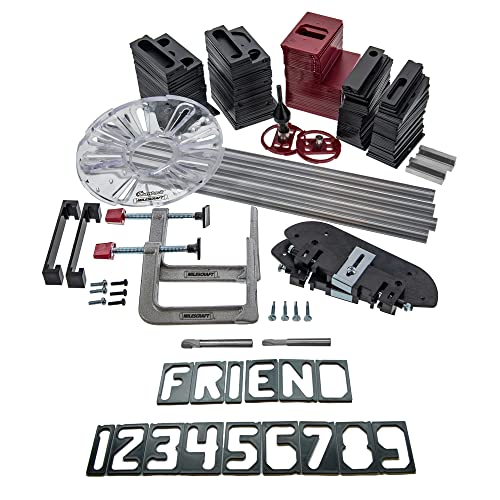
Milescraft 1212 SignPRO Sign Making Kit with 2.5in & 1.5in Template Sets

O’SKOOL Router Table Insert Plate Template Kit for 9-1/4″ × 11-3/4″ Plates

Milescraft 1207 Design/Inlay Router Template Jig (Black and Red)

HUHAO 90-Degree V Groove Router Bit, 1/2″ Shank x 2″ Dia

Bosch GKF125CEN Colt 1.25 HP Variable-Speed Palm Router
Milescraft 1212 SignPRO Sign Making Kit for Routers (Complete Kit)

DEWALT DWP611PK Fixed/Plunge Base Router Kit, Variable Speed
What Each Pick Brings To The Table
Template bushings are the unsung heroes of sign routing. A bushing rides along the edge of a template, and the bit follows underneath, so the cut perfectly mirrors the pattern. The BOZXYE set includes 13 pieces machined from solid brass, plus a centering cone that helps you align the bushing in your router’s sub-base before you lock it down. That sub-base is the flat plate beneath your router, and the bushing threads into it to act as the guide.
Solid brass matters here because plastic bushings wear out fast and wobble. With these, you get a firm, smooth glide along template edges, which translates to clean letterforms and tight corners. The set comes in a carrying case, so the smaller sizes don’t disappear into a drawer. For anyone cutting repeatable sign layouts, the bushing set is what actually makes the template useful.
Standout Benefits
- 13 brass bushings cover most sign-template hole sizes you’ll encounter.
- Centering cone simplifies alignment in the sub-base before locking the bushing in.
- Brass resists wear, so repeated sign runs don’t slowly distort the cut.
- Carrying case keeps every piece organized between projects.
- Works with Porter-Cable style sub-bases, a common standard on mid-size routers.
Worth Noting
- You’ll need a router with a compatible sub-base; some compact palm routers use proprietary plates.
- Brass can tarnish over time, though it doesn’t affect cutting performance.
Quick Facts
Who Should Grab It
Sign makers who already own a router with a Porter-Cable style sub-base and want reliable, repeatable template cuts.
Consider Something Else When
The Bosch GKF125CEN Colt palm router suits you better if you prefer one-handed control over a guide bushing setup.
Not every sign element is a letter. Decorative accents like butterfly and bowtie inlays add craft-shop character to farmhouse signs, gift plaques, and wall hangings. The POWERTEC 71356 template is a clear acrylic plate cut to seven different butterfly and bowtie outlines, so you can trace, position, and route the shape with confidence. The transparency is the trick: you can see exactly where the cut will land on the workpiece before you commit.
At roughly 0.22″ thick, the acrylic sits flat on the wood without flexing, which keeps the bit depth consistent across each pass. You get a pack of two, so you can stage a pair of inlays or keep a backup template nearby. It pairs well with the brass bushings from the BOZXYE set in Pick 1, since the template openings are sized to accept standard bushing-and-bit combinations.
Practical Advantages
- Seven shapes in one plate give variety without buying seven separate stencils.
- Clear acrylic lets you align the cut visually before routing.
- Pack of two supports batch work or replaces a worn template.
- Decorative shapes complement letter-based sign layouts nicely.
Trade Offs
- Acrylic edges can chip if you drop the template, so handle with care during storage.
- Limited to bowtie and butterfly shapes; you won’t get full letterforms here.
- You’ll need to secure the template with double-sided tape or clamps to prevent drift during routing.
Best Suited To
Crafters building farmhouse-style or decorative accent signs who want consistent inlay shapes without freehand routing.
A Better Fit Elsewhere
The Milescraft 1207 Design/Inlay Kit gives you more shape variety for general decorative work, while this POWERTEC set focuses on the bowtie theme.
Milescraft builds its sign-making jigs around the same idea: a sturdy frame, clear character templates, and a bushing system that turns your handheld router into a guided sign cutter. This version pairs the 1212 base jig with the 2201 horizontal character set at 2.5 inches tall (41 pieces) and the 2202 horizontal set at 1.5 inches (42 pieces). Two sizes mean you can lay out large address numbers and small detail words on the same project.
The kit includes 1/4-inch and 3/8-inch tungsten carbide-tipped core box bits, a turn-n-lock base plate, metal nose bushings, and low-profile C-clamps. The carbide bits hold an edge far longer than high-speed steel, so you can grind through several signs before sharpening. The low-profile clamps keep the router base clear as it slides through the frame, which is a detail you’ll appreciate the first time a clamp gets in your way on a competing jig.
Well-Handled Touches
- Two template sizes cover both feature text and smaller detail lettering.
- Tungsten carbide bits outlast standard steel, supporting batch sign runs.
- Turn-n-lock base plate swaps routers quickly without re-measuring.
- Low-profile C-clamps clear the router base during travel.
Minor Gripes
- Horizontal-only character set means vertical numbers come from a separate add-on.
- Frame size limits sign length; you may need to reposition for boards over 36 inches.
- Some assembly out of the box before your first cut.
Spec Overview
Right Fit For
Home sign makers producing both header text and supporting detail words on signs up to roughly 36 inches wide.
Look Elsewhere When
The complete Milescraft 1212 SignPRO bundle suits you better if you also need vertical number templates bundled in.
Sign making gets easier when you flip the workflow upside down and use a router table. Instead of chasing the wood with a handheld router, the wood slides across a stationary bit, which gives you better control on small letters and tight curves. The O’SKOOL template kit helps you cut the opening in your table for a 9-1/4″ × 11-3/4″ insert plate, the flat metal or phenolic plate that surrounds the bit.
Cutting that opening freehand is where most router table builds go wrong, leaving a wobbly fit that the insert plate won’t seat into. This kit provides the template, thread inserts, and a matching router bit so the cut is the right size the first time. The result is a snug, flush fit that doesn’t let dust and chips kick up under the workpiece.
What It Does Well
- Eliminates measuring errors when fitting a standard insert plate.
- Thread inserts and bit included, so you don’t piece the job together from separate parts.
- Sized for 9-1/4″ × 11-3/4″ plates, a common router table standard.
Softer Spots
- Specific to one plate size; other table sizes need a different template.
- Best suited to someone already committed to building a router table.
Feature Snapshot
Made For
Builders assembling a router table and wanting a precise, repeatable insert plate opening without trial-and-error cuts.
Skip It When
The Milescraft 1207 inlay kit makes more sense if you’d rather stay handheld and skip the table build entirely.
New sign makers often freeze at the blank-board stage because drawing a clean design feels harder than the routing itself. The Milescraft 1207 sidesteps that hurdle with a small set of geometric templates, plus a pencil guide that helps you trace petals, hearts, stars, circles, and bowties before any cutting begins. You draw first, then route, so mistakes happen on paper, not in wood.
The kit ships with a manual containing 25 design ideas and guidance on creating your own patterns. The compact footprint makes it a friendly first jig for a small workbench, and the patterns are forgiving shapes that beginners can actually finish. Once you’re comfortable, the same pencil-trace-and-cut habit transfers to letterforms down the road.
Points In Its Favor
- Built-in pencil guide for accurate tracing before the bit touches wood.
- 25 design ideas in the manual ease creative block for first-timers.
- Compact size suits small workshops or apartment craft spaces.
Some Limits To Know
- No alphabet or number templates, so lettering comes from a separate add-on.
- Smaller pattern selection than a full sign-making jig.
Whose Shelf It Belongs On
First-time sign makers learning to translate traced designs into routed cuts without committing to a full jig yet.
Another Choice May Suit
The Milescraft 1212 SignPRO Complete Kit fits better once you’re ready to move past decorative shapes into full letter signs.
A V-groove bit carves a clean 90-degree channel into the wood, and that channel becomes the sharp valley between letters or the outline of a sign’s border. The HUHAO bit uses a solid carbide tip, the same hard-wearing material used on the Milescraft bits in Picks 3 and 8, so it holds its edge through repeated hardwood runs. The 1/2-inch shank gives the bit a stable grip in routers that accept larger shanks, reducing chatter on long cuts.
For sign makers, the practical question is what depth of V you need. A 2-inch diameter offers deeper cuts than smaller V bits, useful when you want a pronounced letter edge rather than a hairline score. Run it on a router table for tight, controlled passes, or freehand along a clamped straightedge for border grooves.
Useful Highlights
- Carbide tip outlasts high-speed steel on hardwoods and MDF.
- 1/2″ shank reduces vibration during deep cuts.
- 90-degree angle produces crisp, geometric letter edges.
Points To Keep In Mind
- Larger shank needs a router with a 1/2″ collet; smaller palm routers may not accept it.
- Single-profile bit, so you’ll want a second bit for non-V detail work.
Quick Technical Notes
Perfect Match For
Sign makers adding sharp, defined letter edges or decorative V-groove borders to finished plaques.
Swap It Out When
The DEWALT DWP611PK combo kit makes more sense if you don’t already own a router capable of holding a 1/2-inch shank.
Palm routers earn their place in sign making when you need to trim edges, round over sign borders, or handle small detail work that a full-size router would overpower. The Bosch Colt puts a 1.25-horsepower motor, 7-amp electronics, and a variable-speed dial in a body you can hold with one hand. The wide-bit capacity, accepting bits up to 1-5/16 inches across, means you can run larger profile bits without dipping into a bigger tool.
The depth-adjustment system is the quiet win: it locks repeatable settings, so when you’re rounding the same edge on ten identical signs, each one comes out the same. The non-split aluminum base housing keeps the bit area rigid, and an LED light at the front illuminates the cut line, which is a real help when the bit shadow would otherwise hide your layout marks.
A Few Highlights
- One-handed control keeps small signs and trim cuts manageable.
- Variable speed matches bit diameter and wood hardness.
- Wide-bit capacity accepts larger profile bits used for sign edges.
- LED light improves visibility on dark or figured wood.
Some Limits To Know
- Smaller than a full router, so deeper plunge cuts may take multiple passes.
- Single base, no plunge/fixed combo as on the DEWALT in Pick 9.
Who Will Love This
Hobbyists making small signs and trim cuts who want better control than a full-size router allows.
Reach For A Different Pick When
The DEWALT DWP611PK fixed/plunge combo kit suits you better if plunge cuts for inlay work are part of your regular sign builds.
The full Milescraft 1212 SignPRO package expands on the bundle in Pick 3 by adding 166 horizontal letter templates at 2.5″ and 1.5″, plus 80 vertical number templates at the same sizes, a 3/8″ router bit, and the sturdier frame the brand is known for. The end caps clamp firmly to your workbench, and the rails touch the work surface directly, which keeps the whole frame from rocking mid-cut.
What separates this from the Pick 3 version is essentially completeness: a single purchase covers letters, numbers, and the bit in one box, so you don’t piece the system together over several orders. For shops that handle house numbers, business plaques, and welcome signs, the combination of vertical numbers plus horizontal letters is the difference between “almost ready” and “ready to start cutting.” The 3/8″ bit that ships with the kit is a sensible default that matches the larger template sizes.
What Stands Out
- 166 letter templates plus 80 vertical numbers cover most sign layouts in one kit.
- Sturdier rails contact the work surface for a stable, non-rocking frame.
- 3/8″ bit included, so you can start cutting without a separate bit order.
- Handles signs up to 36 inches across, the most common residential sign size.
Honest Caveats
- Heavier frame than simpler jigs, so storage space matters.
- You may find yourself buying replacement bits after heavy production runs.
Built With In Mind
Small-shop sign makers producing both address numbers and full letter signs who want one bundle that covers the alphabet and digits.
Where A Sibling Pick Shines
The Milescraft 1212 + 2201/2202 bundle in Pick 3 is a leaner alternative if you don’t need vertical numbers in the same purchase.
The DEWALT DWP611PK is the workhorse option in this lineup. A 1.25-horsepower motor drives a soft-starting system, and full-time electronic feedback holds the speed steady as the bit enters dense wood, so the cut quality stays consistent. The kit ships with both a fixed base and a plunge base, which means you can swap between shallow trim passes and deeper inlay cuts without buying a second tool.
For sign work specifically, the variable-speed control lets you slow the bit for larger-diameter bits, and the adjustment ring enables depth changes to within 1/64 inch on the fixed base, which is finer than most sign cuts need. Dual LEDs and a clear sub-base keep the cut line visible even on dark stain. The motor pack detaches for fast bit changes, so swapping between a V-groove and a roundover doesn’t eat your afternoon.
What Makes Sense
- Dual base (fixed and plunge) covers both trim and inlay work in one kit.
- Variable speed optimizes bit performance across materials and profiles.
- 1/64″ depth adjustment on the fixed base supports fine sign detailing.
- Soft-start electronics reduce kickback on entry cuts.
Where It Is Less Suited
- Higher capacity than casual hobbyists may use, so the investment is best when you actually need both bases.
- Heavier than palm routers, so long handheld sessions tire the wrist faster.
Who Should Grab It
Working sign makers who switch between trim passes and plunge cuts regularly and want one motor that handles both setups.
Not Your Match When
The Bosch GKF125CEN Colt in Pick 7 is a friendlier fit for hobbyists making small signs who don’t need a plunge base.
Key Attributes That Shape A Good Sign-Making Router Setup
Router work for signs revolves around three jobs: guided letter cuts, decorative inlays, and edge profiling. The jigs from Milescraft, POWERTEC, and O’SKOOL handle the guided cuts by giving your router a template to follow. The brass bushings from BOZXYE make those templates repeatable across many signs without wear. Specialty bits like the HUHAO V-groove add a third dimension, the sharp valley that gives letters their visual edge. Pairing the right jig with the right bit is where most sign makers either save hours or waste them.
A common sign-making workflow starts with a clamped-down workpiece, a template frame locked in position, and a router fitted with a guide bushing. The bushing rides the template edge while the bit, offset by the bushing’s thickness, cuts the letter shape. Variable-speed routers like the DEWALT and Bosch entries let you tune RPM to the bit diameter: larger bits need slower speeds to avoid burning the wood. A palm router like the Bosch Colt is ideal for trim and edge work where one-handed control beats raw power.
Bit material matters more than brand loyalty. Solid carbide or tungsten carbide-tipped bits outlast high-speed steel on MDF and hardwood, the two materials most signs are cut from. For straight cuts, the V-groove bit gives a clean, repeatable channel. For curved letterforms, core box bits (rounded profile) produce the soft inner corners of letters like “O” and “R.” Bushing sets in different diameters let you match the cut width to the bit width, so the letterform doesn’t end up wider or narrower than the template intended.
Workshop setup also affects the choice. A dedicated router table turns the tool into a stationary cutter, which gives more control on small letters and intricate inlays. The O’SKOOL template kit makes sense if you’re building that table; the handheld jigs make more sense if your workshop space is limited to a benchtop. Storage weight is a real factor with full kits like the Milescraft 1212, so plan a shelf before it arrives.
Where Shoppers Slip Up And When Stepping Up Pays
Pitfalls Shoppers Hit
The first trap is buying a router before a jig. A powerful router with no guide produces wavy letters and burnt edges, especially on the first attempt. Start with a template system and bushings, then match the router to the jig’s mounting style. Another common slip is mixing shank sizes: a 1/2-inch shank bit won’t fit a router with only a 1/4-inch collet, and adapters add wobble. Verify your router’s collet before you buy bits.
Where The Extra Money Goes
Stepping up from a palm router to a fixed/plunge combo like the DEWALT DWP611PK buys you a second base, finer depth adjustment, and electronic speed holding under load. The upgrade is worth it once you’re cutting signs in batches rather than one-offs, because the consistency compounds across every board. Spending more on a full Milescraft 1212 SignPRO over a smaller template set buys you vertical numbers, the sturdier frame, and a 3/8-inch bit ready to go, which removes the trial-and-error stage of buying parts separately.
Frequently Asked Questions
What Is A Router Template Bushing And Why Do I Need One?
A router template bushing is a metal collar that attaches to your router’s sub-base and rides along the edge of a template, guiding the bit to cut a matching shape. Without bushings, the bit would drift and the cut wouldn’t match the template outline. Most sign-making jigs rely on bushings to translate a flat pattern into a routed letter or shape.
Can A Palm Router Handle Full Sign Lettering?
A palm router can handle full sign lettering when paired with a template jig and a guide bushing. The Bosch Colt in this list is a common choice for handheld sign work because it accepts wide bits and offers variable speed. For very large letters or repeated production runs, a full-size fixed/plunge router gives better control and depth consistency.
How Do I Choose Between 1/4-Inch And 3/8-Inch Router Bits For Signs?
Choose a 1/4-inch bit for fine detail work, smaller letterforms, and tighter curves where chip clearance matters. Choose a 3/8-inch bit for larger letters, deeper cuts, and faster material removal. Many sign makers keep both on hand and switch based on the template size they’re routing.
What Is The Difference Between A Fixed Base And A Plunge Base Router?
A fixed base router locks at a set depth, which is great for trim work and edge profiling. A plunge base lets you lower the bit into the workpiece while the router sits flat on the surface, which is the right choice for inlay pockets and stopped cuts. Combo kits like the DEWALT DWP611PK ship with both bases on a shared motor.
Do I Need A Router Table To Make Signs?
A router table is helpful for small letters, intricate inlays, and consistent edge profiles, but it isn’t required. Handheld template jigs like the Milescraft 1212 produce clean letters without a table. A table becomes worth the build when your sign volume increases and you want the workpiece to slide past a stationary bit rather than chase it with a handheld router.