A good sander takes the dread out of refinishing furniture, prepping trim, or smoothing a hand-built bookshelf. Pick the wrong one and you’ll fight the tool more than the workpiece, swapping sheets every minute and watching fine dust drift across the room. The right match depends on whether you need random-orbit coverage for flat panels, a 1/4 sheet palm tool for tight corners, or a detail sander for window mullions. These nine picks span corded, cordless, palm, and detail styles, so you can match the tool to the project instead of forcing every job through the same handle.
An Overview Of The Picks
SKIL 2.0 Amp 1/4 Sheet Palm Sander with Pressure Control (7292-02)

DEWALT Random Orbit Sander, Variable Speed, 5-Inch (DWE6423)
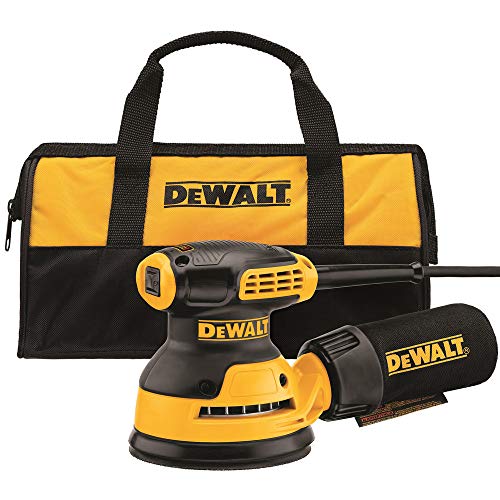
DEWALT Orbital Sander Kit, 5 inch, 3 amp, Corded (DWE6421K)

DEWALT Orbital Sander, 5 Inch Palm Sander Tool, 12,000 OPM (DWE6421)

DEWALT Orbital Sander Kit, 5-Inch, Variable Speed (DWE6423K)

DEWALT 20V MAX Orbital Sander Cordless, 5-Inch (DCW210D1)
DEWALT 20V MAX XR Brushless Cordless 1/4 Sheet Sander (DCW200B)
SKIL 5″ Random Orbital Sander with Cyclonic Dust Box (SR211601)
SKIL Corded Multi-Function Detail Sander with Micro-Filter (SR232301)
Inside Each Recommended Option
First-time refinishers benefit from a tool that coaches good habits, and this SKIL palm sander’s pressure-control alert does exactly that. It signals when you push too hard, which helps beginners avoid burn-through on thin veneers while they build feel. The clear-view dust canister tells you when to empty it, so you stop guessing mid-pass.
At 2.0 amps, the motor handles typical 1/4 sheet tasks like smoothing furniture faces and door panels without straining. The micro-filtration captures fine particles that would otherwise settle on freshly prepped surfaces. It also accepts a vacuum hose for cleaner sessions.
Bright Spots
- Pressure alert reduces gouges on delicate workpieces
- Clear dust canister removes empty-time guesswork
- Soft-grip housing keeps long sessions comfortable
- Built-in vacuum adapter links to shop vacs for cleaner air
- Sealed switch adds meaningful longevity in dusty shops
Points To Note
- Sheet-style clamping is slower than hook-and-loop swaps
- Smaller footprint means more passes on wide panels
Key Product Details
Right Fit For
First-time refinishers working on small furniture and trim who want a forgiving tool that teaches good technique.
Where Another Pick Suits Better
The DEWALT DWE6421 handles wide tabletops and bigger flat panels more efficiently if your projects lean that direction.
Variable speed separates a casual sander from a serious one, and the DWE6423 spans 8,000 to 12,000 OPM (orbits per minute, the rate the pad spins in a random pattern). Dialing down for fine finishing and cranking up for stock removal lets one tool cover two very different jobs. The 5-inch hook-and-loop pad accepts standard discs without fiddly clamps, and the shorter body keeps you close to the work for better control.
A 3-amp motor paired with a counterweight that tames vibration makes longer sessions easier on the hands. The dust collection port routes to a shop vac, and the rubber overmold stays grippy in warm conditions. Compared to the SKIL 1/4 sheet palm sander above, this is a step up in coverage and refinement.
Good Reasons To Consider
- Adjustable speed for finish work and material removal alike
- Counterweight design tames hand fatigue on long jobs
- 5-inch pad covers large flat panels efficiently
Trade-Offs To Consider
- Corded design limits reach away from outlets
- 5-inch pad cannot reach into corners the way a detail sander can
- No included storage bag or extra discs
Made For
Serious DIYers handling varied projects like refinishing tabletops, smoothing cabinets, and prepping doors.
Reach For A Different Pick When
The DEWALT DCW200B makes more sense if you already own 20V batteries and prefer going cordless for small repair jobs.
Workshop regulars want plug-and-sand simplicity, and the DWE6421K delivers with a fixed 12,000 OPM pace that handles most finishing tasks well. The kit form ships with a hard case and a dust bag, so you can store it without hunting for accessories. The shorter body improves sightlines to the workpiece compared to older generation sanders.
Like the variable-speed DWE6423, this model uses a counterweight to dial down vibration and a rubber overmold grip for comfort. The hook-and-loop pad swaps discs in seconds, and the dust bag locks on with one hand, so you can empty and resume without setting the tool down. This is the predictable, no-fuss choice when speed adjustment isn’t on your list.
What Makes Sense
- Single-speed operation removes guesswork for new users
- Kit case keeps everything together in a busy shop
- Counterweight system reduces fatigue on extended projects
Honest Caveats
- No speed control limits versatility on heat-sensitive finishes
- Corded design tethers you to an outlet
Best Suited To
Garage and workshop DIYers who want a reliable, no-frills random orbit sander for finishing work.
Swap It Out When
The DEWALT DWE6423K earns the slot if variable speed and similar kit form matter for your project mix.
The bare-tool DWE6421 trims the DWE6421K down to the essentials for folks who already have a case, dust bag, and discs in their shop. You get the same 3-amp motor, 12,000 OPM pad, counterweight system, and rubber overmold grip that made the kit form popular. For DIYers on their second or third project, skipping the accessories keeps the purchase focused.
The shorter body is a quiet upgrade over older sanders, getting your hand closer to the work for more accurate passes. The hook-and-loop pad still swaps discs in a heartbeat, and the dust port fits a shop vac hose. You sacrifice variable speed, but for many tasks, that single 12,000 OPM pace is exactly the right tempo.
Where It Delivers
- Strips the kit down for shoppers who already own dust collection gear
- Counterweight design keeps vibration manageable
- Compact body improves sightlines to fine detail areas
Less Ideal Details
- Dust bag sold separately from the bare tool package
- Fixed 12,000 OPM may feel aggressive on fragile finishes
Perfect Match For
Repeat DIYers with a full shop who just need the tool itself and want the proven 12,000 OPM random orbit performance.
Look Elsewhere When
The DEWALT DWE6421K makes more sense for first-timers who want a storage case and dust bag included out of the box.
The DWE6423K is the kit version of the variable-speed DWE6423, pairing the 8,000 to 12,000 OPM range with a hard case, dust bag, and the convenience of having everything in one package. The variable speed dial is the headline feature, letting you slow down for finish work and ramp up for raw stock removal on the same tool. The 5-inch hook-and-loop pad covers flat panels efficiently.
The counterweight system and rubber overmold grip carry over from the rest of the DEWALT 5-inch random orbit line, so vibration stays controlled even at higher speeds. Compared to the single-speed DWE6421K, the variable-speed dial is the meaningful difference for anyone refinishing varied surfaces. In a typical garage shop with mixed projects, the extra flexibility tends to earn its keep.
Notable Gains
- Variable speed dial adapts to different materials and finishes
- Hard case protects the tool between projects
- Counterweight design limits hand fatigue during long sessions
- Hook-and-loop pad makes disc swaps quick and tool-free
Where It Is Less Suited
- Corded setup requires dragging an extension cord around
- Heavier than bare-tool configurations
Quick Facts
Who It Suits Best
Multi-project refinishers who need one tool to cover both stock removal and finish work on cabinets, doors, and furniture.
Not Your Match When
The SKIL 5″ Random Orbital Sander with Cyclonic Dust Box fits better for indoor projects where the canister’s clear-view design matters more than a hard case.
Job sites rarely have an outlet where you need one, and the DCW210D1 trades the corded 5-inch sanders above for a 20V battery platform. The brushless motor stretches runtime on the included 2.0Ah pack, and the variable speed dial covers the same 8,000 to 12,000 OPM range as the corded DWE6423K. For renovation work, mobile repairs, or garage projects with no nearby outlet, cordless changes how you move around the project.
The dust bag locks on with one hand, and you can route the port to a compatible DEWALT dust collector. The storage bag holds the tool, battery, and charger so nothing rolls around in your truck. If you already own 20V batteries, this drops into your existing kit without dragging another platform into the shop.
A Few Strong Suits
- Battery freedom reaches outlets-free spots and rooftops
- Brushless motor extends runtime per charge
- Variable speed dial covers finish and removal tasks
- Storage bag keeps the kit organized on the move
Small Caveats
- Runtime depends on battery size, so larger packs help for full-day jobs
- 2.0Ah battery charges quickly but drains faster than higher-capacity options
Essential Details
Who Should Grab It
DEWALT 20V platform users who need cordless reach for remodels, fences, decks, and any project far from a wall outlet.
Consider Something Else When
The corded DWE6423K suits better if your work happens in a fixed shop and you don’t want to manage battery charging.
The DCW200B trades the random orbit pad of the 5-inch models for a 1/4 sheet design, which is better suited to detail work, corners, and edges where square pad geometry helps. The variable speed dial spans 8,000 to 14,000 OPM, giving you a higher ceiling than the random orbit picks above. It’s tool-only, so existing 20V owners skip the extra battery and charger cost.
Like the cordless DCW210D1, the brushless motor stretches runtime and the one-handed dust bag keeps cleanup simple. The sheet-style pad suits close-quarters work like cabinet doors, drawer faces, and trim pieces where a 5-inch round pad would be overkill. The 14,000 OPM top end is a meaningful step up for stock removal in tight spots.
Real-World Strengths
- 14,000 OPM ceiling handles aggressive material removal
- 1/4 sheet pad reaches edges and corners more precisely
- Tool-only configuration rewards existing 20V owners
- Brushless motor supports long runtime on a single charge
Things To Weigh
- Tool-only means battery and charger are separate purchases
- Sheet-style swaps are slower than hook-and-loop disc changes
Key Attributes
Built With In Mind
Existing 20V platform owners focused on detail work, trim, and edges where a square pad geometry outperforms a round one.
A Better Fit Elsewhere
The SKIL 2.0 Amp 1/4 Sheet Palm Sander with Pressure Control covers similar sheet-sanding work without the battery investment.
Where most random orbit sanders use a simple dust bag, the SR211601 uses a cyclonic dust box that spins dust into a contained chamber. The result is a clearer view of when to empty and a cleaner work area, particularly indoors where dust drift gets messy fast. The variable speed dial covers 7,000 to 13,000 OPM, so you can slow down for finish work and speed up for stock removal.
Three sanding sheets ship in the box, so you can start a project the same day. The vibration control system keeps long sessions easier on the hands. Compared to the corded DEWALT 5-inch sanders above, this SKIL trades some durability signaling for a more convenient dust solution at a typically lower entry cost.
What Stands Out
- Cyclonic dust box keeps dust contained and easy to empty
- Wide variable speed range covers multiple project types
- Includes three sanding sheets to get started right away
Softer Spots
- Brand ecosystem is smaller than the DEWALT line, so replacement parts may be harder to source
- Dust box fills quickly on heavy removal jobs
Whose Shelf It Belongs On
Garage and basement refinishers working indoors who prioritize dust containment over heavy-duty daily shop use.
Skip It When
The DEWALT DWE6421 is a stronger pick for full-day shop work where DEWALT’s wider service and parts availability matter.
Detail work calls for a different geometry than random orbit sanders offer, and the SR232301 ships as a 4-in-1 system with three interchangeable attachments for corners, edges, and contours. The 1.2 amp motor produces 13,500 OPM, which is plenty for fine sanding on wood, plastic, and metal. The micro-filter dust box and 1-1/4 inch vacuum port give you two cleanup options.
Where the DEWALT random orbit picks above flatten large panels, this SKIL excels in tight spots like window mullions, cabinet corners, and detailed trim. Twelve sanding sheets are included, so you can rotate grits without an extra trip to the hardware store. Attachment changes need no tools, which keeps the workflow fast on detail-heavy projects.
Strong Points
- Three detail attachments handle corners, edges, and contours
- Tool-free attachment changes speed up detail-heavy work
- Micro-filter plus vacuum port offer flexible dust management
- Includes 12 sanding sheets for immediate project use
Worth Bearing In Mind
- 1.2 amp motor is less powerful than the 3-amp random orbit sanders above
- Detail geometry means more passes on flat surfaces
Feature Overview
Who Will Love This
Refinishers, model makers, and trim carpenters who spend more time on detail work than on flattening large panels.
Another Choice May Suit
The DEWALT DWE6423K covers large furniture faces more efficiently if your project mix leans toward tabletops and doors.
Key Features To Weigh Before Choosing
Sanding looks simple, but the difference between a frustrating tool and a satisfying one usually comes down to a few concrete attributes. Skipping these comparisons leads to the most common buying regrets in this category.
Motor Power And Speed Range
Amps tell you how much sustained power the tool can deliver, while OPM (orbits per minute) sets the rhythm the pad moves at. Higher OPM cuts faster but generates more heat, which can scorch thin veneers. Variable speed is the most useful feature if you sand different materials, because hardwood, softwood, and finish coats each want a different pace. Corded 3-amp models like the DEWALT DWE6423K cover a wide range without bogging, while smaller 1.2-amp detail sanders trade raw power for compactness.
Pad Shape And Disc Type
Random orbit sanders use round hook-and-loop (a hook-and-loop fastener, similar to Velcro, that grips the disc backing) discs and handle large flat surfaces quickly, but they cannot reach inside corners. 1/4 sheet sanders use rectangular sandpaper clamped or hooked to a square pad, which fits edges and tight spots better. Detail sanders use small, often triangular pads with interchangeable heads for specific shapes. The right pad geometry matters more than most first-time buyers expect.
Dust Collection And Cleanup
A clear-view canister tells you when to empty without guesswork, while a cyclonic box spins dust into a separate chamber. A vacuum port is the cleanest option if you already own a shop vac, and most random orbit sanders here support direct vacuum hookup. The honest read is that no onboard system matches a real shop vac, but the included bag or box matters when you don’t want to drag a hose around.
Corded Vs. Cordless Trade-Offs
Corded sanders run indefinitely and tend to weigh less for the same motor power. Cordless 20V sanders reach outlets-free spots and avoid tangled extension cords, but runtime depends on battery capacity. If your projects tend to happen in a fixed shop, corded wins. If you work on decks, fences, and remodels, cordless is a meaningful upgrade.
Smart Considerations Before You Decide
Where Shoppers Go Wrong
The most common buying mistake in this category is matching a random orbit sander to a project that actually wants a detail sander, or vice versa. Buyers focused on motor amps ignore pad geometry, then discover their round pad cannot reach the inside corners of a window frame. Another trap is assuming a higher OPM number is always better, when the right speed depends on the material and finish you’re trying to achieve. Always match pad shape to project type before chasing specs.
What The Higher Tier Buys
Stepping up from a basic palm sander to a kit-form random orbit typically adds a variable speed dial, a counterweight system that tames vibration, and a storage case. The upgrade matters most if you sand different materials regularly, because fixed-speed tools force you to change technique for every job. Cordless models add battery investment, so the upgrade only pays off for projects that genuinely need outlets-free reach. Shop owners and frequent refinishers recover the cost quickly; occasional users may not.