


A proper auto body repair almost always starts long before the paint gun. You block out a panel, knock down old clear coat, feather a repaired edge, and chase pinholes until the surface looks like glass again. The right sander decides how much of that work feels like surgery and how much feels like punishment, so this lineup mixes hand blocks for tight body lines with cordless mini polishers and a 5-inch random orbital for broader panel work.
An Overview Of The Picks

Preppin’ Weapon Sanding Block for Big Hands

Preppin’ Weapon Ergonomic Sanding Block 2-Pack

DEWALT 5-Inch Variable Speed Orbital Sander Kit
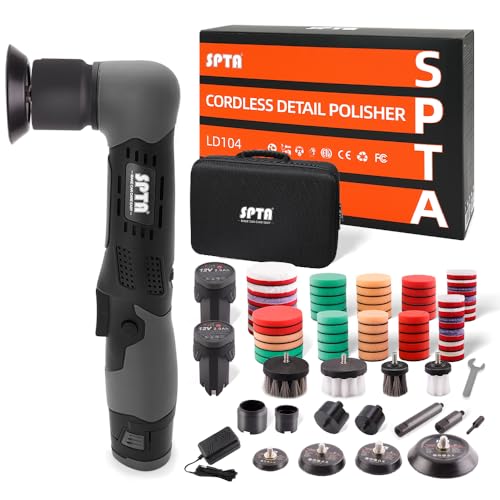
SPTA 12V Cordless Mini Polisher RO/DA Kit

BATOCA S5 Cordless Mini Car Polisher Rotary & DA
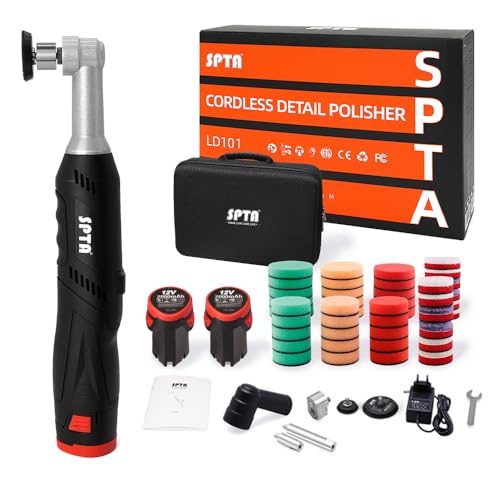
SPTA 12V Micro Cordless Car Polisher RO/DA

SPTA 12V Cordless Polisher Quick-Swap Kit
Meet The Standout Selections
The Preppin’ Weapon hand block feels closer to a shop tool than a hobbyist accessory, with a contoured ABS plastic body that absorbs drops without cracking. The stainless steel clamping system grips cut paper firmly, so a half-sheet doesn’t walk around while you push across a high spot in body filler.
If you block out a fender after a dent pull or chase a wave in a quarter panel, the heft of this block does some of the work for you. It handles wet or dry paper equally well, and switching grits takes seconds rather than the usual fumbling with creased sheets. You can see why body shops reach for it again and again.
Useful Strengths
- Drop-resistant ABS body holds up to shop floor abuse
- Stainless steel clip secures paper without tape or pins
- Contoured shape stays comfortable across long block-sanding sessions
- Works with standard cut sheets, reducing sandpaper waste
- Heft provides real cutting pressure for body filler and primer
Trade Offs
- Single block, so swapping grits still means re-loading paper each time
- Green color shows scuffs and compound smears quickly
Who Will Love This
Restorers, body techs, and serious DIYers shaping filler or primer on full-size panels.
Swap It Out When
Pick the Preppin’ Weapon 2-pack below if you rotate through three or more grits during a single repair.
The 2-pack version keeps the same ergonomic shape as the original, but pairs a red block with a blue one so you can pre-load separate grits and skip the constant re-clamping. For most home garage restorations where you move from 80 to 180 to 400 in the same afternoon, that color-code trick saves genuine time.
The wet/dry versatility is unchanged, so you can knock down a basecoat blend with a soaked 600-grit sheet or chase primer with a dry 220 without swapping tools. Owners commonly report the ABS housing holds up well to dropped-in-the-gravel mishaps, and the larger pack offers better per-block value for shops burning through paper.
Bright Spots
- Two color-coded blocks let you stage grits in advance
- Same pro-grade ABS body and steel clip as the single block
- Lower per-block cost than buying two singles
- Useful for matching both filler and finishing grits at once
Honest Caveats
- Only two colors, so a three-grit workflow still means one reload
- Larger size requires a bit of bench space to store both blocks
- Steel clip can pinch fingers if you snap it shut too fast
Best Suited To
Garage restorers working through a full prep sequence on a single project over a weekend.
A Better Fit Elsewhere
Step up to the DEWALT 5-Inch Orbital if you need to clear material faster than hand sanding allows.
The DEWALT DWE6423K is the only plug-in random orbital sander on this list, and the 3-amp motor with a 8,000 to 12,000 OPM range covers a surprising amount of body work. A 5-inch hook-and-loop pad (hook-and-loop means the abrasive disc sticks on like Velcro) swaps in seconds, and a separate counterweight keeps the vibration down so a full hood doesn’t rattle your wrists numb.
The shorter body height gets you closer to the work surface, which matters when feathering clear coat along a body line or leveling primer on a door shell. The one-handed locking dust bag stays put on the tool, so you spend more time sanding and less time reattaching it. It is the natural step up from the hand blocks above once you need to clear material faster.
A Strong Showing
- 3-amp motor handles heavy primer and clear coat blending
- Variable speed dial adjusts from 8,000 to 12,000 OPM for different materials
- Counterweight design reduces fatigue on long panel sessions
- Hook-and-loop pad accepts standard 5-inch discs
- Lower profile gets you close to the work surface
Worth Noting
- Corded design limits reach around large vehicles
- Dust bag fills quickly during heavy stock removal
- 5-inch pad is overkill for tight curves and mirror caps
Key Specs
Right Fit For
Shop owners and serious hobbyists blocking out door shells, hoods, and trunk lids.
Look Elsewhere When
Reach for the SPTA 12V Cordless Mini Polisher below if most of your work happens on trim, edges, and small panels.
The SPTA mini polisher is built for the tight spots a full-size orbital can’t reach, like mirror caps, door handles, and the curved edges of a fender. The 12V cordless body means no compressor hose, no extension cord, and no awkward reach over a fender to chase a scratch on a roofline.
It runs in RO/DA mode (Random Orbital / Dual Action, meaning the pad both spins and oscillates in a randomized pattern for safer finishing), which is far more forgiving on thin clear coat than a pure rotary polisher. The kit ships with backing plates, foam pads, and wool pads, so you can start with scratch removal and finish with a finishing polish in one session. For a daily driver with isolated defects, this is the most useful scale of tool.
What Makes Sense
- 12V cordless design clears clutter around the vehicle
- RO/DA motion protects thin clear coat from burn-through
- Compact head fits where full-size polishers cannot
- Includes polishing and wool pads for a full workflow
Things To Consider
- 12V battery limits continuous run time on big jobs
- Too small to use as a primary polisher for full panels
- Spare batteries and chargers are not always bundled
Made For
Detailers and enthusiasts chasing isolated scratches, swirls, and oxidation on small areas.
Consider Something Else When
Pick the BATOCA S5 if you also need rotary cutting power for heavier paint correction.
The BATOCA S5 is the only entry here that switches between rotary and dual-action motion by swapping the drive shaft. Rotary mode (where the pad spins on a fixed axis) is the muscle behind serious paint correction, while 12mm random orbital mode finishes that work down to a swirl-free shine.
The cordless body still keeps you free of hoses and cords, and the included accessory pack covers cutting, polishing, and sanding duties. For someone who wants one tool that handles both heavy defect removal and finishing, the dual-shaft approach is genuinely useful. Beginners should start in DA mode and only move to rotary once they’re comfortable with paint thickness.
The Helpful Details
- Switchable rotary and 12mm random orbital action
- Cordless 12V platform for unrestricted movement
- Includes pads for cutting, polishing, and finishing
- Covers both heavy correction and final detail in one kit
Room For Improvement
- Rotary mode requires steady hands and paint depth awareness
- Switching shafts adds a step compared to single-mode tools
Feature Snapshot
Perfect Match For
Intermediate detailers who want cutting power and finishing refinement from a single cordless tool.
Skip It When
Stick with the SPTA 12V Micro Polisher below if you only plan to do light finishing work.
SPTA’s micro polisher is the smallest of the three SPTA entries, and the lower weight makes it approachable for first-timers who worry about burning through clear coat. The RO/DA motion keeps the pad moving randomly, so even an unsteady hand is unlikely to leave holograms (faint circular buffer trails visible in direct sunlight) or dig in.
The matched 1-inch backing plate and small pad footprint suit spot repairs on bumpers, mirror caps, and the curved edges of headlights. The 12V battery platform is shared with the larger SPTA mini, so existing owners can share chargers between tools. For most weekend detailers, this is the safest place to start.
The Upside
- Featherweight body reduces fatigue on long sessions
- RO/DA motion protects against clear coat damage for new users
- Small pad fits tight body lines and trim edges
- Shares 12V battery platform with other SPTA tools
Points To Note
- Limited correction power for deep scratches
- Battery and charger sometimes sold separately
Who Should Grab It
First-time detailers and casual enthusiasts maintaining a daily driver’s finish.
Where A Sibling Pick Shines
Move up to the BATOCA S5 once you need rotary cutting power for heavier defects.
The latest SPTA 12V cordless polisher adds a tool-free quick-change interface, so swapping between cutting pads, polishing pads, and sanding discs no longer requires hunting for a wrench. For a multi-stage detail where you move from heavy compound to fine polish to a final finishing pad, that small ergonomic upgrade adds up.
The kit still ships with the brand’s mix of foam and wool pads, plus backing plates in common sizes. The 12V cordless platform keeps the unit light enough for overhead work on rooflines. If you already own a 12V SPTA battery, this drops into the same charging ecosystem without buying a new system.
Notable Upsides
- Tool-free quick-change interface speeds pad swaps
- RO/DA motion handles compounding and finishing in one tool
- Light 12V body reduces arm fatigue during overhead work
- Includes multiple pad types for a full detail session
Small Caveats
- Quick-change mechanism adds a small cost premium
- Still limited compared to corded polishers for full-day correction jobs
Quick Facts
Built With In Mind
Multi-step detailers who bounce between cutting, polishing, and finishing in a single session.
Another Choice May Suit
Pick the Preppin’ Weapon hand block above if you do more filler shaping than paint correction.
What To Weigh Before Choosing Sanders For Auto Body
Match the tool to the stage of repair
A full auto body job moves through filler, primer, basecoat, and clear coat, and each stage rewards a different sanding approach. Body filler and primer shaping favor a flat hand block with real heft, because you need to feel the high spots under the paper. Clear coat blending and panel finishing are faster with a random orbital sander, while spot scratch removal on trim and edges is where a cordless mini polisher earns its place. Buying one tool for every stage usually means compromising at two of them.
Power source shapes how you work
Corded sanders like the DEWALT deliver consistent power for long sessions, which matters when you’re blocking out an entire hood. Cordless 12V polishers trade that runtime for freedom of movement around the vehicle, no hose snagging on fenders, and easy overhead work. For shop work near outlets, corded still wins on muscle. For driveway and garage work, cordless is genuinely more practical.
Pad size and motion dictate control
A 5-inch random orbital pad covers a door quickly but cannot follow a tight body line without risk. Smaller 1-inch and 3-inch mini polishers reach the spots the big pad cannot, and RO/DA motion is far safer on thin clear coat than a pure rotary motion. Owning at least two scales of tool, a broad one for panels and a small one for detail, is the realistic setup for most enthusiasts.
Ergonomics matter more than specs suggest
Hand blocks with contoured shapes and quick-load clips save your knuckles over a long weekend. Polishers with rubber overmold grips and balanced weight distribution keep vibration from numbing your hands. The honest read is that ergonomic features show up in how you feel at hour three, not in the spec sheet.
Key Considerations Across These Picks
Pitfalls Shoppers Hit
A common trap is buying a polisher before learning paint thickness, then burning through clear coat on a daily driver. Another is grabbing a heavy 5-inch random orbital for scratch removal on a mirror cap and discovering it cannot follow the curve. The right move is matching the tool to the most common repair you actually do, not the biggest job you can imagine.
When Paying More Pays Off
Higher-tier sanders and polishers tend to add variable speed, counterbalanced vibration control, and tool-free pad changes. Those features pay off when you sand for hours, switch grits constantly, or share a tool between hobby and side-work use. For occasional weekend touch-ups, a basic block and entry-level polisher usually cover the need without the extra spend.
Frequently Asked Questions
What is the difference between a random orbital sander and a dual action polisher?
A random orbital sander uses hook-and-loop abrasive discs for material removal, while a dual action polisher uses foam or wool pads for paint finishing. The motion is similar, but the pad and purpose differ.
Can a cordless mini polisher remove deep scratches?
A cordless mini polisher can reduce the appearance of moderate scratches when paired with a cutting pad and compound, but very deep scratches that have gone through the clear coat typically need touch-up paint before polishing.
Do I need a hand sanding block if I already own a power sander?
A hand block gives better feedback on body filler and primer because you can feel the high spots through the paper. Power sanders are faster but tend to level what they touch, which can hide low spots that show up after painting.
How important is variable speed on a random orbital sander?
Variable speed lets you slow the pad for heat-sensitive coatings and speed it up for aggressive stock removal. For most home use, a single speed works, but variable speed adds useful flexibility when working across different materials.
What grit sandpaper should I start with on body filler?
Most body filler work starts around 80 grit for shaping and moves to 180 or 220 before primer. For finishing clear coat, 1000 to 3000 grit wet sanding is typical, depending on the repair depth.




