


Refinishing a weathered deck means long hours moving in the sun, dust in your eyes, and a tool that either keeps up or doesn’t. The right sander for deck work needs real material removal on rough boards, manageable vibration across large surface areas, and dust control that won’t leave your lungs burning. For DIYers tackling a full deck restoration, a 5-inch random orbital sander covers most of the work, while a detail sander or palm sander handles edges, balusters, and tight corners. The picks below cover both the heavy-lifting machines and the smaller tools that finish the job.
Your Options, Compared

SKIL 2.0 Amp 1/4 Sheet Palm Sander 7292-02

DEWALT Orbital Sander Kit 5-Inch DWE6423K

DEWALT 20V MAX Cordless Orbital Sander DCW210D1

DEWALT 5 Inch Palm Sander DWE6421

Makita XOB01Z 18V LXT Cordless Sander Tool Only

Makita BO5041K 5-Inch Random Orbit Sander
Diablo 5-Inch 80-Grit ROS Sanding Discs 50-Pack

SKIL 5-Inch Random Orbital Sander SR211601
SKIL Multi-Function Detail Sander SR232301
Inside Each Recommended Option
Refinishing a deck for the first time often comes with the worry of pressing too hard and gouging the wood. The SKIL 7292-02 addresses that learning curve with a pressure-control feature that signals when too much force is applied, which is genuinely useful for someone still learning how a sander feels in the hand. It uses quarter-sheet paper, a format that is forgiving on flat deck boards and widely available at hardware stores.
For a small to mid-size deck where you mostly work on open, flat surfaces, this palm sander handles the job at a comfortable pace. Where it shows its limits is on large, open expanses of decking where a 5-inch random orbital sander would cover more ground per pass.
Real-World Strengths
- Pressure-feedback helps new users avoid burn marks on soft cedar and pine boards.
- Micro-filtration captures fine dust before it settles across the patio furniture.
- Clear-view dust canister removes the guesswork of when to empty it mid-job.
- Compact body suits people with smaller hands or anyone sanding overhead rail caps.
- Vacuum adapter port lets you hook up a shop vac for cleaner indoor-outdoor transitions.
Things To Consider
- Quarter-sheet coverage means more passes per board, which adds time on a 400-square-foot deck.
- The dust-sealed switch and motor benefit from occasional cleaning in dusty outdoor work.
Who It Suits Best
First-time refinishers working on a small deck or fence who want forgiving feedback while they learn proper hand pressure.
Where Another Pick Suits Better
Homeowners tackling a large deck surface in a single weekend should consider the DEWALT Orbital Sander Kit 5-Inch DWE6423K, which covers more area per pass.
Variable speed is the single most useful feature on a deck sander, and the DWE6423K dial spans 8,000 to 12,000 orbits per minute for that reason. Drop to lower speeds on soft pine to avoid fusing paint to the pad, then climb to higher speeds when stripping old stain from dense cedar. The 3-amp motor keeps torque steady across that range without bogging down on gummy finishes.
The kit arrives with a hard case, hook-and-loop pad, and dust bag, so you can unbox and start sanding the same afternoon. The shorter body height, compared to older DEWALT models, lets you get closer to the deck surface for better control on stair treads. This is the corded workhorse pick for most full-deck restorations.
What Stands Out
- Variable-speed dial matches aggression to grit and wood density.
- Rubber overmold grip reduces fatigue on multi-hour refinishing sessions.
- Counterweight design lowers vibration, which matters when sanding 200+ square feet.
- One-handed dust bag attachment means quick swaps without tools.
Worth Noting
- The corded design requires an outdoor-rated extension cord for far reaches of the yard.
- The dust bag fills quickly on heavy stripping and benefits from regular emptying.
Made For
Homeowners and pros restoring a full deck who want one tool that handles everything from paint removal to fine finishing.
Skip It When
Cordless convenience matters more, in which case the DEWALT 20V MAX Cordless Orbital Sander DCW210D1 is the better fit.
No extension cord, no tripping hazards, and no dragging 50 feet of cable around a backyard deck. The DCW210D1 trades the cord for a brushless motor and a 2.0Ah battery, and the brushless design means the motor runs cooler and lasts longer under heavy load. For back decks far from an outdoor outlet, cordless freedom alone justifies the premium.
The 20V MAX platform also means swapping batteries with other DEWALT tools you may already own. The included storage bag holds the sander, battery, charger, and a few sanding discs for grab-and-go work. The trade-off is runtime, so anyone planning a multi-day project should keep a second battery on the charger.
What Pays Off
- Brushless motor delivers consistent power without the cord drag.
- Battery and charger included mean zero extra purchases to start working.
- Variable-speed dial mirrors the corded DWE6423K for familiar control.
- Storage bag keeps the kit organized in a garage or shed between deck seasons.
Trade Offs
- A 2.0Ah battery delivers shorter runtime than a corded tool during all-day sessions.
- You may find yourself buying extra batteries for a large deck project.
Feature Card
Right Fit For
Homeowners with detached decks, gazebos, or other outdoor projects where running a cord is impractical.
A Better Fit Elsewhere
Users already invested in Makita 18V batteries should look at the Makita XOB01Z 18V LXT Cordless Sander Tool Only instead.
The DWE6421 is the no-frills sibling of the DWE6423K, designed for people who want DEWALT’s build quality without paying for a variable-speed dial. It runs at a fixed 12,000 OPM, which is well-suited to most deck sanding where the goal is efficient material removal and a clean finish in fewer passes. The 3-amp motor shares the same counterweight system as its bigger brother.
This is the kind of tool you pull out of the bag and just start working. One speed, one switch, one job. The shorter body height, dust-sealed switch, and rubber overmold grip are all carryover features from the variable-speed model. For a single deck project where you don’t need to dial in a specific OPM, the DWE6421 covers the basics at a lower entry cost.
A Strong Showing
- Fixed 12,000 OPM hits the sweet spot for most deck sanding tasks.
- Same counterweight vibration reduction as the higher-end DEWALT model.
- Hook-and-loop pad accepts standard 5-inch discs from any hardware brand.
Points To Note
- No speed adjustment can feel limiting on gummy finishes that bog a single speed down.
- The dust bag design is the same one-handed style, which works but isn’t sealed as tightly as a vacuum hose.
- Over time, the hook-and-loop pad tends to collect dust and lose grip, so a quick brushing helps disc adhesion.
Best Suited To
Weekend refinishers who want a simple, reliable corded sander without learning a speed-control dial.
Not Your Match When
Refinishing antique hardwood decks where variable speed prevents burning, in which case the DEWALT Orbital Sander Kit 5-Inch DWE6423K is the smarter tool.
Three speed settings is unusual at this price tier, and the XOB01Z uses that dial to cover light, medium, and heavy stock removal. The lowest setting works well for fine sanding between deck stain coats, while the top setting chews through old paint. Up to 40 minutes of runtime per charge is realistic on a mid-size deck if you keep an extra battery in the rotation.
This is a tool-only configuration, meaning you bring your own Makita 18V battery and charger. For anyone already running Makita cordless drills, impact drivers, and circular saws, that ecosystem is the real value. The ergonomics lean toward users who appreciate a slimmer grip profile compared to barrel-style DEWALT sanders.
Notable Upsides
- Three-speed dial adds versatility for finishing work between deck stain coats.
- Slender grip profile reduces hand fatigue on long vertical sanding sessions like rail caps.
- Shares batteries with the rest of the Makita 18V LXT tool family.
Honest Caveats
- Tool-only configuration means budget extra for a battery and charger if you don’t own Makita tools yet.
- Runtime depends heavily on the amp-hour rating of the battery you pair it with.
Who Will Love This
Existing Makita 18V tool owners who want a cordless random orbital sander that fits the batteries they already own.
Look Elsewhere When
You don’t have a Makita battery on hand, in which case the DEWALT 20V MAX Cordless Orbital Sander DCW210D1 ships ready to work with battery included.
Older decks with years of layered stain or thick paint need a sander that doesn’t slow down under load. The BO5041K uses a 3-amp motor paired with a variable-speed dial that spans 4,000 to 12,000 OPM, and that low-end capability is the key. Dropping to 4,000 OPM lets you work on heat-sensitive finishes without clogging the pad, then ramp up to 12,000 when the surface is clean.
The rubberized palm grip and ergonomic handle shape make it comfortable for extended sessions on a hot summer afternoon. The kit comes with a hard case that protects the tool from moisture and dust in a garage or shed between refinishing seasons. For restoration work where the boards have seen better decades, this is the muscle of the lineup.
Advantages To Know
- 4,000 OPM low end is rare and useful for delicate work on older softwood.
- 3-amp motor sustains power through heavy material removal on dense boards.
- Hard case keeps the sander protected between projects.
Some Limits To Know
- Corded design limits reach without a long extension cord.
- Heavier body than 5-inch cordless options, which matters on overhead rail work.
- Dust collection works best when connected to a vacuum rather than relying on the bag alone.
Perfect Match For
Homeowners restoring an older deck with thick stain layers, peeling paint, or weathered softwood that demands low-end speed control.
Another Choice May Suit
Anyone wanting cordless convenience for the same task should consider the Makita XOB01Z 18V LXT Cordless Sander Tool Only for similar control without the cord.
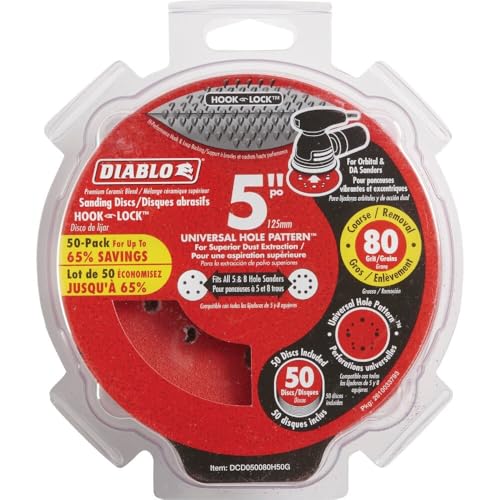
A 5-inch random orbital sander is only as good as the disc stuck to its pad, and 80-grit is the workhorse grit for first-pass deck sanding. This Diablo 50-pack handles the heavy lifting: stripping old stain, removing paint runs, knocking down raised wood fibers, and shaping weathered boards. The hook-and-lock backing is universal across 5- and 8-hole sander pads, so it works with most of the sanders on this list.
Coarse 80-grit discs are consumables, and a single deck refinish can burn through 20 to 30 discs depending on board condition. Buying in a 50-pack keeps you from running out mid-project. The grit cuts aggressively but still leaves a surface ready for a follow-up pass with 120- or 150-grit before stain or sealer goes on.
Everyday Perks
- 80-grit is the right starting point for most deck stripping and refinishing projects.
- 50-disc count covers a full deck without mid-project reordering.
- Hook-and-lock design fits both 5-hole and 8-hole sander pads for cross-tool compatibility.
Points To Keep In Mind
- Coarse 80-grit leaves visible scratch patterns that need a follow-up pass with finer grit before finishing.
- Discs wear out faster on dense hardwoods like ipe or mahogany, so count on more discs for those species.
Built With In Mind
Homeowners stripping old stain or paint who need a steady supply of coarse discs to push through the first rough pass on every board.
Reach For A Different Pick When
You also need a sander to attach the discs to, in which case the DEWALT Orbital Sander Kit 5-Inch DWE6423K is the natural pairing.
The cyclonic dust box on the SR211601 is the standout feature at this tier. Instead of a dust bag that needs to be removed, shaken out, and reattached, the box collects debris under centrifugal force and empties with a twist. For deck work where dust volume is high, that convenience adds up across a long afternoon of sanding.
The variable-speed dial spans 7,000 to 13,000 OPM, which is a wider range than several competitors in the same price range. X-Flow dust collection and vibration control round out a thoughtful design. This is the sander to grab for a single deck project when you don’t want to overspend on a tool that will sit in the garage afterward.
Features That Help
- Cyclonic dust box eliminates the hassle of shaking out a traditional dust bag.
- 7,000 to 13,000 OPM range covers everything from finish sanding to stock removal.
- Includes three sanding sheets to start working the same day you open the box.
- Vibration control reduces hand numbness during extended sessions.
Minor Gripes
- Hard plastic dust box can crack if dropped on a concrete patio, so handle with care.
- Less metal in the housing than premium sanders, which some users report feeling less rigid over years of use.
Feature Card
Who Should Grab It
One-off DIYers refinishing a deck for the first time who want solid performance without a premium price.
Swap It Out When
You’re a contractor sanding decks weekly, in which case the Makita BO5041K 5-Inch Random Orbit Sander is built for that workload.
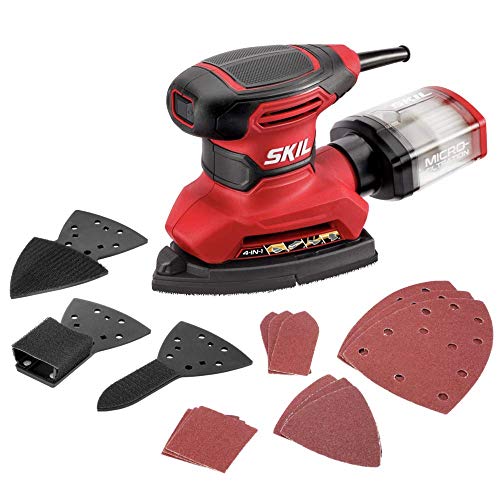
No matter how good your 5-inch random orbital sander is, it can’t reach between balusters, into corners where rail posts meet the top rail, or along the tight curves of decorative spindles. The SR232301 is a detail sander built exactly for that work, with three interchangeable heads that swap by hand without tools. It includes a 1.2-amp motor running at 13,500 OPM, which is plenty for shaping and smoothing small surfaces.
The micro-filter dust box keeps the fine sawdust off your work, and a 1-1/4 inch dust port accepts a vacuum hose for cleaner indoor-outdoor transitions. Twelve included sanding sheets cover the most common grits. On a deck restoration, this is the tool that finishes what the bigger sanders started.
A Few Highlights
- Three interchangeable heads tackle corners, edges, and contours on rail systems.
- Tool-free head changes speed up work across varied deck details.
- Micro-filtration plus vacuum port gives you two dust-control options.
- Twelve sanding sheets included so you can start detail work immediately.
Worth Bearing In Mind
- Detail sanders are slow on large flat surfaces, so this complements a 5-inch sander rather than replacing one.
- Small sanding sheets wear out faster than larger discs on heavy material removal.
The Right Fit
Homeowners restoring a deck with railings, balusters, or decorative trim who need to reach spots a 5-inch pad can’t access.
Where A Sibling Pick Shines
For the flat deck boards themselves, the DEWALT Orbital Sander Kit 5-Inch DWE6423K is the faster, more capable option.
What to Know Before Buying Sanders For Deck Sanding
Sanding a Deck Demands Real Power
Orbital sander speed is measured in OPM, or orbits per minute, the number of times the pad spins in a full circle each minute. For deck work, anything below 10,000 OPM feels slow on rough boards, while speeds above 12,000 OPM remove material fast but risk leaving swirl marks on softer woods. Variable-speed dials give you the most flexibility across grit changes, and a 3-amp motor sustains power through thick paint without bogging down.
Random Orbital vs. Sheet Sanders
Random orbital sanders spin the pad in both a circle and an ellipse at the same time, which prevents the swirl patterns that plague traditional sheet sanders. For most of a deck’s flat surface, a 5-inch random orbital is the right tool. A 1/4 sheet palm sander like the SKIL 7292-02 works on smaller decks and tight budgets, and a detail sander like the SKIL SR232301 handles railings and corners. Most restoration jobs need two of these three.
Dust Control Is Not Optional
Sanding a deck kicks up enormous dust clouds, and breathing that dust for hours is unpleasant at best. Built-in dust collection (bag or cyclonic box) catches the bulk of debris, while a vacuum adapter port lets you connect a shop vac for the cleanest results. For most outdoor deck work, expect to empty the dust container two or three times per 100 square feet of sanding.
Cordless vs. Corded for Outdoor Work
Cordless sanders free you from extension cords and outlet proximity, which matters when the deck sits 80 feet from the house. The trade-off is runtime, and heavy deck work can drain a 2.0Ah battery in 20 to 30 minutes. Corded sanders run indefinitely but require outdoor-rated extension cords and constant cord management. Existing battery platform ownership often decides the choice more than specs alone.
Key Considerations Across These Picks
Common Slip Ups to Avoid
The biggest mistake is underestimating how many sanding discs a full deck requires. A 200-square-foot deck can easily eat through 20 to 30 coarse discs on the first pass alone, so buying a single small pack means multiple trips to the hardware store. Pairing a 5-inch sander with a 50-pack of coarse discs up front saves time and frustration.
Another common trap is ignoring dust collection until mid-job. A sander that runs without a bag or vacuum connection will coat the patio, the furniture, and your lungs in fine dust within minutes. Connecting a shop vac or at least keeping the dust box empty throughout the job makes a visible difference in air quality and cleanup afterward.
What Separates Premium From Basic
The jump from budget to premium sanders mostly comes down to motor quality, vibration control, and dust-collection efficiency. A brushless motor in models like the DEWALT DCW210D1 runs cooler and lasts longer under heavy use, which matters for contractors but less so for one-off DIYers. Counterweight systems and rubber overmold grips reduce hand fatigue on multi-hour refinishing sessions, and that comfort is worth the upgrade for anyone tackling a large deck.
The biggest practical upgrade is variable-speed control. Single-speed sanders work fine on consistent wood, but a deck with mixed paint, stain, and bare wood benefits from a dial that lets you match aggression to the surface. For most homeowners, a mid-tier sander with variable speed hits the sweet spot between price and capability.
Frequently Asked Questions
What is the best sander for refinishing a deck?
For most homeowners, a 5-inch random orbital sander with variable speed, such as the DEWALT DWE6423K, covers the largest deck surfaces efficiently without leaving swirl marks. Pair it with a detail sander for railings and corners.
Can a regular orbital sander handle deck boards?
Yes, a random orbital sander handles standard deck boards well, especially at 5 inches or larger. Smaller 1/4 sheet palm sanders work on flat surfaces but require more passes and more time on a full deck.
How do you sand a deck without leaving marks?
Use a random orbital sander (not a traditional sheet sander) to avoid swirl patterns. Keep the sander moving across the board rather than holding it in one spot, and let the weight of the tool do the work without pressing down hard.
What grit sandpaper is best for deck sanding?
Start with 60- or 80-grit for stripping old stain and paint, then move to 100- or 120-grit for smoothing before stain or sealer. Skipping grits leaves scratches that show through the finish.
Should you use a corded or cordless sander for a deck?
Corded sanders offer unlimited runtime and consistent power for full-day sessions, while cordless sanders provide freedom from extension cords on detached decks. Existing battery platform ownership often decides the choice.




