


You already know the feeling: a project is 95% done, the finish coat is ready, and a 5-inch random orbit sander simply cannot reach the corner, the carved groove, or the inside curve without chewing up the surrounding surface. Detail work demands tools that think small, move slow, and follow the contour rather than the flat plane. This roundup focuses on sanders and finishing tools built for tight spots, fine grits, and the kind of patient finishing that separates a craftsperson from a weekend warrior. Hobbyists restoring furniture, model makers smoothing 3D-printed parts, and DIYers tackling trim work will find options sized and shaped for the work the big sanders cannot do.
An Overview Of The Picks

DEWALT DWE6423 5-Inch Random Orbit Sander
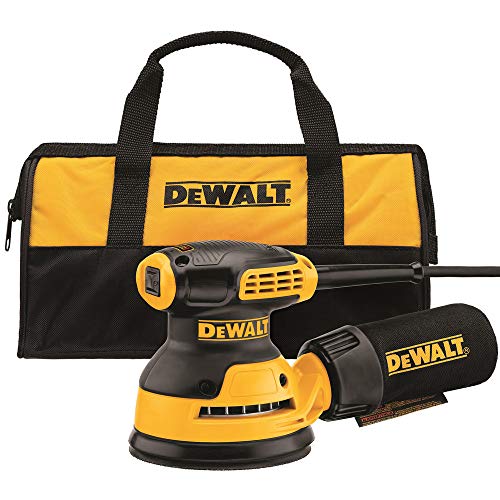
DEWALT DWE6421K 5-Inch Orbital Sander Kit

DEWALT DWE6421 5-Inch Palm Sander

DEWALT DWE6423K Variable Speed Sander Kit

DEWALT DCW210D1 20V MAX Cordless Sander

Makita XOB01Z 18V LXT Cordless Sander
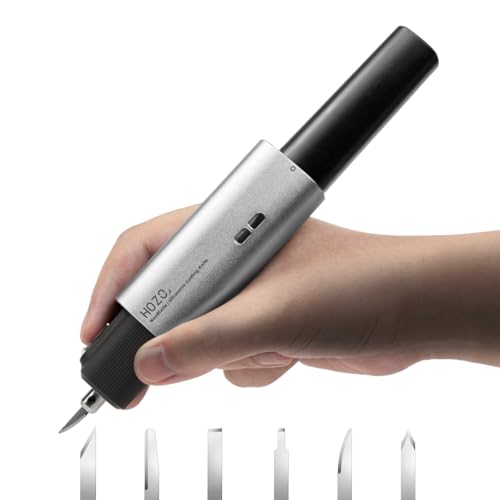
HOZO NeoBlade Wireless Ultrasonic Cutter

HOZO NeoSander 64pc Color-Coded Sanding Heads

HOZO NeoSander Reciprocating Detail Sander
A Deeper Look At The Lineup
The DEWALT DWE6423 earns its spot first because the 8,000 to 12,000 OPM (orbits per minute) range gives you genuine control over how aggressive the cut feels. You dial down for soft pine and up for harder finishes, which matters when the same project moves from stock removal to final pass in a single session.
For most shop environments, the corded 3-amp motor delivers consistent power without the fade that battery models eventually hit. The hook-and-loop pad swaps 5-inch discs quickly, and the counterweight system is designed to reduce vibration. Compared to the DWE6421 below, this model adds that variable-speed flexibility, though it costs a bit more for the feature.
Bright Spots
- Variable speed dial adjusts between 8,000 and 12,000 OPM for material-matched sanding
- Rubber overmold grip reduces hand fatigue during extended sessions on furniture or cabinetry
- Low-profile body keeps the pad close to the work surface, improving control in tight areas
- Counterweight system lowers vibration, which helps when finishing a project over an hour or longer
Worth Noting
- No included carrying case, so transport between job sites requires a separate bag or tray
- Corded design limits reach in large rooms without an extension cord handy
- Single 5-inch pad size means very narrow grooves still need a detail tool for full access
Who It Suits Best
Workshop-focused DIYers and pros who want a corded random orbit sander with adjustable speed for varied materials.
Consider Something Else When
Model makers and craft hobbyists working in very tight spots will find the HOZO NeoSander Reciprocating Detail Sander a better match for pen-style precision work.
Where the DWE6423 offers speed adjustability, the DWE6421K keeps things simple at a fixed 12,000 OPM and adds a carrying case plus the accessories you need to start sanding out of the box. The hook-and-loop pad handles 5-inch discs, and the dust bag attaches with one hand, so cleanup stays out of your way during finish work.
For most beginners building a starter tool kit, this is the easier entry point because there is no speed dial to second-guess. The shorter body height gets the pad closer to the work surface than bulkier predecessors, which helps when you are sanding inside a cabinet door or along a tight frame. Relative to the DWE6423, you trade variable speed for a lower cost and a kit-ready package.
Everyday Advantages
- Kit includes a carrying case and starter accessories, so you can begin sanding immediately
- 3-amp motor maintains 12,000 OPM consistently on standard household 15-amp circuits
- Compact body improves access into shallow recesses and face frames
- One-handed dust bag attachment keeps setup quick between sessions
Points To Keep In Mind
- Single-speed motor cannot slow down for heat-sensitive finishes or thin veneers
- Corded only, so no option to swap to a battery platform later
Made For
First-time sander owners and homeowners who want a complete kit without researching which disc or bag to buy separately.
Look Elsewhere When
Users already invested in a cordless platform should consider the DEWALT DCW210D1 for battery compatibility instead of this corded kit.
The DWE6421 is the tool-only version of the kit above, which makes it the right call if you already own compatible accessories or simply do not need a second dust bag. The 3-amp motor still delivers 12,000 OPM, the counterweight design still aims to cut vibration, and the palm-grip form factor sits comfortably in most hands.
For most home workshops, this sander handles repeated finish-sanding sessions without complaint. The trade-off compared to the kit is straightforward: no carrying case and no extra discs in the box, so you pay a small premium per feature elsewhere. If you already know which grits you prefer, skipping the kit can keep your bench drawer uncluttered.
Benefits That Matter
- Tool-only packaging avoids redundant accessories for owners who already have what they need
- Counterweight system dampens vibration during long refinishing jobs like table tops
- Same 12,000 OPM performance as the kit version for consistent stock removal
Honest Caveats
- No case, so storage requires a shelf or drawer plan
- 5-inch pad still cannot reach grooves narrower than the disc itself
Best Suited To
Repeat finishers who already own a sander bag and want the bare tool at a more accessible cost.
Not Your Match When
Mobile contractors who need job-site transport will find the DEWALT DWE6423K kit version more practical thanks to its included case.
The DWE6423K takes the variable-speed motor of the DWE6423 and bundles it into a kit with a carrying case, dust collection bag, and starter accessories. For most people who want both speed flexibility and a portable package, this is the version that travels to a friend’s garage or a job site without extra planning.
The 3-amp motor moves the pad between 8,000 and 12,000 OPM, which gives you room to slow down on stain-grade trim and speed up on rough millwork. In a kitchen remodel scenario, you can switch from stripping a cabinet face to feathering a repaired edge using the same tool, just at a lower setting.
A Strong Showing
- Carrying case included for safer transport between vehicles and work areas
- Variable speed motor covers aggressive removal and gentle finishing in one tool
- Hook-and-loop pad makes disc swaps fast during multi-grit sequences
Some Limits To Know
- Heavier than the tool-only DWE6423 because of the case and accessories
- Corded design still requires outlet access for every project
Right Fit For
Remodelers and small-shop pros who carry tools between locations and want speed adjustability for mixed-material work.
Swap It Out When
Shop-only users who never transport the sander will save money and skip the unused case by going with the DEWALT DWE6423 instead.
Cut the cord and the sander goes wherever the project lives: a deck rail, a stair landing, a piece of furniture still mounted to a wall. The DCW210D1 runs on the 20V MAX battery platform, ships with a 2.0Ah pack and charger, and adjusts from 8,000 to 12,000 OPM through a variable-speed dial on top of the housing.
For most users already carrying other 20V MAX tools, this sander slides into an existing workflow without buying a new battery ecosystem. The brushless motor is engineered for longer runtime and less heat buildup than brushed alternatives, and the included storage bag keeps the kit tidy in a truck or closet. The trade-off versus corded models is runtime, which depends on the amp-hour battery you slot in.
A Few Highlights
- Battery and charger included, removing the usual extra purchase for first-time cordless sander owners
- Brushless motor balances runtime and durability for frequent finish work
- Variable speed dial from 8,000 to 12,000 OPM matches material needs on the fly
- Storage bag included for organized transport in crowded work vans
Possible Compromises
- 2.0Ah battery runs shorter than higher-capacity packs on aggressive sanding sessions
- More expensive than equivalent corded DEWALT options once you already own the platform
Who Will Love This
DIYers and pros already invested in the DEWALT 20V MAX battery family who want a cordless random orbit sander with adjustable speed.
Reach For A Different Pick When
Makita LXT users should pick the Makita XOB01Z instead, since it uses the batteries they already own at home.
Makita positions the XOB01Z as the cordless random orbit sander for users who already trust the 18V LXT platform. Three speed settings, 7,000, 9,500, and 11,000 OPM, let you match the pad speed to the surface without a continuously variable dial. The control layout is simple, which keeps the learning curve short.
For most LXT owners, this is the missing puzzle piece for a fully wireless sanding workflow. Battery and charger are sold separately, so factor that in if you are entering the platform for the first time. Once you have a charged 18V pack on hand, runtime per charge supports a reasonable finishing session before swapping cells.
What Earns Its Place
- Three-speed selector covers rough, medium, and finish work without overcomplicating controls
- Pairs with existing 18V LXT batteries for users already on the Makita platform
- Compact 5-inch pad reaches into tighter spaces than 6-inch alternatives
Small Caveats
- Tool-only listing, so battery and charger must be purchased separately for first-time platform users
- Speed settings are fixed at three positions rather than continuously variable
Perfect Match For
Makita LXT loyalists who already own batteries and want a brushless-feel random orbit sander that matches their existing tool family.
A Better Fit Elsewhere
Shop users without Makita batteries get a better value with the corded DEWALT DWE6423, which includes everything in the box.
The NeoBlade is technically a cutter, not a sander, but it earns a spot in a detail-work roundup because it solves the same problem from a different angle. A 40kHz vibrating blade slices through 3D-printed supports, foam, thin plywood, and matboard without the grit dust of a traditional abrasive. For model makers, that means no dust in the seams and no sanded-over detail.
For most desktop workshops, the cordless design and 4.4-ounce body make it easy to maneuver around miniature parts. Two cutting modes adapt the power to softer and harder materials, and the replaceable battery keeps runtime manageable between charges. If your finishing work involves separating parts rather than smoothing surfaces, this tool deserves a place next to the sanders on the bench.
The Practical Payoff
- 40kHz ultrasonic vibration cuts without abrasive grit, keeping detail edges crisp on miniatures
- Lightweight 4.4-ounce body reduces wrist fatigue during long modeling sessions
- Two cutting modes adjust power for materials ranging from foam to thin hardwood
- Replaceable battery extends tool life beyond a single cell’s cycle count
Practical Considerations
- Blade wears over time and replacement availability may be limited to specific retailers
- Not designed for heavy stock removal on thick lumber
Whose Shelf It Belongs On
3D printing hobbyists, scale modelers, and crafters who frequently separate printed parts or trim matboard and foam without losing fine detail.
Where A Sibling Pick Shines
Woodworkers sanding flat furniture surfaces will get more value from the HOZO NeoSander Reciprocating Detail Sander, which is purpose-built for abrasion rather than vibration cutting.
These are accessory sanding heads, not a power tool, and that is exactly the point. The 64-piece set covers eight shapes and eight grits from #180 to #1500, with a color per grit so you can grab the right abrasive without reading a label in dim shop lighting. For most crafters, the shape variety is what changes the game: cones for inside curves, cylinders for bores, and flat pads for faces.
For most NeoSander owners, this set replaces the trickle of buying individual replacements and ensures you have the right shape on hand. Compatible with the HOZO NeoSander reciprocating tool, the heads swap in seconds, and the color coding stays consistent across grits so muscle memory builds quickly.
Good Reasons To Consider
- Eight shapes handle edges, grooves, curves, and flat surfaces without improvising with a file
- Color-coded grit system speeds selection during multi-stage finishing
- Range from #180 to #1500 covers rough shaping through final polish in a single set
A Few Limitations
- Heads only fit the HOZO NeoSander tool, so they are not universal replacements
- No storage case included, so organization depends on a separate tray or pouch
Who Should Grab It
Existing NeoSander owners who want a complete shape and grit library in one purchase rather than building it piecemeal.
Another Choice May Suit
Shoppers who do not yet own a NeoSander should start with the HOZO NeoSander Reciprocating Detail Sander, since the heads alone are not useful without the tool.
This is the tool the sanding heads above are built for, and it stands on its own as a true detail sander. The reciprocating linear motor delivers 13,000 SPM (strokes per minute), which is faster than most random-orbit sanders can match, and the stepless stroke adjustment from 0.6 to 1.8mm controls how much material each pass removes.
For most model makers and craft hobbyists, the pen-style grip transforms how you approach tight geometry. You can sand inside a 3D-printed lattice, along a routed letterform, or across a miniature seam without the bulk of a palm sander getting in the way. Unlike the random orbit picks above, this is a linear-motion tool, so it works better for edges and grooves than for broad flat surfaces.
Real-World Strengths
- Stepless stroke adjustment from 0.6mm to 1.8mm lets you tune aggression per pass
- 13,000 SPM linear motion removes material fast in narrow grooves and on edges
- Pen-style grip reaches into spaces a 5-inch palm sander physically cannot
Trade-Offs
- Linear motion leaves directional scratch patterns, so final passes may need a foam block to blend
- Not a substitute for a random orbit sander on large flat panels
Built With In Mind
3D printing post-processing, scale modeling, and craft sanding where reach and precision matter more than coverage area.
Skip It When
Owners refinishing a tabletop or cabinet face will finish faster with the DEWALT DWE6421, which covers flat surfaces more efficiently.
Choosing the Right Detail Sander for Your Work
Detail work rewards tools matched to the geometry of the surface. A 5-inch random orbit sander covers broad areas fast, but it cannot reach a 90-degree inside corner or a 2mm groove. A reciprocating pen sander handles those tight zones but slows you down on a tabletop. The right choice depends on the projects you take on most often, the materials you work with, and how much surface area versus fine geometry each task contains.
Match the Tool to the Surface Geometry
Flat panels, doors, and tabletops pair naturally with a 5-inch random orbit sander. The round pad and orbital motion leave a swirl-free finish suitable for final coats, and the pad size covers ground quickly. For carved moldings, routed edges, and inside corners, a detail sander with a pointed or pen-style head reaches where round pads physically cannot. Households and workshops handling both types of work usually benefit from owning one of each rather than forcing one tool to do both jobs.
Power Source Shapes the Workflow
Corded sanders deliver consistent power for long sessions and tend to weigh less per dollar, but they tether you to an outlet or extension cord. Cordless models trade runtime for freedom of movement, which matters when sanding a deck rail, a piece of furniture still mounted to a wall, or a project in a room without convenient power. For most occasional finishers, a corded model keeps cost and complexity low. For mobile work or for owners already invested in a battery platform, a cordless option removes one more cable from the workspace.
Speed Control and Pad Size
Variable-speed motors (or multi-speed selectors) let you slow the pad for heat-sensitive finishes, thin veneers, or soft woods, and speed it up for stock removal on harder materials. Pad size changes reach and aggression: a 5-inch pad covers flat surfaces efficiently, while smaller detail heads reach narrow grooves. OPM, or orbits per minute, describes how fast the pad moves, and higher OPM generally removes material faster at the cost of more heat at the surface. Matching OPM to the grit and material keeps the surface temperature in a safe range and extends abrasive life.
Grit Range and Abrasive Selection
Most detail work happens in the higher grit range, where scratches are fine enough to disappear under finish. A set that covers #180 through #1500 supports the full progression from shaping to polishing without buying individual packs. Color-coded abrasive sets speed selection during multi-stage work, which matters when the project moves quickly from rough to fine. For most craft applications, starting at #240 or #400 and progressing upward protects fine detail from being sanded away too early.
Key Considerations Across These Picks
Pitfalls Shoppers Hit
The most common mistake is buying a 5-inch random orbit sander for tasks that genuinely need a detail tool. The pad simply cannot reach carved details, and forcing the angle usually rounds over edges you wanted to keep sharp. Another trap is choosing cordless without checking whether the battery platform matches tools you already own, which doubles the cost of entry. Finally, underestimating grit range leads to frustration when a project needs a polish finer than the included abrasives provide.
When Paying More Pays Off
Higher-tier sanders earn their cost through brushless motors (longer runtime, less heat), variable-speed controls (better finish on sensitive materials), and better vibration damping (less hand fatigue on long sessions). For pros or serious hobbyists, those differences add up across years of use. For occasional finishers working on a single project, the cost difference may not justify the upgrade, and a simpler tool at a more accessible cost handles the job without compromise.
Frequently Asked Questions
What is the difference between a random orbit sander and a detail sander?
A random orbit sander uses a round pad that spins and orbits simultaneously, covering flat areas quickly with a swirl-free finish. A detail sander uses a smaller, often pointed or linear-motion head to reach into corners, grooves, and curves where round pads cannot fit. Most workshops benefit from having one of each for different parts of a project.
Can I use a 5-inch random orbit sander for fine finishing work?
Yes, especially with higher grits and variable speed. A 5-inch random orbit sander handles flat surfaces and gentle curves well at #220 grit and above. It struggles only with very narrow grooves, sharp inside corners, and detailed carvings that need a smaller head.
What grit should I start with for detail sanding?
Most projects start at #180 or #240 for shaping and move through #400, #600, and beyond for finishing. Starting too coarse on soft materials like pine or 3D-printed PLA removes detail quickly and may require reworking the design.
Are cordless detail sanders worth the extra cost?
Cordless models make sense for users already invested in a compatible battery platform, or for work in spaces without convenient power. For stationary shop use, a corded sander delivers consistent power at a lower cost, and runtime never becomes a concern.
How do I keep dust under control while detail sanding?
Hook-and-loop dust bags capture a portion of the airborne particles, and attaching the sander to a shop vac improves collection significantly. For very fine work, a well-ventilated room and a simple dust mask rated for the material being sanded keep the air clear and your lungs protected.




