


A good sander turns a rough board into furniture-grade material, but the wrong one makes every project feel like a fight. Woodworking hobbyists, weekend refinishers, and trim installers all need a tool that keeps dust down, vibration low, and finish quality high. The picks below cover corded and cordless sheet and random-orbit sanders for wood, each with a clear use case so you can match the right tool to the job.
A Fast Comparison Of The Options

DEWALT 1/4 Sheet Palm Sander (DWE6411)

DEWALT Random Orbit Sander Variable Speed 5-Inch (DWE6423)
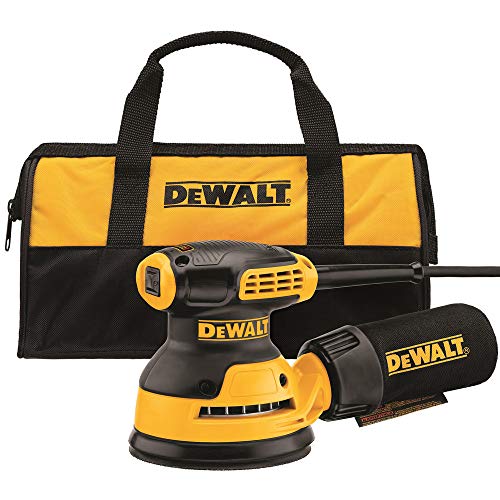
DEWALT 5-Inch Random Orbit Sander Kit (DWE6421K)

DEWALT 5-Inch Random Orbital Sander (DWE6421)

DEWALT 5-Inch Variable Speed Random Orbit Sander Kit (DWE6423K)

DEWALT 20V MAX Cordless 5-Inch Random Orbit Sander Kit (DCW210D1)

DEWALT 20V MAX XR Brushless 1/4 Sheet Variable Speed Sander (DCW200B)

Makita XOB01Z 18V LXT Cordless 5-Inch Random Orbit Sander (Tool Only)

Makita BO5041K 5-Inch Random Orbit Sander Kit
The Details Behind The Selections
The 1/4 sheet format is the classic go-to for detail work, and DEWALT’s DWE6411 keeps the format honest. A 2.3-amp motor drives the pad at 14,000 OPM, which is plenty for shaping edges, knocking down finish between coats, and smoothing small panels. The shorter body brings your hand closer to the work surface, so corner work and tight moldings feel less awkward than on taller palm sanders.
For anyone restoring a vintage door, refinishing a tabletop, or sanding down craft projects, this is a comfortable, predictable tool. The rubber overmold grip and separate counterweight keep vibration manageable during longer sessions, and the one-handed locking dust bag stays put when you’re moving between grit changes. The pad uses a standard sheet size, so picking up replacements at any hardware store stays simple.
What Works In Its Favor
- Lightweight palm-grip body reduces hand fatigue during long finish-sanding sessions.
- 14,000 OPM speed handles fine sanding, between-coat work, and light material removal.
- Standard 1/4 sheet sanding paper is inexpensive and easy to source anywhere.
- One-handed dust bag attachment speeds up cleanup between grits.
Points To Note
- Corded design limits reach around large projects and outdoor jobs.
- 1/4 sheet pad covers less surface area per pass than a 5-inch random orbit pad.
- Single-speed operation offers no variable control for delicate veneer work.
Key Specs
Best Suited To
DIYers and refinishers who tackle trim work, furniture touch-ups, and small flat surfaces where a compact, predictable sheet sander makes the job easier.
Consider Something Else When
Pick the DEWALT Random Orbit Sander, Variable Speed, 5-Inch (DWE6423) instead if you need swirl-free finishes across larger panels, since its 5-inch pad covers more area in each pass.
Where the DWE6411 above handles detail, the DWE6423 takes over for finish work on wider surfaces. A 3-amp motor runs the pad between 8,000 and 12,000 OPM, letting you dial aggression up or down depending on the grit and the wood. Random-orbit sanders move the pad in tight circles while spinning it, which prevents the directional scratches that plain sheet sanders leave behind.
Hook-and-loop pad changes mean switching grits is a pull-and-stick motion, and the low-profile body keeps you close to the workpiece. The rubber overmold grip absorbs vibration well enough for doors, tabletops, and cabinet panels. Where many corded orbiters feel industrial, this one stays manageable for someone who only sands a few times a year.
Useful Strengths
- Variable 8,000–12,000 OPM range supports everything from heavy stock removal to fine finishing.
- Random-orbit action leaves a scratch pattern that’s far easier to hide under stain or paint.
- Hook-and-loop pad swaps sandpaper in seconds, no clips or clamps to fight with.
- Counterweight design reduces vibration compared to older single-weight orbit sanders.
Honest Caveats
- Corded power means trailing cord management during larger projects.
- 5-inch pad feels small on big tabletops where a 6-inch model would speed things up.
- Dust bag fills quickly on heavy grit sessions, so shop-vac hookup is recommended for long jobs.
Quick Technical Notes
Made For
Hobbyist woodworkers finishing cabinets, doors, and furniture who want scratch-free results without stepping up to a full-size 6-inch orbital sander.
Look Elsewhere When
Choose the DEWALT 20V MAX Cordless 5-Inch Random Orbit Sander Kit (DCW210D1) instead if your shop layout keeps you far from outlets, since cordless freedom often matters more than peak power for finish sanding.
The DWE6421K takes everything the DWE6423 above does and wraps it into a single-bag kit, which is exactly what a small home workshop needs. The 3-amp motor runs the pad at a fixed 12,000 OPM, which sounds limiting next to the variable-speed model, yet in practice most projects only need one good orbit speed anyway. You get the same rubber overmold grip, hook-and-loop pad, and low-profile body in a tidy carrying case.
For a garage shop where the sander lives on a shelf between uses, the included storage bag keeps dust off the tool and the cord coiled. It’s a quieter mental model: open the bag, sand the project, drop the tool back in. The bag also makes it easy to carry to a friend’s house or a job site, which matters more than people expect.
Points In Its Favor
- Kit bag keeps the sander, paper, and accessories together so nothing goes missing between projects.
- 3-amp motor sustains cutting power through dense grain without slowing down.
- Single-speed 12,000 OPM is well-matched to most wood sanding tasks, simplifying the workflow.
Some Limits To Know
- No variable speed dial, so heat-sensitive finishes require a lighter touch.
- Tool-only concept is here replaced by a kit bag, but no extra accessories are bundled.
Right Fit For
Shop owners and serious DIYers who want a self-contained, grab-and-go sanding setup for routine wood refinishing in a fixed workspace.
Skip It When
Go with the DEWALT Orbital Sander Kit, 5-Inch, Variable Speed (DWE6423K) instead if you regularly switch between heavy stock removal and delicate finish work, since the variable-speed model adapts without swapping tools.
The DWE6421 is the bare-tool version of the kit you just read about, and that simplicity is the point. You get the same 3-amp motor at 12,000 OPM, the same hook-and-loop pad, the same rubber overmold grip, and the same low-profile body. No bag, no extras, just the sander in the box. For someone who already owns a drawer full of sandpaper and a carrying system they like, that’s a meaningful difference.
At 5 inches, the pad handles flat panels, cabinet doors, and small tabletops with steady progress. The counterweight design keeps the pad tracking true rather than bouncing, which matters more than variable speed for most finish work. Owners commonly appreciate the dust bag sealing cleanly, and the vacuum port fits standard shop-vac hoses.
What It Does Well
- Reliable single-speed performance removes guesswork for new sanders learning the ropes.
- Counterweight-balanced pad tracks smoothly across grain, reducing swirl marks.
- Hook-and-loop pad accepts the most common 5-inch sanding discs on the market.
Trade Offs
- No variable speed limits how aggressively you can ramp up on tough spots.
- Corded-only design means planning around outlet placement for each project.
At A Glance
Who Will Love This
Anyone building a starter wood shop who wants a no-frills, dependable random orbit sander without paying for a kit bag they may not use.
Where Another Pick Suits Better
Pick the Makita BO5041K 5-Inch Random Orbit Sander Kit instead if you frequently work on heat-sensitive finishes, since its wider variable speed range gives you a safer lower setting.
The DWE6423K is the kit version of the DWE6423 you saw earlier, and it pairs the variable 8,000–12,000 OPM range with the same carrying bag the DWE6421K uses. The dial sits at the front of the housing, easy to reach mid-pass, so swapping between aggressive stock removal and gentle finish work happens without putting the tool down. The 3-amp motor keeps the pad spinning at the chosen speed under load.
For a woodworker who flips between stripping an old table and sanding fresh cabinets, that variable range is genuinely useful rather than a marketing checkbox. A lower setting keeps heat down on veneers and sealer coats, while the top end chews through rough-sawn boards fast. Everything else, the grip, the dust bag, the vacuum port, matches the rest of the DEWALT random-orbit family.
Why It Works Well
- Front-mounted speed dial changes OPM without interrupting the workflow.
- Variable range adapts to delicate finishes and aggressive material removal in one tool.
- Kit bag offers organized storage for the sander, discs, and accessories.
Potential Drawbacks
- Corded design requires managing a power cord during every job.
- 5-inch pad can feel underpowered on large tabletops where a 6-inch model would save time.
Feature Rundown
Perfect Match For
Woodworkers handling mixed projects, refinishing old pieces and prepping new builds, who want one sander to cover both ends of the grit spectrum.
Not Your Match When
Choose the DEWALT 20V MAX Cordless 5-Inch Random Orbit Sander Kit (DCW210D1) instead if you regularly sand in locations without nearby power, since cordless operation often matters more than the highest orbit speed.
The DCW210D1 marks the first cordless entry on this list, and for many woodworkers it’s the one that changes the workflow most. The brushless 20V MAX motor runs the 5-inch pad between 8,000 and 12,000 OPM through a variable speed dial on the front, and a 2.0Ah battery ships in the box along with a charger. No cord means you can walk around a project, climb a ladder, or sand a piece still mounted on a wall without dragging an extension cord behind you.
The hook-and-loop pad, the one-handed dust bag, and the vacuum port all match the rest of the DEWALT orbit family, so the learning curve stays low. Runtime on a 2.0Ah pack is short by industrial standards but adequate for finish sanding a few pieces at a time. For someone already invested in the 20V MAX platform, the battery and charger in the box mean no extra purchases to start using it.
Advantages To Know
- Brushless motor extends runtime and motor life compared to brushed cordless designs.
- Variable speed dial gives the same control as corded variable models, with full portability.
- Kit includes battery, charger, and storage bag, ready to use out of the box.
- Compatible with the broader DEWALT 20V MAX battery family if you already own tools in that line.
Where It May Fall Short
- 2.0Ah battery limits runtime during long heavy-grit sessions; spare batteries help.
- Costs more upfront than the corded DWE6423K due to the battery and charger inclusion.
- Power delivery drops as the battery drains, so finishing on a low charge is slower.
Who Should Grab It
Job-site finishers, remodelers, and shop owners with mixed corded and cordless DEWALT tools who need a reliable orbit sander away from outlets.
Reach For A Different Pick When
Pick the DEWALT Random Orbit Sander, Variable Speed, 5-Inch (DWE6423) instead if your sanding happens in a stationary shop, since corded power delivers longer runtime without battery management.
The DCW200B is the cordless answer to the corded DWE6411 that opened this list, and it’s aimed squarely at the detail-sanding crowd. A brushless 20V MAX motor drives the 1/4 sheet pad through a variable speed dial that spans 8,000 to 14,000 OPM, giving you a wider range than most palm sanders offer. Note the tool-only designation, which means the battery and charger ship separately if you don’t already own them.
For trim carpenters, cabinet installers, and anyone sanding in tight indoor spaces, the lack of a cord makes the job dramatically easier. The same one-handed dust bag, vacuum port compatibility, and rubber overmold grip from the corded version translate directly here. You will, however, want a charged 20V MAX battery on hand, since the 1/4 sheet format often sees long sessions on big projects.
What Stands Out
- Brushless motor delivers longer runtime and durability over brushed cordless designs.
- Wide 8,000–14,000 OPM variable range handles both light finish sanding and heavier stock shaping.
- 1/4 sheet pad excels at corners, edges, and detailed profiles where random orbit pads can’t reach.
Soft Spots
- Tool-only bundle means battery and charger are separate purchases for first-time DEWALT 20V users.
- 1/4 sheet format moves less material per pass than a 5-inch random orbit sander.
Feature Snapshot
Built With In Mind
Tradespeople and remodelers who already own 20V MAX batteries and need a portable detail sander for door frames, corners, and on-site touch-ups.
A Better Fit Elsewhere
Pick the DEWALT 20V MAX Cordless 5-Inch Random Orbit Sander Kit (DCW210D1) instead if you want a complete kit with battery and charger included, since the DCW200B ships tool-only.
The Makita XOB01Z is the first non-DEWALT entry, and it brings Makita’s reputation for ergonomic tools into the orbit sander category. The 18V LXT brushless motor drives the 5-inch pad through three preset speeds at 7,000, 9,500, and 11,000 OPM, which is fewer settings than a continuous variable dial but covers the realistic range most woodworkers ever use. Like the DCW200B above, it ships tool-only with no battery or charger included.
For woodworkers already invested in Makita’s 18V LXT platform, the XOB01Z drops into the existing battery system without adding chargers or batteries to the bench. The pad uses hook-and-loop attachment, the dust collection bag seals with one hand, and the rubberized grip profile is widely noted for comfort during longer sessions. The trade-off, as with most tool-only listings, is the upfront cost of batteries for newcomers.
Features That Help
- Three-speed selector switches between rough, medium, and fine sanding without a continuous dial.
- Brushless motor extends runtime and reduces maintenance over brushed designs.
- Hook-and-loop pad accepts standard 5-inch discs, keeping consumables inexpensive.
- Compatible with the broader Makita 18V LXT battery family for shared tool investment.
Possible Compromises
- Tool-only bundle means first-time Makita 18V users need to budget for batteries separately.
- Three preset speeds offer less fine-tuning than continuously variable corded models.
Whose Shelf It Belongs On
Existing Makita 18V LXT users who want a portable random orbit sander that shares batteries with their drills, impacts, and saws.
Where A Sibling Pick Shines
Choose the DEWALT 20V MAX Cordless 5-Inch Random Orbit Sander Kit (DCW210D1) instead if you don’t already own Makita batteries, since that kit ships with everything needed to start sanding.
The BO5041K closes this list with the widest variable speed range in a corded random orbit sander, going from 4,000 to 12,000 OPM. That low end matters more than the headline top speed, because it lets you sand sealed finishes and soft veneers without burning through them. A 3-amp motor sustains the chosen speed under load, and the kit ships with a carrying bag for storage and transport.
The rubberized palm grip and top handle are well-cushioned, which is a real benefit during long refinishing sessions on big tabletops. The dust port fits standard shop-vac hoses, and the one-handed dust bag swaps on and off without tools. For someone who values low-end control on delicate work as much as top-end speed on rough stock, the BO5041K is a compelling alternative to the DEWALT models that dominate the rest of this list.
Positive Takeaways
- Wide 4,000–12,000 OPM range offers excellent low-end control for finish and veneer sanding.
- 3-amp motor holds the selected speed even on dense hardwoods under pressure.
- Kit includes a carrying bag for organized transport and storage.
- Rubberized grip on both the palm and top handle reduces fatigue during extended use.
Details To Watch
- Corded design ties you to an outlet or extension cord for every job.
- Lacks the brushless efficiency of newer cordless models in this list.
Key Attributes
Right Fit For
Refinishers, antique restorers, and finish carpenters who need precise low-speed control on heat-sensitive surfaces alongside the option to push hard when stripping old finishes.
Swap It Out When
Pick the Makita XOB01Z 18V LXT Cordless 5-Inch Random Orbit Sander instead if you already own Makita 18V batteries and want to leave the cord behind for portable detail work.
What To Weigh Before Choosing Sanders For Wood
Pad Format And Project Scope
Sheet sanders like the DEWALT 1/4 Sheet Palm Sander (DWE6411) and the DEWALT 20V MAX XR Brushless 1/4 Sheet Variable Speed Sander (DCW200B) shine on corners, edges, and small flat parts, while 5-inch random orbit sanders handle large flat surfaces faster and leave a more uniform scratch pattern. Most woodworkers end up wanting both, but for a first sander the random orbit is usually the better daily driver for furniture, cabinets, and doors.
Power Source Tradeoffs
Corded sanders deliver consistent power and unlimited runtime, which is ideal for shop work and long sessions. Cordless sanders like the DEWALT 20V MAX Cordless 5-Inch Random Orbit Sander Kit (DCW210D1) and the Makita XOB01Z trade some runtime for the freedom to move around a project without an extension cord. For finish sanding, where most passes are short and light, cordless convenience often wins, while for heavy stock removal, corded endurance matters more.
Variable Speed And Finish Control
A variable speed dial lets you match orbit speed to the workpiece, and the range matters as much as the top end. The Makita BO5041K goes down to 4,000 OPM, which is friendly to thin veneers and sealer coats, while single-speed models lock you into one pace. If you sand a variety of wood species or already-buffed finishes, variable speed is the upgrade that pays for itself fastest.
Vibration, Grip, And Dust Handling
A separate counterweight and rubber overmold grip reduce the hand-numbing vibration that turns a short sanding session into an endurance test. A one-handed dust bag and a vacuum port that fits a standard shop-vac hose are equally important, since fine dust is the main long-term health and cleanup issue with any wood sander.
What Separates The Field
Common Pitfalls When Shopping
Choosing by orbit speed alone often backfires, because the top-end OPM number is similar across most 5-inch orbiters. The more useful comparison is the low end of the speed range, the quality of the dust collection system, and whether the pad height lets you get close to vertical surfaces. Shoppers also frequently overlook pad size, buying a 5-inch random orbit for heavy panel work when a 6-inch model would cut their time in half.
Why Some Models Cost More
Higher-tier sanders like the brushless DEWALT 20V MAX kits and the Makita XOB01Z command a premium for brushless motors, which extend runtime and motor life compared to brushed designs. Variable speed dials, counterweight systems, and included carrying cases all add cost but pay back in daily usability. For light, occasional sanding, a corded single-speed model is plenty, and the savings can go toward better dust extraction or a stack of quality sanding discs.
Frequently Asked Questions
What Is The Difference Between A Sheet Sander And A Random Orbit Sander?
A sheet sander uses a square or rectangular pad that moves in small orbits, making it ideal for corners and detail work. A random orbit sander spins the pad in a circle while orbiting it, producing a swirl-free finish on flat surfaces, which is why most woodworkers reach for a random orbit model for furniture and cabinet projects.
Do I Need A Variable Speed Sander For Wood?
Variable speed is most valuable when sanding sealed finishes, soft veneers, or heat-sensitive surfaces where a high orbit speed can burn through the material. For rough stock removal on raw lumber, a single-speed model is typically sufficient, so the upgrade makes more sense as your projects get more refined.
Is A Cordless Sander Powerful Enough For Furniture Work?
Modern brushless cordless sanders like the DEWALT 20V MAX Cordless 5-Inch Random Orbit Sander Kit match corded orbiters closely for finish sanding, where most passes are light. Heavy stock removal for extended periods still favors corded models, but for typical furniture and cabinet work, a quality cordless sander performs well.
What Grit Sandpaper Should I Start With For Wood?
Most wood projects start with 80 or 100 grit for removing old finish or smoothing rough boards, then progress through 120, 150, 180, and 220 grit for finer finishes. Skipping grits leaves scratch patterns that show through stain and paint, so working through the sequence step by step produces cleaner results.
How Important Is Dust Collection On A Wood Sander?
Dust collection is one of the most important practical features on a sander, both for health and for finish quality. Fine wood dust obscures the surface you’re trying to smooth, makes grit changes less effective, and poses long-term respiratory risks, so a sealed dust bag or shop-vac hookup is worth prioritizing over minor spec differences.




