


Sanding used to mean a thin layer of dust on everything in the shop, from the workpiece to your hair. Today’s sanders with built-in dust collection handle that problem head-on, capturing fine particles at the source so your lungs, your finish, and your cleanup routine all benefit. Whether you’re refinishing a dining table, smoothing rough-sawn lumber for a bookshelf, or prepping trim before painting, a good dust-collecting sander turns a chore into a controlled process.
This roundup covers nine solid options across palm, random orbit, and detail formats, ranging from budget-friendly corded picks to brushless cordless kits. You’ll find a mix of well-known tool brands, each with a slightly different take on dust capture, ergonomics, and power. The goal: help you match the right tool to the work you actually do, not chase a single magic machine.
A Fast Comparison Of The Options

SKIL 1/4 Sheet Palm Sander with Pressure Control (7292-02)

DEWALT Random Orbit Sander, Variable Speed, 5-Inch (DWE6423)
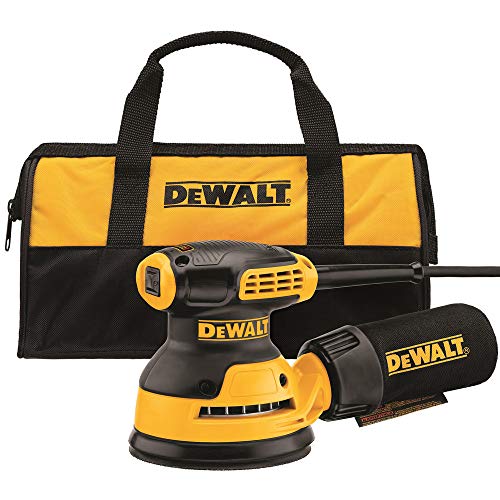
DEWALT Orbital Sander Kit, 5 inch, 3 amp, Corded (DWE6421K)

DEWALT Orbital Sander, 5 Inch Palm Sander Tool (DWE6421)

DEWALT Orbital Sander Kit, 5-Inch, Variable Speed (DWE6423K)

DEWALT 20V MAX Cordless Orbital Sander, 5-Inch (DCW210D1)

Makita XOB01Z 18V LXT Cordless 5″ Random Orbit Sander

SKIL 5″ Random Orbital Sander with Cyclonic Dust Box (SR211601)
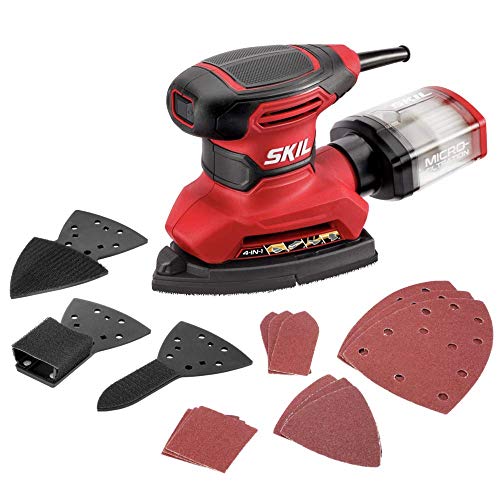
SKIL Multi-Function Detail Sander with Micro-Filter Dust Box (SR232301)
Taking A Closer Look At The Options
The SKIL 7292-02 is a quarter-sheet palm sander (a small rectangular sander that uses standard sheet sandpaper cut to size) that earns its place as a starting point for anyone new to powered sanding. The 2.0-amp motor runs at a fixed speed, keeping things simple, while the pressure control technology alerts you when you press too hard, which can otherwise stall the pad and leave swirl marks on the workpiece.
Dust collection comes via a clear-view micro-filtration canister that captures fine particles and a built-in vacuum adapter for shop vac hookup. For most home projects like refinishing a small side table, smoothing a door before repainting, or stripping old finish off trim, the dust capture proves adequate, though owners commonly report the canister fills quickly during longer sessions.
Advantages To Know
- Pressure control feedback helps beginners avoid gouging soft wood.
- Clear-view dust canister removes the guesswork around when to empty.
- Soft-grip housing reduces hand fatigue during extended finish sanding.
- Dust-sealed switch extends tool life in dusty shop environments.
- Built-in vacuum adapter accommodates standard shop vac hoses.
Things To Consider
- The 2.0-amp motor can feel underpowered on heavy stock removal or thick old finishes.
- Quarter-sheet format means frequent paper changes compared to hook-and-loop pads.
Key Specs
Who It Suits Best
First-time sanders tackling small furniture refinishing, trim prep, or light hobby projects around the house.
Where Another Pick Suits Better
For larger flat surfaces and faster material removal, the DEWALT DWE6423K variable-speed random orbit sander is the stronger match.
The DWE6423 is a 5-inch random orbit sander (a sander whose pad spins in a circle while orbiting in a small ellipse, which prevents visible scratch patterns), so it makes circular scratch patterns that blend into the wood rather than leaving directional lines. That random action is what gives it an edge for finish sanding on tabletops, cabinet doors, and face frames where appearance matters.
A 3-amp motor drives the pad between 8,000 and 12,000 OPM (orbits per minute), and a separate counterweight (an internal balance mass that offsets the spinning pad) reduces vibration compared to cheaper single-bearing designs. The low-profile housing lets you get close to the work surface, useful when sanding inside a face frame or against a back panel. Hook-and-loop pad changes (a hook-and-loop system uses tiny hooks to grip matching fuzzy-backed sanding discs, so swapping grits is a peel-and-stick motion) make swapping grits quick.
What Works In Its Favor
- Variable speed dial matches pad speed to material and grit.
- Counterweight design keeps vibration low over long sessions.
- Low-profile body reaches tight spots other random orbits can’t.
- Locking dust bag or vacuum port offers two collection choices.
Worth Noting
- Corded design limits reach on large furniture pieces unless you use an extension cord.
- The dust bag is small, so expect to empty it often on big jobs.
Best Suited To
Home woodworkers and refinishers who want a smooth, swirl-free finish on flat panels and prefer corded consistency over cordless convenience.
Skip It When
You need to wander away from outlets on a jobsite; in that case the DEWALT DCW210D1 cordless sander covers the same orbit format with battery freedom.
The DWE6421K ships as a kit, which means the dust bag and sanding disc arrive in the box rather than as separate purchases. It runs at a single speed of 12,000 OPM, which simplifies the controls for anyone who doesn’t want to think about speed adjustment and just wants to sand.
The shorter housing compared to older DEWALT designs helps in tight quarters, and the counterweight plus rubber overmold grip keeps hand fatigue reasonable on a long day in the shop. The one-handed locking dust bag stays attached securely while you work, and you can swap it for a vacuum hose when you want cleaner air around the workbench.
Useful Highlights
- Kit format includes dust bag and starter disc, ready to use out of the box.
- Single-speed operation removes a variable that beginners often mis-set.
- Counterweight reduces vibration transfer to hands and wrists.
- Shorter body improves control in close-quarters work.
Points To Note
- No variable speed means you can’t slow the pad for heat-sensitive finishes or delicate veneered surfaces.
- Like the DWE6423, the dust bag fills quickly on extended runs.
Right Fit For
Garage and basement workshops where the sander lives near an outlet and gets used weekly on furniture builds or refinishing projects.
Consider Something Else When
You work on a wide range of materials, from soft pine to hard exotic woods, and want speed flexibility; the DWE6423K variable-speed kit is the better tool.
The DWE6421 is the bare-tool version of the kit covered above, same motor and pad, but sold without the bag or starter disc. For people who already own a shop vac and a stack of hook-and-loop discs, that bare format often makes more sense than paying for accessories that’ll sit in a drawer.
It still has the 3-amp motor at 12,000 OPM, the counterweight balance, and the rubber overmold grip. The dust port accepts the same vacuum hose or the separately purchased dust bag. In the hand, it feels nearly identical to the DWE6421K, so the choice between the two comes down to whether you need the included accessories.
Notable Gains
- Same proven motor and counterweight as the kit version, often at a lower entry cost.
- Compact palm-grip format fits comfortably in smaller hands.
- Hook-and-loop pad accepts common 5-inch discs from any sanding supplier.
Honest Caveats
- Dust bag and starter disc not included, adding to total cost if you need them.
- Single-speed operation limits fine-tuning for heat-sensitive finishes.
- Replacement hook-and-loop pads wear out and need occasional replacement after heavy use.
Key Specs
Made For
DIYers who already own shop accessories and want a reliable corded random orbit sander without paying for extras they don’t need.
A Better Fit Elsewhere
First-time tool owners who want everything in one box should consider the DWE6421K kit instead.
The DWE6423K combines the variable-speed motor of the DWE6423 with the kit format of the DWE6421K, so you get dust bag, starter disc, and a speed dial that runs from 8,000 to 12,000 OPM. That range matters more than it sounds: slower speeds keep heat down on delicate veneers and sealers, while faster speeds chew through rough stock on solid wood.
The shorter housing and counterweight balance carry over from the rest of DEWALT’s 5-inch random orbit line, and the rubber overmold grip stays comfortable through long sessions. For someone running a small finishing business or a serious home shop, the variable speed alone justifies choosing this kit over the single-speed version.
Where It Delivers
- Variable speed dial handles everything from fine finish work to aggressive stock removal.
- Kit includes dust bag and sanding disc, no extra shopping needed.
- Counterweight and overmold grip reduce hand fatigue on long days.
- Accepts both dust bag and shop vac hose for flexible collection.
Trade Offs
- Higher cost than single-speed models, a meaningful gap for casual users.
- Corded design ties you to an outlet or extension cord.
Who Will Love This
Tradespeople, cabinetmakers, and serious hobbyists who sand a variety of materials and want one tool to cover the full range.
Look Elsewhere When
You mostly work on rough framing lumber; a dedicated belt sander would be more efficient for that heavy material removal.
The DCW210D1 is the only brushless model in DEWALT’s 5-inch random orbit line that ships with a battery and charger in the box. Brushless motors (motors with no carbon brushes to wear out, controlled electronically instead) tend to run cooler and last longer than brushed equivalents, and they squeeze more runtime out of each battery charge. The kit includes a 2.0Ah battery and charger, plus a storage bag for the whole setup.
The variable-speed dial covers 8,000 to 12,000 OPM, matching the corded DWE6423K on paper. In practice, runtime depends on the job, and heavy material removal on a 2.0Ah pack drains faster than you’d see with a higher-capacity battery. For jobsites without easy outlet access, or for finish work in rooms where dragging a cord feels like a hassle, the cordless format earns its keep.
The Good Stuff
- Brushless motor extends runtime and tool life compared to brushed designs.
- Variable speed dial matches corded-model flexibility.
- Includes battery, charger, and storage bag, ready to work out of the box.
- One-handed locking dust bag or vacuum port for clean operation.
Points To Keep In Mind
- 2.0Ah battery is on the small side for all-day shop use; consider a higher-capacity pack for heavy sessions.
- Higher upfront cost than corded equivalents once you add the kit pricing.
Quick Facts
Perfect Match For
Existing DEWALT 20V MAX tool owners who want to add a cordless sander to their system without investing in a new battery platform.
Not Your Match When
You already own a corded random orbit and rarely work far from an outlet; the corded DWE6423K delivers similar sanding performance at a lower cost.
The XOB01Z is sold as tool only, so no battery or charger arrives in the box, which is the right call for anyone already running Makita’s 18V LXT platform. Three speed settings (7,000, 9,500, and 11,000 OPM) cover most sanding scenarios, and the ergonomic grip keeps the tool planted during long runs.
Makita rates the XOB01Z for up to 40 minutes of runtime on a single charge with a typical 18V pack, though real-world numbers depend on the grit, the wood, and how much pressure you apply. The dust collection system uses a one-handed bag attachment or a vacuum port for shop vac hookup. For woodworkers already in the Makita ecosystem, this is the obvious way to add a random orbit sander without owning a second battery system.
What Helps Most
- Three-speed range covers fine finish work through moderate material removal.
- Tool-only pricing makes sense for existing Makita 18V owners.
- Ergonomic grip reduces wrist strain during extended sessions.
Some Limits To Know
- Battery and charger sold separately, adding cost for first-time Makita buyers.
- Top speed of 11,000 OPM is slightly lower than the DEWALT cordless model.
Whose Shelf It Belongs On
Makita 18V LXT owners who want a sander that shares batteries with their drill, impact driver, and other cordless tools.
Reach For A Different Pick When
You don’t already own Makita batteries; in that case the DEWALT DCW210D1 kit, which ships with a battery, is a more practical entry point.
The SR211601 stands out in this list for one specific reason: it uses a cyclonic dust box rather than the simple bag that most competitors include. Cyclonic separation (using a swirling vortex to fling heavier particles out of the air stream and into a collection bin) keeps the filter from clogging as quickly, so the dust collection stays effective for longer sessions.
Variable speed runs from 7,000 to 13,000 OPM, which is one of the broader ranges in this roundup. The 5-inch hook-and-loop pad accepts common discs, and vibration control helps during long sanding runs. Three sanding sheets ship in the box, enough to start a small project without an extra trip to the store.
Everyday Advantages
- Cyclonic dust box maintains suction longer than bag-based collection.
- Wide 7,000 to 13,000 OPM speed range covers fine and coarse work.
- Vibration control keeps the tool comfortable during extended use.
- Includes three sanding sheets to get started.
Practical Considerations
- Cyclonic box adds bulk compared to slim dust bag designs.
- Emptying the dust box can be messier than swapping a sealed bag.
Who Should Grab It
DIYers and homeowners who want better-than-basic dust capture without paying for a pro-grade brand name.
Swap It Out When
You already own a shop vac and want the cleanest possible air during sanding; in that case the DEWALT DWE6423K with vacuum hookup is the stronger pick.
The SR232301 is the only detail sander in this roundup, meaning it’s built for tight corners, small parts, and intricate profiles rather than flat panels. The 4-in-1 design swaps the base plate for different attachments: a finger attachment for narrow grooves, a contour pad for curves, and standard detail profiles for flat spots near edges.
A 1.2-amp motor produces 13,500 OPM, which is plenty for the small contact areas this sander is designed for. Dust collection runs through a micro-filtration box that captures fine particles, and there’s a 1-1/4-inch dust port for shop vac hookup. Twelve sanding sheets in the box cover the first several projects.
Bright Spots
- Tool-free attachment changes speed up switching between profiles.
- Micro-filtration plus vacuum port gives two dust collection options.
- Compact body reaches into corners random orbit sanders can’t touch.
Possible Compromises
- Small pad size makes it inefficient for large flat surfaces.
- Lower motor power compared to random orbit models in this list.
Built With In Mind
Crafters, model makers, and homeowners restoring window frames or ornate trim where a full-size random orbit is too bulky.
Another Choice May Suit
For large furniture panels and table tops, the DEWALT DWE6421 delivers more efficient material removal across flat surfaces.
Matching A Sander To The Work You Actually Do
Picking a sander with dust collection comes down to three questions: what surfaces you’ll sand most often, how far from an outlet you’ll work, and how much dust capture really matters for your space.
Pad Format Drives Use Case. Random orbit sanders (the round, 5-inch models) handle flat panels and broad surfaces efficiently. Palm sanders like the SKIL 7292-02 use quarter-sheet pads that reach into corners but change paper more often. Detail sanders with interchangeable attachments fit profiles and tight spots that round pads cannot reach. Match the pad to the geometry of your typical project rather than chasing maximum speed.
Corded vs Cordless Affects Workflow. Corded sanders deliver consistent power without battery management, making them the natural fit for shop-based work. Cordless models like the DEWALT DCW210D1 and Makita XOB01Z trade some runtime for portability, which matters on jobsites, in client homes, or anywhere running an extension cord feels like a hassle.
Dust Collection Format Changes The Cleanup. Bag-based collection works fine for short sessions but fills quickly on big jobs. Cyclonic designs like the SKIL SR211601’s box maintain suction longer, while vacuum port hookups provide the cleanest air when you already own a shop vac. For indoor work in finished spaces, vacuum hookup is worth prioritizing.
Speed Range Matters for Material Variety. Single-speed sanders keep controls simple, which beginners often appreciate. Variable-speed models let you slow the pad for heat-sensitive finishes or speed it up for rough stock removal. The DWE6423K and DCW210D1 both span 8,000 to 12,000 OPM, a range that covers the bulk of wood sanding scenarios.
Smart Shopping Notes For Sander Shoppers
Where Shoppers Go Wrong
A common mistake is choosing a sander based on motor power alone, when dust collection quality and pad format actually affect the final finish more directly. Another slip-up is buying a cordless model without checking that the battery system matches tools you already own; mismatched platforms mean extra chargers and batteries cluttering the bench. Finally, skipping the dust port and relying only on the included bag leads to disappointing air quality during long sessions, so check that the sander accepts a shop vac hose before committing.
Where The Extra Money Goes
Higher-tier sanders like the DEWALT DCW210D1 add brushless motors for longer life, variable speed dials for material flexibility, and balanced counterweights that reduce hand fatigue. The upgrade makes sense for anyone sanding more than a few hours per week. For occasional touch-up work, a budget-friendly corded option like the SKIL SR211601 covers the same dust collection concept with fewer frills and a noticeably lower entry cost.
Frequently Asked Questions
How Does Dust Collection Actually Work On These Sanders?
Most sanders in this roundup use a combination of a built-in dust port and either a collection bag or box. Fine particles get pulled through holes in the sanding pad and into the container, with a vacuum hose connection available on most models for cleaner air.
Can I Use Any Sanding Disc With A Hook-And-Loop Pad?
Hook-and-loop systems accept any disc with the matching fuzzy backing and the correct diameter, so 5-inch hook-and-loop discs from any major brand will fit the DEWALT and SKIL random orbit sanders in this list. Just match the grit to the job.
Is A Cordless Sander Powerful Enough For Furniture Refinishing?
Modern brushless cordless sanders like the DEWALT DCW210D1 deliver pad speeds comparable to corded models, though runtime on a single battery charge becomes the limiting factor for extended sessions rather than raw power.
What Grit Sequence Works For Most Sanding Projects?
A typical sequence starts at 80 or 100 grit for material removal, moves to 120 or 150 for smoothing, and finishes at 220 for surfaces that will receive stain or paint. Skip more than one grit step at a time to avoid leaving deep scratches that finer grits struggle to remove.
Do These Sanders Work On Metal Or Just Wood?
The random orbit and detail sanders in this roundup handle wood, metal, and plastic, though the appropriate grit and disc type matter. For metal, use discs specifically rated for the material to avoid loading the pad with debris.




