


Drywall sanding looks simple until you do it. The grit is wrong, the sponge wears out in ten minutes, or the dust kicks back at your face and ruins the finish you just spent an hour laying down. Anyone patching a nail hole, feathering a seam, or smoothing a whole room has hit at least one of those walls.
A good sponge wraps your hand, flexes into corners, and cuts just enough without gouging the paper face underneath. The picks below lean on foam density, abrasive grain, and grit range, the three things that separate a sponge you keep reaching for from one that ends up in the trash. Here’s what stands out across a full room of drywall work.
The Choices Worth Comparing
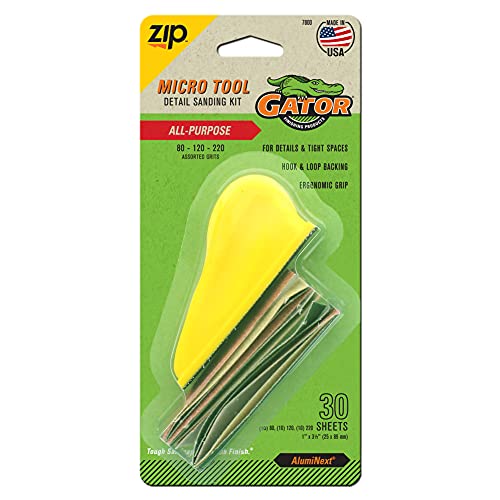
Gator MicroZip Sander Kit, Assorted Grits, 3.5″ x 1″

Virginia Abrasives 5″ x 3″ Sponge Blocks, 80/120 Grit, 24 Pack

Virginia Abrasives 4″ x 3″ Sponge Blocks, 80/120 Grit, 32 Pack

LiME LiNE 600 Grit Sanding Sponges (6) Pack

ZXOEJF 27-Piece Sanding Sponge, 120–3000 Grit Assortment

EAFBAO 50-Piece Sanding Sponge Assortment, 180–3000 Grit

Virginia Abrasives 5″ x 3″ Sponge Blocks, 80 Grit, 24 Pack
A Closer Look At Each Pick
The Gator MicroZip runs small on purpose, and that small footprint is the whole reason it earns the first slot. At 3.5″ x 1″ the kit slips into inside corners, around electrical boxes, and along the seam where ceiling meets wall, all the spots where a full-size block (like the Virginia Abrasives picks later in the list) feels clumsy.
Hook-and-loop backing means swapping grits takes a second, and the aluminum oxide grain holds up across multiple patches without losing bite. For anyone doing punch-list repairs rather than full-room finishing, this is the right scale. The foam core stays firm rather than folding under thumb pressure, which keeps the cut consistent on softer joint compound.
Where It Helps
- Compact size reaches inside corners and tight electrical-box cutouts where larger blocks bind.
- Hook-and-loop system swaps sheets in seconds, no taping or adhesive wrestling.
- Assorted grits cover both joint-compound smoothing and final paint-prep passes.
- High-density foam resists folding, so the cut stays even across longer sessions.
Trade Offs
- Small surface area makes whole-wall work slow and tiring on the hand.
- Sheet-based design means replacements are tied to the proprietary hook-and-loop pad size.
Key Specs
Whose Shelf It Belongs On
Detail-oriented DIYers patching nail holes, screw pops, and small dings rather than re-skinning a whole room.
Where Another Pick Suits Better
The Virginia Abrasives 5″ x 3″ Sponge Blocks, 80/120 Grit, 24 Pack is a smarter reach when the project covers full walls instead of touch-ups.
Compared to the Gator’s small-scale precision approach, the Virginia Abrasives 5″ x 3″ blocks swing the other way. These are built for covering square footage, with a straight-edge profile that lays flat against butt joints and wider seams.
The 80/120 grit combination (medium then fine) mirrors the actual workflow of drywall work: knock down ridges, then refine. At 24 per pack, there’s room to toss a worn block without losing a working session. The size fits comfortably in a hand and the foam stays flexible enough to glide over taped seams without catching edges.
What Stands Out
- Wide 5″ face clears more compound per stroke, which matters on long seams.
- 80 and 120 grit split covers both shaping and finishing in one purchase.
- 24-pack quantity means replacements stay on hand through full-room projects.
Points To Note
- No fine grits above 120, so a separate finer sponge is required for paint-ready passes.
- Larger blocks feel bulky inside tight inside corners, where the Gator MicroZip has the edge.
Feature Snapshot
Right Fit For
Homeowners and remodelers sanding full rooms of freshly taped drywall where speed on long seams matters more than detail precision.
Not Your Match When
The ZXOEJF 27-Piece Sanding Sponge Assortment is the better shelf when the project also includes fine polishing steps beyond drywall prep.
Step down an inch in width and step up eight blocks in count, that’s the trade the 4″ x 3″ version of the Virginia Abrasives line offers. You get the same 80/120 grit pairing and the same straight-edge profile, just in a slightly trimmer body and a fatter pack.
For anyone running multiple rooms or a small rental renovation, the 32-block count keeps the workflow moving without a mid-project reorder. The smaller face also slips into corners a little more willingly than the 5″ version, which is a quiet bonus on ceiling lines.
Bright Spots
- 32-pack quantity lowers the per-block cost noticeably over the 24-pack sibling.
- 4″ width handles both seams and tighter inside corners more comfortably than 5″ blocks.
- Same 80/120 grit logic as the larger Virginia Abrasives pick, so workflow stays familiar.
Honest Caveats
- Cuts more strokes per pass than the 5″ version, which adds time on long walls.
- Still no fine-grit option above 120, so finishing sponges need to come from elsewhere.
Made For
Shoppers running large projects on a tighter budget who still want name-brand abrasive stock rather than off-brand bulk.
Skip It When
The LiME LiNE 600 Grit Sanding Sponges are the right shelf when the next step is a fine final pass on top of medium sanding.
Most of the picks earlier in this list attack the rough stages. The LiME LiNE 600-grit set is the opposite move, a final-pass specialist that comes in after the medium work is done. 600 grit on drywall is a real step toward a paint-ready surface, especially over skim coats and Level 5 finishes.
The 4″ x 4.75″ double-sided face gives you two fresh working surfaces per block, which is a quiet but useful detail for a fine-grit sponge that you’d otherwise rotate often. The flexibility helps it follow contours without leaving flat spots.
Notable Gains
- 600 grit cuts the visible scratch pattern that coarser sponges leave behind, so primer and paint lay smoother.
- Double-sided design effectively doubles the working life per block.
- Flexible body follows seams and curves without flattening the surface.
Less-Strong Areas
- No coarse grit included, so you still need a separate block for ridge knockdown.
- Six-pack count may run short on large rooms with heavy finishing needs.
Quick Facts
Best Suited To
Finishers and detail-focused remodelers handling skim coats, Level 5 finishes, or any drywall stage where scratch pattern visibility matters.
Look Elsewhere When
The Virginia Abrasives 5″ x 3″ Sponge Blocks, 80/120 Grit, 24 Pack is the right call for the heavy shaping work that comes before any fine-grit pass.
The ZXOEJF set goes the other direction from the focused LiME LiNE, packing nine different grits from 120 up to 3000 into a single purchase. For a shop that bounces between drywall, wood, and metal, that range eliminates buying separate packs for each medium.
The 3″ x 4″ footprint is compact and the silicon carbide surface handles wet or dry work. In practice, this is less a drywall-only kit and more a multi-surface finishing set that happens to include the grits you’d reach for on a Level 4 or 5 wall.
Points In Its Favor
- Wide grit range (120 to 3000) covers everything from compound shaping to near-polish finishing.
- Wet-or-dry rated for both drywall dust control and wood-finish workflows.
- Three pieces per grit means rotation stays simple as blocks wear down.
Worth Bearing In Mind
- Includes grits far beyond what drywall typically needs, so some pieces may go unused.
- Smaller 3″ x 4″ face slows coverage on long seams compared to the 5″ Virginia Abrasives blocks.
Who It Suits Best
Multi-craft hobbyists and small-shop owners who want one assortment covering drywall, wood sanding, and finish polishing in a single shelf purchase.
Consider Something Else When
The EAFBAO 50-Piece Sanding Sponge Assortment is the stronger pick when hook-and-loop convenience and a larger overall count matter more than ultra-fine grits.
The EAFBAO set brings the largest count in this roundup: 50 pieces across ten grits from 180 up to 3000, with five blocks per grit. The hook-and-loop pad design also means individual sheets can be cut down for detail work on smaller surfaces.
Compared to the ZXOEJF kit, you trade three-grit-per-stage coverage for a higher total count and the hook-and-loop convenience. For an active garage or workshop that goes through abrasive blocks regularly, that count matters more than a few extra-fine grits.
Positive Points
- 50-piece count keeps the workshop stocked through multiple projects without reordering.
- Hook-and-loop backing speeds up swaps and supports custom-cut sheets for odd shapes.
- Ten grit steps from 180 to 3000 cover coarse through final-polish stages.
Some Limits To Know
- Starts at 180 grit, so very heavy ridge-knockdown work needs a separate coarser block.
- Larger pack size takes up more shelf space than the focused 6-pack LiME LiNE option.
Perfect Match For
Active DIYers, hobby woodworkers, and garage workshops that need a deep bench of sponges ready for varied jobs on any given weekend.
Swap It Out When
The LiME LiNE 600 Grit Sanding Sponges are a more focused choice when the project is strictly final-pass finishing rather than general workshop use.
The final entry from Virginia Abrasives narrows the focus to a single 80-grit medium cut with an angled edge profile. That single-angle shape isn’t decorative: it gives the block a defined corner for feathering tape edges and working into inside corners without flipping the sponge.
The 80-grit medium rating handles the heavy lifting on re-coats, second passes, and ridge knockdowns where coarser paper would gouge the face. For pro remodelers who go through sponges by the box, an all-medium, all-angled pack keeps the workflow consistent.
Strong Points
- Angled edge gives a defined corner for inside-corner and tape-edge feathering.
- 80-grit medium is well-matched to second coats and re-coat work on filled drywall.
- Same 24-block count as the 80/120 sibling, keeping the bench stocked.
Trade-Offs To Consider
- Single-grit pack means a separate fine sponge is required for finishing.
- Heavier cut than the 80/120 dual-grit version, so beginners may sand through paper if pressure isn’t controlled.
Who Should Grab It
Working remodelers and serious DIYers handling re-coats, patches, and heavy stock removal on existing drywall surfaces.
Reach For A Different Pick When
The Gator MicroZip Sander Kit is the better tool for fine-detail patches in tight spots rather than full re-coat work.
What Matters Most Before Choosing Sanding Sponges For Drywall
Grit Range And Workflow
Drywall sanding happens in stages, and the grit number tells you where each sponge belongs. Coarse grits (60 to 80) knock down ridges, tape edges, and high spots on second or third coats. Medium grits (100 to 150) refine the surface after the heavy shaping is done. Fine grits (220 and up) prepare the wall for primer and paint. A single-grit pack forces you to buy additional sponges for other stages, while an assortment (like the ZXOEJF or EAFBAO kits) covers the full sequence in one purchase. Most touch-up work only needs medium and fine, so a 80/120 combination covers the common case well.
Block Size And Shape
A 5″ x 3″ block covers long seams quickly but feels bulky in tight corners. A 3″ x 4″ block trades speed for corner access. Smaller profiles like the Gator MicroZip reach inside-corner angles and around electrical boxes where larger blocks bind. Angled-edge blocks add a defined corner for feathering, which matters on re-coat work. Choosing shape comes down to the geometry of the project, not just the surface area.
Foam Density And Flexibility
The foam core is what separates a sponge that lasts from one that folds under thumb pressure and leaves uneven cuts. High-density foam keeps the abrasive flat against the wall, which produces consistent scratch patterns. Lower-density foam feels softer but tends to dish out in the middle, which translates to high spots on the wall that show up after priming. For drywall specifically, a medium-density foam with a firm face is the safer bet.
Pack Size And Reorder Frequency
A 24-pack or 32-pack of medium sponges disappears faster than expected on a full room, because worn blocks shed dust and lose cut quickly. Buying in larger counts lowers the per-block cost but also takes up shelf space. The honest read is: match the pack count to the project size, not to the per-block savings alone.
Key Considerations Across These Picks
Common Shopping Slip Ups
The most common mistake is buying only medium grits and expecting the wall to be paint-ready. Medium grit leaves a visible scratch pattern that flashes through primer and paint, especially on smooth finishes. Pair medium and fine grits on every purchase, or grab a focused fine-grit pack (like the LiME LiNE 600 set) as a separate item. The other frequent slip is ignoring block shape: a 5″ block feels productive on a long seam and then suddenly won’t fit the inside corner above the doorway, so the project stalls mid-pass.
What The Higher Tier Buys
Premium drywall sponges in this category earn their cost through foam density, longer-lasting abrasive grain, and consistent block geometry. A cheap block dishes out in the middle after ten minutes, while a denser foam holds its shape across a full room. Higher-tier kits also tend to include matched grit sequences (multiple blocks per grit) which prevents the mid-project scramble when a single medium-grit block wears out before the rest. The upgrade is worth it for anyone sanding more than one room at a time, or anyone who has ever lost a Saturday to a sponge that fell apart halfway through a finish coat.
Frequently Asked Questions
What grit sanding sponge works best for drywall?
A medium grit (around 100 to 120) handles most joint compound work, while a fine grit (220 or higher) prepares the surface for primer and paint. Coarser 80-grit blocks are useful for ridge knockdown and re-coats.
Can sanding sponges be used wet on drywall?
Wet sanding is possible on drywall, but most pros stick to dry sanding to avoid soaking the paper face of the gypsum board. Light damp sponges can knock down dust on final passes, though prolonged wet use risks damaging the underlying paper.
How long does a drywall sanding sponge last?
A medium-grit sponge on joint compound typically lasts through one or two full rooms of work before losing cut. Heavier pressure and coarser grits shorten the life, while finer grits on already-smooth walls last considerably longer.
Are angled sanding sponges better than flat blocks?
Angled blocks add a defined corner for inside corners and tape-edge feathering, which is a real advantage on re-coat work. Flat blocks are faster on long seams, so the best pick depends on which geometry dominates the project.
Should I use a sanding sponge or sandpaper on drywall?
Sanding sponges wrap the hand, flex into corners, and last longer on curved surfaces, while traditional sandpaper sheets cut faster on large flat areas. For most DIY drywall work, a sponge block is the more forgiving choice, especially for less experienced hands.




