


Stripping old paint off furniture, trim, or a tired metal railing is a messy job, and the right abrasive decides whether you spend an hour or an entire weekend on it. The picks below cover flat panels, contoured spindles, automotive panels, and detail work in tight corners. Each option handles a different layer of the job, from heavy lifting to final smoothing before primer goes on.
How The Shortlist Stacks Up

Festool 575162 Granat P80 6-Inch Sanding Discs, 50-Pack

SenmaiTools Emery Cloth Roll, 6 Grits, 1″ x 19.7 ft
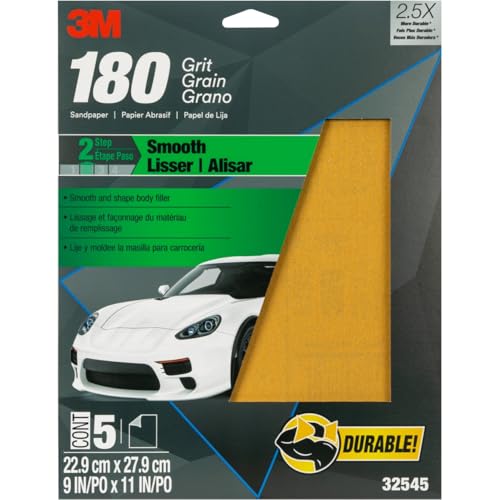
3M Sandpaper, 180 Grit, 5 Sheets, 9″ x 11″

SenmaiTools High Grit Sandpaper Assortment, Ultra Fine
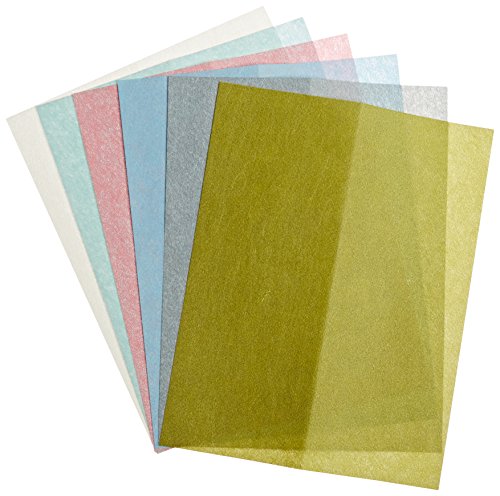
Zona 37-948 3M Wet/Dry Polishing Paper, Assorted Microns

EAFBAO 50 PCS Sanding Sponge Assortment, 180-3000 Grit

EAFBAO 32PCS Round Sanding Sponge, 180-3000 Grit (Red)

EAFBAO 63 PCS 1-Inch Sanding Dremel Discs, 180-3000 Grit
Inside Each Recommended Option
Paint removal on a big flat tabletop goes faster when the abrasive matches the sander’s dust port pattern, and that is where these Festool Granat discs earn their keep. The P80 grit cuts through latex, oil-based coatings, and primer without loading up the way cheaper aluminum-oxide discs do on a hot summer day in a garage with no airflow.
Each disc carries the MULTI-JETSTREAM 2 hole pattern, which pairs with Festool’s RO 150, ES 150, ETS 150, ETS EC 150, and LEX 150 sanders for cleaner dust extraction during heavy stripping sessions. The Granat blend handles bare wood and most modern paint systems comfortably, and a 50-pack gives you room to wear through a few on a stubborn door without panic.
Bright Spots
- Resists clogging on soft latex paint better than standard aluminum-oxide discs
- P80 grit is the sweet spot for knocking down thick paint layers before switching to a finer pass
- MULTI-JETSTREAM 2 hole pattern pulls dust through the pad instead of letting it swirl around the workpiece
- Compatible with five Festool sander models already in many professional shops
Things To Consider
- Only fits Festool sanders, so the investment makes little sense without one of those machines
- Higher cost per disc than commodity sanding sheets, and the supply tends to thin out during heavy project runs
Who It Suits Best
Shops and serious DIYers already running a Festool random-orbit or eccentric sander who want a matched abrasive system.
Where Another Pick Suits Better
Hand sanders working without a powered tool get more mileage from the 3M 180-grit sheets, which cut by hand and on a machine.
Refinishing a metal patio chair, sanding rust off a vintage hand plane, and smoothing a patch of wood filler on a windowsill all want different grits, and that is the daily reality of a small workshop. A single roll that tears off exactly what you need tends to beat hunting through a stack of half-used sheet packs.
This emery cloth roll runs six grits from 80 to 600, with the dispenser box keeping the unused portion clean and out of the way on a crowded bench. The cloth backing flexes around curved metal legs and contoured furniture parts, and it tolerates wet work, so you can knock down paint with a little soapy water to keep dust from blowing around the garage.
Reasons It Performs
- Six grits on one roll covers everything from stripping thick enamel to polishing a brushed finish
- Cloth backing drapes over rails and spindles without cracking the way paper sheets do
- Wet/dry construction lets you control dust on indoor projects
- Pull-out dispenser keeps the roll tidy and stops grit from contaminating your other supplies
Worth Noting
- Narrow 1-inch width suits detail work but feels slow on broad flat panels
- Emery cloth cuts slower than ceramic or zirconia discs on hard cured paints, so patience helps on heavy layers
Key Specs
Made For
Mixed-material hobbyists who strip metal, wood, and furniture with one roll rather than a wall of separate packs.
Skip It When
Large flat furniture panels go faster under the EAFBAO sanding sponge block, which covers more area per stroke.
A door jamb full of old lacquer or a motorcycle tank with a peeling clear coat calls for an abrasive that holds up under hand pressure without tearing through the paper backing. The 3M 180-grit sheets sit in that middle band where you are smoothing filler and shaping glaze before moving to primer.
These sheets run 9 by 11 inches, the standard shop size that tears cleanly into quarters for hand blocks or feeds a sheet sander. The aluminum-oxide grain holds its edge through body filler, and the heavier paper backing resists tearing when you press hard to level a low spot in a patch.
Positive Takeaways
- 180 grit handles the transition from stripping to primer prep without skipping a step
- Aluminum-oxide grain resists clogging on body filler dust
- Cuttable for hand blocks, or usable directly in a sheet sander
- 5-sheet pack suits one-off repairs without buying more than you need
Trade Offs
- Only 5 sheets in a pack, so larger projects run out fast and need reorders
- Single-grit pack means buying additional grits for full paint-removal sequences
Best Suited To
Garage tinkerers and bodywork DIYers smoothing patches, glaze, and spot putty between coats.
Look Elsewhere When
Multi-grit flexibility matters more, in which case the SenmaiTools emery roll covers six grits on one continuous feed.
After the heavy paint is gone, a coat of clear on a guitar body or a restored tabletop still shows every scratch from the coarser paper. That is where the very fine end of the grit spectrum earns its place, knocking down orange peel and scuffing between finish coats.
This SenmaiTools assortment climbs from 400 grit all the way to 20,000, with 33 sheets covering the full progression from smoothing primer to mirror-polish territory on small surfaces. The sheets run 9 by 3.6 inches, sized for hand finishing on a block, and the grit number printed on the back keeps you from guessing mid-project.
What Stands Out
- Includes a polishing cloth for wiping residue between grit steps
- Twelve grit steps from 400 to 20,000 cover a complete finishing ladder
- Wet/dry construction lets you lubricate for the finest grits to avoid heat buildup
- Compact sheet size fits comfortably in hand for detail work
Honest Caveats
- No coarse grits, so this pack assumes you already stripped the heavy paint with something else
- Smaller sheet format feels wasteful on broad panels
Feature Snapshot
Who Will Love This
Restorers chasing a glass-smooth surface on instruments, jewelry boxes, and small turned wood pieces.
Not Your Match When
Bulk paint stripping is the first task, since the Zona 3M wet/dry polishing paper includes coarser micron options for the same kind of controlled finishing on larger work.
Polishing a carved acrylic handle, refining a fiberglass repair, or burnishing a piece of soft aluminum demands an abrasive that flexes with the contour instead of grinding flat spots into the curve. Standard paper sheets crack on tight radii, and that is what this 3M-format sheet is designed to avoid.
The non-woven backing bends around corners and rounded edges, and the assortment covers six micron grades (1, 2, 3, 9, 15, and 30) for stepped polishing on acrylic, polyurethane, solid surface composites, fiberglass, and finished wood. The 8.5 by 11 inch sheet cuts into strips for Zona’s saw frames, though hand-folding a strip works just as well for spot polishing.
Everyday Perks
- Flexible non-woven backing follows curves without tearing or skipping
- Six micron grades let you work in sequence from coarse cut to final polish
- Usable with or without water, depending on the material and the dust tolerance in the room
- One sheet of each grade means less waste on occasional polishing jobs
Points To Keep In Mind
- Only one sheet per micron grade, so larger projects need extras
- Micron grading reads differently from FEPA grit, and the learning curve catches first-timers off guard
Perfect Match For
Modelmakers, acrylic fabricators, and small-scale finishers working on contoured surfaces where rigid paper fails.
Swap It Out When
Bulk wood furniture restoration needs the SenmaiTools ultra-fine assortment, which includes far more sheets across a longer grit ladder.
Hand-sanding a dresser drawer front or feathering drywall compound on a wall patch calls for something that grips the work and your fingers at the same time. A flat sheet wrapped around a block gets the job done, but a foam-backed sponge with the abrasive already attached feels less like a wrestling match.
This EAFBAO set runs 50 sponges across ten grit steps from 180 to 3000, so you can strip paint, then work all the way to a pre-polish without switching formats. The hook-and-loop backing holds the abrasive on the block, and the foam core flexes against light curves, molding itself to the surface instead of digging in.
Real-World Strengths
- Ten grit steps in one box eliminates the need to buy separate packs per stage
- Foam core conforms to gentle curves and rounded edges without cutting flat spots
- Hook-and-loop attachment swaps grits quickly mid-project
- Washable and reusable when dust clogs the surface, extending the working life
Less-Strong Areas
- Not aggressive enough for thick,多层 paint buildup on a single pass
- Sponge format costs more per sheet than bulk paper rolls for budget jobs
Whose Shelf It Belongs On
Homeowners tackling weekend furniture flips and drywall repairs who want one kit for stripping and finishing alike.
Reach For A Different Pick When
Power-tool users running a random-orbit sander get faster results from the Festool Granat discs, which match the tool’s dust extraction.
Stripping paint from a turned chair leg or sanding the inside curve of a wooden bowl by hand is the kind of job where a flat sheet folds, tears, and leaves uneven scratch patterns. A round sponge pad that mounts on a drill or rotary tool changes the geometry, letting the abrasive follow the radius instead of fighting it.
This EAFBAO set ships 32 round foam pads across the same 180 to 3000 grit ladder as its block-format sibling. The hook-and-loop face accepts the included abrasive discs, and the foam body gives just enough to keep the cut even on convex surfaces without losing the contact pressure you need for paint removal.
Well-Handled Touches
- Round format suits curved spindles, beads, and turned legs that defeat flat sheets
- Hook-and-loop pad changes grits without tools
- Foam core absorbs vibration from the drill, so your hand does not take the abuse
- Wide grit range supports full stripping-to-polishing sequences in one kit
Some Limits To Know
- Requires a drill or rotary tool to drive the pad, which adds setup time for quick hand jobs
- Smaller diameter than full-size sanding discs, so coverage on flat panels feels slow
Built With In Mind
Woodworkers restoring vintage chairs and decorative trim where curves dominate the surface area.
Another Choice May Suit
Tight inside corners and small carvings pair better with the EAFBAO 1-inch Dremel discs, which reach into spaces a 3-inch pad cannot.
Stripping paint from a louvered shutter, cleaning up a routed sign, or sanding the inside of a jewelry box calls for an abrasive that fits a 1-inch mandrel and reaches into corners a finger cannot. Larger discs cover real estate fast but skip the geometry that makes detailed work look finished.
This EAFBAO set ships 63 hook-and-loop discs across nine grit steps from 180 to 3000, designed to mount on a Dremel or any small rotary tool with the matching pad. The 1-inch diameter gives controlled contact in tight spaces, and the grit ladder covers everything from paint removal to final surface prep before a sealing coat.
Good Reasons To Consider
- 63 discs across nine grits support long detail projects without constant reorders
- 1-inch format reaches into louvers, carvings, and inside corners that defeat wider discs
- Hook-and-loop attachment changes grits in seconds on a Dremel mandrel
- Wide grit range covers full paint-removal-to-finishing sequences
Possible Compromises
- Requires a Dremel or compatible rotary tool, sold separately
- Not suited for broad flat panels, where larger discs or sheets finish much faster
Right Fit For
Detail-oriented hobbyists, modelers, and sign makers working on small parts and intricate profiles where larger abrasives cannot reach.
A Better Fit Elsewhere
Broad furniture panels and large flat doors go faster with the EAFBAO sanding sponge blocks, which cover more area per stroke.
What Matters Most Before Choosing Sandpapers For Removing Paint
Grit range dictates how the abrasive behaves. Lower numbers (60 to 100) bite into thick paint and remove material quickly but leave visible scratch patterns that need finer follow-up. Mid-range grits (120 to 220) handle the transition from stripping to primer prep. Anything above 400 is finishing territory, useful for knocking down orange peel or scuffing between coats rather than removing paint itself.
Backing material changes the feel under hand pressure. Paper sheets tear more easily on edges but cost less per sheet. Cloth emery rolls flex around curves and tolerate wet work, which suits metal and contoured furniture. Foam-backed sponges absorb vibration and conform to light curves, which helps on turned legs and rounded edges. Hook-and-loop disc systems trade convenience for the need to match the sander’s pad size and hole pattern.
Wet/dry construction matters for indoor projects where dust becomes a problem, and for ultra-fine grits above 1000 where lubrication prevents heat buildup that can scorch the surface. Coarser grits on most surfaces work fine dry, with a vacuum or dust extraction handling the cleanup.
Compatibility with your sander or tool is the most commonly overlooked factor. Random-orbit sanders need specific disc diameters and hole patterns for dust extraction to function. Rotary tools need small-diameter discs that match a 1-inch or similar mandrel. Buying abrasive before confirming fit leads to a stack of paper that does nothing in the shop.
Key Considerations Across These Picks
Where Shoppers Go Wrong
The most common slip-up is grabbing a single-grit pack and expecting it to handle a full paint removal sequence. Stripping and finishing live at opposite ends of the grit ladder, and one pack rarely covers both. Buying a multi-grit assortment up front, even if the count per grit looks generous, tends to cost less than chasing individual packs for each stage.
Another trap is ignoring backing stiffness. A thin paper sheet works on flat panels but folds and tears on edges. A foam sponge that feels like a luxury turns out to be the only thing that survives a curved spindle job. Matching backing to the dominant surface geometry saves the frustration of watching fresh abrasive shred on the first stroke.
Where The Extra Money Goes
Higher-tier abrasives tend to use tougher grain formulations (ceramic blends or proprietary mixes) that hold their edge longer under heat and pressure. On a single door that difference barely registers, but on a kitchen full of cabinets the longer sheet life means fewer disc changes and less downtime. Premium backings resist tearing at the edges, where cheaper paper delaminates after a few minutes of hard work.
For most weekend projects, mid-range abrasives deliver the right balance. Stepping up to premium picks pays off when the project scale is large, the paint is stubborn, or the sander runs hot enough to burn through economy discs in minutes.
Frequently Asked Questions
What grit sandpaper is best for removing paint?
Coarse grits between 60 and 100 cut through most paint layers fastest, though they leave deep scratches that need finer follow-up sanding. Starting at 80 grit and stepping up to 220 handles most full paint-removal sequences on wood and metal surfaces.
Can you use sandpaper to remove paint from metal?
Yes, though emery cloth or aluminum-oxide sheets designed for metal tend to last longer than standard wood sandpaper. Wet sanding helps control heat and dust, especially on larger panels like automotive fenders or metal railings.
What is the difference between sandpaper grit and sandpaper micron grade?
FEPA grit measures particle size on a numbered scale where higher numbers mean finer abrasive, while micron grades measure the actual particle size in micrometers where lower numbers mean finer. A 30-micron sheet feels close to a 500-grit FEPA sheet, but the numbering runs in opposite directions.
How do I know when to switch to a finer grit?
The paint is fully gone and only the bare substrate remains, or the previous grit has left uniform scratch patterns with no shiny low spots. Switching earlier leaves scratches that show through the new paint, while switching later wastes time and wears out the coarser abrasive unnecessarily.
Should I sand wet or dry when removing paint?
Dry sanding works for most stripping and shaping stages and pairs well with dust extraction. Wet sanding shines during ultra-fine finishing stages above 1000 grit, where water lubrication prevents heat buildup and keeps the abrasive cutting instead of glazing over.




