


Working wood demands a sharp eye and the right abrasive under your hand. Whether you refinish a dining table, prep trim for paint, or knock down rough edges on a weekend project, the paper you choose quietly shapes the final feel of the work. A scratch left behind by too-coarse grit means extra passes, while a sheet that clogs fast costs you time and money. The right sandpaper for wood cuts clean, lasts longer, and gives you a finish you actually want to live with.
The lineup below covers hand sheets, quick-change discs, hook-and-loop pads, sanding sponges, and flexible emery rolls, so you can match the abrasive to the tool and the task in front of you.
A Quick View Of The Lineup

Zona 37-945 3M Wet/Dry Polishing Paper, 15 Micron, 10-Pack

Eagle Abrasives Super Assilex Flexible Sanding Sheet Kit, K600-K1500
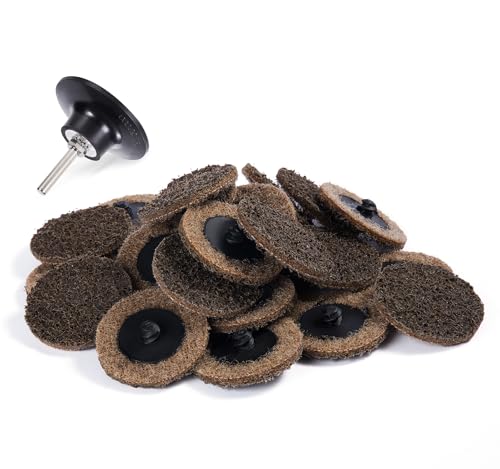
S SATC 25-Pack Quick Change Disc, 2-Inch Coarse

S SATC 2-Inch Sanding Discs 70-Pack with 1/4″ Holder

Pukamam 24-Piece Sanding Sponge Set, 80-3000 Grit

Pukamam 12-Pack Washable Sanding Sponges, 60-400 Grit

S SATC 2-Inch Hook and Loop Sanding Pad with Foam Pads

Pukamam 6-Pack Emery Cloth Rolls, 80-600 Grit, 1″ x 19.7′

S SATC 100-Pack 2-Inch Hook and Loop Sanding Discs, 600 Grit
Taking A Closer Look At The Options
The Zona 37-945 is built for the very end of the job. At 15 micron, it lives in the territory where you’re chasing glass-smooth surfaces on small turned pieces, inlay work, or tight box joints, not stripping boards. The 8-1/2 by 11-inch sheet cuts easily with scissors and works with or without water, which gives you flexibility for both dry touch-ups and wet polishing on figured grain.
Where this paper shines is in the final pass. After you’ve worked through 320, 400, and 600 grit, this sheet takes out the last micro-scratches and leaves a surface ready for a rubbed-oil finish or a polish coat. You may find a single sheet goes a long way because the abrasive is so fine it loads slowly, and the 10-pack should cover a few small projects without running dry.
The Upside
- 15-micron abrasive handles ultra-fine hand polishing, taking out micro-scratches after 600 grit.
- Wet/dry construction lets you choose your method, useful on figured or resinous woods where dust clogs quickly.
- Generous 8-1/2 by 11-inch sheet can be torn into smaller pieces for pins, dowels, and tight inlay work.
- Made in the United States, which tends to mean consistent mineral distribution across the sheet.
Things To Consider
- 15 micron is far too fine for stock removal, so it cannot stand in for your 120 or 220 grit work.
- Hand work only, since the sheet is not designed for hook-and-loop or quick-change attachment systems.
Who It Suits Best
Woodturners and small-project crafters who need a refined final pass on inlays, pens, or jewelry boxes.
Look Elsewhere When
You’re stripping stock or shaping lumber, in which case the S SATC 25-Pack Quick Change Disc handles that grind more efficiently.
The Eagle Abrasives Super Assilex kit sits in a different lane than the Zona paper. The mineral is engineered to remove material quickly while still leaving a very shallow scratch pattern, so the work looks cleaner after each pass than you’d expect from the grit number on the box. Grits run from K600 through K1500, which is firmly in finish-sanding territory.
The 25 sheets pair with a foam hand block and a 1 M hand pad, so you can knock down edges and inside curves without folding the paper into a hard crease. The flexible contact makes it ideal for convex chair arms, concave bowls, and routed profiles where a rigid sheet would skip or dig in.
Standout Benefits
- K600 to K1500 range covers the full sequence between rough finish-sanding and pre-polish on fine woodwork.
- Flexible abrasive conforms to inside curves, routed edges, and chair legs without folding sharply.
- Shallow scratch pattern means fewer follow-up passes before topcoat.
- Foam hand block and interface pad included, so you can start finishing on day one.
Worth Noting
- No coarse grits included, so this kit cannot stand alone for stripping or leveling.
- Specialty film-backed sheets cost more per sheet than commodity aluminum-oxide paper.
Feature Snapshot
Made For
Furniture makers and restorers who need a clean scratch pattern on curved chair parts, cabriole legs, and routed profiles.
Not Your Match When
You’re doing flat-panel stock removal, where the S SATC 2-Inch Sanding Discs on a die grinder get the work done faster.
The S SATC quick-change disc is for the messy first stages of a project. Designed to mount on a die grinder, the 2-inch surface conditioning disc is built from aluminum-oxide non-woven material that strips paint, knocks down rust on metal furniture hardware, and cleans up weathered wood fast. The coarse rating gives you real bite without immediately digging into soft pine.
Compared to the Eagle Abrasives kit above, this is the opposite end of the workflow. Where the Assilex sheets refine a finished surface, these discs open up raw material or old finishes. The spiral quick-change design grips the holder firmly and pulls off without flying bits when the abrasive wears through.
Benefits That Matter
- Aggressive cutting action lifts paint, varnish, and surface rust in a single pass.
- Aluminum-oxide mineral holds up under die-grinder speed without melting or glazing.
- Quick-change Type-R connection swaps discs in seconds without a wrench.
- Open web structure resists loading on gummy finishes like old shellac.
Points To Note
- Coarse rating leaves visible scratch, so a finer disc must follow before finishing.
- Requires a compatible die grinder and holder pad, which are sold separately.
Best Suited To
Restorers and refinishers stripping old paint from doors, window frames, and outdoor furniture.
Swap It Out When
You’re working on fine furniture where a coarse disc would scar the substrate, since the Pukamam 24-Piece Sponge Set offers much finer grits in a hand-friendly format.
The 70-pack version of the S SATC disc trades a few sheets for a much deeper bench supply, which matters when you’re running a die grinder through real work. The open-web aluminum-oxide surface stays cool under load, reducing the heat-induced discoloration and warping that ruins thinner discs on long passes. A 1/4-inch holder ships in the box, so you have everything needed to mount the discs on a standard die grinder right away.
For shop owners and frequent DIYers, the bundled holder is the real value here. Most surface-conditioning discs force you to buy a separate backing pad. With this kit, the connection between disc and holder is a Type-R spiral that grips firmly and releases cleanly when the abrasive is spent, so you spend more time working and less time wrestling stuck pads.
Useful Highlights
- Open web abrasive runs cooler, reducing the risk of heat marks on thin panels.
- 70-disc supply covers long projects and frequent touch-ups without reordering.
- Type-R quick-change spiral holds securely and releases without tools.
- 1/4-inch holder included, eliminating a separate accessory purchase.
Honest Caveats
- Bundled disc count means heavier packaging and a bigger up-front spend than the 25-pack.
- Coarse scratch pattern still needs finer follow-up before topcoat.
Whose Shelf It Belongs On
Small-shop owners and serious restorers who run through surface-conditioning discs on a regular basis.
A Better Fit Elsewhere
You only need a few discs for a one-off project, in which case the smaller S SATC 25-pack above keeps cost down.
The Pukamam 24-piece sponge set is the closest thing on this list to a complete sanding kit in a single box. Twelve grits, two sponges each, ranging from 80 grit for heavy stock removal up to 3000 grit for finish polishing. Each sponge measures roughly 3.93 by 2.75 by 0.19 inches, which fits the hand comfortably and reaches into corners that a sheet of paper cannot.
The foam body does two things a paper sheet cannot. It flexes around a curved chair leg without creasing, and it rinses out under a tap, so a clogged sponge isn’t a thrown-away sponge. For most home workshops this is the kit you open when you don’t know what you need, because almost every grit you might want is in the box.
What Pays Off
- 12-grit spread from 80 to 3000 covers the full workflow, from rough shaping to final polish.
- Sponge body flexes around curves, moldings, and inside corners.
- Washable and reusable, so the 24-piece set lasts across multiple projects.
- Comfortable to grip, which reduces hand fatigue on long refinishing sessions.
Smaller Limits To Know
- Aluminum-oxide abrasive cuts slower than a film-backed sheet on flat panels.
- Bulky 3.93 by 2.75 footprint doesn’t reach into very narrow rabbets.
Quick Technical Notes
Who Will Love This
Home DIYers who handle mixed projects like furniture refinishing, drywall patching, and small auto bodywork in the same weekend.
Reach For A Different Pick When
You need a flat-panel machine finish, where the S SATC 2-Inch Hook and Loop Pads on an orbital sander will cover ground faster.
The 12-pack Pukamam set is the smaller, more focused sibling of the 24-piece kit above. Six grits from 60 through 400, two sponges each, built from high-density foam with aluminum-oxide abrasive bonded to the surface. The 60-grit sponge is rough enough to lift a splintered edge or a peeling finish, while the 400-grit sponge preps a surface for primer or stain.
The appeal is simplicity. You rinse a clogged sponge under the tap, squeeze it out, and keep working. For drywall patching, scuffed trim before repainting, or a quick scuff-sand on a furniture project, these cover the bases without dragging out a sheet of paper and a sanding block.
A Few Highlights
- 60 to 400 grit range covers the stages most household repairs actually need.
- Rinse-and-reuse design extends the life of each sponge through multiple sessions.
- High-density sponge holds its shape under pressure and resists crumbling.
- Useful on wood, drywall, and metal surfaces with one set.
Factors To Consider
- Stops at 400 grit, so final polishing still needs a separate ultra-fine sheet.
- Smaller set than the 24-piece version, with fewer spare sponges per grit.
Perfect Match For
Homeowners tackling paint prep, drywall touch-ups, and weekend furniture refreshes.
Where Another Pick Suits Better
You want true polish-grit capability, since the Pukamam 24-Piece Set above extends up to 3000 grit for finer finishing work.
The S SATC hook-and-loop pad is an accessory, not a finished abrasive, but it deserves a place here because it solves a common problem: turning a drill into a usable detail sander. The 1/4-inch shank drops into a standard drill chuck, and the polyurethane backing plate holds any 2-inch hook-and-loop disc on the market. Foam interface pads ship with the set, which soften the cut on contoured surfaces.
You won’t replace a random orbital sander with this setup, since a drill spins in one direction and lacks oscillation. For corners, small flat panels, and tight detail work where a full-size sander is awkward, the pad-and-disc combo handles the job without dragging out a bigger tool. It works on wood, glass, porcelain, and metal, which makes it a versatile add-on for any home shop.
The Value In It
- Converts any 1/4-inch chuck drill into a 2-inch detail sander.
- Hook-and-loop face accepts any standard 2-inch sanding disc.
- Polyurethane backing plate resists cracking under repeated use.
- Foam interface pads reduce aggression on curved or delicate surfaces.
Room For Improvement
- Drill-only speed control can burn wood if you run too slow, so care is required.
- 2-inch disc size covers less area than a standard 5 or 6-inch orbital pad.
Who Should Grab It
DIYers who own a good corded drill but don’t want to invest in a dedicated detail sander yet.
Consider Something Else When
You already have a die grinder, since the S SATC 70-Pack Sanding Discs attach directly and cover the same small-format work.
Emery cloth rolls fill a gap the rest of this list leaves open. The 1-inch by 19.7-foot format tears to any length you need, so you can wrap a strip around a dowel, fold it into a narrow rabbet, or feed it into a slot that no rigid pad can reach. Six grits from 80 through 600 cover rough shaping through pre-finish, and the aluminum-oxide abrasive bonded to a tear-resistant nylon backing holds up under hand pressure without shredding.
The flexibility is the headline. Wet or dry use means you can flush dust while working on metal, then move to wood for the same grit sequence without changing products. For tool maintenance, knife handles, and small carved pieces where a sponge is too bulky and a sheet is too wide, the emery roll is the right tool.
The Helpful Details
- 1-inch width reaches into narrow slots, rabbets, and curved profiles that wider sheets miss.
- Tear-resistant nylon backing survives hand pressure and tool contact without shredding.
- Six grits from 80 to 600 cover shaping through pre-finish on wood and metal.
- Wet/dry construction handles gummy resinous woods and dusty metalwork with equal ease.
Less Ideal Details
- Hand-tear format requires scissors or careful ripping, which adds a step before each use.
- Roll shape stores compactly but does not sit flat on a bench like pre-cut sheets.
The Right Fit
Tool restorers, luthiers, and detail carvers who need narrow, flexible abrasive on curves and inside corners.
Skip It When
You mainly work on flat panels, since the S SATC 100-Pack Hook and Loop Discs on an orbital sander are far more efficient.
The 100-pack closes out the list as the bulk-supply option for mid-stage finish work. Each disc is 2 inches in diameter with no center hole, made from aluminum-oxide abrasive that tolerates heavy pressure without tearing. The 600-grit rating is the sweet spot for finish-sanding bare wood, scuff-sanding between coats of finish, and prepping surfaces for stain.
The hook-and-loop backing means the discs swap in seconds on the S SATC pad above or any other 2-inch hook-and-loop holder. For a workshop that runs through 600 grit faster than any other grade, the 100-disc count cuts down on reordering. Aluminum oxide cuts cleanly and resists loading on most woods, so each disc gives you reasonable life before it dulls.
Why It Works Well
- 100-disc supply suits workshops that burn through 600 grit on a regular basis.
- Aluminum-oxide abrasive handles pressure and heat without delaminating.
- No-hole design fits the S SATC hook-and-loop pad and most generic 2-inch holders.
- Versatile across woodworking, automotive scuff-sanding, and metal finishing.
Trade Offs
- Single-grit pack means ordering additional sets for other stages of the workflow.
- Aluminum oxide cuts slower than ceramic alternatives on heavy stock removal.
Built With In Mind
Workshop regulars who sand between finish coats and want a single-grit supply that lasts through multiple projects.
Another Choice May Suit
You need full-grit range, in which case the Pukamam 24-Piece Sponge Set covers every stage in a smaller, hand-friendly format.
What Matters Most Before Choosing Sandpapers For Wood
Match The Format To Your Tool
The biggest decision is whether you need sheets, discs, sponges, or rolls. Sheets and sponges fit hand work and random orbital sanders, while discs fit die grinders and small orbital sanders. Buying a paper format your tool cannot mount is a common waste. Check your sander’s pad type (hook-and-loop, quick-change, or clamp) before ordering.
Understand Grit Numbers
Grit refers to the size of the abrasive particles, lower numbers mean coarser paper, higher numbers mean finer. Coarse grits (60 to 100) shape wood and strip finishes. Medium grits (120 to 220) prep for stain. Fine grits (320 to 600) smooth between finish coats. Ultra-fine (1000 and up) polishes. Skipping stages leaves visible scratch, so a range of grits usually beats buying all of one grade.
Mineral Type And Backing Matter
Aluminum oxide is the standard choice for wood because it cuts cleanly and costs less. Silicon carbide handles wet sanding and harder finishes. Film backings flex and resist tearing on curves, while paper backings are cheaper but more fragile. For flat panels, paper works fine. For curves and contours, film or foam-backed products last longer.
Buying For Volume Versus Occasional Use
Frequent users benefit from bulk packs like the 70-disc and 100-disc options above, since reordering adds up. Occasional users may do better with a smaller mixed-grit kit, which covers every stage without the up-front spend. The honest read is that most home DIYers use fewer grits than they think, so a focused kit often wins over a giant assortment.
Key Considerations Across These Picks
Where Shoppers Go Wrong
The most common slip-up is starting with too fine a grit. Reaching for 220 on rough lumber just burns through the paper without removing material, and the surface ends up burnished instead of smoothed. A better move is to step through 80, 120, 180, and 220 in sequence, only spending as much time as needed at each stage. Another trap is ignoring dust loading: clogged paper cuts slow and leaves a rough surface, so a quick brush-off or a switch to a fresh sheet often beats pushing harder on a worn one.
What The Upgrade Payoff Looks Like
Higher-tier abrasive products earn their keep on three fronts. Film-backed sheets like the Eagle Abrasives kit conform to curves without folding, which a cheap paper sheet cannot. Premium aluminum-oxide or silicon-carbide minerals stay sharp longer, so each sheet covers more square footage before you swap it. Larger pack sizes like the 70 or 100-disc options drop the per-unit cost, so a shop running through discs weekly sees real savings. The trade-off is up-front cost, so the upgrade is worth it for frequent users and a stretch for one-off projects.
Frequently Asked Questions
What grit sandpaper should you start with on bare wood?
Start with 80 or 100 grit if the wood is rough, has mill marks, or carries an old finish. Jump to 120 or 150 if the surface is already milled smooth. Going finer than that as a first pass just polishes the rough texture instead of leveling it.
How do you know when to change sandpaper?
A drop in cutting speed is the clearest sign. You feel the sander skating instead of biting, and dust stops flowing freely. On a sheet, fold it to expose fresh abrasive before discarding. On a disc, swap it out as soon as the surface looks glazed.
Can you use the same sandpaper on wood and metal?
Aluminum-oxide discs and emery cloth handle both, since the abrasive cuts either substrate. The catch is contamination: a disc used on metal can leave ferrous particles that stain wood. A quick visual check or a separate set for each material avoids the problem.
Is wet sanding better than dry sanding on wood?
Wet sanding reduces dust and keeps the abrasive cooler, which extends the life of fine-grit paper. It works well on sealing coats and between finish layers, but the water can raise the grain on bare wood, so a light final dry sand afterward is common.
How long does a sheet of sandpaper last?
A single sheet can cover anywhere from a few square feet at coarse grits to a few minutes at ultra-fine on hard surfaces. Pressure, grit, and dust load all affect life, so judging by feel is more reliable than counting square feet.




