A dull or wrong-spec blade punishes you long before the saw does: splintered trim, blown-out melamine, and a cloud of dust that costs you an afternoon with sandpaper. Most shop headaches trace back to the wrong tooth count, kerf, or grind for the material at hand. This roundup cuts through the noise with nine blades grouped by what they actually do well, from trim work and finish carpentry to framing and high-volume production cuts.
A Snapshot Of The Selections

Diablo Fine Finish Saw Blade 10″ 60T 2-Pack

Tenryu SL-305100 12″ 100T Carbide Blade

10″ 80T Table Saw Blade Dwa11080 Compatible

2-Pack 12″ Miter Saw Blade 80T Fine Finish
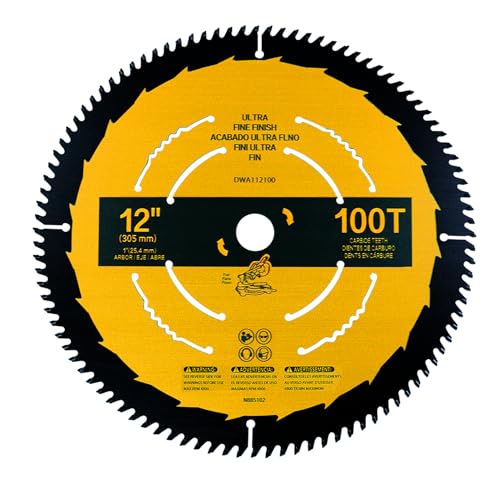
12″ 100T Fine Finish Blade for DEWALT

DEWALT 10″ Miter Saw Blade Combo DW3106P5

Diablo Ultra Finish 7-1/4″ 60T Saw Blade

Freud LU91M010 10″ 60T Thin Kerf Blade

CRAFTSMAN 10″ Miter Saw Blade Combo CMAS210CMB
Taking A Closer Look At The Options
Trim work demands a blade that disappears into the cut, and this 10-inch Diablo with 60 Hi-ATB (High Alternate Top Bevel) teeth earns its reputation on crown molding, baseboards, and clean crosscuts in hardwood. The thin kerf (the width of material removed by each cut) trims waste and reduces motor load, so a smaller miter saw still pulls through oak without bogging. A 2-pack means you always have a sharp backup mid-job.
You spend less time sanding the edge and more time installing, and the carbide holds up across a weekend deck build without losing its bite. The blade is at home on a 10-inch miter, chop saw, or portable table saw.
Points In Its Favor
- 60-tooth Hi-ATB configuration produces clean, splinter-light edges on hardwoods and softwoods
- Thin kerf reduces material waste and eases the load on smaller miter saw motors
- 2-pack format keeps a sharp spare on hand so a dull tooth never derails a workday
- Cross-compatible with most 10-inch miter, chop, and table saws in the home shop
Honest Caveats
- Not suited for heavy framing or rip cuts where a lower-tooth count shines
- Carbide can glaze over if you push through dirty or nail-laden lumber
Feature Snapshot
Best Suited To
Trim carpenters and finish carpenters running 10-inch miter or chop saws who need clean, low-splinter crosscuts in molding, oak, and plywood.
A Better Fit Elsewhere
Step up to the Tenryu SL-305100 12″ 100T Carbide Blade if your shop runs a 12-inch sliding compound miter and you want even quieter, more polished cuts on premium stock.
Sliding compound miter saws benefit from blades built specifically for them, and the Tenryu Silencer series delivers with laser-cut, resin-filled expansion slots that absorb vibration before it reaches your workpiece. The 100-tooth ATAF grind (Alternate Top Angle with Face, a tooth shape that balances shearing and scraping) leaves a near-polished edge on hardwoods, melamine, and veneered plywood. If you’ve ever watched a finished cut come off a 12-inch slider and wanted zero tear-out, this blade gets close.
The PTFE-coated body (a slippery, heat-resistant non-stick finish) keeps pitch from sticking, so buildup doesn’t slowly choke the cut. It is a longer-haul investment that pays back in quiet cuts and cleaner edges over years.
A Few Strong Suits
- 100-tooth ATAF grind produces ultra-finish crosscuts in premium materials
- Laser-cut plate with resin-filled slots dramatically lowers noise and vibration
- PTFE coating resists pitch buildup, helping the blade run cooler for longer
- 12-inch diameter suits large sliding compound miter saws for wider stock
Trade-Offs
- Premium price tier compared to 60-tooth finish blades
- Heavier plate demands a beefier saw; underpowered saws may bog on thick hardwood
- Specialized for finish work, so ripping framing lumber is not its strong suit
Who It Suits Best
Cabinet and trim professionals with 12-inch sliding compound miter saws chasing near-mirror finishes on melamine, hardwood, and veneered sheet goods.
Consider Something Else When
Pick the Diablo Fine Finish Saw Blade 10″ 60T 2-Pack instead if your shop runs 10-inch miter saws and you want a more affordable finish blade that still does trim justice.
Value-focused shops need blades that pull double duty without bleeding the budget, and this 80-tooth 10-inch blade steps into that role cleanly. Tungsten carbide tips handle the day-to-day grind of hardwood, plywood, and multi-layer boards, while the ATB grind (Alternate Top Bevel, teeth angled alternately left and right for cleaner shearing) keeps crosscut edges tidy enough for finished projects. The body slot design trims vibration, so you don’t fight the saw through every cut.
It performs respectably on a miter saw too, giving DIYers one blade to swap between machines. The honest read is that it won’t match premium TiCo (Titanium Cobalt) carbide for edge life, but for the price, it is a sensible workhorse.
Strong Points
- 80-tooth ATB configuration produces smooth crosscuts in plywood and hardwood
- Tungsten carbide tips resist wear across long cutting sessions
- Body slot design reduces vibration, easing operator fatigue
- Compatible with the popular Dwa11080 spec for easy table saw fitment
Points To Note
- Edge retention falls short of premium TiCo carbide blades under heavy daily use
- Not a specialist finisher; ultra-thin veneers may still show minor tear-out
- Generic-brand fitment, so checking your saw’s arbor (the central mounting hole) and max RPM is wise
Quick Facts
Right Fit For
Budget-minded DIYers and small shop owners who want a single 10-inch blade that handles crosscuts in plywood and hardwood without premium pricing.
Skip It When
Reach for the Freud LU91M010 10″ 60T Thin Kerf Blade if you need premium TiCo carbide and a thin kerf for sliding compound miter precision.
High-volume shops burn through blades faster than they’d like, and a 2-pack of 12-inch 80-tooth finishers keeps the line moving. The 0.091-inch kerf keeps cuts narrow without sacrificing rigidity, and the 7-degree hook angle (tooth rake, where positive angles bite more aggressively) drives a smooth feed through hardwood and plywood. With a 1-inch spindle and a 4,800 RPM ceiling, it covers most 12-inch miter saws on the market.
You may find the carbide life shorter than premium blades, but a spare in the drawer takes that concern off the table. For production cutting, redundancy matters more than bragging rights.
Where It Helps
- 80-tooth ATB configuration delivers a clean, ready-to-install edge on trim stock
- 2-pack format minimizes downtime when a blade dulls mid-shift
- Compatible with the majority of 12-inch miter saws thanks to standard 1-inch spindle
- Hardened carbide teeth maintain a workable edge through repeated cuts
Worth Noting
- Edge longevity lags behind premium TiCo carbide options
- Cooling slots are not as refined as blades costing twice as much
- Sticker design is plain, which is fine in a busy shop but not display-worthy
Made For
Production carpenters and remodel crews running 12-inch miter saws who need a steady supply of replacement finish blades without premium pricing.
Reach For A Different Pick When
Choose the Tenryu SL-305100 12″ 100T Carbide Blade instead for longer edge life, lower vibration, and a noticeably quieter cut on premium stock.
DEWALT 12-inch miter saws dominate trim job sites, and this 100-tooth blade is built as a direct companion. The 0.091-inch kerf, 7-degree hook angle, and 4,800 RPM ceiling line up with what most 12-inch DEWALT saws expect from a fine-finish replacement. Cork, hardwood, plywood, and multi-layer boards all come off with a clean edge that needs minimal cleanup.
You’ll appreciate the smoother cut if you run a slider day after day. The trade-off is that the higher tooth count slows feed rate, so patience beats force on denser material.
Notable Upsides
- 100-tooth count produces polished edges on hardwood and plywood trim
- Engineered as a compatible replacement for popular DEWALT 12-inch miter saws
- Thin 0.091-inch kerf reduces waste and motor strain on long cuts
- Carbide teeth hold their edge across extended trim carpentry sessions
Less Ideal Details
- Higher tooth count slows cutting speed on thick hardwood
- Not a multi-purpose blade; framing and ripping belong on a lower-tooth disc
- Edge retention is solid but not in the same league as premium TiCo carbide
Feature Snapshot
Whose Shelf It Belongs On
DEWALT 12-inch miter saw owners who specialize in trim, cabinetry, and high-finish crosscut work and want a compatible, high-tooth-count blade ready to swap in.
Where Another Pick Suits Better
Pick the Tenryu SL-305100 12″ 100T Carbide Blade if you want a step up in vibration damping and pitch resistance for daily production use.
Most home workshops don’t need nine specialty blades; they need two that cover ninety percent of cuts, and this DEWALT combo delivers exactly that. The 60-tooth blade handles fine finish work while the 32-tooth disc chews through framing lumber, deck boards, and dimensional pine. Tungsten carbide tips are built to last, and the computer-balanced plate keeps vibration tame on either blade.
Swapping blades is a small hassle, but having both ready turns a 10-inch miter saw into a legitimate all-rounder. It is the kind of set that disappears into a drawer and quietly handles every weekend project you throw at it.
Practical Advantages
- Two-blade combo covers fine finish and rough framing in a single purchase
- Tungsten carbide tips stay sharp through repeated homeowner use
- Computer-balanced plate reduces vibration for improved cut accuracy
- 5/8-inch arbor matches standard 10-inch miter and table saws
Points To Keep In Mind
- Neither blade is a specialist; expect occasional tear-out on ultra-finish projects
- Carbide quality is solid but not on par with premium aftermarket blades
- Switching between blades mid-project requires arbor removal and reinstallation
Perfect Match For
DIYers and remodelers running a 10-inch DEWALT miter or table saw who want one box that covers both finish trim cuts and rougher framing work without buying separate blades.
Look Elsewhere When
Choose the CRAFTSMAN 10″ Miter Saw Blade Combo CMAS210CMB if you want a more budget-priced combo that also pairs a finish and framing blade for occasional use.
Not every miter saw is a 10 or 12-inch beast; cordless 7-1/4-inch saws have become a go-to for trim carpenters on ladders, and this Diablo 60-tooth disc is tailored to that form factor. The Perma-SHIELD non-stick coating keeps pitch and resin from gumming up the plate, so cuts stay clean even after a long day of crown molding. Hi-Density carbide is matched to wood cutting, holding an edge longer than generic steel.
Cutting depth is naturally limited by the smaller diameter, so 4x4s and wider baseboards still belong on a bigger saw. For trim and finish work on a cordless platform, however, this blade punches well above its size.
What Stands Out
- 60-tooth ATB configuration delivers ultra-finish cuts on smaller cordless miter saws
- Perma-SHIELD coating reduces heat, gumming, and corrosion during extended use
- Hi-Density carbide resists dulling on hardwood and abrasive sheet goods
- Lightweight design suits compact cordless saws where every gram matters
Some Limits To Know
- 7-1/4-inch diameter limits cut depth for wide baseboards and thick stock
- Premium pricing for a smaller blade may feel steep if you own a 10-inch saw
- Not designed for framing or rough ripping
Quick Facts
Built With In Mind
Trim installers and finish carpenters using compact 7-1/4-inch cordless miter saws on ladders or in tight spaces where weight and cut quality matter more than capacity.
Swap It Out When
Step up to the Diablo Fine Finish Saw Blade 10″ 60T 2-Pack if you run a full-size 10-inch miter or table saw and need a larger diameter for wider stock.
Sliding compound miter saws reward blades designed around their unique demands, and the Freud LU91M010 hits the brief with a -5-degree negative hook angle that tames the climbing tendency aggressive teeth can cause. The result is a blade that won’t grab the workpiece mid-cut, giving you better control and a calmer cut on long stock. Premium TiCo HI-Density carbide and a Silver Ice coating work together to keep edges sharp and pitch from sticking.
The thin .090-inch kerf reduces motor load, which is a quiet gift on older or smaller miter saws. For a shop that values precision over speed, this is a confident upgrade.
Advantages To Know
- Negative hook angle minimizes tooth climb for better control on sliding miter saws
- TiCo HI-Density carbide extends edge life beyond generic blades
- Silver Ice coating resists pitch buildup and corrosion
- Thin .090-inch kerf requires less power and allows faster feed rates
A Few Limitations
- Negative hook angle makes the blade feel less aggressive on dense hardwood
- Premium pricing reflects the carbide quality
- Specialized for finish work; ripping belongs on a different blade entirely
Who Will Love This
Trim professionals and serious woodworkers running 10-inch sliding compound miter saws who want controlled cuts, premium carbide, and a thin kerf for less motor strain.
Not Your Match When
Choose the DEWALT 10″ Miter Saw Blade Combo DW3106P5 instead if you’d rather have a 32-tooth rough blade and a 60-tooth finisher in one box for mixed DIY projects.
First-time miter saw owners often don’t know what tooth count they need, and this CRAFTSMAN combo sidesteps that question by including both. The 24-tooth blade is built for framing and ripping, while the 60-tooth fine finish disc takes over for trim and cabinet work. Induction-brazed carbide tips and a heat-treated steel plate keep warping off the table, which matters more than people realize on a budget saw.
Edge retention won’t match premium aftermarket options, but the corrosion-resistant coating extends working life between replacements. For the first six months of a new workshop, this combo covers every cut you are likely to face.
Features That Help
- Combo pack pairs a 24-tooth framing blade with a 60-tooth finisher
- Induction-brazed carbide tips offer reasonable durability for the price
- Heat-treated steel plate resists warping under load
- Corrosion-resistant coating extends blade life between uses
Worth Bearing In Mind
- Edge retention is shorter than premium blades, so replacements come sooner
- 24-tooth blade tears hardwood cleanly enough for framing but not for fine finish
- Combo format adds setup time if you swap between blades frequently
Feature Snapshot
Who Should Grab It
New miter saw owners and weekend DIYers who want a versatile 10-inch combo pack that handles both framing lumber and trim cuts without deciding between blades upfront.
A Better Fit Elsewhere
Pick the DEWALT 10″ Miter Saw Blade Combo DW3106P5 if you want a more refined combo with a 32-tooth/60-tooth pairing and a computer-balanced plate for smoother cuts.
What Separates A Great Miter Saw Blade From A Mediocre One
Tooth Count Drives The Cut Personality
Tooth count sets the personality of every blade. Low-tooth discs in the 24-tooth range rip through framing lumber fast but leave rough edges. Mid-range 40-tooth blades split the difference for general construction. High-tooth discs in the 60 to 100 range deliver the splinter-free crosscuts trim carpenters need. The trade-off is real: more teeth mean smoother edges but slower feed rates and more heat per cut, so pushing too hard on dense hardwood can glaze the carbide.
Tooth Geometry And Hook Angle Set The Feel
Beyond tooth count, the grind shape and hook angle (the angle of each tooth relative to the material surface) change how the blade behaves. ATB grinds (Alternate Top Bevel, with teeth angled alternately left and right) shear wood cleanly for crosscuts. Flat-top grinds (FTG, where teeth point straight up) plow through rip cuts. Negative hook angles, like the -5 degrees on the Freud LU91M010, keep the blade from grabbing, which is a real asset on a sliding miter saw where climbing can ruin a cut.
Kerf And Plate Stability Shape The Motor Load
Kerf, the width of material each pass removes, drives motor load and material waste. Thin-kerf blades around .090 inches save stock and let smaller saws cut hardwood, while full-kerf plates around .110 inches stay stiffer for high-power industrial cuts. Laser-cut expansion slots, like the resin-filled ones on the Tenryu Silencer, vent heat and dampen vibration. The honest read is that thin kerf is friendlier to most home workshops, but the blade body must be balanced enough to avoid wobble.
Smarter Shopping Before You Commit
Common Slip Ups When Picking Miter Saw Blades
The most frequent mistake is matching a blade by diameter alone without checking the arbor size, max RPM, and tooth count for the job. A 12-inch premium finish blade is wasted on a 7-1/4-inch cordless saw, and a 24-tooth framing disc is the wrong tool for melamine shelving. Equally common: ignoring tooth count, then blaming the saw for tear-out that the blade’s grind was causing all along. Always match the blade to the dominant material, and keep a finish blade reserved for trim day.
When The Premium Tier Earns Its Keep
Premium blades cost more because of carbide grade, plate stabilization, and coatings that fight pitch and heat. The upgrade pays off for daily users, sliding miter saw owners chasing polished edges, and shops cutting abrasive sheet goods. Occasional DIYers get more value from a versatile combo pack, but anyone running a 12-inch slider day after day will feel the difference in cut quality, noise, and blade life within a season.
Frequently Asked Questions
How often should you replace a miter saw blade?
Replace a miter saw blade when cuts start showing burn marks, tear-out, or extra resistance that wasn’t there before. Heavy daily users may need a fresh blade every few months, while weekend DIYers often get a year or more from a quality finish blade.
Can one blade handle both ripping and crosscutting on a miter saw?
A general-purpose 40-tooth blade handles both tasks reasonably well, but results are always a compromise. For cleaner crosscuts in trim and plywood, pair a finish blade with a separate low-tooth blade for ripping.
Does tooth count really change cut quality that much?
Yes, tooth count has a direct impact on cut quality. More teeth mean each tooth removes less material per pass, which produces smoother edges and less tear-out. The trade-off is slower cutting and slightly more heat, so the right tooth count depends on the material and the project.
Are thin-kerf blades worth the extra cost?
Thin-kerf blades are worth it on smaller or older miter saws where motor power is limited, because they remove less material per pass. On high-power saws, the choice is more about cut speed and material savings than motor strain.
What is the best blade for trim and molding?
A 60 to 80-tooth ATB grind is the best blade for trim and molding, paired with a thin kerf if your saw can handle it. Higher tooth counts in the 100-tooth range are excellent for premium stock but are not always necessary for everyday trim work.