


Cutting aluminum cleanly starts with the right tooth geometry. TCG (Triple Chip Grind) teeth handle non-ferrous metal the way ATB teeth handle plywood, slicing rather than scraping, and that difference shows up immediately in chip size and edge quality. The picks below cover 7-1/4-inch cordless options up to 12-inch stationery blades, with tooth counts ranging from 56 to 100. Compatibility with common miter, slide miter, and table saws matters as much as the cut itself, since the wrong arbor size turns a smart purchase into a shelf ornament.
The Main Contenders

FOXBC 10-Inch Saw Blade 80-Tooth TCG for Aluminum
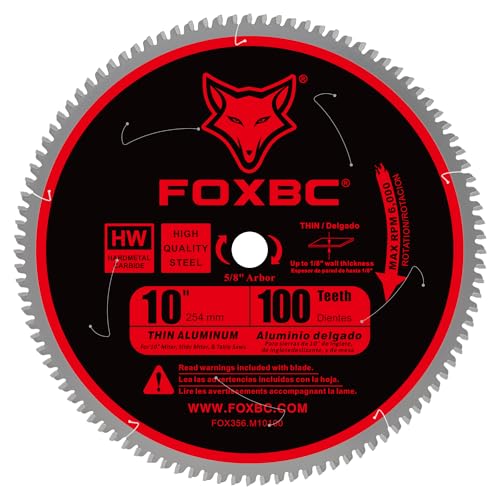
FOXBC 10-Inch Saw Blade 100-Tooth TCG for Aluminum

Diablo Saw Blade 7-1/4″ 56-TCG-Tooth

Bosch PRO Multi Material Cordless Circular Saw Blade

FOXBC 12-Inch Miter Saw Blade 80-Tooth Fine Finish

FOXBC 12-Inch Saw Blade 96-Tooth TCG for Aluminum

EXFEIN 7-1/4-Inch 60-Tooth Aluminum TCG Blade

FOXBC 12-Inch Miter Saw Blade 100-Tooth Polished Finish

JINSINA 12-Inch 100T Circular Saw Blade for Aluminum
Inside Each Recommended Option
For a shop running a 10-inch miter or slide compound saw, this FOXBC 80-tooth TCG blade hits a useful middle ground between aggression and finish. The 5/8-inch arbor matches the most common 10-inch platform, and the tooth count is high enough to leave a clean edge on aluminum trim, copper bar, and rigid plastic without bogging down on slightly thicker stock. Owners working with mixed non-ferrous loads will appreciate that it handles aluminum, brass, and fiberglass on the same setup, which removes the chore of swapping blades between similar materials.
Compared with the smaller 7-1/4-inch cordless picks later in this list, this blade gives you more cut depth and a more stable cut on stationery saws. Just confirm your saw’s RPM window before mounting.
Where It Excels
- 80-tooth TCG geometry produces clean edges on aluminum, copper, and plastic without heavy secondary finishing.
- High-density tungsten carbide teeth are built for wear resistance, so the blade keeps its edge across long production runs.
- Laser-cut stabilizer vents cut down on noise and harmonic wobble, which translates to straighter cuts at the back of the cut.
- Compatible with the major 10-inch miter and slide miter platforms from DeWalt, Skil, Metabo, and Makita.
Things To Consider
- Avoid forcing the cut on very thin sheet; let the blade’s tooth pitch do the work, or step down to the 100-tooth FOXBC in the next slot.
- Cleaning pitch buildup with a blade-cleaning solution after extended runs helps the teeth stay free-cutting.
Feature Snapshot
Best Suited To
Home metalworkers and small-shop fabricators running 10-inch miter saws who need a single blade for assorted non-ferrous stock.
Where Another Pick Suits Better
Cordless 7-1/4-inch users should reach for the Diablo 56-tooth blade instead, since it matches a portable circular saw’s smaller footprint and lower RPM range.
When the cut list runs heavy on thinner sheet, the 100-tooth sibling of the first FOXBC blade becomes the smarter pick. The extra teeth lower each tooth’s bite, which keeps thin aluminum from catching and lifting, and the kerf stays a tight 0.095-inch to minimize waste on expensive coil stock. It also covers medium (3/32- to 1/4-inch) and thick (3/16- to 7/16-inch) aluminum, so the same blade carries you through mixed gauges without a swap.
Stepping up from the 80-tooth version trades a touch of feed rate for noticeably cleaner walls, which matters when the workpiece is going straight into anodizing or powder coat.
Real-World Strengths
- 100-tooth TCG pattern glides through thin gauge aluminum without grabbing.
- Hard tungsten carbide body resists wear on abrasive alloys and fiberglass-adjacent work.
- Same 5/8-inch arbor and 10-inch format as the 80-tooth FOXBC, so mounting hardware stays consistent.
Worth Noting
- Feed rate feels slower than the 80-tooth on thick plate; patience keeps the cut cool.
- High tooth count means more edges to keep clear of pitch, so a quick resin-cleaner wipe between sessions helps preserve finish quality.
Key Specs
Who Will Love This
Detail-oriented fabricators cutting thin sheet and trim who want a near-burr-free edge right off the saw.
Skip It When
Heavier plate and structural aluminum call for the FOXBC 12-inch 96-tooth blade further down this list, which has the mass and reach for thicker cuts.
Diablo’s 7-1/4-inch blade is the cordless-friendly sibling to the larger stationery picks above. At 56 TCG teeth, it is the lowest tooth count in this roundup, which actually plays to its strength: a more aggressive bite that pushes through aluminum angle, thin-wall tube, and sheet without stalling on a battery-powered saw. The 5/8-inch arbor matches the standard on most 7-1/4-inch cordless and corded circular saws.
Where the FOXBC 10-inch blades are built around a stationary bench setup, this Diablo is designed around grab-and-go portability on a job site or in a garage.
Good Reasons To Consider
- Tri-metal brazing at the tooth shoulder absorbs the shock loads that come from interrupted cuts in metal stock.
- Carbide formulation targets longevity on tough non-ferrous alloys.
- 56-tooth count gives a faster cut than the 80- and 100-tooth FOXBC blades while still leaving a workable edge.
Trade Offs
- Edge finish is rougher than the 100-tooth FOXBC, so visible cosmetic parts may need a light deburr.
- Smaller diameter limits cut depth, which matters for thick bar stock.
Made For
Tradespeople and DIYers running cordless circular saws who need a portable aluminum-cutting solution without giving up too much finish quality.
Look Elsewhere When
Stationery work on thicker plate is a better match for the FOXBC 12-inch 96-tooth TCG blade, which has the diameter and tooth count for heavier stock.
The Bosch PRO Multi Material blade is built for hand-held cordless circular saws, with a thin kerf engineered to reduce friction and stretch battery runtime. That matters more on aluminum than people expect: every fraction of a millimeter of kerf costs motor effort, and on a 12V or 18V platform that adds up to extra cuts per charge. Carbide teeth produce clean edges in mild steel, sheet metal, and aluminum.
For shoppers working primarily on steel with occasional aluminum, this fills a hybrid role. For pure aluminum production, a dedicated TCG blade still wins on edge quality.
Where It Helps
- Thin kerf keeps the motor draw low, which is meaningful on cordless saws with smaller batteries.
- Carbide tooth tips stay sharp through repeated cuts in thin stock.
- Standard arbor fits the most common hand-held cordless circular saws.
Honest Caveats
- Positioned for steel and multi-material duty, so the finish on aluminum is a step below a purpose-built TCG blade.
- International sourcing can mean different packaging and warranty handling than domestic Bosch SKUs.
Whose Shelf It Belongs On
Cordless-first shops that alternate between thin steel and light aluminum, especially where battery life matters more than the final edge polish.
Not Your Match When
Pure aluminum fabrication runs should step up to the FOXBC 100-tooth TCG blade for cleaner cuts and longer abrasive life.
Although the listing name says “wood,” this FOXBC 80-tooth ATB (Alternate Top Bevel) blade is a clean trim workhorse for 12-inch miter saws and explains the design language the aluminum TCG blades borrow. The ATB grind scores and slices wood fibers, producing a near-finished edge on pine, poplar, and soft hardwoods. The thin 0.118-inch kerf reduces motor load, and a 7-degree hook angle keeps the blade from grabbing in delicate trim.
Worth including here for anyone running a 12-inch miter saw who also does fine-finish woodwork alongside metal cuts, even though aluminum is not its design target.
Reasons It Performs
- 80-tooth ATB layout gives a clean, ready-to-finish edge on natural wood trim.
- Thin kerf keeps dust low and cuts fast on softer species.
- Laser-cut vents keep the plate flat and the cut quiet on long rip-style crosscuts.
Points To Keep In Mind
- ATB grind is wrong for non-ferrous metal; switch to the FOXBC 96T TCG blade for aluminum on the same saw.
- Wood resins build up faster than metal swarf, so dry storage and an occasional resin-clean wipe extend tooth life.
Who Should Grab It
Finish carpenters and trim installers who want one blade for cabinet-grade woodwork on a 12-inch miter saw.
Swap It Out When
Any aluminum or brass cuts need to go to the FOXBC 12-Inch 96-Tooth TCG, which has the right tooth geometry for non-ferrous metal.
Stepping up to a 12-inch blade opens up deeper cuts and more stable cuts on thick stock, and this 96-tooth TCG model is tuned for exactly that workload. The negative 5-degree hook angle is a meaningful detail: it keeps the blade from climbing into the workpiece, which is critical on thicker aluminum plate and rigid plastic where grabbing can ruin a part. A 0.094-inch kerf stays efficient while leaving room for clean chip evacuation.
Compared with the smaller 10-inch FOXBC earlier, this blade handles plate and thick bar better but still has the teeth to leave a clean edge on thinner stock.
Bright Spots
- 96-tooth TCG cuts across thin, medium, and thick aluminum without changing blades.
- Negative hook angle reduces grab risk on heavy plate and on shop miter saws under load.
- FoxCarbide tooth formulation is built for high-volume non-ferrous cutting and resists wear on abrasive alloys.
A Few Limitations
- 1-inch arbor means it does not fit 10-inch miter saws, so it lives on a dedicated 12-inch stationery saw.
- Mass of a 12-inch blade can bog down low-power saws, so pair it with a saw rated for the workload.
Right Fit For
Small fabrication shops running 12-inch compound or dual-bevel miter saws that need a single blade for assorted aluminum gauges.
Where A Sibling Pick Shines
For pure 12-inch fine-finish wood, the FOXBC 100-tooth polished ATB blade is the better fit.
EXFEIN’s 60-tooth TCG blade targets the 7-1/4-inch format with a 45-degree trapezoidal tooth geometry that punches above its weight on aluminum, copper, and rigid plastic. The 5/8-inch arbor matches the standard on most circular saws, miter saws, and portable table saws in this size class, which is a useful compatibility note since the blade can move between machines without an adapter.
This sits between the lower-tooth Diablo and the higher-tooth 10-inch FOXBC picks, giving portable users a middle option.
What Makes Sense
- Trapezoidal TCG teeth are designed for smooth shearing of non-ferrous metal without grabbing.
- 2.3 mm tooth thickness adds rigidity for straighter cuts in softer alloys.
- Standard 5/8-inch arbor fits common circular, miter, and compact table saws.
Soft Spots
- Brand recognition trails the bigger names on this list, so support resources are thinner.
- Smaller diameter limits the depth of cut on thicker bar stock.
Feature Card
Perfect Match For
Garage workshops and hobby metalworkers with mixed portable saws who want one blade to swap between machines.
Another Choice May Suit
For purely cosmetic cuts on thin stock, the FOXBC 100-tooth 10-inch blade produces a noticeably smoother wall.
Where the 80-tooth FOXBC delivers fine woodwork, the 100-tooth polished finish blade is engineered for surfaces that need minimal sanding. The double-side grind tooth geometry shears the wood fibers cleanly on the exit side of the cut, and the axial shear-face design aims for a finish comparable to fine-grit sanding on natural hardwoods and plywood edge banding.
Like the other 12-inch FOXBC in this list, it lives on a stationary miter or slide saw, but it is angled at trim carpentry and cabinetry rather than metalwork.
A Strong Showing
- 100-tooth ATB pattern produces an edge close to fine-sanded, reducing post-cut finishing time.
- Thin 0.098-inch kerf leaves more material on the workpiece and less dust in the air.
- FOXBC’s proprietary carbide grade targets long intervals between sharpenings.
Potential Compromises
- Premium finish geometry means slow feed rates; rushing it dulls the tooth pattern quickly.
- Best results depend on a high-quality, low-runout miter saw, so a worn spindle will undercut the finish.
Spec Overview
Built With In Mind
Custom cabinet shops and finish carpenters who measure quality by the absence of sanding marks on the cut edge.
Not Your Match When
Aluminum production calls for a TCG grind, so the FOXBC 12-inch 96-tooth TCG is the proper pick for those cuts.
The JINSINA 12-inch 100T rounds out the list as a flexible stationery option. TCT (Tungsten Carbide Tipped) teeth are well suited for non-ferrous cutting, and the 1-inch arbor fits 12-inch table saws, miter saws, and the larger 12-inch circular saw platforms. Rated for up to 5,000 RPM, the blade covers the operating window of common 12-inch saws in this class.
It is a useful alternative to the FOXBC 12-inch blades for shoppers who want a different brand’s take on the same general purpose.
Where It Delivers
- 100-tooth TCT configuration gives a clean wall on aluminum, copper, and plastic.
- Universal 1-inch arbor slots into table, miter, and large circular saws.
- Higher tooth count reduces the chance of chipping on harder non-ferrous alloys.
Possible Compromises
- Brand presence is lighter than the FOXBC lineup, so spec sheets and replacement timing may need extra checking.
- Finish quality lands a touch below the FOXBC 96T on heavy plate cuts, in our view.
Feature Facts
Who Should Grab It
Shops with multiple 12-inch stationery saws who want one blade they can move between a table saw and a miter saw.
Where Another Pick Suits Better
Specialists cutting thick plate all day should pick the FOXBC 12-inch 96T TCG, which is built with a more aggressive negative hook for heavy work.
Choosing the Right Tooth Geometry and Size for Aluminum
Picking saw blades to cut aluminum starts with matching tooth geometry to the workpiece. TCG (Triple Chip Grind) is the industry standard for non-ferrous metals: the alternating raker and chamfer tooth pattern shears aluminum rather than scraping it, which reduces burring and keeps chip load manageable. ATB (Alternate Top Bevel) and FTG (Flat Top Grind) designs work fine on wood but grab on soft metal, so they belong on the wood-cutting saw, not the metal one.
Tooth count is the next dial. Lower tooth counts, in the 56 to 60 range, move material quickly and suit thicker stock on cordless saws. Mid-range 80-tooth blades balance cut speed and edge quality for general fabrication. 96 and 100-tooth configurations produce the cleanest walls on thin sheet and decorative trim, at the cost of feed rate. Match the count to your most common gauge: thin sheet rewards more teeth, thick plate forgives fewer.
Arbor size and blade diameter have to match the saw. 7-1/4-inch cordless platforms want 5/8-inch arbors and stay under about 2-1/2 inches of cut depth. 10-inch miter and slide saws use 5/8-inch arbors and reach roughly 3 inches of depth, which covers most aluminum trim. 12-inch stationery saws use 1-inch arbors and deliver more depth and more stable cuts on heavy plate.
Kerf (the width of material the blade removes) matters most on cordless saws and expensive stock. A thin kerf (around 0.094 to 0.098 in) reduces motor load, extends battery runtime, and wastes less aluminum per cut. Heavier kerfs (3 mm and up) add rigidity for high-RPM stationery work but chew up more material.
Hook angle, the tilt of the tooth relative to the cut direction, controls how aggressively the blade bites. Positive hook angles (5 to 15 degrees) feed fast but can climb into soft aluminum. Neutral or slightly negative hook angles (0 to -5 degrees) are safer on plate and on shop miter saws under load, especially when an operator is still learning the feel of the cut.
Finally, material composition matters as much as geometry. Tungsten carbide tips and TCT (Tungsten Carbide Tipped) constructions are the baseline for non-ferrous cutting. Premium carbide grades resist wear on abrasive alloys and extend the interval between blade changes. A laser-cut plate with stabilizer vents stays flat at high RPM, which keeps long cuts straight and reduces noise.
Key Considerations Across These Picks
Pitfalls Shoppers Hit
The most common mistake is using a wood-cutting blade on aluminum. The ATB grind grabs, the cut jumps, and the part often ends up in the scrap bin. Match the tooth type to the material every time. Another recurring error is buying the largest blade available, then mounting it on an underpowered saw. RPM sag, motor heating, and poor cut quality follow. Run a blade within the saw’s rated capacity, and respect the manufacturer’s maximum RPM. Finally, shoppers often forget to check the arbor size. A 1-inch arbor blade on a 5/8-inch saw is a return trip, not a swap.
Where The Extra Money Goes
Higher-tier aluminum blades invest in three places: carbide grade, plate quality, and tooth geometry. A premium carbide formulation keeps its edge across many more cuts, which matters on production runs and on abrasive alloys. A laser-cut, tensioned plate with stabilizer vents stays flat at speed, producing straighter cuts and less noise. Specialty tooth geometries, such as the axial shear-face grind or negative hook angles, target specific failure modes, like climbing into the workpiece or rough exit-side walls. The upgrade pays off when cut quality and downtime both matter, less so on occasional hobby work where a mid-tier TCG blade does the job cleanly.




