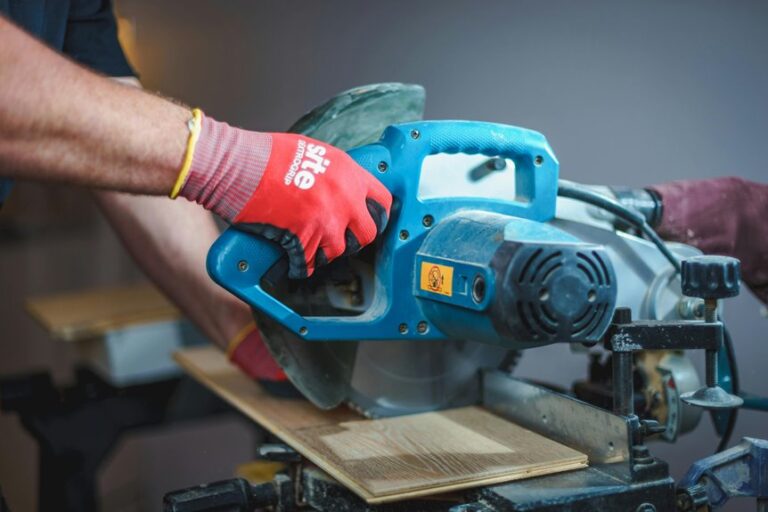
A clean miter joint starts with the right saw and the right setup. Trim carpenters, weekend DIYers, and hobby woodworkers all hit the same wall: the blade drifts, the cut tears out, and the corner refuses to close tight. The seven tools below cover the full spectrum, from pull-stroke Japanese handsaws to brushless cordless miter saws and a precision accessory that fixes crown molding headaches. Each pick earns its place for a specific reason, and the trade-offs are spelled out honestly so you can match the tool to your shop, your budget, and the kind of joints you actually cut.
The Main Contenders

SUIZAN Ryoba Double Edge Saw 9.5" Japanese Pullsaw

DEWALT 12-Inch Miter Saw DWS715 15-Amp
SUIZAN Ryoba Double Edge Saw 7" Japanese Pullsaw
IRWIN Tools ProTouch Drywall/Jab Saw (2014100)

Goldblatt Folding Drywall Saw 5-Inch Jab

DEWALT Miter Saw Crown Stops (DW7084)

Makita XSL05Z 18V LXT Brushless 6-1/2" Miter Saw
More Details On Our Top Picks
Pull-stroke saws flip the usual cutting direction on its head, and the SUIZAN Ryoba rewards anyone willing to slow down and let the teeth do the work. The 9.5-inch frame holds two blade edges, one coarser for crosscuts and one finer for ripping, so you can rough out a frame and then trim the joint shoulder without swapping tools.
Compared with the DEWALT DWS715 in the next slot, this saw has zero motor noise and almost no kerf, meaning the slot it leaves behind is barely a paper’s width. That detail matters when your miter joint tolerance is measured in fractions of a millimeter. Cabinetmakers and trim carpenters who already own a powered miter saw often reach for a pull saw to sneak up on a final line.
Useful Highlights
- Dual-edge blade design handles both crosscut and rip work from one frame, cutting down on tool changes during trim fitting.
- Pull-stroke action keeps the blade on a thin, straight line, which helps tight miter joints close without sanding gaps shut.
- Lightweight build reduces hand fatigue on long trim runs, especially when working overhead on ceiling moldings.
- Japanese steel construction is commonly reported to hold its edge through extended trim projects before needing a touch-up.
Things To Consider
- The pull-stroke motion takes a few cuts to internalize for anyone raised on Western push saws.
- Two-handed control is the norm, so one-handed trimming overhead gets tiring faster than with a powered alternative.
Quick Facts
Who It Suits Best
Trim carpenters and detail-focused woodworkers who want surgical control on miter joints and don’t mind a slower, more deliberate cut.
Where Another Pick Suits Better
Anyone cutting dozens of identical crown molding pieces in a day will find the DEWALT DWS715 a faster, more repeatable powered option.
The DWS715 is the workhorse of the roundup. A 15-amp motor turning at 4,000 rpm drives a 12-inch blade through dimensional lumber and nested crown with authority, and the tall sliding fences support serious baseboard and crown heights without tipping the workpiece.
This is the kind of saw that earns its floor space in a small shop or trim cart. The single-bevel design tilts left only, which keeps the controls simple but means flip-cutting for opposing angles. Compared to the SUIZAN 9.5-inch pull saw, the DEWALT trades finesse for repeatable speed, exactly what production trim work demands.
Where It Excels
- 15-amp motor at 4,000 rpm powers through hardwoods and dense trim without bogging down.
- 12-inch blade handles nested crown molding up to roughly 6-5/8 inches, covering most residential profiles.
- Stainless-steel miter detent plate and cam lock hold angle settings firmly, which is the heart of repeatable miter work.
- Sturdy sliding fences keep tall trim vertical, freeing both hands to hold and align the workpiece.
Worth Noting
- Single-bevel design means flipping the workpiece for opposing miters, a small workflow wrinkle on big trim runs.
- At roughly 50 pounds, the saw really wants a dedicated stand or bench in the shop.
- Cleaning pitch buildup off the fence and bevel tracks is a regular chore on heavy production days.
Feature Snapshot
Made For
Serious DIYers, remodelers, and trim specialists who need powered, repeatable miter cuts in standard residential trim and lumber.
Consider Something Else When
Job sites without reliable power or anyone needing a grab-and-go setup will find the Makita XSL05Z cordless saw far more practical for the same joint work.
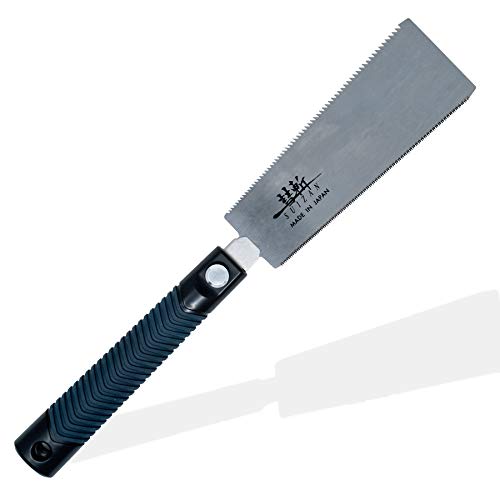
The 7-inch Ryoba is the 9.5-inch model’s smaller sibling, built for tight spots where a longer blade would just get in the way. Picture fitting a small miter return on a window stool or trimming a mitered corner in a jewelry box, situations where reach matters less than control.
The shorter blade reduces flex, which gives you a stiffer cut on small stock. For miter work on picture frames, shadow boxes, and small decorative moldings, the size becomes the feature. Versus the IRWIN jab saw that follows, this blade is far more about fine joinery than rough opening cuts.
Useful Strengths
- Available in both 7-inch and 6-inch blade lengths, letting you pick the right reach for the workpiece.
- Short frame improves line-of-sight to your pencil mark, a quiet but real upgrade for miter accuracy.
- Dual-edge design keeps crosscut and rip teeth in one tool, useful when small projects mix cuts.
- Light enough to keep on a bench hook for hours without cramping your hand.
Honest Caveats
- Too short for full-width door casing or wide baseboard joints in a single pass.
- Like its larger Ryoba sibling, the pull stroke asks for a brief retraining period.
Feature Rundown
Best Suited To
Hobbyists and trim carpenters handling picture frame, jewelry box, and small molding projects where short, controlled cuts beat raw speed.
Look Elsewhere When
Anyone facing full-size door or window casing should reach for the DEWALT DWS715 for the reach and repeatability that saw provides.
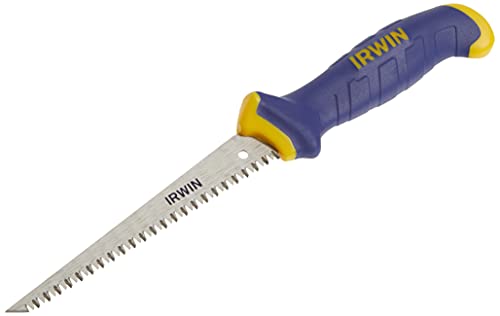
The IRWIN jab saw is not a miter saw in the trim-molding sense, and that’s worth saying up front. It earns its place here because a great many miter joints start with a rough opening in drywall or sheathing, and the 2014100 punches through that step fast.
The thick-body blade resists flex during aggressive plunge cuts, and the ProTouch rubber grip helps when you’re stabbing into a ceiling or a tight wall cavity. The tri-ground teeth are commonly reported to chew through drywall, plywood, and even PVC quickly without wandering off the line. For the actual miter joint itself, you’ll still want a real miter saw or a SUIZAN pull saw in hand.
What Makes Sense
- Thick-body construction resists twist and flex, giving more control during plunge cuts.
- Tri-ground teeth bite aggressively on the pull stroke, speeding up rough-in work.
- ProTouch rubberized handle softens vibration and improves grip in dusty job-site conditions.
- Compact enough to keep clipped on a belt or stuffed into a tool bag all day.
Points To Note
- Coarse tooth geometry leaves ragged edges, so finishing cuts on visible trim call for a finer tool.
- The aggressive teeth can grab on hardwood if you push past the intended material, so stay aware of the substrate behind the drywall.
Whose Shelf It Belongs On
Remodelers, electricians, and plumbers who routinely rough-in openings before installing trim and need one reliable jab saw on the belt.
Reach For A Different Pick When
For visible miter joints on finished trim, the SUIZAN 9.5-inch pull saw gives a far cleaner edge.
Goldblatt’s folding jab saw tucks into a small footprint without sacrificing the cut. The 5-inch bi-metal blade with 8 TPI cuts in both directions, and the HRC 66-68 hardness rating on the blade steel suggests the teeth hold up well in the field.
The folding hinge is the headline feature for anyone tired of poke-throughs in a tool bag. Open it up and you have a total tool length around 11-3/4 inches, which fits the hand well for overhead work. Compared with the IRWIN jab saw, the Goldblatt folds flat but trades some rigidity, so don’t expect the same aggressive push as a fixed-blade design.
Key Advantages
- Folding design protects teeth in transit and reduces the chance of torn bag liners.
- Bi-metal 8 TPI blade cuts in both push and pull directions, useful in tight corners where stroke direction is limited.
- Triple-ground teeth reduce the effort needed per stroke, which matters on repetitive rough-in work.
- Total length around 11-3/4 inches balances reach with portability for tool belt carry.
Trade Offs
- Folding hinge adds a small amount of flex compared with a solid one-piece jab saw.
- Some users find the lock mechanism worth checking periodically on long job runs.
Technical Reference
The Right Fit
Mobility-focused remodelers and service techs who need a stowable jab saw that disappears into a tool roll or pouch when not in use.
Skip It When
Production remodelers who lean hard on their jab saw all day will find the IRWIN ProTouch’s rigid body more durable for heavy plunge cuts.
The DW7084 is an accessory, not a saw, and that’s the point. Crown molding in a miter saw is awkward because it wants to lie flat against the fence and the table, but the spring angles only work when the molding stands vertically. These stops solve that problem in a simple, steel-jawed way.
Mounted to the saw fence, the stops register the crown molding in the correct upright position, so the saw cuts the actual miter angle you dial in. It works with several DEWALT 12-inch miter saws, including the DWS715 reviewed above. For trim carpenters running long crown runs, this small accessory pays for itself the first time it stops a misaligned cut.
A Few Strong Suits
- Steel construction stands up to repeated clamp pressure without bending out of true.
- Positions crown molding vertically against the fence, which is the proper orientation for compound miter cuts.
- Compatible with multiple DEWALT 12-inch miter saw models, so the accessory moves with you if you upgrade the saw.
- Simple, tool-free install on most compatible saws, which means no extra shop time wasted on mounting hardware.
Worth Noting
- Brand-specific to DEWALT 12-inch saws, so owners of other miter saws can’t use it as-is.
Feature Facts
Who Should Grab It
Anyone running a DEWALT 12-inch compound miter saw and tired of guessing the crown molding position before each cut.
A Better Fit Elsewhere
If you don’t already own a DEWALT 12-inch miter saw, the Makita XSL05Z in the next slot brings its own built-in laser line for alignment without needing add-on stops.
The Makita XSL05Z swaps the cord for an 18V LXT battery, and the trade is bigger than it sounds. Without a power cord, you set up on a kitchen floor, a roof deck, or a finished hallway without dragging extension cords through the space.
The brushless motor is engineered for longer runtime and a longer tool life, and the integrated laser line gives you a visible cut reference right on the workpiece. At roughly 14.6 pounds with the battery, the saw is light enough to carry one-handed. Compared with the corded DEWALT DWS715, the Makita cuts a smaller maximum board, but it adds true portability and a dual-bevel head that tilts both directions without flipping the workpiece.
Strong Points
- Brushless motor design supports longer runtime per charge and reduces brush-related maintenance over the saw’s life.
- Dual-bevel head tilts in both directions, speeding up opposing miter cuts on inside and outside corners.
- Integrated laser line projects the cut path onto the workpiece, helpful for marking-free setups.
- Compact 6-1/2-inch blade and roughly 14.6-pound total weight make this the most portable compound miter saw in the roundup.
Points To Keep In Mind
- Tool-only listing means battery and charger add to the actual cost if you don’t already run Makita 18V LXT gear.
- 6-1/2-inch blade limits the max board thickness compared to the 12-inch DEWALT DWS715.
- Run time is finite, so for a long production day a spare charged battery is a sensible add-on.
Core Features
Perfect Match For
Job-site trim carpenters and finish carpenters who already invest in the Makita 18V LXT platform and need a portable, accurate miter saw for finish work.
Another Choice May Suit
Workshop-only woodworkers who never lose access to an outlet will appreciate the bigger cut capacity of the DEWALT DWS715 at a more approachable entry point.
What To Weigh Before Choosing Saws For Cutting Miter Joints
Match The Saw To The Joint You Cut Most
Miter joints come in three common flavors: picture frame corners on small stock, decorative trim runs around doors and windows, and full nested crown molding against a ceiling. The right saw for one is the wrong tool for another. Short stock and detail work favor pull saws or compact cordless saws, while long crown and baseboard runs favor 12-inch powered miter saws with tall fences. Before picking a saw, take a quick inventory of the joint sizes and materials you touch most often.
Power Source Shapes The Workflow
Corded saws deliver unlimited runtime and usually a bigger blade for a given price. Cordless saws like the Makita XSL05Z trade a smaller max cut for setup-anywhere convenience, which matters on finished job sites where running a cord is a hassle. Hand saws, including the SUIZAN Ryoba pair, need no power at all, which makes them perfect for trim fitting when the miter saw is already busy on rough cuts.
Tooth Count And Kerf Set The Cut Quality
Tooth count (TPI, or teeth per inch) and kerf (the width of the cut slot) directly affect how clean a finished miter joint looks. Higher TPI blades and thinner kerfs reduce tearout, the splintering that ruins a visible trim edge. Pull saws and finish blades win here, while aggressive jab saws intentionally leave ragged edges for rough openings. Pick the tooth count that matches the visibility of the joint.
Fence Height And Bevel Direction Matter For Crown
Crown molding sits at an angle, and the saw has to support that height against a vertical fence. Tall sliding fences and dual-bevel heads remove the most common sources of crown miscuts. If the saw does not natively support the crown height you run, a dedicated crown stop accessory like the DEWALT DW7084 fills the gap cleanly.
Picking Through The Noise On Miter Saw Shopping
Mistakes Worth Dodging
Buying a miter saw with too small a blade is the most common slip. A 6-1/2-inch saw handles small trim, but a 12-inch saw handles the same job plus every larger piece you’ll meet later, which is why many people regret the smaller choice within a year. Another trap is ignoring the workpiece flip that single-bevel designs force, because flip-cutting slows you down and slightly reduces accuracy on opposing miters. Finally, picking a saw without checking fence height against your most common crown molding profile leaves you doing workarounds every cut.
When Paying More Pays Off
A higher tier in this category usually buys one of three things: a brushless motor that runs cooler and lasts longer, a dual-bevel head that eliminates workpiece flipping, or a longer battery platform if you go cordless. For someone running trim full-time, those upgrades return the investment through faster setups and less fatigue. For a casual DIYer, the entry tier earns its keep without the premium.