PVC pipe shows up everywhere, from irrigation repairs to plumbing tweaks to weekend builds in the garage. The wrong blade turns that work into a ragged, cracking mess, and the right tool makes it disappear in a single stroke. This roundup walks you through eight hand saws, replacement blades, and ratchet cutters that handle PVC cleanly, with a focus on tooth geometry, blade flexibility, and the kinds of pipe diameters most DIYers actually wrestle with. Whether you’re replacing a single section of drain line or building out a full sprinkler manifold, the picks below cover the realistic scenarios you face at the workbench.
An Overview Of The Picks

Vaughan Bear Saw Replacement Blade, 8-3/8 Inch, Japanese Pull Saw

Shark Corp 10-2312 12-Inch Carpentry Saw
FACHLICH 15-Inch 4-Pack Reciprocating Saw Blades 6TPI
Milwaukee 48-44-0405 M12 Plastic Pipe Shear Blade

LIBRATON PVC Pipe Cutter, Up to 2-1/2-Inch Ratchet PVC Cutter, PEX Hose Cutter

LIBRATON PVC Pipe Cutter 2-1/2-Inch, PVC Cutter, Ratchet Pipe Cutter Tool
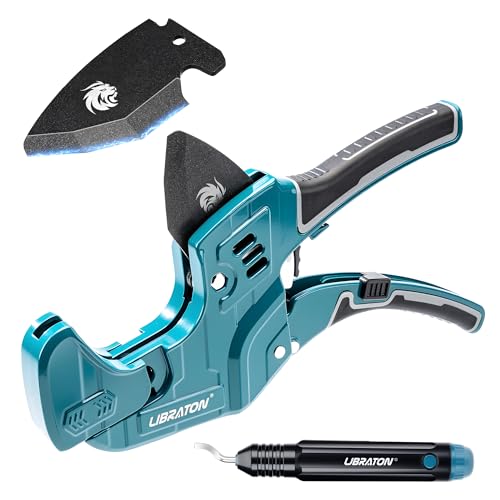
LIBRATON 2-1/2-Inch Ratchet PVC Pipe Cutter, 2 Adjustable Ranges PVC Cutter
LIBRATON 1-5/8-Inch Ratchet PVC Pipe Cutter, 2 Adjustable Ranges PVC Cutter
A Closer Look At Each Pick
Pull saws flip the usual cutting direction, slicing on the draw stroke instead of the push, and the Vaughan Bear Saw replacement blade leans into that geometry for finer control on small-diameter PVC. The 8-3/8 inch length lands in a sweet spot for trim carpenters and remodelers who already own the Bear Saw handle and just need a fresh edge.
You will notice the difference most in tight spots, like cutting a stub of pipe flush against a wall, where a stiff framing saw would force you to overshoot the mark. The hardened teeth track straight through thin-wall PVC without bouncing, and the compact size keeps your line of sight clear on every stroke.
A Strong Showing
- Pull-stroke cutting leaves a clean edge on thin-wall PVC with minimal chipping
- Compact 8-3/8 inch length fits where a full-size hand saw cannot reach
- Hardened teeth hold their geometry through repeated cuts in plastic and soft wood
- Drops onto an existing Vaughan Bear Saw handle, no extra hardware needed
Worth Noting
- Requires the matching Vaughan handle, sold separately from the blade
- Tooth count favors finish work, so it feels slow on anything thicker than schedule 40 pipe
Best Suited To
Remodelers and finish carpenters who already run a Bear Saw and need a replacement blade tuned for plastic trim and small pipe sections.
Look Elsewhere When
Shark Corp 10-2312 12-Inch Carpentry Saw suits you better if you want a full-size, ready-to-use hand saw rather than a replacement edge for an existing handle.
Shark Corp’s 10-2312 earns its spot as the classic do-it-all carpentry saw, and the manufacturer specifically calls out PVC and ABS pipe as materials it handles well. The flexible blade gives you enough bend to start a cut in a tight corner, then firms up enough to keep your line straight across the diameter.
Picture a Saturday plumbing patch where you’re swapping out a section of drain line and trimming a few PVC stubs to length. This saw is the one you grab without thinking, because it crosses over from wood trim to plastic pipe without skipping a beat.
Features That Help
- 14 teeth-per-inch count strikes a clean balance between speed and finish on plastic
- Flexible blade geometry supports flush cuts where the pipe sits close to a wall
- Replaceable blade extends the life of the handle across years of weekend projects
- Listed compatibility with PVC and ABS makes it a confident grab for plumbing repairs
Trade Offs
- Tooth count is a touch coarse for very thin-walled pipe, where a finer blade would leave a cleaner edge
Quick Technical Notes
Who It Suits Best
Homeowners with a mixed repair list who want one hand saw that moves between wood trim and PVC pipe without swapping tools.
Reach For A Different Pick When
LIBRATON PVC Pipe Cutter 2-1/2-Inch, PVC Cutter, Ratchet Pipe Cutter Tool makes more sense when you’re making repeated straight cuts in larger pipe and want a clean, burr-free edge without sawing motion.
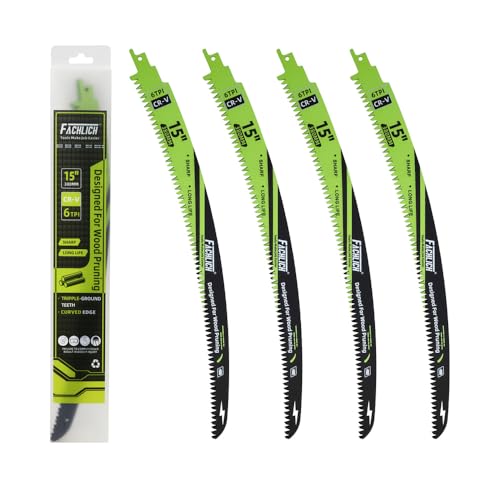
Reciprocating saws are the workhorses of demolition and rough-in plumbing, and the FACHLICH 4-pack gives you a curved 15-inch blade designed for round wood and PVC. The 6 teeth-per-inch tooth pitch favors fast material removal over polished finish, which matches how most people actually use a recip saw in the field.
You will appreciate the four-pack if you burn through blades, because reciprocating-saw edges dull quickly when they hit dirt or hidden fasteners. Having spares in the case means you finish the cut instead of driving to the hardware store mid-project.
Points In Its Favor
- Curved profile wraps the contour of round pipe for cleaner entry cuts
- Four-blade value pack keeps you cutting through the whole job without resupply runs
- Cr-V construction targets better wear resistance during aggressive cuts
- 15-inch length reaches into deep cavities where a hand saw cannot fit
Room For Improvement
- Requires a compatible reciprocating saw, so it adds no value if you only own hand tools
- 6TPI tooth count leaves a rougher edge than finer hand-saw blades on visible pipe runs
Feature Snapshot
Right Fit For
DIYers and tradespeople who already run a corded or cordless reciprocating saw and need dedicated blades for PVC demolition cuts.
Skip It When
Vaughan Bear Saw Replacement Blade suits your needs better if you only do hand-tool work and want quiet, no-power cuts on small-diameter pipe.
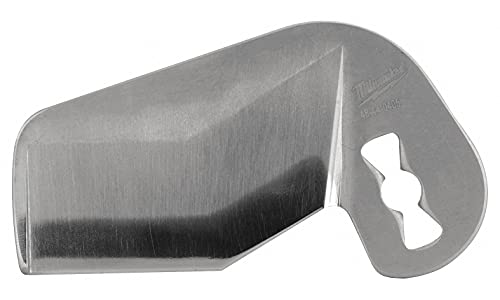
The Milwaukee 48-44-0405 is a replacement blade for the M12 plastic pipe shear, a cordless tool that resembles a heavy-duty ratchet cutter. Rather than slicing with teeth, the shear crushes through PVC with a clean, square cut, and this blade is the replaceable edge that does the actual cutting work.
You will only buy this if you already own the M12 shear body, but for plumbers running dozens of cuts a day, that is a reasonable trade. The blade swap takes seconds and brings the tool back to factory-fresh sharpness.
Practical Pluses
- Replacement edge restores the clean shearing action of the M12 platform
- Compact 4-inch by 2.5-inch footprint fits the shear’s cutting head geometry
- Designed specifically for plastic pipe, so it stays sharper than generic metal-cutting blades
Points To Keep In Mind
- Only useful if you already own the Milwaukee 2470-21 M12 shear body
- Replacement blades are a recurring cost for high-volume shop use
Who Should Grab It
Working plumbers and remodelers who already run the Milwaukee M12 cordless platform and need to refresh their plastic pipe shear.
Not Your Match When
LIBRATON PVC Pipe Cutter, Up to 2-1/2-Inch Ratchet PVC Cutter, PEX Hose Cutter fits better if you want a manual ratchet cutter that does not depend on batteries or a proprietary tool body.
Ratchet cutters change the physics of cutting PVC: instead of pushing a saw through the wall, you squeeze the handle a few times and the ratchet mechanism walks the blade around the pipe. The LIBRATON Up to 2-1/2-Inch ratchet cutter takes that approach with an aluminum body, which keeps the weight down without sacrificing rigidity.
For repetitive cuts on a sprinkler manifold or a pool plumbing retrofit, this style of tool saves your wrist and leaves a cleaner edge than most saws. The 2-1/2-inch capacity covers the most common residential PVC diameters, including 2-inch schedule 40.
Where It Delivers
- Aluminum body keeps the tool light during long cutting sessions
- SK5 blade steel holds an edge through repeated cuts in PVC and PEX
- 3mm blade thickness resists flex when you squeeze through thicker pipe walls
- Teflon coating on the blade reduces friction and helps shed plastic shavings
Honest Caveats
- Capacity tops out at 2-1/2 inches, so 3-inch and larger pipe needs a different tool
- Ratchet mechanism adds bulk compared to a simple scissor-style cutter
Feature Rundown
Made For
Plumbers and irrigation installers making repeated cuts in 2-inch and smaller PVC who want a clean edge without the dust and vibration of a saw.
Swap It Out When
Shark Corp 10-2312 12-Inch Carpentry Saw fits your work better if your cuts are occasional and you want one tool that handles wood trim alongside pipe.
The companion LIBRATON 2-1/2-Inch ratchet cutter shares the same cutting capacity as the previous model but tightens the focus on blade longevity. The manufacturer highlights an improved hardening process for the SK5 blade, which means fewer replacements over the life of the tool.
For homeowners who tackle a plumbing repair every few months rather than every day, that extra durability translates into a cutter that still feels sharp years down the road. The 2-1/2-inch ceiling still applies, so anything larger needs a different approach.
What Helps Most
- Improved hardening process on the SK5 blade extends working life
- 2-1/2-inch capacity covers most home plumbing and irrigation pipe sizes
- Ratchet action walks the blade around the pipe with each squeeze
- Compact body fits inside a standard toolbox drawer
Less Ideal Details
- Single cutting range means no quick adjustment for very small PEX without repositioning
Whose Shelf It Belongs On
Homeowners and handymen who want a low-fuss ratchet cutter for occasional PVC repairs and small plumbing jobs.
A Better Fit Elsewhere
LIBRATON 2-1/2-Inch Ratchet PVC Pipe Cutter, 2 Adjustable Ranges PVC Cutter makes more sense when you regularly switch between different pipe sizes and need the telescoping head to cover them without swapping tools.
What separates this LIBRATON from the previous ratchet cutter is the telescoping cutting head, which gives you two distinct size ranges in one tool. You slide the head to the smaller setting for half-inch PEX, then extend it out to handle 2-inch PVC without changing the tool body.
The 3CR13 stainless blade steel also steps up the corrosion resistance, which matters when you store the tool in a damp garage or truck box. The replaceable blade design means you can swap a dull edge without retiring the whole tool.
A Favorable Mix
- Telescoping head covers two pipe ranges in one tool, useful for mixed jobs
- 3CR13 stainless blade adds corrosion resistance for outdoor storage
- Replaceable blade extends the working life of the cutter body
- Coated surface helps shed plastic shavings during heavy use
A Few Limitations
- Adjustable head adds a small amount of bulk over fixed-range cutters
- Maximum capacity still tops out at 2-1/2 inches
Spec Overview
Built With In Mind
Tradespeople and serious DIYers who move between PEX and PVC on the same job and want one adjustable cutter to cover both.
Not Your Match When
LIBRATON 1-5/8-Inch Ratchet PVC Pipe Cutter, 2 Adjustable Ranges PVC Cutter fits better when most of your work is small-diameter PEX and you do not need the extra headroom.
The smaller sibling in the LIBRATON adjustable range, this 1-5/8-inch ratchet cutter trades top-end capacity for a more compact head. That smaller profile is a real advantage when you are working inside a sink cabinet or against a joist, where a full-size cutter simply will not open wide enough to seat around the pipe.
You also get the same telescoping head, 3CR13 stainless blade, and replaceable edge as the larger model, so you are not giving up build quality for size. The honest trade-off is that anything thicker than 1-5/8 inches falls outside the tool’s reach.
Real Benefits
- Compact 1-5/8-inch head fits where larger ratchet cutters cannot open
- 3CR13 stainless blade with surface coating fights corrosion in humid spaces
- Replaceable blade keeps the tool in service after the edge dulls
- Telescoping range lets you cover small PEX sizes without swapping tools
Where It Is Less Suited
- 1-5/8-inch capacity rules out standard 2-inch PVC schedule 40 pipe
- Smaller head means more ratchet strokes per cut on the upper end of its range
Perfect Match For
Plumbers and remodelers working in tight cavities on small-diameter PEX and thin PVC where a compact cutter head is the only realistic option.
Consider Something Else When
LIBRATON 2-1/2-Inch Ratchet PVC Pipe Cutter, 2 Adjustable Ranges PVC Cutter is the better pick when your work regularly includes 2-inch pipe and you want the telescoping range to cover both small and mid-size diameters.
Matching The Right Cutter To Your Pipe
Picking a saw or cutter for PVC comes down to how often you cut, what diameters you face, and whether you want a powered or hand-powered tool. The list above spans hand saws, replacement recip blades, and manual ratchet cutters, so the right choice depends on your specific workflow.
Blade Type And Tooth Count
Teeth per inch (TPI) is the single biggest spec to understand here. Lower TPI, like the FACHLICH reciprocating blades at 6 TPI, cuts faster but leaves a rougher edge. Higher TPI, like the Shark Corp at 14 teeth per inch, sacrifices speed for a cleaner cut on visible pipe runs. For most DIY work, somewhere in the 10 to 14 TPI range hits the sweet spot. Pull saws (TPI is a tooth density measure, not a count of teeth) sit in a different category because their cutting action reverses, letting finer teeth track through thin material without flexing.
Cutting Capacity And Pipe Diameter
Every tool in this list has a ceiling, and exceeding it is how blades snap or jaws bend. The Shark Corp handles 12 inches of cut depth, which covers virtually any residential PVC diameter, while the ratchet cutters top out between 1-5/8 and 2-1/2 inches. If you regularly work with 3-inch drain pipe, you need a different tool entirely. Measure the outside diameter of your pipe before committing to a cutter.
Manual Ratchet Vs. Powered Saw
Manual ratchet cutters win on noise, dust, and cut quality on plastic. They leave a square, burr-free edge that solvent cement bonds to cleanly. Powered reciprocating saws win on speed, demolition work, and pipe that is already fastened in place where you cannot fit a cutter. Many pros keep both, since the job dictates the tool.
Build Materials And Long-Term Care
SK5 and 3CR13 blade steels dominate the ratchet cutter market for good reason: they hold an edge and resist corrosion when you store the tool in a damp truck. Coated blades shed plastic shavings and cut down on friction. For hand saws, flexible blade bodies help with flush cuts, and replaceable blade designs mean you are not throwing the entire tool away when the edge dulls.
Key Considerations Across These Picks
Pitfalls Shoppers Hit
The most common mistake is choosing a cutter by capacity alone and ignoring the ratchet mechanism. A 2-1/2-inch cutter with a sloppy ratchet will wander off-line and leave a beveled edge that does not seat properly in a coupling. Test the ratchet action if possible, or read feedback specifically about cut quality on PVC rather than just diameter claims. Another frequent trap is buying a replacement recip blade without confirming the shank fits your saw. Most modern cordless recip saws use a universal 1/2-inch tang, but older or specialty tools may need an adapter.
Where The Extra Money Goes
Stepping up to a higher-tier ratchet cutter usually buys you three things: better blade steel (SK5 or 3CR13 instead of generic carbon), a replaceable blade design, and corrosion-resistant coatings. Those features matter if you use the tool often or store it in less-than-ideal conditions. For a once-a-year homeowner repair, a basic ratchet cutter handles the job fine. The premium tier pays off in edge retention, fewer replacements, and the confidence that the tool still works years later when you finally pull it out of the drawer.
Frequently Asked Questions
Can a regular wood saw cut PVC pipe?
Yes, a fine-tooth wood saw will cut PVC, but the cut quality depends heavily on the tooth count. Saws with 10 or more teeth per inch leave a workable edge for most repairs, while coarser framing blades tend to chip and crack thin-wall pipe. Dedicated PVC cutters and finer-tooth saws are the better choice when the cut will be visible or when you need a square edge for solvent welding.
What is the best blade type for cutting PVC?
For hand tools, a fine-tooth crosscut or pull saw with 10 to 14 TPI gives the cleanest cut on PVC. For power tools, a fine-tooth reciprocating saw blade or a purpose-built plastic pipe shear works well. Ratchet cutters with hardened steel blades are the cleanest option overall, because they shear rather than saw through the pipe wall.
How do I avoid cracking PVC when cutting it?
Support the pipe on both sides of the cut line so the wall does not flex, use a fine-tooth blade or a ratchet cutter, and avoid forcing the cut faster than the tool wants to move. On cold days, PVC becomes more brittle, so slow your cutting speed and let the tool do the work. Scoring the cut line lightly before finishing the cut also helps on thin-wall pipe.
Are ratchet pipe cutters better than saws for PVC?
Ratchet cutters produce a cleaner, square, burr-free edge that is ideal for solvent-cement joints, and they cut quietly with no dust. Saws are faster, reach into spaces where a cutter cannot open, and handle pipe that is already installed. For new construction where the pipe is free-standing, a ratchet cutter is usually the better choice. For demolition and retrofit work, a saw is more practical.
Do I need different tools for different PVC diameters?
Most DIYers can get by with one tool that covers the diameters they actually use. Ratchet cutters with a 2-1/2-inch capacity handle the majority of residential PVC and PEX sizes. Larger drain lines, 3 inches and up, usually require a different tool such as a larger ratchet cutter or a powered saw. Before buying, measure the outside diameter of the pipe you work with most often and pick a tool that covers it with some headroom.