Replacing a floating laminate or engineered floor means one awkward step: undercutting door jambs and trim so the new planks slide underneath without a gap. The wrong tool chews through drywall, leaves a fuzzy kerf (the width of material removed by the blade), or forces you to pry trim and re-install it. A proper saw for this job keeps the cut flush, the wall intact, and the install clean. Below are six options that handle this specific task, from full-power jamb saws to a manual dovetail saw for tight corners.
The Essentials At A Glance
SKIL 3601-02 Flooring Saw with 36T Contractor Blade

ONEAND 18V 5.5in. Cordless Flooring Saw
HAUTMEC 10in. Reversible Dovetail Saw HT0234

ROBERTS 6 in. Jamb Saw (17076)

Roberts 10-46 6-Inch Jamb Saw with Case

BARWALT Super Jamb & Undercut Saw BWT71352
The Picks, Examined More Closely
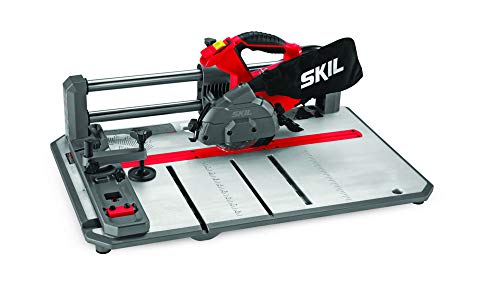
The SKIL 3601-02 sits in a different lane from the other picks on this list. Instead of undercutting jambs, it acts as a portable cutting station for the planks themselves. You set it on a table or the floor, lay a board across, and push it through the 36-tooth contractor blade to get cross, miter, or rip cuts (cross cuts go across the board grain, miter cuts angle across, rip cuts run with the grain). For a single-room floating floor install, that means you skip hauling boards to a garage or driveway saw.
Compared to the dedicated jamb saws below, this tool trades undercutting precision for plank-cutting convenience. The lightweight body moves easily from room to room, and a DIYer handling both the planks and a handful of door casings can pair it with the HAUTMEC saw for corners the SKIL can’t reach.
Key Advantages
- Compact footprint fits on a workbench or directly on the subfloor
- Handles solid, engineered, and laminate boards without swapping setups
- Lightweight enough to carry to upper floors without a helper
- Cuts right where the install is happening, reducing dust drift
Things To Consider
- Not designed to undercut jambs flush to a wall, so trim still needs a separate tool
- Blade changes require basic wrench work each time you switch tooth counts
Quick Facts
Who It Suits Best
DIYers installing a single room of floating floor who want one tool to handle the plank cuts cleanly on-site.
Skip It When
You mainly need to undercut existing door casings; in that case, the ROBERTS 6 in. Jamb Saw (17076) handles that work directly.
The ONEAND 18V cordless saw is built for rooms without a convenient outlet. Its 5.5-inch blade is a meaningful step down from a 6-inch jamb saw, so you trade a little undercutting depth for the freedom to work in a finished basement or upstairs hallway without dragging an extension cord behind you. The tool-only listing assumes you already own the battery platform, which is common among homeowners who started with a drill or impact driver.
Where the SKIL above focuses on cutting planks, this saw targets the trim. It’s a practical middle ground between a full-power corded jamb saw and a hand tool like the HAUTMEC, especially for small patch jobs where setting up dust collection feels excessive.
Where It Excels
- Cordless design eliminates the trip hazard of a cord across a doorway
- Compact body reaches tight corners better than full-size jamb saws
- Compatible with the wider 18V battery ecosystem many DIYers already own
Worth Noting
- Sold as tool only, so you supply battery, charger, and any extras
- Smaller 5.5-inch blade limits how deep you can undercut in a single pass
- Owners commonly report shorter battery life on hardwood jambs than on soft trim
Right Fit For
Shed workshops, garage apartments, and finished basements where running power is awkward and the cut list is short.
Look Elsewhere When
You’re processing an entire house of door casings, in which case the BARWALT Super Jamb & Undercut Saw offers more depth and longer runtime per cut.
The HAUTMEC HT0234 is the only handsaw in this roundup, and that is exactly its appeal. The reversible blade flips to either side of the rigid carbon-steel back, so you can cut flush to a wall from a comfortable stance whether you’re right- or left-handed. The offset cranked handle creates the clearance needed to slide the teeth under a door jamb without marring the surrounding drywall.
For a one-day patch job, a hand tool removes every concern about cords, batteries, and dust. You trade speed for control, and on a single door casing that is a worthwhile exchange. Pair it with the SKIL 3601-02 if you also need to cut planks.
Notable Gains
- Spring-loaded reversible blade adapts to either hand and tight corners
- Cranked handle design delivers real clearance under standard jambs
- 12 TPI (teeth per inch) cut leaves a clean edge for tight plank fit
- Zero power needed, so it works in occupied spaces without noise complaints
Room For Improvement
- Manual cutting is slow if you have more than three or four casings
- Requires a steady hand and a little practice to start a square cut
Feature Snapshot
Made For
Small repairs, single-room installs, and any homeowner who wants to avoid the noise and dust of a power jamb saw.
Another Choice May Suit
Anyone trimming out a whole house should consider the Roberts 10-46 6-Inch Jamb Saw with Case, which is purpose-built for high-volume undercutting.
The ROBERTS 17076 is the workhorse the others get compared to. A 5-4/5 amp industrial-grade motor driving a 6-inch carbide blade undercuts door jambs up to 1-3/4 inches thick in a single pass, and the adjustable depth guide keeps the cut from wandering into the drywall behind. For a contractor pulling baseboards and trim from room to room, this is the kind of tool that earns its keep on the first job.
The trade-off shows up at delivery time: the bare 17076 ships without a case, so storage and transport are on you. The Roberts 10-46 6-Inch Jamb Saw with Case fixes that gap, and the BARWALT below pushes the depth range further still.
Good Reasons To Consider
- Industrial-grade motor handles repeated cuts without bogging down
- Patented design addresses full inside corners on molding up to 1/2-inch thick
- Adjustable depth guard protects the wall behind the cut
- Spiral ground gears keep operation smoother and quieter than straight-cut gears
Trade Offs
- Listed without a carrying case, which is awkward for mobile crews
- Corded design requires planning around outlet placement
Who Will Love This
Full-time flooring installers and remodelers who cut jambs daily and want a tool that keeps up with that pace.
Where Another Pick Suits Better
Homeowners tackling a single-room refresh may find the ONEAND 18V 5.5in. Cordless Flooring Saw easier to store and pull out of a closet.
The 10-46 takes the same proven 6-inch jamb saw platform and adds the custom carrying case the bare 17076 skips. For crews that load the truck every morning, the case protects the depth-adjust mechanism and the motor housing from jobsite grit. Ball and needle bearings on the armature extend working life when the saw sees daily use.
Compared to the BARWALT below, the 10-46 uses a slightly shallower depth range, which is fine for typical residential jambs but limiting on commercial door frames. The price gap between the two usually comes down to whether you need that extra reach.
Useful Strengths
- Includes a fitted carrying case for transport and storage
- Industrial motor with ball and needle bearings for longer service life
- Precision height adjustment from flush to 1-1/16 inch covers standard trim
- Ground spiral gears run more quietly than straight-cut equivalents
Small Caveats
- Heavier than the cordless ONEAND option, so it tires the arm on long runs
- Depth range tops out below the BARWALT for thicker commercial casings
Best Suited To
Contractors and serious DIYers who need a transport-ready jamb saw that survives frequent loading and unloading.
Not Your Match When
You mostly cut in finished living areas and need to minimize trips back to the truck; the HAUTMEC 10in. Reversible Dovetail Saw HT0234 skips the case entirely.
The BARWALT closes out the list with the deepest cut range and the toughest blade. The 6-3/16-inch carbide-tipped blade powers through door jambs and undercut trim up to 1-1/2 inches deep, and the depth adjustment moves from a true flush cut to that maximum without tools. For installers who occasionally work on commercial doors or older homes with built-up casings, the extra reach eliminates the need for a second pass.
Versus the Roberts 10-46 covered above, the BARWALT pushes deeper but costs a step up in weight. If your cut list rarely exceeds standard residential jambs, the Roberts delivers similar daily-driver performance at a friendlier carry weight.
Everyday Wins
- Carbide-tipped blade holds an edge through repeated masonry-style cuts
- 1-1/2 inch depth range handles built-up or commercial casings
- Carrying case included for storage and transport
- Flush-to-deep adjustment covers most trim profiles in one tool
Honest Caveats
- Larger blade size means more material removed on every pass
- Heavier body can fatigue the wrist during full-day undercutting runs
Key Specs
Whose Shelf It Belongs On
Pros and remodelers who hit a mix of residential and light-commercial door casings and need one saw that handles both.
Reach For A Different Pick When
Your work is limited to standard interior doors, since the SKIL 3601-02 Flooring Saw with 36T Contractor Blade covers a different stage of the install entirely.
What To Look For In A Saw Built For Undercutting
A jamb saw is purpose-built to trim the bottom of a door casing so a new floor can slide underneath. Blade diameter and depth range matter more than raw power, because most residential casings top out at 1-1/2 inches. A 6-inch blade with adjustable depth gives you a flush cut without driving into the drywall behind the trim.
For power tool picks, motor amps translate to how the saw feels under load. A 5-amp or larger motor pushes through harder wood jambs without stalling. Cordless options trade runtime for portability, and a smaller 5.5-inch blade suits trim-only work in tight spaces. Manual dovetail saws fill the gap when noise, dust, or a missing outlet rules out power.
Blade type drives cut quality. Carbide-tipped blades hold an edge through repeated use and handle occasional masonry encounters. High TPI counts produce smoother cuts but cut more slowly. Pick the tooth count that matches how often you’ll be swapping boards versus slicing through casings.
Storage and transport often get overlooked. A carrying case adds real value for crews that load tools daily. For a single-room DIY job, a saw that nests in a tool drawer with a blade guard is usually enough.
Key Considerations Across These Picks
Common Buying Mistakes
The most frequent misstep is choosing a plank saw when the real problem is undercutting jambs. The SKIL 3601-02 excels at cutting boards, not casings, and pairing it with the wrong tool leaves you chiseling trim by hand. Match the saw to the cut you actually need to make.
Another trap is ignoring depth range. A 5-3/8-inch blade simply cannot undercut a 1-3/4-inch solid-wood door jamb in a single pass. Measure your thickest casing first, then confirm the saw’s maximum depth before buying.
What The Higher Tier Buys
Premium jamb saws add carbide-tipped blades, ball-bearing motors, and longer depth ranges. Those upgrades show up as longer service life under daily use and the ability to handle commercial-grade casings. For a one-room weekend job, mid-tier models cover the work without the extra cost. For pros running two or three installs a week, the upgraded components pay back through fewer blade changes and less downtime.