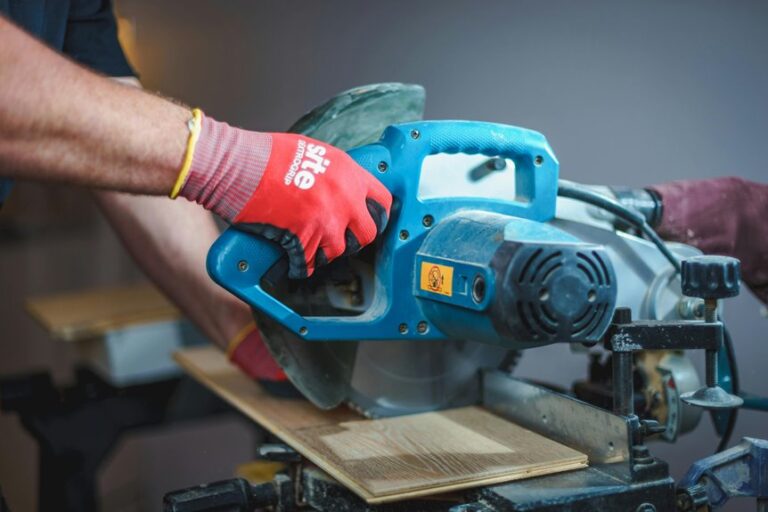
Plywood confuses plenty of first-time saws because it splits, splinters, and chews up cheap blades faster than almost any other sheet good. Picking the right saw changes everything, from how clean the edge looks to how long your Saturday project actually takes. The seven options below cover cordless track saws for cabinet-grade work, compact circular saws for jobsite cuts, and a few hand saws that handle quick, no-cord jobs. Each one earns its spot for a specific kind of user, so the list works whether you’re building a closet or framing a shed.
The Picks In Brief

Makita XPS02ZU 18V X2 LXT Brushless Cordless 6-1/2″ Plunge Circular Saw

VAUGHAN Bear Saw 10-1/2″ Medium Fine Blade Japanese Pull Saw

Klein Tools 725 Jab Saw Triple Ground Teeth

TOOLAN 8-In-1 Multi Blades Hand Saw
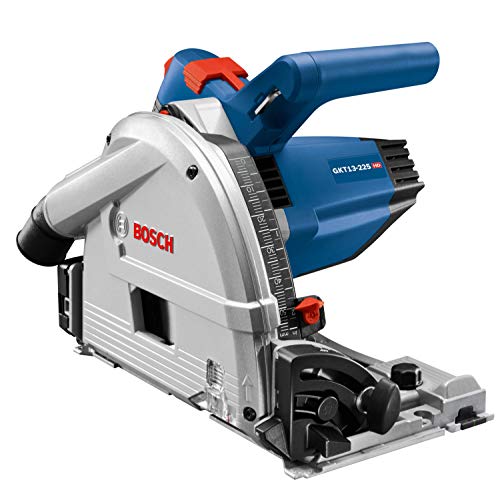
Bosch GKT13-225L 6-1/2″ Track Saw with Plunge Action

Goldblatt Folding Drywall Saw 5″ Jab Saw

Chumia 2-Man Crosscut Saw 3.6 ft Manual Logging Saw
The Strengths Of Each Pick
The Makita XPS02ZU trades corded power for the freedom of two 18V batteries running a brushless motor, and the 36V combined output keeps the blade spinning at a steady pace through 3/4-inch plywood. Plunge action means you can start a cut in the middle of a panel rather than from an edge, which is exactly how cabinet backs and notches get cut cleanly.
Pair it with a Makita guide rail (sold separately) and the saw becomes a portable alternative to a stationary table saw for breaking down sheet goods. AWS connectivity, which is Makita’s wireless tool-start system, lets the saw talk to a compatible dust extractor so the vacuum ramps up only when the blade is moving. For shop owners and remodelers who already own LXT batteries, the economics make a lot of sense.
The Practical Payoff
- Plunge action supports interior cutouts for outlets and vents without a starter hole drilled first
- Brushless motor adjusts speed automatically as load changes, which protects the motor during thick passes
- AWS wireless pairing cuts down on dust exposure when paired with a matching extractor
- Runs on the same 18V batteries as the rest of the LXT lineup, so no new battery platform is needed
- Tool-only body keeps the cost down for anyone who already owns chargers and packs
Honest Caveats
- Guide rail is sold separately, and that accessory is where the real precision lives
- Batteries and charger are not included in the bare-tool kit
Key Product Details
Who Will Love This
Existing Makita LXT owners and serious remodelers who want cordless freedom without giving up the precision of a guide-rail cut.
Reach For A Different Pick When
The TOOLAN 8-in-1 Multi Blades Hand Saw suits anyone who only needs a few small plywood cutouts and doesn’t want to manage batteries or guide rails.
Japanese pull saws cut on the pull stroke rather than the push, which sounds like a small detail until you actually use one. The blade stays in tension through the cut, so the kerf (the slit the blade leaves behind) stays thin and the cut stays straight. The medium/fine tooth count on the Bear Saw’s 10-1/2-inch blade is well matched to plywood, particle board, and trim work where tear-out matters more than speed.
There’s no power cord, no battery, and no guide rail to set up. You mark your line, start with a short scoring pass, then work into a full stroke as the kerf deepens. It rewards patience, and the trade-off for that patience is an edge that often needs zero sanding before finishing. For trim carpenters, hobbyists, and finish-out crews working in a quiet house, the silence alone makes the case.
Good Reasons To Consider
- Pull-stroke design puts less stress on the thin blade, so wandering and flex are minimized
- Medium/fine tooth pattern leaves edges clean enough to skip sanding on plywood and molding
- 10-1/2 inch blade handles sheet-good crosscuts and 2×4 trim work in one tool
Points To Keep In Mind
- Manual cutting speed is far slower than any corded or corded track saw on full sheet goods
- Tooth geometry takes a few strokes to get used to, and beginners sometimes snap the thin blade early on
- Not the right tool for rough framing where speed beats finish quality
Best Suited To
Finish carpenters, trim installers, and careful DIYers who need clean edges on plywood and molding without dragging a power cord across a finished floor.
Consider Something Else When
The Bosch GKT13-225L Track Saw handles large plywood sheets much faster, which matters more for full-cabinet builds than trim work.
The Klein 725 is the kind of saw that lives in an electrician’s bag or a remodeler’s pouch and gets pulled out for one specific job: making a hole where there isn’t one. The triple-ground teeth cut on the push stroke, the hardened carbon steel blade takes abuse without snapping, and the beveled tip punches through drywall, plywood, or plastic with a wrist twist rather than a drill hole.
For plywood specifically, this saw handles the cutouts you don’t want to fire up a circular saw for. Junction box openings in plywood backer boards, notches around door frames, and small trim pieces all fall in the jab saw’s comfort zone. It’s not a sheet-good saw, and pretending otherwise leads to frustration. Where it shines is right-sized holes and short, straight cuts where portability matters more than reach.
Real Benefits
- Beveled tip starts a cut without a pilot hole, which saves time on remodel work
- Hardened carbon steel blade holds its edge through drywall grit and plywood glue without immediate dulling
- Triple-ground teeth clear material quickly and reduce snagging in plywood layers
- Curved handle front lets you apply two-handed pressure for stubborn cuts
Softer Spots
- Blade is short, so long rip cuts on plywood sheets are out of reach
- Hardened teeth can be tougher to re-sharpen than a standard tooth profile once they dull
Feature Snapshot
Right Fit For
Electricians, remodelers, and homeowners who need to make quick cutouts in plywood panels without hauling a power tool to the spot.
Look Elsewhere When
The Makita XPS02ZU Plunge Circular Saw is the better match for breaking down full plywood sheets where straight, long cuts are the goal.
Multi-blade hand saws are usually a compromise, and the TOOLAN 8-in-1 leans into that reality rather than hiding from it. A TPR (thermoplastic rubber) non-slip handle holds eight different blades through a lockback mechanism, so the same tool flips from drywall jab saw to hacksaw to wood saw with a quick blade change. For homeowners who own one drawer of tools instead of a workshop, that flexibility outweighs any single-task specialization.
The trade-off is that none of those eight blades is the absolute best version of itself. The wood blade works fine on plywood under 1/2 inch, the drywall blade handles sheetrock the way a jab saw should, and the hacksaw blade cuts plastic and metal pipe in a pinch. Storage stays simple since the unused blades fit in the handle. Anyone building a garage workshop from scratch gets a lot of utility from a single tool here.
Where It Delivers
- Eight blades cover wood, drywall, plastic, and metal, replacing several single-purpose saws
- Lockback mechanism keeps the active blade secured during heavier cuts
- TPR handle reduces grip fatigue during longer sessions
- Compact form makes it easy to store in a kitchen drawer or truck bench
Trade-Offs To Consider
- Wood blade is acceptable for trim and thin plywood, not ideal for thicker sheet goods
- Frequent blade changes can loosen the lockback over time if it’s not checked periodically
- Each blade is shorter than a dedicated tool, so reach is limited on larger panels
Made For
Apartment dwellers, casual DIYers, and first-time homeowners who want one saw that covers a wide range of odd jobs without filling a toolbox.
Not Your Match When
The Bosch GKT13-225L Track Saw fits anyone who needs repeated, long, straight cuts across 3/4-inch plywood cabinets far better than a multi-blade hand tool.
Track saws live in a category that didn’t really exist for hobbyists until recently, and the Bosch GKT13-225L is the version most people picture when they imagine one. The saw rides on an included track, the plunge action lets you start a cut in the middle of a panel, and the result is essentially table-saw quality edges from a tool that lives in a carrying case. Plywood, laminated particle board, and melamine all come off the track with clean, glue-ready edges.
Compared to the Makita XPS02ZU from earlier in the list, this Bosch ships with the rail included, which changes the value math. You also get a 6-1/2 inch blade and a 13-amp corded motor, so there’s no battery anxiety on a long day of breaking down sheet goods. It’s heavier than a handheld circular saw, and you have to allow time to set up the track, but the finished accuracy is what justifies the routine for cabinet work and built-ins.
Everyday Wins
- Track-guided cuts keep edges square and splinter-free across full plywood sheets
- Plunge action simplifies interior cutouts that would otherwise need a jigsaw or a drill-and-jig routine
- Included carrying case and rail make the kit ready to use out of the box
- Corded 13-amp motor handles repeated cuts without runtime worries
Practical Considerations
- Corded design requires an outlet or extension cord, which is a step back from cordless kits on remote jobsites
- Track setup adds time to each cut compared to a freehand circular saw
Quick Facts
Whose Shelf It Belongs On
Cabinet builders, remodelers, and serious hobbyists who want repeatable, splinter-free plywood cuts without parking a full table saw in the shop.
Swap It Out When
The Makita XPS02ZU Plunge Circular Saw makes more sense for anyone already invested in the LXT cordless platform and willing to buy the rail separately.
The Goldblatt folding jab saw folds down to a tool-belt-friendly shape and pops open to a 5-inch blade that punches through plywood, wallboard, and PVC the same way a fixed jab saw does. The bi-metal blade cuts in both directions, so you don’t have to think about stroke direction mid-cut, and the triple-ground teeth clear material fast for a saw this small.
For trim carpenters, electricians, and DIYers who climb ladders all day, the folding design is the actual point. It tucks into a pouch without snagging, and the locking mechanism keeps the blade rigid during real cuts rather than folding under pressure. The blade is short, so you’re not breaking down plywood sheets with it, but for cutouts, notches, and small openings, the compact size is the feature that matters.
The Value In It
- Folding blade locks open for use and closed for safe pouch carry
- Bi-metal construction handles plywood, wallboard, and PVC without early dulling
- 8 TPI (teeth per inch) cuts on both push and pull, which speeds up short cuts
- Triple-ground teeth clear material fast for a hand saw in this size class
Minor Gripes
- 5-inch blade is too short for any meaningful sheet-good work
- Lock mechanism needs occasional cleaning since sawdust can interfere with full engagement
Core Details
Built With In Mind
Trim carpenters, electricians, and homeowners who need a small, safe, pouch-friendly saw for cutouts in plywood and wallboard.
A Better Fit Elsewhere
The Klein Tools 725 Jab Saw is a more rigid choice for anyone who rarely needs the folding feature and wants a longer blade for slightly larger cutouts.
The Chumia 2-Man Crosscut Saw is a different tool than anything else on this list, and pretending otherwise does it a disservice. It’s a 3.6-foot hand saw built for two people to pull back and forth, and it cuts through logs and thick lumber where no power saw makes sense: remote campsites, off-grid cabins, and yards without extension cord access. Plywood isn’t its main target, but dimensional lumber, OSB (oriented strand board), and 2x stock all fall in its range.
The teeth clear wood chips as you stroke, so the kerf stays open during the cut, and the longer blade reach makes a single pass through logs that a one-person saw would need many strokes to clear. It needs a partner to operate, which limits the use cases, but the absence of fuel, batteries, or cords is the whole point. For camping, firewood prep, and property maintenance in remote areas, that’s a real advantage.
The Case For It
- No fuel or batteries needed, so it works in remote sites without power infrastructure
- Two-person design shares the workload, which matters on thicker logs
- 3.6-foot blade handles logs that would take a one-person saw many extra strokes
- Manual operation stays quiet enough for campgrounds and residential yards
Where It May Fall Short
- Requires two operators, so solo workers need a different tool entirely
- Blade is built for crosscutting wood, not for the clean, splinter-controlled edges plywood projects often need
- Tooth pattern is rougher than finish saws, so plywood edges may require additional sanding
The Right Fit
Campers, off-grid property owners, and anyone who cuts firewood or fells small trees in places where power tools aren’t practical.
Skip It When
The VAUGHAN Bear Saw is the right tool for finish-grade plywood cuts in trim work, where crosscut saws would tear up the veneer.
Picking The Right Saw For Your Plywood Project
Blade tooth count and tooth shape matter more than raw power for most plywood work. Fine-tooth blades (40+ teeth on a 6-1/2 inch blade) leave cleaner edges but cut slower, while coarse blades move faster at the cost of splintering. For cabinet-grade plywood where the edge shows, lean fine; for framing sheathing hidden behind siding, coarse is fine. Tooth shape, especially the difference between flat-top (FT), alternate-top-bevel (ATB), and triple-chip grind (TCG), changes how the blade slices the veneer layer, and the right pick depends on whether you’re cutting across or with the grain.
Cut type matters as much as blade choice. Straight rip cuts along the length of a sheet work best with a track saw, circular saw, or guide-rail setup. Plunge cuts for interior openings need a saw with a plunge base, like the Makita or Bosch reviewed above, or a hand jab saw for smaller cutouts. Cross-grain cuts that go across the panel face need blades with more teeth to keep the thin face veneer from chipping, which is where a fine-finish blade earns its premium.
Corded versus corded-versus-cordless comes down to jobsite logistics. Cordless saws (the Makita) trade away some runtime and up-front cost in exchange for mobility and no extension cord to manage. Corded track saws (the Bosch) deliver consistent power and lower long-term cost if you already have outlets nearby. Hand saws (the VAUGHAN, Klein, Goldblatt, TOOLAN, and Chumia) handle the situations where power isn’t available, the cut is too small to justify setup, or finish quality outranks speed.
For first-time saws, buying on price alone usually backfires. A cheap circular saw paired with a coarse blade can turn a sheet of oak plywood into splinters in one pass, and the result costs more in sandpaper and time than the savings on the tool. A mid-tier track saw or fine-tooth blade typically pays for itself the first time you skip a sanding step.
What Trips Up First-Time Plywood Saw Shoppers
Common Shopping Slip Ups
The biggest mistake is reaching for the most powerful saw on the shelf when the project is finish work. A framing circular saw will rip through plywood fast, but it leaves a ragged edge that needs heavy sanding, and the blade can chip the face veneer badly enough to ruin the visible side. Matching the saw to the cut type matters more than matching the saw to muscle memory.
Another trap is forgetting that the blade determines the cut more than the saw does. A premium saw with a coarse framing blade still produces rough edges, while a budget saw with a 40-tooth finish blade often surprises people with how clean the cut looks. Budgeting for a quality blade alongside the saw itself is usually smarter than upgrading the saw and reusing a cheap blade.
Where The Extra Money Goes
Higher-tier saws in this category earn their premium through better depth-of-cut adjustment, more reliable plunge mechanisms, and tighter tolerances on the included guide rails. The Bosch track saw reviewed above, for example, ships with a rail that stays straight over its full length, while budget rails sometimes bow and pull the cut off course. The upgrade also tends to include dust collection that actually works, which matters for indoor work where sawdust cleanup eats hours.
The case for paying more is strongest when the project repeats the same cut many times. A one-time closet shelf doesn’t justify a $500 track saw, but a kitchen renovation with 20 sheet-good panels does, because each cut gets faster and the edge quality stays consistent. For one-off projects, the value picks and hand saws on this list do the job without the premium.