Picking the right scan tool can save a weekend of guesswork. A simple code reader handles check engine basics, while a fuller diagnostic tool helps you read more systems, clear service lights, and reset common maintenance functions after repairs.
That split matters in a home garage, a shared driveway, or a busy shop bay. The seven picks below range from straightforward OBD2 readers to more advanced tools with bidirectional control, so you can match the tool to the car, the job, and the amount of detail you want.
Quick Look At Our Top Scan Tools


A-Premium AD200 Professional OBD2 Scanner

TOPDON AD800BT 2 OBD2 Scanner
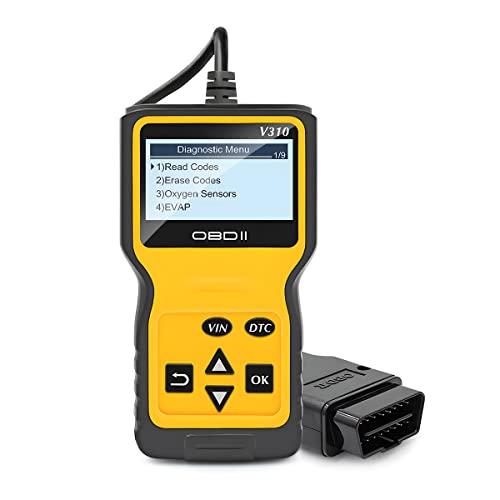
AUCELI OBD2 Scanner Code Reader

TOPDON AL400 OBD2 Scanner

KINGBOLEN Ediag Elite OBD2 Scanner

FOXWELL NT614 Elite OBD2 Scanner
More Details On Our Top Picks
TOPDON’s AD600S sits in the zone where a weekend mechanic starts wanting more than plain code reading. Its reset list covers common maintenance jobs, so you can handle service work without juggling separate tools.
The trade-off is the learning curve, since a tool with this many functions asks for more menu time than a basic reader. For home garages that deal with ABS, SRS, or transmission lights along with routine resets, that depth makes sense.
What We Like
- Broad reset coverage helps you keep up with oil, brake, battery, steering angle, DPF, TPMS, and throttle-related tasks in one unit.
- CAN FD support matters on newer vehicles that use a faster communication format, so you are less likely to outgrow it quickly.
- Injector coding can save time after certain repairs, especially on vehicles that need component matching instead of a simple code clear.
- The lifetime update promise reduces the usual annoyance of outdated software on a tool you plan to keep in the garage.
Areas To Watch
- Its range is useful, but the extra menus will feel heavier than a simple reader for quick driveway checks.
- The feature set makes more sense for cars with repeated maintenance needs than for occasional light-only scans.
- Storage and cable handling matter more here, because a richer handheld tool usually ends up living in a drawer with other repair gear.
Feature Snapshot
Built With In Mind
You’ll get the most from this tool in a home garage where one vehicle can throw several different service reminders over the year. It also suits a more hands-on owner who wants to stay ahead of maintenance instead of waiting for a shop visit.
Where A Sibling Pick Shines
TOPDON AL400 OBD2 Scanner suits you better for quick engine-light checks and simpler menus, especially for a household that wants a straightforward first tool.
The AD200 keeps things simple, and that’s its main appeal. It suits the sort of garage session where your main job is reading a fault code, clearing it after a fix, and getting back on the road without extra menu digging.
Compared with the more feature-heavy TOPDON AD600S, this one is easier to hand to a first-time user. The honest read is that you give up advanced service functions, but you also avoid paying for features you may never touch.
Strong Points
- Its straightforward code-reading approach lowers the barrier for first-time scanner use.
- Support for vehicles from 1996 onward gives it wide day-to-day relevance.
- Clear fault-code work fits quick driveway checks and post-repair confirmation.
Small Caveats
- It stays in the basic-reader lane, so deeper system access is not the point here.
- You may outgrow it faster than the TOPDON AL400 or FOXWELL NT614 Elite if you start doing more maintenance jobs yourself.
Quick Facts
Who Should Grab It
Newer DIY owners and occasional garage users will get the most from this one, especially around a single check engine light.
Another Choice May Suit
KINGBOLEN Ediag Elite OBD2 Scanner makes more sense for you if you want bidirectional control and app-based flexibility on a phone or tablet.
This is the tool for a more advanced garage workflow. Bidirectional control means you can send commands to certain vehicle components, not just read stored faults, and that changes the whole feel of the diagnostic session.
Compared with the AD600S, the AD800BT 2 goes deeper on active testing and broader reset coverage, so it suits owners who handle more than routine maintenance. The catch is that this level of capability asks for patience, since the menu structure and vehicle-specific functions take some getting used to.
Reasons To Buy
- Bidirectional testing opens up more advanced diagnosis than a basic reader can manage.
- More than 28 reset services gives you room for varied repair and maintenance jobs.
- FCA AutoAuth support helps with certain vehicle access needs that can complicate diagnostics.
- CAN FD support keeps it relevant for newer platforms.
- The two-year update window helps extend the useful life of the software.
Worth Noting
- Its depth makes it less friendly for anyone who only wants quick code checks.
- Advanced function sets can feel like overkill in a one-car household with basic maintenance needs.
- Staying organized matters, because a tool like this tends to live beside other specialized repair gear and paperwork.
Core Details
Right Fit For
You’ll appreciate this most in a serious DIY garage or small repair space where active testing saves time and guesswork.
Look Elsewhere When
AUCELI OBD2 Scanner Code Reader fits better for simple code-and-clear jobs where you want the least possible setup.
AUCELI keeps the formula direct, which is exactly why a lot of first-time scanner users gravitate toward this class of tool. No app pairing and no extra layers, just the sort of setup that makes sense beside a driveway repair or a quick pre-trip check.
Compared with the higher-function TOPDON and FOXWELL units, this one is about speed and simplicity rather than system depth. You may find the yellow housing easier to spot in a crowded toolbox, which sounds minor until you’re looking for it under a hood in poor light.
Best Bits
- Read-and-erase basics are quick to grasp, even for people new to OBD2 tools.
- Emissions monitor status checking helps you confirm whether a car is ready for inspection-related checks.
- The 16-pin OBD2 connector keeps physical hookup simple on compatible vehicles.
- No extra app requirement keeps setup light and uncluttered.
Points To Note
- Its job is narrow, so don’t expect the reset depth of the TOPDON AD600S.
- Compatibility still depends on OBD2 vehicle support, so older nonstandard vehicles are a poor fit.
- The bright shell helps with visibility, but you’ll still want a clean storage spot to keep the cable from getting tangled.
Technical Sheet
Whose Shelf It Belongs On
This belongs with commuters, first-time DIY owners, and anyone who wants a compact answer to a check engine light.
Swap It Out When
TOPDON AL400 OBD2 Scanner is the better fit for you if you want a more polished display and built-in DTC lookup for slightly faster interpretation.
The AL400 feels like the sort of scanner you keep within arm’s reach because it removes friction from small jobs. Its color screen and button layout make more sense than bare-bones units when you’re standing in a dim garage with one hand on the tool and the other on the hood latch.
Compared with the AUCELI reader, this one leans a little more toward guided use thanks to DTC lookup and freeze-frame data. DTC means diagnostic trouble code, the stored fault code a vehicle logs when something needs attention, and that extra context is useful for people who want a little guidance without moving into advanced diagnostics.
Upsides
- DTC lookup helps you make quicker sense of fault codes.
- Freeze-frame data gives context from the moment a fault was recorded.
- One-click I/M checks are handy before inspection-related errands.
- The 2.4-inch color screen is easier to read than many tiny monochrome displays.
- Lifetime updates help keep a basic scanner from aging out too quickly.
Minor Gripes
- The smaller display is practical, but it still won’t feel spacious beside tablet-style tools.
- It stays focused on OBD2 basics, so deeper system work belongs to the AD600S, AD800BT 2, or FOXWELL NT614 Elite.
- Button navigation is straightforward, though a cluttered glove box can make any handheld harder to keep organized.
Details At A Glance
Best Suited To
You’ll like this most for regular driveway maintenance, especially beside a daily driver that occasionally throws a fault light.
Reach For A Different Pick When
FOXWELL NT614 Elite OBD2 Scanner fits better for you if you want multi-system coverage and more service functions in one handheld unit.
The Ediag Elite takes a modern route by moving diagnostics onto your phone or tablet. That setup suits a garage that already lives around mobile devices, and it keeps the handheld clutter down on a crowded workbench.
Compared with the TOPDON AD800BT 2, this one leans into Bluetooth convenience and app-driven use rather than a traditional standalone form factor. The trade-off shows up in your own workflow, since you’ll need to be comfortable managing diagnostics through iOS or Android instead of a separate dedicated screen.
Bright Spots
- Bluetooth design keeps the scanner itself compact and easy to stow.
- Bidirectional control gives it real depth for active troubleshooting.
- More than 15 reset functions cover common maintenance jobs.
- Full-system coverage goes beyond engine-only checking.
- Lifetime updates make the no-subscription angle more appealing over time.
Areas To Watch
- App-based use depends on your comfort with a phone or tablet during repairs.
- Wireless setup can feel less immediate than plugging in a simple handheld code reader.
- Keeping the dongle and cable tidy matters, especially in a glove box that already holds charging cords and paperwork.
Core Details
The Right Fit
You’ll get the most out of this choice in a tech-friendly garage where app control feels natural and space is tight.
A Better Fit Elsewhere
TOPDON AD600S OBD2 Scanner suits you better if you want a more traditional handheld unit with a dedicated screen and a wider reset list.
FOXWELL’s NT614 Elite lands in the middle ground that many home mechanics actually need. It gives you more than a basic reader without jumping all the way into the deepest professional class, and that balance is useful in a garage that sees varied maintenance throughout the year.
Compared with the AD200 and AUCELI units, it adds meaningful system coverage and reset functions, which is a real step up for anyone chasing more than one dashboard warning. The only real catch is that more capability also means more menus, so it suits owners who are comfortable spending a little time learning the layout.
Positives
- Four-system coverage reaches beyond engine-only scanning.
- Five reset functions cover several routine repair tasks.
- ABS bleeding support gives it stronger service value than basic readers.
- Reads and clears engine, ABS, SRS, and transmission faults.
Points To Note
- It is more involved than a simple code reader, so casual users may not use every feature.
- The broader function set makes the learning curve steeper than the AUCELI or TOPDON AL400.
- Keeping the unit in a dedicated case or drawer helps preserve it in a busy tool area.
Core Details
Who Will Love This
This fits hands-on owners who want a broad but still manageable tool for recurring repairs on more than one vehicle.
Skip It When
A-Premium AD200 Professional OBD2 Scanner is the cleaner choice for you if all you want is fast engine-code reading with very little setup.
How To Choose The Right Scan Tools
Match The Tool To Your Repair Habit
Basic code readers suit you when the job starts and ends with a check engine light. More advanced scan tools pay off once you regularly reset service lights, look at ABS or transmission faults, or work on vehicles with newer communication formats such as CAN FD.
Think about how often you open the hood and how far you want to go after a code appears. A driveway user who wants fast answers needs a very different tool from someone who handles brakes, batteries, and throttle work more often.
Pay Attention To System Depth
Engine-only tools are fine for many households, but they stop short of the detail you get from multi-system scanners. A four-system or full-system tool gives you more context, which helps when a warning light turns into a messy chain of symptoms.
That extra depth usually costs more because the hardware and software have to speak to more vehicle modules. The trade-off is complexity, so a richer menu makes sense only when you’ll actually use it.
Look At Reset Functions And Access
Reset services matter more than many shoppers expect. Oil, brake, battery, steering angle, DPF, TPMS, and throttle resets can turn a scanner from a code reader into a true garage helper.
Bidirectional control takes that further by letting you command certain systems during diagnosis. It’s a strong fit for hands-on owners, while casual users are often happier with a simpler handheld that boots fast and stays obvious.
Don’t Ignore The Interface
Buttons, screen size, phone pairing, and menu layout shape the day-to-day experience. A 2.4-inch color screen can be enough for quick work, while Bluetooth app-based tools suit people who prefer using a phone they already know.
The honest read is that convenience beats raw feature count for many garage tasks. A tool that feels easy in your hand gets used more often, and that matters more than a long feature list on paper.
Things Worth Knowing First
Common Shopping Slip Ups
A common mistake is paying for advanced resets that never get used. Another is assuming every vehicle works the same, even though model year and protocol support still matter a lot in this category.
Keep your use case front and center. A simple code reader is usually enough for light troubleshooting, while more advanced work calls for deeper system coverage and a clearer display.
What The Higher Tier Buys
More money usually goes into bidirectional control, broader reset menus, and wider system access. You also tend to get better software support, which matters once vehicle electronics keep changing year by year.
That upgrade makes sense for home mechanics who handle repeated repairs or anyone working on more than one vehicle. For a light-duty garage, the extra capability can sit unused, which is where a simpler tool still makes sense.
Frequently Asked Questions
What does OBD2 mean?
OBD2 stands for onboard diagnostics, the standard system many cars use to report fault codes. It helps you read warning lights and basic vehicle data through a scan tool.
Do you need Bluetooth for a scan tool?
No, Bluetooth is only one setup style. A handheld scanner with its own screen works well when you want a self-contained tool.
What is a reset service on a scan tool?
A reset service clears or recalibrates a maintenance-related function after a repair. Common examples include oil, brake, battery, and steering-angle tasks.
Is a basic code reader enough for most cars?
It’s enough for many check engine light jobs. Once you start dealing with service resets or multiple warning systems, a more advanced tool makes life easier.
Why do some scan tools cost more?
You usually pay for deeper vehicle coverage, extra reset functions, and bidirectional control. Better software support and more polished screens also add to the cost.
Closing Thoughts
Your best scan tool depends on how deeply you want to work on your own vehicle. A simple reader keeps warning-light checks easy, while a feature-rich unit pays off once you start handling resets and multi-system diagnostics. The strongest choice is the one that fits your garage habits, your comfort level, and the amount of detail you actually need. Pick that match, and the tool will feel useful instead of complicated.