


A stripped screw brings a project to a standstill. The wrong extractor snaps off inside the head, the right one walks it out in seconds, and the difference comes down to matching tool geometry, steel grade, and drive method to the fastener you’re fighting. This roundup gathers nine screw extractors built for the most common failure modes: rounded Phillips heads, rusted hex bolts, broken-off studs, and seized lug nuts on a car.
You’ll find purpose-built pliers for tight electronics work, impact-rated socket sets for auto repair, and multi-piece kits pairing left-hand cobalt drill bits with spiral extractors for the worst stripped fasteners. Each pick gets a real-world read on who it’s for and where it falls short, so the choice lines up with the jobs in front of you.
A Side-By-Side Look
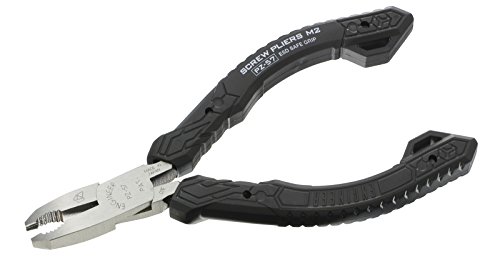
ENGINEER PZ-57 M2 Screw Extractor Pliers (Made in Japan)

JROUTH 14Pcs Impact Nut & Bolt Remover Kit

XEWEA 25Pcs Screw Bolt Extractor Set

XEWEA 14PCS 3/8″ Drive Impact Bolt Extractor Set

WYBENZ 15PCS Impact Bolt Lug Nut Remover Kit

XEWEA 49PCS Screw & Bolt Extractor Set with Drill Bits

WYBENZ 17Pcs Multi-Spline Screw Extractor Kit
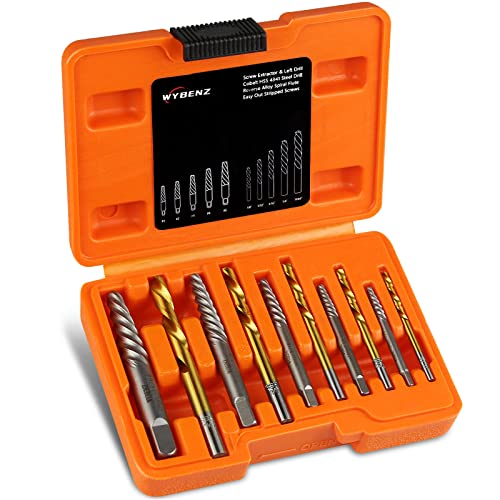
WYBENZ 14Pcs Screw Extractor with Left Hand Drill Bits

Mayhew Tools 36978 Metric Screw Extractor (Black Oxide)
Taking A Closer Look At The Options
The ENGINEER PZ-57 doesn’t look like a typical extractor, and that’s the point. Where the other picks in this roundup are drill-driven or impact-driven sockets, this is a dedicated pair of pliers with a narrow tip that reaches recessed screws other tools can’t access. The slim profile makes it a natural fit for laptop repair, RC vehicle work, and any job where the screw sits inside a plastic housing or near delicate components.
ESD-safe elastomer grips (specially formulated to resist static discharge that could damage sensitive electronics) give it a comfortable, anti-slip feel in hand. The jaws carry both vertical and horizontal serrations, so the bite on a stripped head stays firm as you twist. Compared to the socket-based picks below, this is a one-handed tool you reach for when the fastener lives in a spot a drill simply can’t go.
Positive Points
- Slim jaw geometry reaches recessed screws a drill or socket cannot access
- ESD-safe handles protect circuit boards and sensitive components during work
- Cross-serrated jaws grip both slotted and Phillips-style stripped heads
- Compact size fits easily into a laptop bag or small electronics kit
Soft Spots
- Limited to smaller screws, so rusted automotive bolts fall well outside its range
- Single-size tool, unlike the multi-piece sets that cover a broader fastener range
- Not designed for use with power tools, restricting its role to manual extraction
Key Specs
Whose Bench It Belongs On
Electronics technicians, RC hobbyists, and anyone working on laptops, game consoles, or small appliances where a stripped screw hides in a tight corner.
Skip It When
A broken or rounded automotive fastener is the problem, since the JROUTH 14Pcs Impact Nut & Bolt Remover Kit handles rusted lug nuts with far more authority.
The JROUTH 14-piece set is built for the jobs that ruin a normal socket. Reverse helical spiral flutes (the spiral-cut grooves cut into the socket’s interior) bite into rounded heads and dig deeper as torque climbs, so a stripped lug nut that has fused to a wheel stud has a real chance of coming out. The chrome-molybdenum steel body (a tough alloy steel with chromium and molybdenum added for strength and wear resistance) takes the hammering of an impact wrench without cracking.
Coverage spans 1/4″ through 3/4″ with both SAE and metric sizes, plus a 3/8″ hex adapter that turns the set into a system you can throw on a ratchet, an impact gun, or a tap handle. For weekend mechanics facing a stubborn drain plug, a rounded caliper bolt, or a seized wheel stud, this is the kit that earns its keep on the first call.
Useful Touches
- Reverse spiral flutes bite deeper as torque increases, improving grip on damaged heads
- Chrome-molybdenum steel construction handles repeated impact wrench use
- Combined SAE and metric sizing covers most North American and import fasteners
- Sandblasted finish improves wear resistance over the life of the sockets
Trade Offs
- At 14 pieces, the kit is overkill for light household fixes like a single stripped screw
- Laser-etched size markings can wear down with heavy shop use over time
Who It Suits Best
Home mechanics and DIY auto enthusiasts who regularly face rusted or rounded bolts and need a single kit that covers both standard and metric fasteners.
Not Your Match When
Smaller electronics screws are the target, since the ENGINEER PZ-57 M2 Screw Extractor Pliers handle that scale with much finer control.
Range is what the XEWEA 25-piece set sells, and the size spread here is genuinely wide. Multi-spline extractors cover everything from 5/16″ up to 7/8″, filling the gaps left by smaller 13- or 14-piece kits. For shops and serious DIYers who never know what size fastener will show up next, that coverage removes the guesswork of reaching for the right tool.
The body is forged chromium-molybdenum steel with a manganese phosphate coating, a conversion finish that bonds to the steel and slows surface corrosion in humid garages and shop environments. Compared to the JROUTH 14-piece set above, this one trades some compactness for a larger size window, so you are less likely to encounter a stripped fastener that falls outside what the kit can grab.
Why It Works Well
- 25 sizes cover nearly any standard fastener you are likely to encounter
- Manganese phosphate coating protects against shop humidity and rust
- Multi-spline design grips rounded hex and Torx-style heads
- Solid storage case keeps the full size range organized in a drawer
A Few Limitations
- Larger kit size means more pieces to sort through on simple jobs
- Designed for hand tools, not impact wrench use
Feature Card
Best Suited To
Small repair shops, maintenance crews, and DIYers with a deep fastener inventory who want one kit that handles almost anything.
Look Elsewhere When
Most of your work is automotive and you need impact-rated sockets, where the XEWEA 14PCS 3/8″ Drive Impact Bolt Extractor Set fits a ratchet or impact gun more cleanly.
The XEWEA 14-piece impact set slots straight onto a 3/8″ drive ratchet or impact wrench, so it works the way most mechanics already work. Internal threads with reverse spiral flutes (corkscrew-shaped grooves cut in the opposite direction of normal threads) bite down as you turn counterclockwise, and the higher the torque, the deeper the bite. That is the mechanism that lets a pneumatic impact gun crack loose what a hand tool cannot.
For rusted undercarriage bolts, seized oxygen sensors, and rounded axle nuts, this kit covers the most common sizes you’ll hit on a passenger car or light truck. The chrome-molybdenum steel body handles the repeated hammering of an impact gun without splitting. Versus the JROUTH kit reviewed earlier, sizing here leans more toward the sizes auto work actually demands.
Key Advantages
- 3/8″ drive fits standard ratchets and most impact wrenches
- Reverse spiral flute design grips tighter under increased torque
- Chrome-molybdenum steel construction survives impact-grade use
Honest Caveats
- Requires a 3/8″ drive tool you may need to supply separately
- Less versatile on smaller screws and electronics fasteners
Made For
Mechanics and home auto enthusiasts who already own a 3/8″ impact wrench and want a purpose-built set for seized undercarriage hardware.
A Better Fit Elsewhere
Cross-size coverage matters more than impact rating for you, in which case the XEWEA 25Pcs Screw Bolt Extractor Set spans a much wider size window.
The WYBENZ 15-piece set earns its workshop label with a thoughtful accessory kit. Thirteen extractor sockets cover 1/4″ through 3/4″ in both SAE and metric, while the included 3/8″ hex adapter and knockout pin handle the transition between ratchet and impact, and the cleanup of stubborn studs afterward. The gray oxide finish is a different surface treatment than the JROUTH set’s sandblasted look, and it serves a similar role in slowing corrosion during long shop life.
The knockout pin is the piece most competing kits skip, and it is genuinely useful when an extractor walks the bolt out but leaves the threaded stud stuck in the hole. Tapping the pin through the back of the extractor drives the broken stud out cleanly, saving a trip to the parts store. For a working garage where the same kit sees daily use, that one accessory often decides the choice.
Positive Takeaways
- Knockout pin drives out studs that the extractor itself can’t fully clear
- Gray oxide finish resists corrosion in humid shop environments
- 13 socket sizes plus 3/8″ hex adapter cover most workshop extraction jobs
Practical Considerations
- Size range overlaps with the JROUTH set, so owning both may be redundant
- Storage case is functional but minimal compared to higher-end kits
Quick Facts
Right Fit For
Garage owners and small-shop mechanics who need a single kit that handles both extraction and follow-up stud removal.
Swap It Out When
You are working on finer fasteners or smaller projects, in which case the ENGINEER PZ-57 M2 Screw Extractor Pliers deliver much better access in tight quarters.
When a screw head is so damaged that a socket extractor has nothing to grip, the answer is usually to drill into the broken fastener first. The XEWEA 49-piece set combines 16 left-hand cobalt drill bits, 13 multi-spline screw extractors, 6 spiral screw extractors, and 13 bolt extractors into one case, covering both the drilling step and the extraction step in a single grab. Cobalt drill bits hold their edge in tough alloy steel where standard HSS (high-speed steel) would walk or dull quickly.
For severely damaged fasteners, the left-hand (counterclockwise-cutting) drill bit does the heavy lifting: as soon as the bit catches, the broken screw often backs out on its own, no extractor needed. The note in the source data is worth respecting here, since cobalt drill bits should not be used on stainless steel, where they can work-harden the surface and make the problem worse. For carbon steel and alloy fasteners, the setup is hard to beat.
Benefits That Matter
- Combines left-hand drill bits and extractors in a single system
- Cobalt drill bits resist dulling in hardened alloy fasteners
- 49 pieces handle nearly any stripped or broken fastener scenario
Some Limits To Know
- Cobalt drill bits should not be used on stainless steel, limiting some applications
- Larger case size means more to keep track of in a crowded toolbox
Spec Overview
Perfect Match For
Restoration specialists and serious DIYers dealing with seized, broken, or partially drilled fasteners where standard sockets cannot grip.
Reach For A Different Pick When
Most of your work is automotive and you need impact-rated sockets, in which case the JROUTH 14Pcs Impact Nut & Bolt Remover Kit is purpose-built for that load.
The WYBENZ 17-piece set stands out for what comes in the box beyond the extractors themselves. Thirteen multi-spline extractors in 1/8″ to 1/2″ sizes pair with a 3/8″-1/4″ hex adapter, a 3/8″-1/2″ impact adapter, a 3/8″ universal joint, and a 3/8″ drive extension bar. That adapter spread lets the kit move between a standard ratchet, an impact wrench, and hard-to-reach angles without buying extra parts.
The smaller size window here targets household and small-engine work rather than full automotive repair. Compared to the XEWEA 25Pcs Screw Bolt Extractor Set, this kit trades raw size count for the accessories that make those sizes usable in real shop scenarios. For someone who uses a mix of hand tools and a drill, the universal joint alone is a quiet win.
The Value In It
- Includes universal joint and extension bar for hard-to-reach fasteners
- Both 1/4″ and 1/2″ adapters expand compatibility with existing tool drives
- Chrome-molybdenum steel body holds up under repeated extraction work
Soft Spots
- Maximum 1/2″ size limits use on larger automotive fasteners
- More pieces to organize than a simple 13-piece socket set
Who Will Love This
DIYers and home repair enthusiasts who tackle a mix of appliance fixes, furniture assembly corrections, and small-engine repairs.
Consider Something Else When
The work leans toward heavy auto repair, since the XEWEA 14PCS 3/8″ Drive Impact Bolt Extractor Set is built specifically for impact-grade rusted fasteners.
The WYBENZ 14-piece set is a smaller, friendlier version of the drill-and-extract concept behind the XEWEA 49-piece set reviewed earlier. Seven HSS (high-speed steel) left-hand drill bits pair with seven alloy steel bolt extractors in a portable case that fits in a kitchen drawer. The 135° drill point angle is worth noting, since that geometry centers the bit on a damaged head and reduces the wandering that ruins broken-fastener extractions for first-timers.
For someone just starting to learn fastener extraction, the kit’s smaller piece count and included storage case keep the learning curve manageable. The trade-off is reach: you are not going to crack loose a 3/4″ axle nut with this set. Where it shines is the broken furniture bolt, the stripped lawnmower screw, and the seized cabinet hinge that has resisted three flathead attempts.
Notable Gains
- 135° drill point centers cleanly on damaged heads for easier hole starting
- Compact case keeps pieces organized and prevents loss between uses
- HSS left-hand drill bits handle the most common household fastener steels
Honest Caveats
- Limited size range means it cannot back up larger jobs
- Not designed for impact wrench use, restricting its role to drill-driven extraction
Who Should Grab It
Home repair beginners and apartment dwellers who want one compact kit for the typical stripped screw around the house.
Another Choice May Suit
Range matters more than portability, in which case the XEWEA 25Pcs Screw Bolt Extractor Set covers a much wider fastener spectrum at the cost of bulk.
The Mayhew 36978 is the outlier in this list, since it ships as a single extractor rather than a multi-piece kit. For a working shop that already owns a drawer of extractors and just needs one well-made metric replacement, the value proposition is different. The hardened steel edge cuts into a damaged screw shaft rather than gripping the head, which is sometimes the only path when the head has been drilled off or sheared away entirely.
The black oxide finish (a chemical conversion coating that adds mild corrosion resistance and reduces glare) is industry-standard for hand tools, and the company has been making punches, chisels, and extractors in the United States since 1856. That kind of lineage matters for shops that replace one worn extractor at a time rather than buying a full kit every few years. For most DIYers, the single-piece format is a hard sell, but for a professional who already knows the size, the build quality speaks for itself.
Everyday Advantages
- Hardened steel edge cuts into screw shafts where head grip is impossible
- Black oxide finish adds mild corrosion resistance during shop storage
- USA-made construction supports consistent quality control
- Fluted cutting edges designed specifically for damaged fastener removal
Points To Keep In Mind
- Single size and piece, so you may need additional extractors to cover a full range
- Higher cost per piece than multi-size kits, depending on the listing
Spec Rundown
Built With In Mind
Professional mechanics and industrial maintenance crews who want a single heavy-duty extractor to fill a specific size gap in their existing tool inventory.
Where A Sibling Pick Shines
You are building a kit from scratch and need a range of sizes, in which case the Mayhew-style approach makes less sense than the multi-piece XEWEA or JROUTH sets reviewed above.
What To Weigh Before Choosing Screw Extractors
Match The Tool To The Fastener
Screw extractors fall into three broad families, and the right pick depends on the job. Pliers-style extractors like the ENGINEER PZ-57 reach into places sockets cannot, which makes them ideal for electronics and small appliances. Socket-style extractors with reverse spiral flutes grip rounded hex and Torx-style heads and pair with ratchets or impact wrenches for automotive and machinery work. Drill-and-extract kits pair left-hand drill bits with extractors for fasteners too damaged for a socket to find purchase on.
The size window also matters. A 13-piece household kit covers furniture and appliance screws but runs out of reach on a 3/4″ lug nut. A 25-piece shop kit covers most fasteners but takes up more drawer space. Picking the family that matches your common work avoids owning three kits and using only one.
Steel Grade And Drive Method
Chrome-molybdenum steel handles impact wrench use without cracking, and the JROUTH and XEWEA 14-piece impact sets both use it. Cobalt drill bits, like the ones in the XEWEA 49-piece set, hold an edge in tough alloy steel where HSS bits dull quickly. For a one-time household fix, HSS is enough. For daily shop use, the upgrade to chrome-moly or cobalt pays back in fewer broken bits and faster extractions.
Drive method is the other axis to consider. 3/8″ drive sets work with most ratchets and impact wrenches, while 1/2″ drive sets target larger truck and equipment work. Smaller electronics work doesn’t use a drive at all, which is why the ENGINEER PZ-57 pliers fill a niche the socket sets cannot.
Coatings And Corrosion Resistance
Shop humidity and garage temperature swings punish bare steel. Manganese phosphate, gray oxide, and black oxide finishes all slow surface corrosion during long storage, and the difference shows up over years rather than weeks. For a kit that lives in a truck or unheated garage, a coated finish is worth seeking out. For a kit stored in a climate-controlled shop, the coating is a quieter benefit.
Accessories That Change The Job
Adapters and knockout pins look like small add-ons, but they change what a kit can actually do. A 3/8″ hex adapter turns a socket set into a system that fits multiple drives. A knockout pin drives out the broken stud that the extractor left behind. A universal joint reaches fasteners a straight socket cannot. The WYBENZ 15-piece and 17-piece sets both lean into accessories, and they are often the picks that solve problems a larger but simpler kit cannot.
Key Considerations Across These Picks
Common Shopping Slip Ups
The most frequent mistake is buying a kit that matches the wrong drive size. A 1/2″ drive extractor is useless without a 1/2″ drive ratchet or impact wrench, and a kit marketed for automotive use may not include the adapter you need. The reverse mistake is buying a 1/4″ or 3/8″ drive set and trying to crack loose a fastener that really wants 1/2″ drive torque. Matching the drive to your existing tool collection saves frustration.
Another common trap is buying a multi-piece kit when a single-purpose tool would do the job. The ENGINEER PZ-57 pliers extract one screw at a time, but for laptop and RC work, they do it faster than any socket set. Picking the smallest tool that handles the common job keeps your kit focused.
Where The Extra Money Goes
Higher-tier extractors earn their cost in three places: steel grade, coating, and accessory count. A chrome-moly or cobalt body survives the hammering an impact wrench delivers, and a manganese phosphate or oxide coating holds up to years of shop storage. A kit with adapters, a knockout pin, and a universal joint removes the need to buy those parts separately.
The upgrade from a basic 13-piece set to a 25-piece or 49-piece set makes sense when the work spans fastener sizes and types. For a single-purpose task, the upgrade is harder to justify. The honest read is that pros and frequent users feel the difference in time saved and bits not broken, while occasional users often do fine with the simpler kits.
Frequently Asked Questions
What size screw extractor do I need?
Match the extractor to the fastener size you’re pulling, and pick a kit that covers the range of fasteners you actually work on. For household screws, 1/8″ to 1/2″ covers most cases. For automotive work, 1/4″ to 3/4″ handles common lug nuts, caliper bolts, and axle nuts. Buying one extractor for one job is rarely worth it, since you often encounter a different size the next time around.
Can screw extractors damage the surrounding material?
Yes, especially when drilling. A left-hand drill bit that walks off-center can chew into surrounding threads or housing, and a too-large extractor can mushroom the fastener head and make extraction harder. Centering carefully, using a 135° point drill bit, and starting with the smallest extractor that fits all reduce the risk. For electronics and delicate housings, pliers-style extractors avoid the drilling step entirely.
How do left-hand drill bits work for extraction?
A left-hand (counterclockwise) drill bit cuts in the same direction you turn to remove a screw. Once the bit catches and spins the broken fastener, the broken screw often backs out without needing a separate extractor. This is why the XEWEA 49-piece set pairs cobalt left-hand drill bits with extractors: the drill often does the job alone, and the extractor is the backup when it doesn’t.
Are impact-rated extractors worth the extra cost?
For anyone using an impact wrench, yes. Standard extractors can shatter under the hammering of a pneumatic impact gun, and a broken extractor inside a fastener turns a hard job into a much harder one. Chrome-molybdenum steel and proper impact-rated construction handle the load without failing. For hand-ratchet use only, impact-rated steel is less critical.
Can I reuse a screw extractor after a successful extraction?
Most spiral and socket extractors can be reused several times if the flutes remain sharp and the body is not deformed. The first extraction usually dulls the cutting edges slightly, so reusing an extractor on a softer screw is fine, while reusing one on hardened steel may produce less grip. Replacing heavily used extractors periodically keeps the kit performing the way it did when new.




