


A wobbly deck frame usually traces back to one thing: the wrong fastener. Most DIYers underestimate how much a screw’s thread pattern, coating, and head style affect long-term hold, especially in pressure-treated lumber that swells, shrinks, and fights back. The picks below cover the common scenarios you’d actually face: standard deck boards, structural framing, trim work, and a couple of metal-flashing odd jobs. Match the screw to the job, and the deck tends to behave for a decade or more.
How The Shortlist Stacks Up

GRK Fasteners R4#8 x 1-1/4″ Screws 110CT
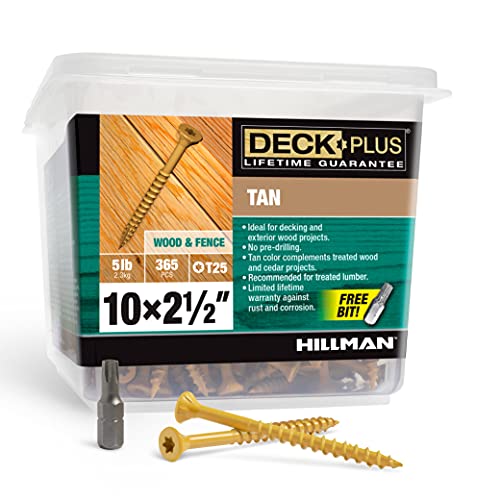
Deck Plus Deck Screws #10 x 2-1/2″ 365-Pack Tan

Deck Plus Wood Screws #8 x 2″ 625-Pack Tan

Deck Plus Deck Screws #10 x 3″ 310-Pack Green
Simpson Strong-Tie SDWS22312DBB Outdoor Accents Screw

Wensilon 300-Pack #8 x 3/4″ 410 Stainless Truss Screws

Wensilon 300-Pack #8 x 3/4″ Hex Washer Self-Drilling Screws

LIONMAX Deck Screws #10 x 3″ 25 lb Tan Bucket
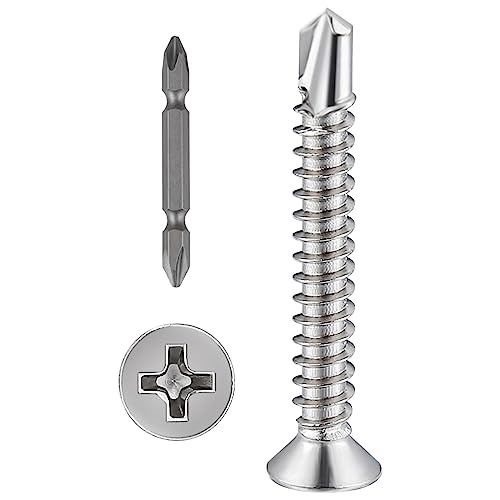
Wensilon 250-Pack #8 x 1-1/4″ 410 Stainless Flat Screws
The Strengths Of Each Pick
The GRK R4 sits in that sweet spot where the box opens, the bit fits, and the screw bites without a starter hole. Its zip tip cuts straight into softwood, which keeps a small deck repair from turning into a second trip for drill bits. For most backyards where you’re fastening blocking or sistering a joist, the 1-1/4″ length lands just right without poking through the back face.
The star drive (a six-point recess shaped like a six-pointed star, also called Torx) grips a driver bit firmly, so you can sink screws at awkward angles without the bit walking out. Compared to a standard Phillips screw, you may find the head takes a little more force to seat, but the trade-off is a stripped head far less often. It works equally well indoors on trim or outside on a fence rail, which makes the 110-count box a versatile thing to keep on the shelf.
Everyday Wins
- Zip tip cuts its own starting hole in most softwoods, saving a pilot-hole step
- Star drive holds the bit under load, reducing the chance of cam-out (the bit slipping out of the head and chewing it up)
- Short 1-1/4″ length is ideal for blocking, cleats, and light framing without blow-through
- Rated for both interior and exterior applications, so the box pulls double duty on the jobsite
Worth Noting
- Limited to softwood framing at this length, not the right call for thick structural members
- Coating is built for general use, so a permanent coastal deck may need a heavier-duty option
Who It Suits Best
Handy homeowners knocking out small deck repairs, blocking, and quick framing fixes around the yard.
Look Elsewhere When
You need a fastener for a full 5/4 deck board surface, where the Deck Plus #10 x 2-1/2″ Tan box covers more ground per pound.
This is the workhorse box most folks end up buying after the first one runs out. The 2-1/2″ length matches 5/4 deck boards (the slightly thicker nominal decking sold at lumberyards) and most standard framing into 2x joists, and the tan epoxy blends with cedar-toned lumber better than a bright silver screw. The coarse thread and self-starting point let you drive without a separate pilot hole on most cuts.
The four-layer epoxy coating is the detail that makes a difference three winters in, when cheaper screws start bleeding rust down the face of the board. Pressure-treated lumber, which carries chemical preservatives that corrode standard steel, plays much nicer with this kind of coated screw. Compared to the GRK R4 above, this is the heavier, deck-board-specific option.
Real-World Strengths
- 2-1/2″ length threads fully through a 5/4 board and bites into a 2x joist for a solid hold
- Tan epoxy finish blends with warm-toned lumber and resists corrosion from treated wood
- Self-drilling tip skips the pilot-hole step on most cuts, which speeds up a big deck noticeably
- Star drive resists cam-out when you’re driving hundreds of screws in a row
Trade Offs
- Tan color may look mismatched on gray composite or PVC deck boards
- 5 lb box of 365 pieces covers a medium-sized deck; large re-decking jobs may need a second box mid-project
Key Specs
Made For
Homeowners building a standard pressure-treated or cedar deck with 5/4 nominal boards over 2x joists at 16″ centers.
Reach For A Different Pick When
You’re fastening thick 2x nominal deck boards on heavy framing, where the Deck Plus #10 x 3″ Green version drives deeper and holds more securely.
Once the deck boards are down, the fascia and the picture-frame border need a smaller, neater screw that won’t split the thinner stock. The #8 shank here is noticeably slimmer than the #10 deck-board screw, so it cuts into 1x or 5/4 trim without a pilot and leaves a tighter head profile. Tan again keeps the visual blend with cedar-tone lumber.
For most deck trim, 2″ is the right reach. You sink into the rim joist without bursting the back of the fascia, and the head sits flush enough to be left as-is on rustic builds. The smaller shank also means less stress on composite trim material, where oversized screws can mushroom the surface.
Why It Works Well
- Slender #8 shank reduces splitting on 1x fascia and trim pieces
- 2″ length bites into rim joists without blowing through the back face of thin trim
- Tan epoxy matches cedar and pressure-treated tone nicely
- Self-drilling tip skips pilot holes on most softwood trim cuts
Points To Note
- Not a structural screw, so it doesn’t replace framing fasteners on ledger or beam work
- Smaller head can pull through very soft composite trim if over-driven
Right Fit For
Carpenters finishing a deck with cedar-tone fascia boards, picture-frame borders, or other thin trim pieces that need a tidy head.
Skip It When
You’re fastening structural members or ledger boards, where the Simpson Strong-Tie SDWS22312DBB is the right call.
When the deck boards are 2x nominal rather than the thinner 5/4 stock, you need a screw with the extra inch to bite past the board and into a 2x joist below. The 3″ length here threads deep enough to seat a true 2×6 decking board without the head spinning before flush. Green color is a deliberate choice for decks with treated-lumber that will weather to a greenish-gray hue.
The longer shank also makes this a useful option for stair treads, where the thickness of the riser demands more thread engagement. Compared to the 2-1/2″ sibling above, you trade a bit of speed for the assurance that the screw seats all the way on heavier stock. Same epoxy system, same self-starting tip, just more reach.
Where It Helps
- 3″ length sinks through 2x nominal deck boards and still bites the joist beyond
- Green tone blends with treated lumber that will weather gray-green over time
- Self-drilling point starts without a pilot in most softwood situations
- Star drive keeps the bit engaged across long driving runs
Honest Caveats
- Over-driving on thin stock is a real risk, so the depth clutch on the drill matters
- Green color may clash on cedar or naturally aged boards that don’t shift green
- 5 lb box of 310 pieces covers a smaller linear footage than the 2-1/2″ version, so plan accordingly
Best Suited To
Builders installing 2x nominal deck boards, stair treads, or thicker composite decking that needs a deep, confident bite.
Not Your Match When
You’re hanging a ledger or fastening structural hardware, where the Simpson Strong-Tie SDWS22312DBB provides a far heavier structural grip.
When the connection actually holds the deck up, the screw has to be more than a deck-board fastener. Simpson’s SDWS22312DBB at .220″ diameter is a structural-class screw designed for ledger-to-house, beam-to-post, and similar heavy framing moments. The black DB coating reads as decorative but is built for exterior exposure, and pairs with the company’s Outdoor Accents washer for a clean architectural look on visible posts.
The sawtooth point (a serrated cutting tip that chews its way through dense lumber) is what makes the install feel faster than the screw’s size suggests. You push, and the screw threads itself in with less wrist strain. Without the washer, the screw is a wood-to-wood fastener; with the washer, it becomes a finished structural connection.
Benefits That Matter
- .220″ shank diameter carries structural load, well above a standard deck screw
- Sawtooth point starts fast and reduces wrist torque on long drives
- Under-head nibs (small ridges that grip the wood surface) keep the head from skating as it seats
- Compatible with Outdoor Accents washer for a clean visible-post look
Some Limits To Know
- 50-count pack is small for a full deck, so a structural job may need multiple boxes
- Washer and decorative hardware sold separately, adding to the visible-post project cost
- Over-spec for a simple deck board surface, where a smaller screw drives faster
Quick Facts
Who Will Love This
Builders and serious DIYers handling ledger attachment, post-to-beam connections, or any structural moment where code-rated fastening matters.
Swap It Out When
You’re only fastening deck boards, where the LIONMAX 25 lb bulk bucket covers the surface at a much better per-screw cost.
Not every screw on a deck goes into deck boards. Aluminum flashing, joist tape, and thin metal trim all need a fastener that won’t corrode and won’t punch too far through. These 3/4″ 410 stainless truss-head screws solve the corrosion side. The truss head (a low-profile, wide-diameter head) spreads load on thin metal so it doesn’t dimple or tear.
410 stainless is magnetic and harder than the more common 304 grade, which gives the screw some bite when self-tapping into a thin gauge of metal. The shorter length means you fasten flashing without the point reaching the wood below, which is the common error that causes leaks later. Compared to the deck-board screws above, this is a specialized hardware-side fastener.
Real Benefits
- 410 stainless body resists rust in exterior flashing and trim applications
- Truss head spreads pressure on thin metal without dimpling the surface
- 3/4″ length stops short of puncturing the back of joist tape or flashing
- 300-pack size covers the trim scope of an average deck without waste
What To Weigh
- Not a structural screw, so it has no role in ledger or beam fastening
- Harder 410 grade is more brittle than 304, so it isn’t ideal in chloride-heavy coastal salt air
Perfect Match For
Finish-out work where you attach aluminum flashing, ledger caps, or joist tape on a deck frame.
A Better Fit Elsewhere
Joist hangers and structural metal brackets, where the Wensilon Hex Washer self-drilling screw has the geometry and tip to handle thicker metal.
Joist hangers, post anchors, and Simpson-style metal brackets all need a screw that drills its own pilot through the metal first. The TEK tip on these Wensilon screws (a notch cut into the point that acts like a tiny drill bit) bites into a standard joist-hanger gauge without a separate step. Hex washer head means the bit locks in firmly, and the integrated washer face spreads load on the metal flange.
410 stainless again for corrosion resistance, paired with the magnetic-absorbing property that lets you hold the screw on a magnetic hex driver for overhead work. The 3/4″ length lands right for typical hanger depths. Compared to the truss-head Wensilon above, this is the structural-hardware side of the same product family.
Where It Excels
- Self-drilling TEK tip cuts its own hole through standard joist-hanger gauge metal
- Hex washer head grips the bit firmly and spreads load on the bracket flange
- 410 stainless body holds up to exterior exposure on treated-lumber hangers
- Hex drive makes overhead one-handed driving noticeably easier
Points To Keep In Mind
- Short 3/4″ length is right for hangers but undersized for thicker bracket gauges
- Hex head is taller than flush-mount heads, so visible-finish hardware may not love it
Feature Snapshot
Built With In Mind
DIYers and pros attaching joist hangers, post bases, and framing connectors where the screw has to bite through the metal flange first.
Where Another Pick Suits Better
You’re fastening flat trim and flashing, where the Wensilon truss-head version sits cleaner and avoids hex-head show-through.
Re-decking a 12×20 surface burns through fasteners faster than most people budget for. The LIONMAX 25 lb bucket ships 1,700 #10 x 3″ screws in a reusable pail, which means you can run a whole deck without breaking for a second box. Three T-25 star bits ride along in the lid, a small but useful touch that saves a mid-project trip to the truck.
The tan coating is described as passing a 1,500-hour salt-spray test, which is the kind of spec language you want to see on a fastener that lives outdoors in rain and snow. T-25 star drive is the same six-point system, and it lines up with most impact-driver bit sets you already own. The 3″ length covers both 5/4 and true 2x nominal deck boards over standard joists.
Where It Delivers
- 1,700-count bucket handles a full medium-to-large deck re-skin in one buy
- Reusable pail doubles as jobsite storage and a parts tray
- T-25 star drive matches common impact-driver bit sets already in the shop
- Tan coating rated for extended salt-spray exposure on outdoor builds
Trade-Offs To Consider
- 25 lb bucket is heavy to lift and ship, so plan a delivery location with ground-level access
- Tan color won’t match gray composite or painted trim exactly
Core Details
Whose Shelf It Belongs On
Contractors and serious DIYers working a full deck surface where one bulk buy beats a stack of small boxes on cost and convenience.
Consider Something Else When
You’re only fastening trim or doing small repairs, where the smaller Deck Plus 5 lb boxes waste less.
The flat head on this Wensilon pack is the selling point for any visible finish hardware. The head sits flush or countersinks neatly into a pre-drilled recess, which matters on stainless or painted builds where a raised hex head would interrupt the line. 1-1/4″ length is a versatile in-between that handles cabinet hardware, light framing, and finish trim.
Stainless body holds up in humid and exterior environments, though the 410 grade is a step behind 304 in pure corrosion resistance. For most backyard uses the difference is academic, but coastal builds or chlorinated pool decks may want to look up. The screw is a hardware-side fastener, not a deck-board fastener, so it earns its place in the deck project for the trim and finish scope.
What Earns Its Place
- Flat head sits flush in countersunk holes, ideal for visible-finish hardware
- 1-1/4″ length is the versatile middle for trim, light framing, and finish work
- 410 stainless body resists rust in most backyard environments
- 250-pack suits small-to-medium finish scopes without a lot of leftover
Where It Is Less Suited
- 410 grade is harder but more brittle than 304 in chloride-heavy environments
- Flat-head use typically requires a countersink or pre-drilled recess, slowing the work slightly
Who Should Grab It
Finish carpenters and DIYers working on stainless or painted trim where the head needs to disappear into the surface.
Another Choice May Suit When
You’re fastening structural hardware, where the Simpson Strong-Tie SDWS22312DBB provides the load rating a flat-head trim screw can’t.
What Matters When Picking Screws For A Deck
Match the screw to the job, not the deck as a whole
Most people buy one box and hope it covers the project. The smarter move is to split the build into roles: deck boards, fascia, structural framing, and finish hardware. A #10 x 2-1/2″ or 3″ coarse-thread screw with an epoxy or polymer coating handles the deck-board surface. A thinner #8 trim screw handles fascia without splitting. A structural screw like the Simpson SDWS series handles ledger and beam work where load matters. Mixing roles wastes money and weakens the build.
Understand coatings, not just colors
The color of a deck screw is mostly cosmetic, but the coating beneath it is the actual corrosion barrier. Epoxy-coated screws are the mainstream pick for pressure-treated lumber because the coating resists the chemical preservatives in treated wood that attack plain steel. Stainless is a step up in corrosion resistance, but the grade matters: 410 stainless is harder and magnetic, while 304 is more corrosion-resistant but softer. Match the grade to your environment rather than the lowest-cost option.
Length is a function of board thickness, not preference
A 2-1/2″ screw into a 5/4 board over a 2x joist leaves about 1-1/4″ of thread in the joist, which is the rough working ratio for a confident hold. Push the screw into thicker 2x nominal deck boards and the same length runs out of bite. The general rule: at least 1″ of screw should be embedded in the receiving lumber beyond the board being fastened. Longer is rarely the problem; too short is the common failure.
Drive style changes the day’s frustration
Phillips-head deck screws (a cross-shaped recess with four contact points) strip out faster than star drive, especially under the higher torque of an impact driver. The six-point star drive keeps the bit engaged, which matters when you’re sinking 1,500 screws in a day. Bit walking is the most common time-waster on a deck project, and switching to star drive cuts that time loss in half.
Getting These Picks Right
Pitfalls Shoppers Hit
The most common move is buying bright, cheap, zinc-plated screws because the box looks similar. Zinc plating wears off in a season or two on pressure-treated lumber, and the bleeding rust down the face of a brand-new deck is the kind of regret that doesn’t sand out. Match the screw to the lumber treatment, and skip the bright-zinc shortcut on any outdoor structural connection.
A second slip is mixing fasteners between metal and wood. Joist hangers, post anchors, and flashing all want a self-drilling screw with a hex washer head or a corrosion-resistant body, not a deck-board screw. The deck-board screw will hold the hanger for a while, then corrode at the metal interface and snap under load. Keep at least one specialty box on the bench for hardware.
When Paying More Pays Off
The upgrade from a 5 lb box to a 25 lb bucket pays off the moment you have to drive more than 600 screws in a session. The bucket stays organized, the spare bits in the lid save trips to the truck, and the per-screw cost drops noticeably. The upgrade from a coated screw to a structural screw like the Simpson SDWS pays off on any ledger or beam moment where code-rated fastening is required. Neither upgrade is necessary for a single small repair, but both earn their keep on a full deck build.
Frequently Asked Questions
What size screw should I use for 5/4 deck boards?
A #10 x 2-1/2″ screw is the standard length for 5/4 nominal deck boards fastened into 2x joists. The screw should sink through the board and leave roughly an inch of thread in the joist below, which gives the joint enough hold to resist seasonal movement without the head pulling through the face of the board.
Do I really need a special screw for pressure-treated lumber?
Standard zinc-plated screws corrode quickly when used with pressure-treated wood because the chemical preservatives attack the plating. An epoxy-coated or stainless screw resists that reaction and holds up through the lumber’s lifespan. Skipping the upgrade tends to show up as rust streaks down the deck face within the first year or two.
How many screws do I need per deck board?
A standard calculation is two screws per joist per board, so a 16-foot board crossing joists at 16″ centers needs about 24 screws. A 12×20 deck at 5/4 board width typically falls in the 1,500- to 2,000-screw range, which is why a 25 lb bulk bucket covers most single-deck projects.
Can I use deck screws for structural framing like the ledger?
Standard deck screws are not rated for structural load applications. For ledger-to-house, beam-to-post, and similar connections, a structural wood screw or through-bolt is the right call. The Simpson SDWS series is one common structural option designed specifically for those high-load moments.
What is the difference between 304 and 410 stainless screws?
Both are stainless, but they behave differently. 304 is softer and more corrosion-resistant, which makes it the better pick for coastal and chloride-heavy environments. 410 is harder and magnetic, which makes it a stronger self-tapping screw but a less durable one in salt air. For most backyard decks, either grade will perform well, but coastal builds should lean toward 304.




