


Aluminum is a friendly metal to work with, but only when your fasteners cooperate. A soft alloy paired with the wrong screw leads to stripped threads, snapped heads, and joints that work loose after a season outdoors. The picks below focus on screws that bite cleanly into sheet metal and aluminum framing, resist the corrosion that comes with moisture, and stay seated under vibration. Whether you are hanging aluminum flashing, building a utility trailer, or assembling HVAC ductwork, the right thread geometry and head style make the difference between a clean job and a frustrating afternoon.
A Closer Look At The Lineup

Wensilon #8×1″ 410 Stainless Steel Truss Head Self-Tapping Screws (200pcs)
Etauwe #8 x 1/2″ Truss Head Self Tapping Screws, White Head, 100 PCS

Wensilon #8×3/4″ 410 Stainless Steel Truss Head Self-Tapping Screws (300pcs)

Wensilon #8×3/4″ Phillips Truss Head 410 Stainless Self-Tapping Screws (300 pcs)

Strong-Point #8 x 3/4″ Phillips Modified Truss Self-Drilling Tek Screw, Zinc-Plated, 100 Pack

Wensilon #6 x 3/4″ 410 Stainless Phillips Drywall Screws, Black (340 pcs)

Wensilon #8×3/4″ Hex Washer Head 410 Stainless Self-Drilling TEK Screws (300pcs)
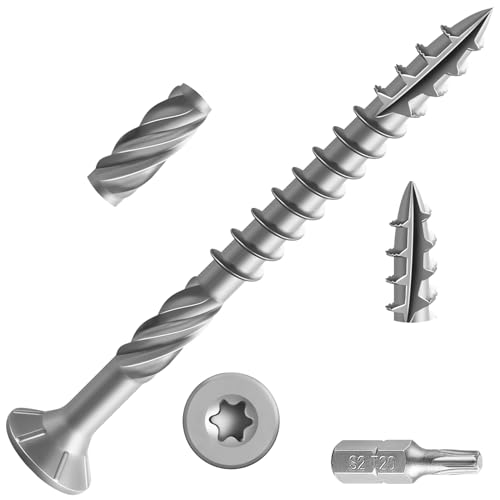
Wensilon #10 x 3″ 304 Stainless Deck Screws, Bronze Epoxy, T20 Star (58 pcs)
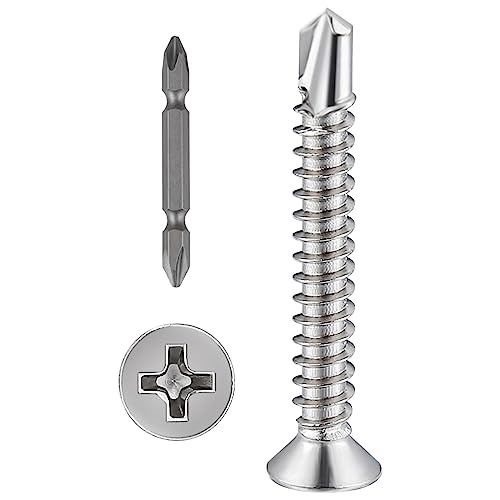
Wensilon #8×1-1/4″ 410 Stainless Flat Head Self-Tapping Screws (250pcs)
Meet The Standout Selections
A long one-inch shank and a wide truss head make these Wensilon screws a confident pick for fastening thin aluminum sheet to framing. The 410 stainless build resists rust in shop and light outdoor conditions, and the magnetic-absorbing alloy holds its shape under repeated driver use. Compared with the shorter Wensilon #8 x 3/4″ pack later in the lineup, you get a touch more reach for stacking two pieces of sheet metal.
You will feel the difference most when assembling enclosure panels, attaching aluminum flashing, or building jigs. The low-profile head spreads load without digging into soft stock, which is exactly what you want with aluminum.
Strengths Worth Knowing
- 410 stainless steel body resists corrosion and stripping under heavy driver use.
- Truss head geometry spreads clamp load, lowering the risk of crushing thin aluminum sheet.
- One-inch length reaches through two thin layers of sheet metal without bottoming out.
- 200-piece count covers small batch fabrication without leaving you short mid-project.
Things To Consider
- 410 stainless is magnetic and not as corrosion-resistant as 304 stainless in marine settings.
- Piloting a clean starter hole helps the threads bite cleanly into harder aluminum alloys.
Who It Suits Best
Shops and serious DIYers who fasten aluminum sheet to metal framing on a regular basis.
Consider Something Else When
For coastal or poolside installs, the Wensilon #10 x 3″ 304 Stainless Deck Screws offer a noticeable jump in corrosion resistance.
The Etauwe pack trades stainless for a zinc-plated carbon steel body and gives back something a lot of finish carpenters care about: a white-painted head. For aluminum trim, soffit panels, or anywhere you want the fastener to disappear against a white surface, the color match does the heavy lifting. The half-inch length is short, which is the point. You are not stacking material, you are tacking thin sheet to a backing.
A bundled screwdriver bit is a small but useful touch, removing one extra trip to the drawer. In practice, these work best in interior and sheltered exterior applications where moisture exposure stays low.
Good Reasons To Consider
- White-painted head blends into trim, soffit, and cabinet interiors for a cleaner finish.
- Zinc plating adds a layer of corrosion resistance for indoor and covered exterior use.
- Compact 1/2″ length is ideal for thin aluminum sheet without punching through the back.
- Included driver bit saves a separate purchase.
Worth Noting
- Not as corrosion-resistant as stainless, so avoid long-term outdoor exposure.
- Short length means limited holding power in thicker or stacked material.
Right Fit For
Finish carpenters and remodelers installing white aluminum trim, vents, and thin panels in dry environments.
Look Elsewhere When
For outdoor sheet metal work, the Wensilon #8×1″ 410 Stainless Steel Truss Head Self-Tapping Screws hold up far better in the elements.
Three-quarter-inch length is the sweet spot for most single-layer aluminum sheet fastening, and getting 300 of them in one box keeps the cost per screw friendly. Like the longer Wensilon pack at #1, you are working with 410 stainless, so the same corrosion profile applies. The difference here is the size: shorter, more numerous, and tailored to lighter jobs.
For HVAC work, light fabrication, and aluminum screen frame repair, this is the pack that quietly earns its keep on the bench.
Practical Advantages
- 300-piece bulk count suits projects that chew through fasteners.
- 410 stainless holds up to repeated driver cycling without stripping.
- 3/4″ length fits single-layer sheet metal fastening without excess protrusion.
- Truss head prevents pull-through on softer aluminum alloys.
Trade Offs
- Too short for two-layer fastening where the longer #1 pack is a better fit.
- Bulk packaging means sorting by size if you mix these with other Wensilon screws.
Who Should Grab It
Tradespeople and serious DIYers running repeated fastening tasks on thin aluminum stock.
Skip It When
If you need a self-drilling point for metal studs, the Strong-Point #8 x 3/4″ Phillips Modified Truss Self-Drilling Tek Screw drills its own pilot.
The Wensilon #4 pack sits at a useful crossroads: the 3/4″ length and Phillips drive that handle soft aluminum sheet, plus the kind of holding power that also grips plywood and MDF cleanly. For weekend furniture builds, cabinet backs, and light shop projects that cross between metal and wood, this is the screw that stays in the drill.
You trade a little specialization for versatility. In our view, the trade pays off for hobby builders who do not want to swap screws every time the substrate changes.
What Makes Sense
- Phillips truss head handles both thin aluminum and wood without a bit change.
- 410 stainless resists rust in garage and shop humidity levels.
- 300-count pack suits larger furniture and cabinet projects.
- Self-tapping point saves a pre-drilling step in many soft metals.
Points To Note
- Phillips drive can cam out under high torque, so a controlled drill speed helps.
- Not designed for outdoor structural exposure where 304 stainless would last longer.
Best Suited To
DIYers and small-shop builders who switch between soft metal and wood on the same project.
Reach For A Different Pick When
For a flatter, flush finish in ductwork, the Wensilon #8×1-1/4″ 410 Stainless Flat Head Self-Tapping Screws sit cleaner against the surface.
The Strong-Point Tek screw flips the script. Instead of needing a pilot hole, the integrated drill bit tip cuts its own path through light-gauge metal. For aluminum-to-steel-stud framing, wire lath, and metal track work, that single feature removes a whole step from the workflow.
Zinc plating carries the corrosion resistance here, not stainless, so this lands in the category of interior or sheltered work. The 100-count box is the right size for a focused job rather than a long-running supply.
Bright Spots
- Self-drilling Tek tip eliminates a separate pilot step on metal studs and track.
- Modified truss head sits low while spreading load over the surface.
- Zinc-plated steel delivers solid corrosion resistance for interior builds.
- Drills cleanly through lath and light gauge metal without bit wandering.
Soft Spots
- Not stainless, so outdoor or wet environments will shorten service life.
- Drill point adds cost per screw compared with plain self-tapping styles.
Whose Shelf It Belongs On
Drywall contractors, lathers, and tradespeople fastening into metal studs and track on a regular basis.
A Better Fit Elsewhere
For general-purpose aluminum sheet work without a pre-drilled hole, the Wensilon #8×3/4″ 410 Stainless Steel Truss Head pack is the more versatile everyday option.
The smaller #6 diameter and coarse thread make this Wensilon pack a natural fit for fastening aluminum trim, drywall, and light sheet goods to wood framing. The black phosphate-style finish keeps glare down under work lights, and the 340-count jar is a generous starter supply for first-time DIYers.
For aluminum specifically, this works best on thinner gauges where you want to avoid the stress concentration a larger #8 head can create. You may find the #6 size undergunned for thicker aluminum stock, where stepping up to a #8 makes more sense.
Where It Delivers
- Coarse thread bites cleanly into wood studs and soft aluminum without a pilot.
- Black finish reduces glare during overhead installation work.
- Smaller #6 diameter minimizes splitting in thinner aluminum sheet.
- 410 stainless body offers a corrosion resistance upgrade over plain steel drywall screws.
Honest Caveats
- Smaller shank carries less shear strength than the #8 options for heavier loads.
- Black finish can mark surrounding surfaces if you are not careful during driving.
Perfect Match For
First-time DIYers hanging thin aluminum panels, drywall, or slate on interior walls and ceilings.
Swap It Out When
For heavier gauge aluminum panel work, the Wensilon #8×1″ 410 Stainless Steel Truss Head Self-Tapping Screws provide noticeably more holding power.
The hex washer head is the differentiator here. Where a Phillips drive can slip under heavy load, the six-sided socket locks onto a nut driver and transmits torque cleanly. Combined with the TEK self-drilling point and 410 stainless body, this becomes a workhorse for panel-to-frame fastening in metalwork.
Roofing panels, trailer skins, and aluminum siding repairs all benefit from the no-slip drive. Depending on your drill setup, you may want a dedicated hex driver bit, since the geometry is wider than a standard Phillips.
A Few Strong Suits
- Hex washer head resists cam-out, a common frustration with Phillips screws under load.
- TEK drill point cuts its own pilot through light gauge metal and aluminum.
- 410 stainless construction holds up in shop and light outdoor humidity.
- 300-count pack suits contractors running high screw volume per project.
Potential Sticking Points
- Hex drive requires a matching nut driver or bit you may not already own.
- Washer flange sits slightly proud of flush, which may matter for cosmetic panels.
Right Fit For
Contractors and serious DIYers fastening aluminum panels and metal roofing where driver slippage slows production.
Where A Sibling Pick Shines
For installations where a flush finish matters more than drive grip, the Wensilon #8×1-1/4″ 410 Stainless Flat Head Self-Tapping Screws sit nearly flat in the surface.
When aluminum trim meets treated lumber outdoors, 304 stainless earns its keep. The Wensilon #8 swaps the magnetic 410 alloy for a more corrosion-resistant 304 body and pairs it with a bronze epoxy top coat and serrated threads for better grip. The 3-inch length reaches deep into framing, and the T20 star drive keeps your bit engaged under long runs.
For deck edges, aluminum stair nosing, and exterior trim transitions, the upgrade in alloy pays for itself in fewer call-backs. In most cases, you will appreciate the head color matching stained cedar and dark composite decking.
What Pays Off
- 304 stainless steel offers stronger corrosion resistance in outdoor and coastal settings.
- Bronze epoxy coating blends into stained wood and dark composite surfaces.
- Serrated threads reduce plate separation for a tighter finished joint.
- T20 star drive resists cam-out during high-torque deck fastening.
Some Limits To Know
- 58-piece count is small relative to the bulk stainless packs, so plan purchases for larger decks.
- Specialty T20 bit adds a small extra tool requirement.
Made For
Homeowners and contractors fastening aluminum flashing, stair nosing, and trim to exterior wood framing.
Where Another Pick Suits Better
For indoor metalwork where 304 corrosion resistance is not needed, the Wensilon #8×1″ 410 Stainless Steel Truss Head screws deliver the same fit at a lower cost.
The flat head profile and 1-1/4″ length close out the list with a screw built for clean, flush finishes in aluminum. Countersinking into thin sheet is the obvious use case, and the longer shank gives you real grip in stacked assemblies. Like the truss head packs from the same brand, you are getting 410 stainless construction that balances cost and corrosion resistance.
For HVAC duct seams, aluminum cabinet faces, and any spot where a proud head would catch fabric or skin, the flat head is the answer.
The Helpful Details
- Flat head sits flush in thin aluminum sheet for snag-free finishes.
- 1-1/4″ length reaches through stacked sheet metal layers cleanly.
- 410 stainless body balances strength and corrosion resistance for indoor work.
- Self-tapping point saves a pilot step in most aluminum gauges.
Factors To Consider
- Requires a countersink or pre-dimpled hole for the head to sit truly flush.
- Longer shank adds cost per screw versus shorter 3/4″ alternatives.
Who Will Love This
HVAC installers and fabricators who need a flush, snag-free finish on aluminum duct and panel assemblies.
Not Your Match When
For quick panel work where a low-profile truss head and faster install matter more, the Wensilon #8×3/4″ 410 Stainless Steel Truss Head pack saves time.
Choosing Screws For Aluminum: What Actually Matters
Aluminum is softer than steel, so the fastener choice has to respect that. Hardened steel screws cut into aluminum cleanly, but they can also gall (a form of cold-welding where the metals seize together) if the wrong alloy pairing is used. Stainless steel, particularly the 300-series, slides into aluminum with less friction and resists the corrosion that develops when two dissimilar metals sit in moisture together.
Head shape drives the cosmetic and functional result. Truss heads spread load and stay low, hex washer heads lock onto the driver for high-torque work, and flat heads countersink for flush finishes. Drive type matters too: Phillips strips under heavy load, while Torx and hex drives keep their grip through long runs.
Length and thread pitch should match the material stack. A screw that bottoms out before the threads engage loses holding power. For single-layer sheet metal, 3/4″ is the common starting point. For two layers or thicker stock, stepping up to 1″ or longer keeps the threads in the working material.
Corrosion resistance depends on environment. Interior work tolerates zinc-plated steel, but any outdoor or moisture-prone install benefits from stainless. 410 stainless is magnetic and affordable; 304 stainless costs more but stands up to weather and coastal air. The wrong screw in the wrong environment fails fast, often without warning.
Key Considerations Across These Picks
Pitfalls Shoppers Hit
The most common misstep is reaching for a standard wood or drywall screw on aluminum. The threads are too aggressive and the head profile sits too high, leading to stripped pilots and proud fasteners. Another trap is ignoring the alloy: plain steel screws corrode quickly when paired with aluminum in any wet environment, and that corrosion stains the surrounding metal.
Buyers also underestimate how fast a small project can eat through a 50-piece pack. Buying a 100 or 300-count box up front usually saves both money and a second trip to the retailer.
When Paying More Pays Off
The premium picks in this lineup earn their cost through stainless alloys, self-drilling tips, and hex or star drives that hold up under real use. For outdoor installs, deck transitions, or high-volume production work, the upgrade from zinc-plated to 304 stainless prevents the kind of fastener failure that forces rework. Self-drilling Tek points also pay for themselves when you are sinking dozens of screws into metal framing, since they skip the pilot step entirely.
Frequently Asked Questions
Can you use regular steel screws in aluminum?
Standard steel screws will physically drive into aluminum, but they corrode quickly when moisture reaches the joint. That corrosion transfers to the aluminum, staining the surface and weakening the connection over time. Stainless or coated fasteners are the safer long-term choice for most installs.
What size screw works best for thin aluminum sheet?
A #8 screw in the 3/4″ to 1″ range handles most single-layer sheet metal fastening. For very thin aluminum under 0.040″, stepping down to a #6 prevents the threads from pulling through. The truss or flat head profile keeps the load spread across the soft surface.
Do self-tapping screws need a pilot hole in aluminum?
Most self-tapping screws cut their own thread in soft aluminum without a pilot, though a small starter dimple helps the point stay centered. Harder aluminum alloys benefit from a pre-drilled pilot sized to the screw’s minor thread diameter. For metal-on-metal framing, a TEK self-drilling tip is the faster option.
Is 410 stainless strong enough for outdoor use?
410 stainless resists corrosion in sheltered outdoor environments and interior spaces, but it is magnetic and not as weatherproof as 304 stainless. For decks, coastal installs, or any location with standing moisture, 304 stainless is the more durable choice. The cost difference reflects the alloy upgrade.
What drive type holds up best for high-volume fastening?
Torx and hex drives consistently outlast Phillips under high torque. Phillips bits cam out and strip the screw head, especially in dense metal work. For production fastening, the T20 or hex washer head packs save both time and frustration.




