


Hanging a mailbox on a brick column, mounting a hose reel on the garage wall, or securing a fence bracket to a block planter: these projects live or die by the fastener you trust. Brick and masonry don’t forgive sloppy choices. The wrong screw strips out, snaps under load, or simply won’t bite into the dense face. This list gathers nine solid options spanning light-duty decorative work up through heavy structural anchoring, so you spend less time wrestling stripped heads and more time getting the job done.
Your Options, Compared

Wensilon 105-Piece Concrete Screw Anchor Kit Flat Head

Wensilon 117-Piece Slotted Hex Concrete Screw Kit

Wensilon 30-Pack 3/16″ x 1-3/4 Concrete Screws Blue Flat Head

Wensilon 30-Pack 3/16″ x 1-1/4 Slotted Hex Concrete Screws Blue
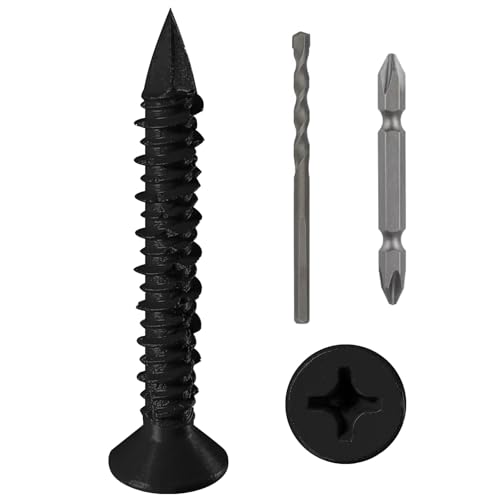
Wensilon 30-Pack 3/16″ x 1-3/4 Black Flat Head Concrete Screws

Wensilon 30-Pack 3/16″ x 1-1/4 White Flat Head Concrete Screws

Wensilon 1/2″ x 3″ Epoxy-Coated Large-Diameter Concrete Screws (50 pcs)

Wensilon 1/4″ x 2″ Zinc-Plated Large-Diameter Concrete Screws (30 pcs)

Fischer Ultracut Concrete Screw
More On The Choices That Made The List
This is the kit you reach for when appearance matters as much as hold. It bundles 105 flat-head screws across blue, black, and white finishes, in three lengths running from 1-1/4 inch up to 2-1/4 inch. The color split means you can match the head to a painted wall, a dark shutter, or a white fascia without rummaging for a touch-up pen later. The hex-flange-style head sits flush or near-flush once driven, so it disappears into most trim profiles.
Real-world use centers on decorative mounts: house numbers, lightweight address plaques, conduit clips along a finished wall, and small fixtures where a bare silver screw would clash. The hardened carbon-steel body drives into pilot holes in brick, block, and mortar joints. You will want to pre-drill with a hammer drill and a masonry bit matched to the 3/16-inch shaft. For most weekend jobs around the porch or garage, the count is generous enough that a few stripped heads won’t sink the project.
Noteworthy Benefits
- Three color options in one box lets you blend with painted or stained surfaces without buying separate packs.
- Multiple lengths (1-1/4, 1-3/4, 2-1/4 inch) cover shallow trim and deeper structural mounts in the same kit.
- Flat-head profile sits flush for a cleaner look on trim and decorative hardware.
- Hardened carbon-steel construction grips masonry without needing a separate anchor sleeve.
Worth Noting
- The 3/16-inch diameter is light-duty, so heavy shelving or loaded brackets will overstress it.
- Color-coated heads can scuff under aggressive driving, leaving a bright steel sliver.
Key Specs
Who It Suits Best
Homeowners handling visible mount points like house numbers, trim, light fixtures, and address plaques where matching the head color to a painted surface is a priority.
A Better Fit Elsewhere
For heavy loads like a handrail or pergola bracket, the Wensilon 1/2″ x 3″ Epoxy-Coated Large-Diameter Concrete Screws handle the higher pull-out force you need.
The hex-head sibling to the flat-head kit swaps aesthetics for installation speed. A slotted hex drive (sometimes called a hex washer, with a slotted top for added driver bite) gives you more torque transfer than a Phillips or straight slot, which matters in dense brick where the head can cam out mid-drive. The 117-piece count and the same blue-white-black color split make it a grab-and-go option for the toolbox.
Owners who run mixed jobs from one container tend to appreciate the depth here. You get 3/16-inch screws in 1-1/4, 1-3/4, and 2-1/4 inch lengths, all with the same hex drive so you only need one driver bit. Compared to the flat-head kit’s flush finish, this version leaves a small raised head, which is fine when the screw will sit behind a bracket, gutter strap, or electrical box cover. Use it on outdoor conduit runs, deck ledger brackets against block, and signage.
Positive Points
- Hex drive transfers more torque, reducing cam-out in dense brick or old mortar.
- 117-piece count handles a full day of small-anchor installs with extras to spare.
- Three color options let you match surface tone on visible runs.
- Compatible with common nut drivers, so no specialty bit is required.
Points To Note
- Raised hex head won’t sit flush, which can be a problem on visible trim work.
- Pre-drilling accuracy is critical, since off-center pilots strip the hex head quickly.
Made For
Property owners running several small mounting tasks in one session, from conduit clips to signage, who want a high-volume, multi-color hex-drive pack on hand.
Look Elsewhere When
For flush-mounted trim or decorative fixtures where a raised head is unacceptable, the Wensilon 105-Piece Concrete Screw Anchor Kit Flat Head delivers a cleaner finish.
Sometimes a full kit is overkill. This single-size 30-pack keeps things simple: every screw is 3/16 inch by 1-3/4 inch with a blue flat head, so you grab one screw and they all match. For jobs that need one repeatable anchor point, like a row of cable clips or a set of identical brackets, a uniform pack eliminates the size-mix guesswork.
The 1-3/4-inch length is a sweet spot for thin brick veneer, standard concrete block, and most mortar joints. The blue finish tends to blend with painted blue trim or disappear against darker backgrounds. You will want to pre-drill a clean pilot and drive slowly to avoid stripping the head. For most small weekend projects, a single 30-pack covers the fasteners without a big leftover surplus.
Everyday Wins
- Single-size simplicity speeds up repetitive anchor work.
- Blue finish blends with common painted trim colors.
- Flat head sits flush for a tidy look on visible mounts.
Soft Spots
- Only one length, so deeper or shallower mounting needs a different pack.
- Light-duty diameter won’t carry heavy loads like handrails or large shelving.
Right Fit For
Shoppers handling one defined project, such as a set of cable clips or a matching row of light brackets, where identical screws save sorting time.
Another Choice May Suit
For variable-depth work where you need both shallow and deep anchors in one box, the Wensilon 105-Piece Concrete Screw Anchor Kit Flat Head offers better length range.
Short brick, thin stucco, and single-wythe (single-layer) block all punish you for using a screw that’s too long. This 1-1/4-inch hex-head pack solves that. The shorter shaft bites into shallow substrates without bottoming out, splitting a thin wall, or punching through the back face. The slotted hex drive accepts a nut driver for quick installs in tight spots.
Where it shines is shallow work: electrical boxes, low-profile conduit clips, and thin trim against stucco where a longer screw would protrude. The blue rust-resistant coating helps in damp basements and garage walls. You trade shear and pull-out strength for that shorter length, so do not lean on it for loaded applications. Compared to the 1-3/4-inch flat-head pack, this one leaves a small raised head, which is fine behind a cover plate.
Positive Takeaways
- 1-1/4-inch length fits shallow brick and stucco without breakthrough.
- Slotted hex drive resists cam-out better than straight slots in dense material.
- Compact 30-pack is easy to keep in a kitchen drawer or small toolbox.
Honest Caveats
- Reduced embedment depth limits load capacity, so it isn’t right for heavy fixtures.
- Raised hex head is visible on open runs of trim.
Best Suited To
Anyone mounting on thin stucco, single-wythe block, or shallow brick where a longer screw would punch through, especially indoors or in damp basements.
Reach For A Different Pick When
For deeper anchors in standard brick, the Wensilon 30-Pack 3/16″ x 1-3/4 Concrete Screws Blue Flat Head gives you a longer bite without changing the visual style.
Black hardware against dark brick, slate, or stained wood reads as intentional rather than slapped on. This 30-pack matches the dimensions of the blue version, 3/16 inch by 1-3/4 inch, but swaps the color so the heads recede. The flat profile keeps the screw head close to the surface, which matters on visible hardware like gate latches, mailbox mounts, and exterior sign brackets.
Use it where a silver or blue head would interrupt a darker color palette. The rust-resistant black coating is built to handle weather exposure on outdoor projects. Pilot hole size still needs to match the 3/16-inch shaft, and you’ll want to keep the driver straight to avoid chewing up the coating. For wrought-iron-look fixtures, dark shutters, or charcoal trim, the head nearly disappears once driven.
The Case For It
- Black finish blends with dark brick, slate, and stained wood.
- Flat head sits nearly flush for low-profile hardware mounting.
- Outdoor-grade coating resists corrosion on exposed installs.
Some Limits To Know
- Coating can nick under aggressive driving, exposing bright steel.
- Same light-duty diameter as the rest of the 3/16-inch lineup.
Who Should Grab It
Anyone installing dark-colored hardware like wrought-iron-style fixtures, black mailbox mounts, or charcoal trim brackets on dark brick or stucco.
Skip It When
For white or light trim where a dark head would stand out, the Wensilon 30-Pack 3/16″ x 1-1/4 White Flat Head Concrete Screws keeps the hardware nearly invisible.
White trim against a brick wall needs fasteners that don’t draw the eye. This 30-pack of 3/16-inch by 1-1/4-inch flat-head screws in white coating does exactly that. The shorter length is well-matched to thin trim, soffit boards, and fascia where a long screw would punch through the back of the material.
It pairs naturally with vinyl or aluminum trim, PVC fascia, and white-painted wood details against a brick veneer. The flat head sinks just below the surface for a clean look that doesn’t need a dab of paint to hide. In most cases, a quick pilot hole with a 5/32-inch masonry bit is enough to start the screw cleanly without splitting the trim material around it.
Notable Upsides
- White head nearly disappears against painted white trim.
- 1-1/4-inch length suits thin trim without breakthrough.
- Flat profile supports a flush, professional-looking finish.
Things To Weigh
- Limited load capacity makes it unsuitable for heavy fixtures.
- Single size means switching packs for different anchor depths.
Whose Shelf It Belongs On
Homeowners fitting white fascia, soffit boards, or trim against brick who want fasteners that blend into the surface rather than interrupt it.
A Better Fit Elsewhere
For deeper anchor work in standard full-thickness brick, the Wensilon 30-Pack 3/16″ x 1-3/4 Concrete Screws Blue Flat Head gives you more bite in the same color-friendly flat-head style.
This is a different class of fastener altogether. The 1/2-inch shaft and 3-inch length move this screw out of trim work and into structural territory. With an actual body thickness of 9/16 inch (14 mm), the screw relies on hardened carbon steel and a zinc-galvanized surface for strength, then adds a black epoxy outer layer for corrosion resistance in outdoor conditions.
The intended use is heavy anchoring: ledger boards, handrails, gate posts, exterior mount points for hose reels, and similar loads where pull-out force matters. A 1/2-inch pilot hole is required, and you’ll need a hammer drill and impact driver rated for the size. Each pack ships with a socket tool to drive the head. Compared to the smaller 3/16-inch lineup, this one trades finesse for raw holding power, and the head is far more visible once set.
A Favorable Mix
- Large 1/2-inch shaft delivers strong pull-out and shear performance.
- Epoxy coating over galvanized steel handles outdoor exposure.
- Included socket tool simplifies installation from the start.
- 50-piece count covers multi-point structural mounts.
Possible Compromises
- Overkill for trim and decorative work where smaller screws are cleaner.
- Requires a 1/2-inch hammer drill, which is more than a basic DIY drill can handle.
Quick Facts
Perfect Match For
Anyone mounting heavy items like ledger boards, handrails, gate posts, or hose reels to masonry where standard 3/16-inch screws wouldn’t carry the load.
Where A Sibling Pick Shines
For lighter trim, signage, or conduit work, the Wensilon 1/4″ x 2″ Zinc-Plated Large-Diameter Concrete Screws sit in a more practical mid-duty range.
The mid-tier pick fills the gap between trim screws and structural anchors. A 1/4-inch shaft at 2 inches long handles medium loads like rail brackets, exterior light mounts, hose hangers, and small awning supports. The actual body thickness lands at 5/16 inch (8 mm), making the screw noticeably beefier than 3/16-inch options but more forgiving than the heavy 1/2-inch lineup.
The zinc plating offers baseline corrosion resistance for outdoor use, though it isn’t as protective as the epoxy-coated version above. You’ll still want to pre-drill with a 1/4-inch hammer drill bit, and the included socket tool keeps you from hunting for the right driver. The 30-piece count works well for a few mid-sized projects without leaving a large surplus in the shop.
Good Reasons To Consider
- 1/4-inch diameter handles medium loads without stepping up to structural sizes.
- 2-inch length gives a solid bite in standard brick and block.
- Zinc plating provides reasonable outdoor corrosion resistance.
- Included socket tool gets the install started immediately.
Trade-Offs To Consider
- Zinc coating is thinner than the epoxy option, so very wet environments may wear it faster.
- Raised head is more visible than flush flat-head options on trim work.
Built With In Mind
DIYers mounting mid-weight items like rail brackets, exterior lights, or awning supports on brick or block where 3/16-inch screws feel underbuilt and 1/2-inch feels like overkill.
Swap It Out When
For the heaviest loads like a ledger board or handrail, the Wensilon 1/2″ x 3″ Epoxy-Coated Large-Diameter Concrete Screws provide the extra grip you want.
The Fischer Ultracut lineup is what contractors reach for when a project has an engineering stamp behind it. This is a hex-head concrete screw sold across several sizes, including 8×55, 8×70, 8×80, 8×90, and 10×60 mm configurations (50 pieces per box on the listed SKUs), with a pressed washer (an integrated flange that spreads load and seals against the surface) under the head for tighter seating against the fixture. The body geometry is engineered for consistent torque-to-clamp behavior in both cracked and uncracked concrete.
Where it stands out is documentation and predictability. The screws carry a European technical assessment for use in cracked and uncracked concrete, plus seismic (earthquake) load ratings, and they meet fire-resistance class R 120 (meaning they retain structural integrity for 120 minutes in a fire test), which matters on commercial and code-conscious residential jobs. For a homeowner hanging a few hooks, that’s all overhead. For a contractor mounting structural beams, threshold fixings, or racking systems, it’s the difference between a guess and a verifiable anchor. Compared to the Wensilon 1/2-inch option above, the Fischer line trades the wide generic-diameter approach for engineered, size-specific SKUs you select against a load chart.
What It Does Well
- Engineered hex-head body delivers repeatable torque and clamp behavior.
- Multiple size SKUs let you match the screw to a specific load chart.
- Pressed washer under the head spreads load and seals the surface.
Practical Considerations
- Cost per piece is higher than the lighter Wensilon 3/16-inch packs, so basic trim jobs are not the best use.
- Size-specific SKUs mean you need to know the exact length and diameter before ordering.
Who Will Love This
Contractors and code-conscious installers working on threshold fixings, beams, racking, and any project that requires a documented load rating rather than a generic anchor.
Not Your Match When
For a quick weekend mount of a hose reel or address plaque, the Wensilon 1/4″ x 2″ Zinc-Plated Large-Diameter Concrete Screws cover the same brick-and-block use case without the engineering overhead.
What Matters Most Before Choosing Screws For Brick
Shaft diameter is the single biggest decision. Anything in the 3/16-inch range handles decorative and trim work: address numbers, light brackets, conduit clips, and small fixtures. Step up to 1/4-inch for mid-duty work like rail brackets, light awnings, and exterior mounts that see real load. Reach for 1/2-inch when you’re anchoring ledger boards, handrails, or any structure that will pull or twist against the wall.
Length matters almost as much. The screw should penetrate deep enough into solid material to develop its grip, with at least an inch of thread buried in the brick or block, not the mortar joint. Pilot hole size needs to match the shaft closely, which is why manufacturer specs are worth following exactly.
Head style is mostly about appearance and access. Flat heads sit flush for a clean look on visible trim. Hex heads drive faster and resist cam-out, but they leave a raised profile. Color coating, blue, black, or white, only matters when the head is visible.
Coating drives outdoor life expectancy. Zinc plating is the minimum for exposed conditions. Epoxy over zinc adds another layer of corrosion resistance, which is the right call for wet, coastal, or below-grade installs.
Key Considerations Across These Picks
Pitfalls Shoppers Hit
Picking a screw that’s too short is the most common mistake. A 1-1/4-inch screw in standard brick barely gets past the face shell, and you lose most of the holding power. Always size for at least an inch of thread in solid material. Skipping the pilot hole, or using a bit that’s too small, snaps screw heads and burns out drill batteries. The second common slip is anchoring into the mortar joint instead of the brick face. Mortar is softer and crumbles under load, so the brick body is always the better anchor target.
When Paying More Pays Off
Higher-tier screws like the Fischer Ultracut and the 1/2-inch epoxy-coated option earn their premium through verifiable load ratings, thicker shafts, and tougher coatings. For a deck ledger, a handrail, or anything supporting weight or movement, that extra material and engineering pays for itself in fewer call-backs and less risk. For a mailbox or a set of cable clips, the lighter and less expensive 3/16-inch packs are a smarter spend.
Frequently Asked Questions
Do I need a special drill for screws in brick?
Yes. A hammer drill combines rotation with a percussive hammering action that pulverizes masonry as the bit turns, which standard rotary drills can’t match. A regular drill will struggle and overheat in brick or block. Match the bit diameter to the screw’s specified pilot size, and clear dust from the hole before driving the screw.
Can I screw directly into the mortar joint instead of the brick face?
It’s possible, but the joint is softer and less consistent than the brick body. Anchors set in mortar tend to pull out under load, especially in older walls where the mortar has started to crumble. Drilling into the solid brick face gives a denser, more reliable grip for almost any project.
What does a flat head versus a hex head change in practice?
Flat heads sit flush or nearly flush with the surface, which looks cleaner on visible trim and decorative mounts. Hex heads accept a nut driver for higher torque and faster installs, but they leave a raised profile. The choice is mostly aesthetic versus ergonomic, since both styles can carry similar loads at the same diameter.
Are color-coated screws as strong as plain steel versions?
The color coating is a finish layer, typically epoxy or a similar paint-style coating, applied over the same hardened carbon steel. Holding power is set by the shaft diameter, length, and base material, not the color. The coating does, however, add a small amount of corrosion protection, and a nicked coating can expose steel underneath if it’s damaged during driving.
How many screws do I need per project?
Count the fixture’s mounting holes, then add at least 20 percent for stripped heads, miscounts, and future repairs. A 30-pack covers roughly 24 mounting points, while the larger 105- and 117-piece kits handle longer projects with mixed sizes. Buying slightly more than you need is cheaper than a mid-project run back to the retailer.




