


Cinder block is unforgiving. It chips, crumbles, and chews through ordinary fasteners, which is why a purpose-built masonry screw changes the whole experience of mounting a shelf, hanging a fence rail, or anchoring a ledger board. The picks below cover the realistic spread of projects a homeowner or contractor actually faces: light-duty interior brackets, color-matched exterior work, and heavy loads that demand larger-diameter anchors. Match the screw to the wall, the load, and the environment, and the rest of the job gets easier.
The Choices Worth Comparing

BCP Fasteners 1/4″ x 1-3/4″ Hex Head Diamond Tip Concrete Screws, 100 Pack

Wensilon 105-Piece 3/16″ Flat Head Concrete Screw Kit

Wensilon 117-Piece 3/16″ Slotted Hex Concrete Screw Kit

Wensilon 3/16″ x 1-3/4″ Blue Flat Head Concrete Screws, 30-Pack

Wensilon 3/16″ x 1-1/4″ Slotted Hex Concrete Screws, 30-Pack
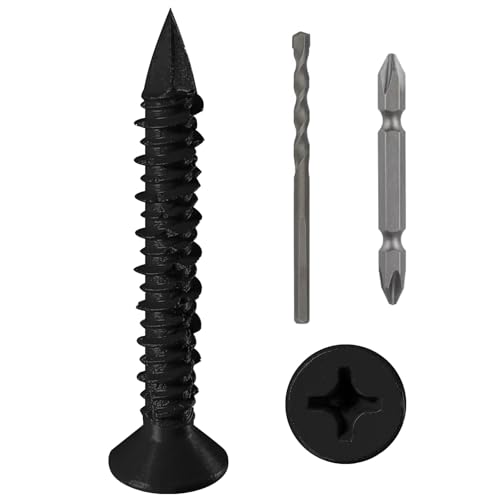
Wensilon 3/16″ x 1-3/4″ Black Flat Head Concrete Screws, 30-Pack

Wensilon 3/16″ x 1-1/4″ White Flat Head Concrete Screws, 30-Pack

Wensilon 1/2″ x 3″ Large Diameter Concrete Screw, 50-Pack

Wensilon 1/4″ x 2″ Large Diameter Concrete Screw, 30-Pack
The Details Behind The Selections
When a project moves from a single shelf bracket into a run of structural anchors, count matters as much as thread pattern. This BCP Fasteners pack ships a hundred 1/4″ hex-head masonry screws, sized at 1-3/4″ long with a diamond-style tip that bites into cured concrete, cinder block, and brick without a separate anchor sleeve. The hex head accepts a standard nut driver, which gives better torque transfer than a Phillips or slotted drive in hard masonry.
The blue coating (a corrosion-resistant finish common to masonry fasteners) helps the screws shrug off basement humidity and outdoor exposure. In most garages and workshops, you can expect a long service life as long as the heads stay protected from standing water. Heavy framing into poured foundation walls and 8x8x16 block walls is where this format earns its keep.
The Good Stuff
- One-hundred-count pack suits a full weekend of framing, fencing, or shelving work
- 1/4″ diameter is a meaningful step up from the 3/16″ fasteners used for light-duty mounts
- Hex drive resists cam-out when the hammer drill is working hard
- Blue coating handles damp basements and exterior wall applications
- Compatible with standard nut drivers, so no specialty bit is required
Things To Consider
- Pilot hole sizing must match the 1/4″ diameter precisely, or threads can strip out in softer block
- Hammer drill with a masonry bit is required; a regular drill tends to wander and overheat
- Hex heads sit proud of the surface, so this is not the right pick when you want a flush finish
Feature Snapshot
Who It Suits Best
Shed builders, garage workshop owners, and homeowners framing into a basement block wall will find the 100-count size and 1/4″ diameter a strong match for repeated structural work.
Where Another Pick Suits Better
If you want a flush-mounted look on a finished wall, the Wensilon 3/16″ x 1-3/4″ Black Flat Head Concrete Screws, 30-Pack sits cleaner against trim and painted surfaces.
Color matching a screw head to the wall behind it is one of those small details that separates a finished project from a slapped-together one. This Wensilon kit solves the problem by offering 3/16″ flat-head concrete screws in three finishes (blue, black, and white) and three lengths (1-1/4″, 1-3/4″, and 2-1/4″), spread across 105 total pieces. The flat Phillips-style head countersinks into a pre-drilled recess for a near-flush look.
Compared to the BCP hex-head pack above, this is a lighter-duty format aimed at fixtures rather than framing. Painted cinder block, finished basement walls, and exterior stucco repair are realistic fits. Because the kit mixes lengths, you can match screw depth to substrate thickness without buying three separate boxes.
Practical Advantages
- Three colors let the head blend with most painted or stained finishes
- Three lengths cover thin veneer block through thicker 8″ walls
- Flat head design sits flush when countersunk into a shallow recess
- Carbon-steel construction with a colored protective coating for corrosion resistance
- Works on concrete, brick, stucco, and standard masonry block
Worth Noting
- 3/16″ diameter is light duty; not the right call for ledger boards or heavy shelves
- Countersinking requires a larger pilot bit than a straight hex-head install
- Coating can wear if the head is struck with a hammer for final seating
Made For
Homeowners finishing out a basement, hanging exterior fixtures, or repairing stucco where the screw head should disappear against the surface.
Look Elsewhere When
Anyone mounting a structural beam or a heavy gate should move to the Wensilon 1/2″ x 3″ Large Diameter Concrete Screw, 50-Pack, which is built for that load class.
A slotted hex drive (a six-sided recess cut into a slightly raised head) splits the difference between the BCP pack’s full hex head and the previous kit’s flat countersink. You get better torque than a flat Phillips head, but the head still reads as a small bump rather than a chunky nut. The 117-piece count spreads three lengths (1-1/4″, 1-3/4″, and 2-1/4″) across the same blue, black, and white color options.
Workshop benches, garage tool rails, and shed buildouts are realistic fits where the head does not need to disappear, but you also do not want a wrench-shaped profile sticking out. In our view, this format works well for the back of a closet, behind a workbench, or anywhere the screw will be hidden once the shelf or cabinet is in place.
Everyday Wins
- Slotted hex drive accepts a nut driver and resists cam-out under load
- Three-color selection helps on multi-surface projects (one box covers several rooms)
- 117 pieces is enough to anchor an entire workbench, a shelving system, and still have leftovers
- Carbon-steel body with rust-resistant coating suits garage and shed environments
Trade Offs
- Head still protrudes, so this is not the pick for visible exterior trim work
- 3/16″ diameter is light to medium duty; over-torque can snap the head in dense aggregate
Best Suited To
DIYers running a long day of garage organization or shed assembly where varied lengths and a torque-friendly drive are more useful than a flush finish.
Consider Something Else When
A clean look on a finished wall is the priority, in which case the Wensilon 3/16″ x 1-1/4″ White Flat Head Concrete Screws, 30-Pack countersinks and disappears more cleanly.
Sometimes a project only needs a small batch of one size and one color, and a 30-pack avoids the waste of buying a 100-count assortment. This Wensilon option ships 30 pieces of 3/16″ by 1-3/4″ flat-head screws in the standard blue finish, sized for medium-depth penetration into standard 8″ block walls. The 1-3/4″ length sits in a useful middle ground: long enough for solid hold, short enough not to blow through thin walls.
You may find this is the format that fits a single weekend project: a set of utility shelves, a row of coat hooks, or a couple of grab bars in a bathroom. The blue finish blends acceptably with unpainted cinder block, raw concrete, and many basement walls.
Noteworthy Benefits
- 30-piece count is sized for a single project rather than a multi-day build
- 1-3/4″ length threads deeply enough for medium-duty wall mounts
- Flat head countersinks for a near-flush profile on finished walls
- Carbon-steel body with a corrosion-resistant blue coating
Honest Caveats
- Single color and single length; no flexibility if the project calls for two sizes
- 3/16″ diameter is light to medium duty; not the right call for ledger or fence-post work
Perfect Match For
Homeowners tackling one focused project, like a single shelving run or a few heavy mirrors, who do not want a multi-pack sitting in the garage for years.
Skip It When
The job needs a longer screw, such as a through-the-wall mount, in which case the Wensilon 3/16″ x 2-1/4″ option in the 105-piece kit covers that reach.
Short screws have a specific job: shallow block, thin walls, hollow concrete panels, and situations where a longer fastener would punch through to whatever is behind the wall. This Wensilon 30-pack is 3/16″ by 1-1/4″, finished in blue, with a slotted hex head that takes a standard nut driver. The shorter length also means a slightly easier pilot hole to drill, which helps when the project demands speed.
Threshold strips, electrical box brackets, and small signage are realistic fits. Cinder block that has been filled with grout can still bite well at 1-1/4″ as long as the load is light, and the slotted hex drive keeps the bit from walking out mid-install.
Benefits That Matter
- 1-1/4″ length is ideal for shallow block and thin-wall concrete applications
- Slotted hex drive reduces cam-out compared to a Phillips-style flat head
- Smaller pilot hole means faster drilling, easier on cordless drill batteries
- Blue coating matches the most common masonry-screw color on job sites
A Few Limitations
- Short length means limited bite; unsuitable for heavy or shear loads
- 30-piece count is small for anyone running a multi-day build
At A Glance
Whose Shelf It Belongs On
Homeowners with shallow block walls, hollow concrete panels, or any job where a longer screw would punch through to the other side of the wall.
Reach For A Different Pick When
You are mounting anything with real weight, such as a handrail or a TV bracket, in which case the Wensilon 1/4″ x 2″ Large Diameter Concrete Screw, 30-Pack offers a more secure bite.
Black hardware against dark surfaces is one of those small finishing choices that quietly makes a project look professional. This Wensilon 30-pack ships 3/16″ by 1-3/4″ flat-head screws in a black rust-resistant coating, the kind of color that disappears into wrought-iron railings, dark-stained trim, and modern matte-black fixtures. The flat head still requires a countersink for a truly flush look, but the head blends far better than a blue or silver fastener would.
Exterior lighting, dark metal railings, and fence picket repair are realistic fits. The 1-3/4″ length is the same as the blue 30-pack above, so you can use these interchangeably on the same wall where color matters more than strength rating.
Points In Its Favor
- Black finish blends into dark fixtures, iron railings, and stained trim
- Flat head countersinks for a low-profile appearance on finished walls
- Same 1-3/4″ length as the standard blue flat-head version for project continuity
- Carbon-steel construction with a corrosion-resistant black coating
Where It Is Less Suited
- Single color and single length means buying multiple boxes for varied jobs
- Black coating can show wear if the head is scraped during installation
The Right Fit
Anyone mounting dark metal fixtures, matte-black hardware, or wrought-iron railings to masonry where a blue or silver screw would visually clash with the surface.
A Better Fit Elsewhere
For projects on white or light-painted walls, the Wensilon 3/16″ x 1-1/4″ White Flat Head Concrete Screws, 30-Pack matches the surface far more cleanly.
White-on-white is the same logic as black-on-dark: hide the fastener, not the fixture. This Wensilon 30-pack is the white-finish cousin of the black and blue versions above, with 3/16″ by 1-1/4″ flat heads that countersink into painted block, soffit, and trim. The short 1-1/4″ length keeps the bite shallow, so this format is built for surface-mounted items rather than deep structural anchors.
Soffit panels, exterior trim, painted basement walls, and white vinyl accessories are realistic fits. Where a heavy hex-head would look industrial, a flush white screw disappears into the wall and lets the fixture take the visual focus.
Key Advantages
- White head virtually disappears against painted or light-colored masonry
- Flat head design countersinks for a near-flush surface
- Short 1-1/4″ length suits thin walls and surface-mounted fixtures
- Corrosion-resistant coating handles humid bathrooms and exterior soffits
Points To Note
- Short length limits load capacity; not for shelves, rails, or anything that pulls on the wall
- White coating can yellow or chip if scraped during install
Who Will Love This
Homeowners mounting trim, light fixtures, or soffit accessories to a white or light-painted masonry wall where the fastener needs to disappear into the surface.
Where A Sibling Pick Shines
For a darker exterior wall, the Wensilon 3/16″ x 1-3/4″ Black Flat Head Concrete Screws, 30-Pack is the matching color-coordinated option.
At 1/2″ diameter and 3″ long, this Wensilon screw is in a different weight class from the 3/16″ and 1/4″ fasteners above. The actual shank thickness is 9/16″ (about 14 mm), and the black epoxy coating is built to resist rust on exterior or below-grade applications. The package includes a matched socket tool, which matters because the head on these larger screws requires a specific driver that you likely do not already own.
Ledger boards, fence posts, structural brackets, and heavy gate hardware are realistic fits. A 1/2″ pilot hole is required, which means a rotary hammer (a hammer drill designed for masonry) rather than a standard drill. For most homeowners tackling a deck ledger or a heavy-duty fence, that is a worthwhile tradeoff for the load capacity.
Notable Upsides
- 1/2″ diameter handles heavy structural loads that smaller screws cannot
- 3″ length provides deep penetration into solid concrete or filled block
- Black epoxy coating resists rust on exterior, treated-lumber, and below-grade work
- Matched socket tool included, so the install does not stall waiting for a special bit
- 50-pack covers a full ledger board, a fence run, or a structural rebuild
Practical Considerations
- Requires a 1/2″ masonry bit and ideally a rotary hammer for clean pilot holes
- Heavier format means more battery drain on cordless drills
- Not the right call for finished interior walls, where the diameter is overkill
Key Product Details
Built With In Mind
Contractors and serious DIYers mounting deck ledgers, fence posts, or other heavy structural elements that smaller masonry screws simply cannot hold.
Not Your Match When
The project is light interior trim work, in which case the Wensilon 3/16″ x 1-1/4″ White Flat Head Concrete Screws, 30-Pack is a far better fit.
This is the middle child of the Wensilon large-diameter line: 1/4″ nominal with an actual thickness of 5/16″ (8 mm), 2″ long, zinc-plated, and shipped 30 to a pack. The 1/4″ pilot hole is far easier to drill than the 1/2″ hole the previous pick needs, and the included socket tool keeps the install moving without a separate bit purchase. Zinc plating (a thin zinc layer that slows corrosion by sacrificing itself first) is the standard indoor-grade finish.
Handrails, mid-weight shelving, light structural brackets, and outdoor pergola connections are realistic fits. Compared to the BCP pack at the top, the zinc finish suits dry interior use better than long-term exterior exposure, so this is a better pick for basement stairs than coastal fencing.
Notable Gains
- 1/4″ actual diameter handles medium-duty loads without over-drilling
- 2″ length reaches into filled block and thicker walls
- Zinc plating suits indoor and sheltered exterior applications
- Matched socket tool included with each pack
- 30-pack is sized for a single railing or shelving project
Things To Weigh
- Zinc plating is less corrosion-resistant than the black epoxy on the 1/2″ version
- 30-pack may not be enough for a full deck or fence project
Feature Card
Who Should Grab It
Homeowners mounting a handrail, a mid-weight shelf, or a small structural bracket into a basement or garage block wall where corrosion exposure is moderate.
Swap It Out When
The project sits in a coastal, below-grade, or fully exterior location, in which case the Wensilon 1/2″ x 3″ Large Diameter Concrete Screw, 50-Pack offers a heavier-duty epoxy-coated alternative.
Choosing The Right Masonry Screw For Your Project
Match Diameter To Load First
The single biggest decision is screw diameter, because it dictates the load class, the pilot bit size, and the bit of drill you need. A 3/16″ screw handles light fixtures, trim, and small mounts on standard 8″ block. Step up to 1/4″ for shelves, handrails, and mid-weight brackets. Move to 1/2″ only for ledger boards, fence posts, and anything pulling significant shear or tension on the wall.
Match Length To Wall Thickness
Length matters as much as diameter, and the rule of thumb is to engage at least 1″ of thread into solid material beyond any hollow core in the block. For a standard 8″ cinder block with two hollow cells, a 1-3/4″ to 2-1/4″ screw usually lands in the right range. Shorter 1-1/4″ screws work for thin walls and surface-mounted items, while 3″ screws reach into solid concrete or fully grouted block.
Match Finish To Environment
Cinder block basements, bathrooms, and exterior walls all see different moisture levels. Blue or black epoxy coatings handle damp and outdoor exposure well. Zinc plating suits indoor and sheltered installs. White and black color options help the head blend into finished surfaces, which matters more for trim work than for structural mounts where the screw is hidden anyway.
Use The Right Drill And Bit
Concrete screws require a pilot hole, and that hole needs a carbide-tipped masonry bit matched to the screw’s nominal diameter. A hammer drill (a drill that adds rapid pounding action to rotation) drives the bit through block far faster than a standard drill. For 1/2″ screws, a rotary hammer is the realistic tool. Skipping the pilot or using the wrong bit is the most common reason masonry screws strip or snap during install.
Key Considerations Across These Picks
Common Shopping Slip Ups
The most frequent mistake is buying 3/16″ screws for a load that actually needs 1/4″ or larger, then wondering why the shelf sags. Another common slip is picking screws that are too short, which means the threads never reach past the hollow cell of the block. A third is buying zinc-plated screws for a below-grade or coastal wall and watching the heads rust within a season. Match the diameter, length, and finish to the actual job before checking out.
Where The Extra Money Goes
The heavier Wensilon packs with epoxy coating and included socket tools cost more per piece for clear reasons: thicker shanks, harder steel, and corrosion-resistant finishes suited to structural and exterior work. The smaller color-matched packs cost less because the diameter is smaller and the coating is thinner. Paying up is worth it when the project carries real weight, sits outdoors, or installs once and stays put for years. Paying less is the right call for light interior work where a flush head matters more than a structural rating.
Frequently Asked Questions
Do concrete screws need an anchor?
No. A concrete screw (sometimes called a Tapcon, which is a popular brand name) cuts its own thread into a pre-drilled pilot hole, so it does not need a separate plastic or metal anchor sleeve. The pilot hole diameter must match the screw’s nominal size for the threads to grip properly.
What size pilot hole for a 3/16″ concrete screw?
A 3/16″ screw typically needs a 5/32″ masonry bit. Going larger lets the screw spin without biting; going smaller risks snapping the screw during install. Always check the bit size printed on the screw packaging or the product page before drilling.
Can you use a regular drill for concrete screws?
For 3/16″ and 1/4″ screws in cinder block, a standard cordless drill with a carbide masonry bit will work, though it runs hot. For 1/2″ screws or dense poured concrete, a hammer drill or rotary hammer is the realistic tool. Without the hammering action, the bit just polishes the hole and overheats.
How deep should the screw go into cinder block?
Plan for at least 1″ of thread engagement into solid material. Cinder block has hollow cells, so a 1-3/4″ screw may only bite into the face shell, which is fine for light loads. For heavier work, drill past the first cell so the threads lock into the back web of the block.
Will concrete screws rust outside?
It depends on the coating. Standard zinc plating handles sheltered exterior use but corrodes faster in coastal or wet environments. Blue and black epoxy coatings resist rust far longer on exterior walls, fences, and below-grade installs. For long-term outdoor projects, match the coating to the moisture level the screw will actually see.




