


A wobbly fence almost always traces back to the wrong fastener. Standard nails back out, zinc-plated screws corrode within a season, and bargain-bin deck screws snap when the wood swells. The right fastener depends on your fencing material, climate, and how much muscle you plan to throw at the project. Galvanized exterior wood screws handle the vast majority of residential privacy fences and picket installations. Stainless fence staples shine for woven wire, chicken runs, and garden enclosures. Structural framing screws earn their keep on heavy posts and gate frames. This list covers the most useful fasteners across those common scenarios, so you can match the hardware to the job instead of guessing at the lumber yard.
How The Shortlist Stacks Up

Insaga Fence Staples 304 Stainless Reusable Wire Fence Fastener Nail Screw
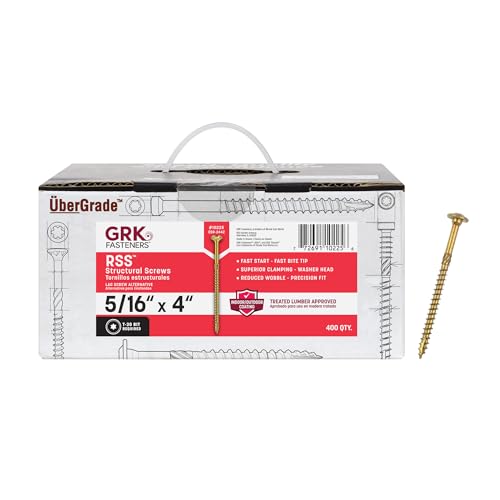
GRK Fasteners RSS 5/16 x 4 Structural Framing Screws, 400 PCS

Deck Plus Wood Screws #10 x 3in, 5lb Box, Tan

FIXLINK Deck Screws 3 Inch #10 x 3, Tan, 310PCS

Power Pro Premium Exterior Wood Screws #10 x 3in, Bronze

Grip-Rite Exterior Screws #9 x 3 in, PrimeGuard Coated

Insaga Fence Staples 304 Stainless Reusable Wire Fence Fastener

Insaga Fence Staples 100 Pack Reusable Wire Fence Fasteners

LIONMAX Deck Screws 3 Inch #10 x 3, Tan, 1700 PCS
More On The Choices That Made The List
Insaga’s 304 stainless fence staples sit in a different category from the rest of this list, and that’s the point. The pick belongs to anyone stretching welded wire, hex netting, or poultry fencing across a wood frame, where a typical wood screw is overkill and a standard U-staple can split the post. The 304 stainless build shrugs off the constant moisture that lives in garden soil and chicken runs, so the fastener stays removable across seasons instead of welding itself into the wood.
For most backyard projects of this type, the install is simple: a cordless drill drives the staple in, and the two-tooth profile bites into the post instead of splitting it along the grain. Reusability matters more than people expect. If a section sags, you can back the staple out, retension the wire, and reset the same fastener without chewing up the post or buying a fresh bag.
Useful Highlights
- 304 stainless steel construction resists rust in damp garden environments
- Reusable design lets you back staples out and reset them as the fence settles
- Drill-driven install is faster and safer than hammering U-staples by hand
- Two-tooth profile grips softwood posts without splitting the grain
Trade Offs
- Not the right choice for solid wood picket fences, where a coated deck screw is a better match
- Requires a drill or driver to seat, so plan for a charged battery on long runs
Key Product Details
Whose Property It Belongs On
Backyard chicken keepers, rabbit hutch builders, and anyone installing a low-tension garden trellis on cedar or pine posts.
Reach For A Different Pick When
Step up to the Grip-Rite Exterior Screws for any solid picket or panel privacy fence, since the bit and thread design are better matched to those boards.
GRK’s RSS structural screws live in a different weight class from the standard deck screws on this list. The 5/16-inch shaft and 4-inch length are built for the load-bearing parts of a fence: the post-to-rail connection on tall privacy panels, gate frames that take a beating every time they swing, and anywhere a lag screw would otherwise go. Code-listed for structural applications, these carry the rating that matters when a fence inspector is involved.
For pros building multi-rail or heavy gate frames, the Zip-Tip self-starting point means no pilot hole in most wood species. The integrated washer head spreads the clamping force, so joints pull tight without crushing the top board. If your build leans more toward decorative picket work than structural framing, you’ll likely want a more typical exterior screw like the Deck Plus instead.
The Good Stuff
- Code-listed for structural connections, so it satisfies heavy build requirements
- Self-starting tip removes the pilot-hole step on most common softwoods
- Integrated washer head maximizes clamping force at the joint
- 4-inch length is well matched to thick gate and rail framing
Things To Consider
- Overkill for a simple 4-foot picket fence where shorter screws will do the job
- Heavier 5/16-inch shaft requires a beefier drill or impact driver
The Right Fit
Gate builders, tall privacy fence contractors, and homeowners replacing structural lag screws on thick posts.
Not Your Match When
Drop down to Deck Plus Wood Screws for thin picket attachment, where the smaller #10 diameter is less likely to split cedar boards.
Deck Plus brings a familiar format to fence work: a tan #10 x 3-inch wood screw with a self-drilling point and a four-layer epoxy coating. The tan head blends into cedar and pine pickets far better than shiny zinc screws, which matters more on visible face boards. The 310-piece, 5-pound box is sized for a typical backyard privacy fence without leaving you with a half-empty pail for the next project.
For a weekend picket install, the star drive resists cam-out, the threads pull the board tight to the rail, and the epoxy coating handles pressure-treated lumber without bleeding black stains onto the wood. The 3-inch length gives you enough bite through a 5/8-inch or 3/4-inch picket and into a 2×4 rail, which is the bread-and-butter connection on most residential fences.
Strong Points
- Tan epoxy-coated head blends into cedar and pine boards cleanly
- Self-drilling tip starts fast in most softwoods without a pilot hole
- Star drive style reduces stripping during long install sessions
- 5-pound box covers a typical backyard fence without a lot of leftover
Worth Noting
- Not the right size for very thin trim or cap boards, which can split with a #10 shank
- Coating holds up well in most climates but may show wear in coastal salt-air conditions over time
Feature Snapshot
Who Will Love This
DIYers building a cedar or pressure-treated privacy fence on standard 2×4 rails who want a head color that disappears.
Look Elsewhere When
Move to the LIONMAX 25-pound bulk box if the project includes an entire property line plus a deck, where the per-piece value starts to matter.
FIXLINK runs in the same lane as the Deck Plus pick above, with a #10 x 3-inch profile, tan finish, and T-25 star drive built for pressure-treated lumber. The angle worth flagging is the start: the serrated thread and self-starting point are designed to eliminate the pre-drill step on most softwoods, which makes this a forgiving choice if you’ve never built a fence before. You can spend more time hanging pickets and less time swapping bits.
For most homeowners replacing a damaged section of fence, the 310-piece box is enough to finish the job without a second trip. The tan head color matches common cedar tones well enough that minor misalignments don’t show as a bright dot across the fence line. The 1500-hour salt spray rating is a real spec, not a marketing flourish, and it’s the kind of detail that tells you how the coating holds up in wet climates.
Good Reasons To Consider
- Self-starting tip and serrated thread skip the pre-drill step on most softwoods
- T-25 star drive resists stripping under load
- Tan plating blends into pressure-treated and cedar boards
- 1500-hour salt spray rating handles humid and coastal climates
Small Caveats
- Same #10 x 3-inch dimensions as the Deck Plus, so it isn’t a fit for thinner trim boards
- May require extra driving pressure on dense hardwood posts
At A Glance
Best Suited To
First-time fence builders who want a forgiving screw that won’t punish minor technique mistakes.
Skip It When
Switch to Power Pro Premium Exterior Wood Screws if you’re working in dense, treated hardwood where the bronze coating offers additional corrosion margin.
Power Pro sits at the premium end of the exterior wood screw shelf, and the bronze coating is the tell. Bronze plating over a hardened steel core is a known pairing for pressure-treated lumber, where the chemicals in modern ACQ treatments chew through plain zinc coatings in a couple of seasons. The 66-pack is small on purpose: this is a high-confidence fastener for the screws that matter most, not a bulk box for the whole fence.
For most coastal installs and projects in damp climates, the bronze head sinks into cedar and treated pine with a clean countersink and a finished look. The self-starting tip helps on tight production runs, where you don’t want to slow down for pilot holes. Compared with the tan Deck Plus box above, you’re paying more per piece, and that’s the trade: better chemistry against treated lumber in exchange for a smaller pack size.
Everyday Advantages
- Bronze plating resists corrosion in pressure-treated lumber and coastal air
- Self-starting tip speeds up installs on repetitive picket runs
- Clean countersink finish on cedar and pine boards
Honest Caveats
- 66-pack runs out fast on full fence builds, so it works best for spot jobs and gate hardware
- Premium price per piece compared to bulk tan options
Who Should Grab It
Homeowners replacing rotted pickets on a treated lumber fence in a coastal or wet climate where standard zinc has failed before.
Swap It Out When
Step over to Grip-Rite Exterior Screws for a full-length fence on a tighter budget, since the PrimeGuard coating is a sensible middle ground.
Grip-Rite is the contractor-grade familiar face in this lineup, and the #9 x 3-inch exterior screw with PrimeGuard coating has hung a lot of fences over the years. The coarse thread bites cleanly into softwood rails, the bugle head sinks flush without pre-countersinking, and the PrimeGuard layer is rated for use in modern pressure-treated lumber. The 1-pound box is a manageable size for repair jobs and small sections.
For most weekend fence repairs, the Phillips #2 drive is the part you’ll either love or tolerate. It works with a basic drill and the bits you already own, but it strips more easily than a star drive on long runs. The trade is real: easier on your battery and tool kit, harder on your wrist if the bit walks. The gray PrimeGuard finish is utilitarian rather than decorative, which suits back-line rails more than face boards.
Points In Its Favor
- PrimeGuard coating is rated safe for pressure-treated lumber
- Coarse thread pulls tight into softwood rails without pilot holes
- Bugle head sinks flush for a clean finished look
- 1-pound box fits small repair jobs without overbuying
Potential Drawbacks
- Phillips #2 drive strips more easily than star drive under heavy torque
- Gray finish is functional rather than decorative on visible picket faces
Feature Card
Built With In Mind
Contractors and homeowners running routine fence repairs who want a treated-lumber-safe screw that works with the bits already in the toolbox.
A Better Fit Elsewhere
Choose Deck Plus Wood Screws if you want a tan head color and a star drive for high-visibility face boards on a new build.
Insaga’s second fence staple on this list shifts the focus to field and welded wire rather than garden runs. The two-tooth profile digs into the post instead of skimming across the surface, which is the difference between a wire that stays taught and one that pulls free after a winter of freeze-thaw cycles. The drill-driven install is the same story as pick #1 above, with the upside of reusable hardware when you need to re-tension a section.
For most rural and semi-rural installs, this staple format works on pressure-treated posts and on cedar rails, and the 304 stainless build is what separates it from the galvanized U-staples at the farm store. Expect to swap bits less than you’d think, since the drive profile is friendly to standard driver bits. The honest trade is the same as any stainless fastener: cost per piece is higher than plated steel, and that’s the price of longevity in a wet environment.
The Practical Payoff
- Two-tooth design grips posts firmly under wire tension
- Drill-driven install avoids the smashed-finger risk of hammered staples
- 304 stainless build holds up in rain, snow, and irrigation splash zones
Practical Considerations
- Stainless price tag adds up across long field fence runs
- Not designed for solid wood picket or panel work
Made For
Property owners stretching welded wire, field fence, or poultry netting along a long post line where corrosion resistance matters.
Consider Something Else When
Move to the GRK RSS structural screws for the gate and bracing portions of the same build, where the load is on the wood connection, not the wire.
Insaga’s 100-pack is the softwood-focused version of the same staple design above, sized for the smaller chicken coop and garden trellis projects. The 100-piece count lands as a sweet spot for one medium enclosure: enough fasteners to finish a backyard run or rabbit hutch without buying a contractor-sized bag. The two-tooth grip is the same as the larger format, and the 304 stainless material is the same corrosion story.
For most small softwood projects, the drill-driven install is quicker than the older U-staple approach, and the stainless build means a single bag handles the whole build rather than requiring a separate galvanized or aluminum pack for indoor vs outdoor use. You may find the 100-piece count runs short on a long garden perimeter, so plan the project size before ordering.
Positive Points
- 100-piece pack suits a typical small enclosure or coop without overbuying
- 304 stainless build works for both outdoor and indoor softwood use
- Two-tooth profile grips pine and cedar without splitting the post
Where It May Fall Short
- May run short on larger garden perimeters and field-fence runs
- Softwood-tuned design is less ideal for dense hardwood posts
Perfect Match For
DIYers building a backyard coop, trellis, or small softwood enclosure who want one bag to cover the whole project.
Swap It Out When
Pick the Insaga pack from pick #1 instead if you need a larger count for a longer garden perimeter on the same softwood posts.
LIONMAX rounds out the list with the bulk format that serious fence and deck builders tend to buy once and empty slowly. The 25-pound bucket holds 1700 pieces, which is enough to hang a long property-line fence plus a deck or two without a second order. The bucket doubles as storage, so leftover screws stay organized and dry in the garage instead of loose in a cardboard box. The T-25 star drive and tan epoxy finish mirror the smaller 310-piece picks above, which keeps the install experience familiar.
For most contractors and homeowners with a multi-project plan, the per-piece value is the headline. The trade is the obvious one: a 25-pound bucket is heavy to receive and store, and you don’t want to be the person who bought one for a six-picket repair. Worth noting that the same #10 x 3-inch profile limits this to the standard picket and rail work, not structural posts or thin trim.
Everyday Wins
- 1700-piece count covers an entire property line plus extra projects
- Bucket packaging doubles as long-term storage
- Tan epoxy coating and T-25 drive match the smaller picks in this list
- Three included T-25 driver bits save a separate bit purchase
Practical Considerations
- 25-pound bucket is heavy to receive and awkward to store in a small shop
- Same #10 x 3-inch sizing means it isn’t suited for trim boards or structural posts
Quick Facts
Who It Suits Best
Whole-property fence installs, contractors stocking a multi-project shop, and homeowners running a fence plus deck in the same season.
Where Another Pick Suits Better
Step down to the Deck Plus 5-pound box for a small repair job, where 1700 pieces is more fastener than you’ll ever need.
What Matters Most Before Choosing Screws For Fencing
Match the Fastener to the Fence Type
A wood privacy fence, a welded wire run, and a heavy gate ask for very different hardware. Coated exterior wood screws like the Deck Plus and Grip-Rite picks cover the residential wood fence majority. Stainless staples like the Insaga options carry the load for wire and mesh. Structural screws like the GRK RSS handle gate frames and load-bearing posts where ordinary deck screws would flex or snap.
Consider Your Climate and Wood Treatment
Pressure-treated lumber contains copper-based preservatives that eat through plain zinc in a few seasons. ACQ-treated posts call for a screw with a documented compatibility statement, which is why the Grip-Rite PrimeGuard, Deck Plus epoxy, and Power Pro bronze picks exist. In coastal or high-humidity zones, step up to bronze or stainless coatings to avoid the dark stain that bleeds out around the screw head after the first wet season.
Length, Shank, and Head Profile
The #10 x 3-inch format is the workhorse for picket-to-rail work, and you’ll see it across most of the wood screw picks on this list. Anything thicker splits thin cedar boards, and anything shorter won’t get enough thread into a 2×4 rail. For posts, structural lag-class screws in the 4-inch range give the holding power that lighter screws can’t.
Drive Style and Bit Wear
Star or Torx drives like the T-25 on the FIXLINK and LIONMAX picks save real time on long runs because the bit stays engaged. Phillips drives, like the #2 on the Grip-Rite pick, are friendlier to the bits you already own but strip more easily under heavy torque. For a 50-board fence, that trade matters more than the per-piece cost difference.
Key Considerations Across These Picks
Common Buying Slip Ups
Picking the cheapest screw in the bin is the move that costs the most in the long run. Plain zinc screws on pressure-treated posts will corrode within a season and leave ugly black halos around the head, especially on cedar. Buying the wrong length is the other quiet mistake: a 1-5/8 inch screw doesn’t get enough bite into a 2×4 rail, while a 4-inch screw will poke through a thin picket. Always match the screw to the combined thickness of the boards it joins, and oversize the length by at least 1/2 inch of thread engagement into the framing member.
Where The Extra Money Goes
The price difference between a budget zinc screw and a bronze or stainless screw pays for two things: coating chemistry and steel hardness. Bronze and epoxy coatings hold up against the copper in treated lumber, and the harder steel core resists snapping during install. For a small repair on a non-critical section, the budget option is fine. For a fence you’ll live with for ten years in a wet climate, the upgraded coating earns its keep by not leaving rust stains down the boards after the second winter.




