


Working with MDF means fighting its two quirks: it splits easily along edges, and it crushes under the wrong thread pattern. The right fastener pulls through cleanly, bites deep without blowing out the core, and leaves a flush finish you can paint or veneer. For weekend builders building a closet organizer, hobbyists crafting speaker stands, or finish carpenters trimming a built-in, the difference between a clean joint and a splayed corner usually comes down to a few millimeters of thread and the right head profile.
A few terms you’ll see below: coarse thread means widely spaced ridges, ideal for gripping soft MDF fibers, while fine thread works better in hardboard. Pan head sits with a low, rounded profile; truss head is wider and flatter, spreading load across soft material; flat head sits flush below the surface for a clean finish.
A Side-By-Side Look
A Side-By-Side Look
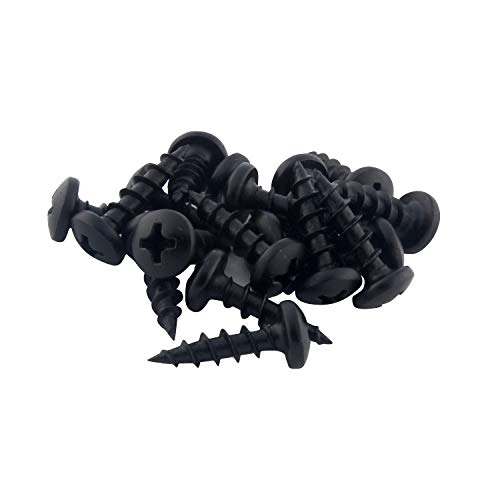
Rok Hardware #8 x 5/8″ Coarse Thread Pan Head Screws (100 Pack)

Wensilon #8×3/4″ 410 Stainless Steel Truss Head Screws (300 pcs)

Wensilon #8×3/4″ Black 410 Stainless Truss Head Screws (300 pcs)

Wensilon #8×1″ Black Truss Head Wood Screws (250 pcs)

Wensilon #8×3/4″ Hex Washer Head Self-Drilling Screws (300 pcs)

Wensilon #8×3/4″ Black Hex Washer Head Self-Drilling Screws (300 pcs)

Wensilon 3/16″ × 1-1/4″ Slotted Hex Concrete Screws (30 pcs)
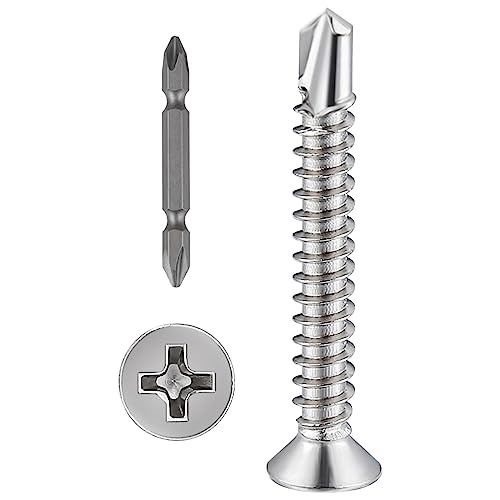
Wensilon #8×1-1/4″ 410 Stainless Flat Head Screws (250 pcs)

Wensilon #8×1-1/4″ Black 410 Stainless Flat Head Screws (250 pcs)
More On The Choices That Made The List
For a fastener that’s purpose-built for the medium it joins, this Rok Hardware pack is the most direct match in the lineup. The #8 shank paired with a deep coarse thread pattern is engineered for thin MDF panels, particle board, and plastic composites where fine thread screws would strip out after a single pass.
The 5/8″ length is short on purpose, leaving enough shank to bite without punching through the back face of a 3/4″ panel. A black phosphate coating adds a modest layer of corrosion resistance and keeps the head visually quiet against dark trim. For first-time MDF builders, the Phillips pan head sits cleanly without demanding specialty drivers, and a hundred screws covers a small closet project without leaving you short.
Key Advantages
- Coarse thread profile grips MDF fibers without chewing them apart on entry
- Short 5/8″ length prevents blow-through on 1/2″ and 3/4″ panels
- Black phosphate finish blends into dark cabinetry and shop fixtures
- Phillips pan head drives flush with a standard driver, no special bit needed
- One-hundred-count jar covers a weekend closet or shelving build
Points To Keep In Mind
- Short length means limited holding power on face-frame joints over 1″ thick
- Phosphate coating is corrosion resistant, not corrosion proof, in damp basements
Key Specs
Who It Suits Best
Beginners assembling flat-pack furniture, closet organizers, or thin cabinet panels will find this screw hits the sweet spot of easy driving and reliable hold in MDF.
Where Another Pick Suits Better
For thicker face-frame work or projects needing a flush, paintable head, the Wensilon flat head variants later in the list take over cleanly.
When a project chews through screws by the dozen, a three-hundred-count jar pays for itself fast. Wensilon’s truss head design spreads clamping force across a wider footprint than a standard pan head, which matters in soft MDF where a narrow head can sink and leave a divot.
410 stainless steel raises the corrosion-resistance bar over plain zinc-plated fasteners, useful in shop humidity or unheated garages. The 3/4″ length gives just enough reach for 1/2″ and 3/4″ panels without protruding. For hobbyists running batch builds of small cabinets or shop jigs, the wide head and bulk quantity tend to outclass the Rok pack on volume and clamp force.
Good Reasons To Consider
- Truss head distributes load across soft MDF without sinking through
- 410 stainless steel resists rust better than zinc-plated hardware
- Three-hundred-count jar suits batch production and busy shops
- 3/4″ length covers most standard MDF thicknesses
Trade-Offs
- Truss heads sit proud of the surface, so they show on finished faces
- Self-tapping point can wander slightly if you don’t start straight
Right Fit For
Cabinetmakers and small-shop builders producing multiple MDF assemblies will appreciate the bulk quantity and the way the truss head resists pull-through in soft stock.
Skip It When
For visible face-frame work that needs a flush finish, swap to the Wensilon flat head #8×1-1/4″ pick, which sits below the surface for a clean, paint-ready result.
The black oxide finish on this Wensilon variant does double duty, hiding the head against dark cabinetry while adding a tougher surface layer than bare zinc. The truss head still spreads load, but the dark coating keeps the fastener visually quiet on stained MDF edges and dark shop fixtures.
Like its silver sibling, the 410 stainless core holds up in damp shop air, and the 3/4″ length works for typical 1/2″ and 3/4″ panels. Owners commonly report the dark finish masks minor staining over time. For those building shop storage or dark-stained built-ins, the finish saves a step of touch-up paint.
Strong Points
- Black finish blends into dark cabinetry and stained millwork
- 410 stainless core resists rust in unheated shops and basements
- Wide truss head prevents pull-through in soft MDF faces
- Three-hundred count supports larger batch builds
Honest Caveats
- Truss head sits above the surface, so it remains visible on flush work
- Black finish can scuff or wear at exposed edges over years of use
- Not a countersink-friendly head for veneer-covered panels
Best Suited To
Woodworkers building dark-stained shop cabinets, garage organizers, or utility furniture where the head should disappear visually without extra finishing work.
Look Elsewhere When
For light-colored projects where any dark spot would telegraph through paint, pick the silver Wensilon truss head above or a flat head variant for a flush result.
When the project calls for bite beyond thin panels, a full inch of length gives the threads room to anchor in thicker face frames and butt joints. The carbon steel core with a black phosphate coating keeps the price approachable for high-volume work, while the truss head continues to spread clamping force across soft MDF.
This is a sensible step up from the shorter Wensilon options for anyone building face frames, attaching cleats, or joining 3/4″ panels into a stiffer assembly. Owners commonly report the longer shank reduces the need for clamps during glue-ups. For shop apprentices and cabinet makers pulling a hundred fasteners a day, the 250-count jar is a practical middle ground.
What It Does Well
- 1″ length grips thicker MDF face frames and butt joints securely
- Black phosphate finish suits dark wood and shop fixtures
- Carbon steel core drives cleanly without snapping under normal torque
- Truss head spreads load and reduces divots in soft stock
A Few Limitations
- Not stainless, so humid environments may eventually show surface oxidation
- Length can blow through thinner panels if you’re not careful on setup
Built With In Mind
Cabinetmakers and finish carpenters assembling face frames, thicker cabinet boxes, or shop jigs that need more thread engagement than short screws provide.
Another Choice May Suit
For pure rust resistance in damp basements, the Wensilon 410 stainless flat head later in this list trades a little depth for serious corrosion protection.
Hex washer head screws bring a different tool dynamic: instead of a Phillips driver, a nut driver or hex socket takes the load. The integrated washer face spreads torque over a broader area, which is forgiving on soft MDF where a small driver recess can sink in or strip out.
The 410 stainless body makes this a smart pick for hybrid projects where MDF meets thin metal, since the self-drilling point bores through light-gauge steel without a separate pilot. You may find the hex head awkward in tight corners, but for shop benches, machinery bases, or garage storage, the wider bearing surface reduces cam-out and saves time.
Real-World Strengths
- Integrated washer face prevents cam-out and head sinkage
- Self-drilling tip cuts through thin metal without separate pilot holes
- 410 stainless resists rust in shop and garage environments
- Hex drive delivers higher torque without bit slip
Less Ideal Details
- Requires a hex driver, not a standard Phillips, which slows simple repairs
- Head sits proud of the surface and shows on visible panels
Whose Shelf It Belongs On
Workshop builders tackling MDF-to-metal assemblies like shop benches, tool stands, or garage storage where the hex drive’s torque and washer face outweigh the visual profile.
Consider Something Else When
For furniture-grade cabinetry where head appearance matters, the Wensilon flat head #8×1-1/4″ 410 stainless option delivers a cleaner, countersunk finish.
Take the working-class hex washer head and add a black oxide finish, and you get a fastener that disappears visually while still doing the heavy lifting. This Wensilon variant keeps the self-drilling tip and 410 stainless body but trades the bright silver finish for a darker, more discreet look.
For garage workshops or utility builds where appearance matters but not enough to justify flat-head countersinking, the dark hex head strikes a middle ground. Owners commonly report the black finish holds up well to fingerprints and shop grime, hiding minor scuffs that would show on silver hardware.
What Pays Off
- Dark finish masks the head against black metal framing and dark shop fixtures
- Washer face spreads load and prevents head sink in soft MDF
- 410 stainless core handles shop humidity and temperature swings
- Self-drilling tip eliminates pilot holes in thin metal
Practical Considerations
- Hex drive demands a separate bit, less convenient for quick field fixes
- Black finish can wear at contact points, revealing silver underneath over years
Made For
Garage builders, race-fab hobbyists, and shop fabricators assembling MDF-and-metal benches where a darker fastener reads as part of the build rather than an afterthought.
Reach For A Different Pick When
For exposed cabinetry or fine furniture, the Rok Hardware pan head screw earlier in the list offers a smaller, more discreet profile for traditional joinery.
MDF rarely lives alone, and when you need to fasten it to masonry, the rulebook changes entirely. Concrete screws cut threads directly into a pre-drilled pilot hole in brick, block, or poured concrete, then back out a wood or MDF ledger through the same anchor point. This Wensilon pack is sized for exactly that scenario.
The 3/16″ diameter and 1-1/4″ length are engineered for masonry first, with a hex head that accepts a nut driver. Carbon steel with a blue rust-oxide finish adds modest corrosion resistance. For garage or basement projects, these work as the structural anchor that lets the rest of the wood-and-MDF assembly stay where you put it.
Practical Pluses
- Hardened carbon steel bites into masonry without separate anchors
- Hex head drives with a standard nut driver or impact socket
- Blue rust finish adds surface protection in damp basements
- One-piece design eliminates loose anchors inside the wall
Possible Compromises
- Not a substitute for a wood or MDF screw on its own
- Requires a hammer drill and correct masonry bit size for the pilot
Who Will Love This
Homeowners and renovators mounting MDF baseboards, garage cabinetry, or basement shelving directly to concrete or block walls.
A Better Fit Elsewhere
For pure wood-to-MDF joinery with no masonry in the picture, the Rok Hardware pan head or Wensilon truss head options earlier in this list save the cost of concrete-rated hardware.
Flat head screws solve the one thing pan and truss heads can’t: they sit flush. A countersunk flat head pulls the head below the surface of the MDF, leaving a clean face that takes putty, primer, and paint without a visible bump. This Wensilon variant adds 410 stainless steel for corrosion resistance in humid rooms.
The 1-1/4″ length gives plenty of thread for thicker stock and edge joinery. The trade-off is the extra step of countersinking, either with a dedicated bit or a combined pilot-and-counterbore tool. For trim carpenters and finish carpenters building furniture-grade MDF pieces, the flush result justifies the slower workflow.
Real Benefits
- Flat head sits flush for a paint-ready, blemish-free surface
- 410 stainless steel resists rust in kitchens, baths, and basements
- 1-1/4″ length handles thicker face frames and edge-to-edge joins
- Self-tapping point reduces pilot-hole work in softer MDF stock
Things To Weigh
- Requires countersinking for the head to sit fully below the surface
- Longer length can blow through thin panels without a depth stop
Perfect Match For
Finish carpenters and trim specialists building painted MDF built-ins, wainscoting, or furniture where a flush, fillable surface is non-negotiable.
Swap It Out When
For utility builds where appearance is secondary, the Wensilon #8×3/4″ 410 stainless truss head earlier in the list installs faster and skips the countersink step.
For dark-stained millwork or visible joinery where you want the fastener to recede rather than disappear into filler, the black flat head version is the most refined finish in the Wensilon MDF lineup. The 410 stainless core keeps the body corrosion resistant, while the black oxide coating on the head blends into espresso, walnut-stained MDF, or dark paint schemes.
The 1-1/4″ length provides the same holding power as the silver flat head, so this is purely an aesthetic upgrade. Depending on your stain and finishing approach, you may find the dark head reads as a subtle accent rather than a fastener. For high-end shop builds or studio cabinetry, it earns its place.
What Helps Most
- Black head finish disappears against dark stains and painted millwork
- Flat head profile countsinks for a clean, fillable surface
- 410 stainless body handles kitchen and bath humidity
- 1-1/4″ length reaches through thicker panel and face frame stock
Where It Is Less Suited
- Dark finish shows silver if you overdrive and strip the coating at the head
- Costs more than plain zinc or phosphate options for similar structural hold
Who Should Grab It
Finish carpenters and studio woodworkers building dark-stained MDF furniture, accent walls, or built-ins where the fastener’s appearance matters as much as its hold.
Not Your Match When
For raw shop utility builds where the head will never be seen, the budget-friendly Wensilon #8×1″ black truss head earlier in the list delivers similar grip at a lower cost.
Choosing Fasteners That Actually Hold In MDF
The first thing to get right is thread pattern. MDF is made of compressed wood fiber, so coarse threads bite deep and resist strip-out, while fine threads tend to spin once the fibers crush. Anywhere a screw enters MDF as the receiving material, coarse pitch wins.
Next, match the head to the surface. Pan heads sit low and clean on utility builds, truss heads spread load across soft faces, and flat heads countersink for a paint-ready result. Length is the third lever. A 5/8″ screw drives into 1/2″ stock without blow-through, but a 1-1/4″ screw reaches through face frames and edge joins. Picking length slightly shorter than the panel depth prevents the tip from poking out the back.
Thread Pitch And Head Profile
Coarse pitch threads with widely spaced ridges cut clean paths through MDF fibers, while fine pitch acts like a wedge and often splits the core. A pan or truss head is a sensible default for utility work where a flush surface isn’t required. Flat heads demand a countersink but reward you with a clean face for paint and veneer.
Corrosion Resistance And Material
For dry indoor projects, black phosphate or zinc-plated carbon steel is enough. For kitchens, bathrooms, basements, or unheated shops, 410 stainless steel adds meaningful rust protection at a modest cost premium. The “twice as hard as copper” note in many of these listings matters because soft screws strip out under the high torque MDF can demand.
Length, Shank, And Pilot Strategy
A 3/4″ screw is the safe middle for 1/2″ and 3/4″ panels. Shorter risks shallow bite, longer risks blow-through. Self-tapping points reduce pilot-hole work, but on edges or near corners, a pre-drilled pilot prevents splitting. Edge distance of at least 1/4″ from the panel edge is a sensible rule of thumb.
Matching Quantity To Workload
A 100-pack covers a single project. A 250- or 300-count jar suits shop production, batch builds, and ongoing repair work. Buying in bulk only makes sense if you’ll use them within a reasonable storage window, since some coatings can dull slightly over years in a humid shop.
Key Considerations Across These Picks
Where Shoppers Go Wrong
The most common error is reaching for any wood screw rather than one engineered for MDF. Drywall screws, deck screws, and fine-thread wood screws all look similar but lack the coarse thread pattern that prevents strip-out. Another frequent slip is skipping the pilot hole on edge joints within 1/2″ of the corner, which causes splits. Owners commonly report blow-through when the screw length exceeds the combined panel thickness, so measure twice and pre-drill on critical edges.
The Case For Spending Up
The jump from a 100-pack of basic pan head screws to a 250- or 300-count jar of 410 stainless fasteners often costs only modestly more per screw. What the higher tier buys is corrosion resistance in humid rooms, fewer strip-outs thanks to tighter manufacturing tolerances, and head profiles that finish cleaner. For a one-off closet project, the basic pick is plenty. For ongoing shop work or visible millwork, the upgrade pays for itself in fewer stripped heads and a cleaner final result.
Frequently Asked Questions
What size screw is best for 3/4″ MDF?
A #8 screw in the 3/4″ to 1″ range handles most 3/4″ MDF joinery without blowing through. For face frames or thicker assemblies, stepping up to 1-1/4″ gives more thread engagement. Pre-drilling on edges prevents splitting.
Do you need to pre-drill MDF before screwing?
Pre-drilling is optional near the center of a panel but strongly recommended within 1/2″ of an edge or corner. A small pilot hole lets the coarse thread bite cleanly instead of splitting the fiber core. Combined pilot-and-counterbore bits are a time-saver for flat head screws.
Are coarse or fine thread screws better for MDF?
Coarse threads are the better choice for MDF. The widely spaced ridges cut clean paths through soft fibers and resist strip-out. Fine threads wedge into the core and often spin out under torque, especially in softer MDF grades.
What is the difference between a pan head and a truss head screw?
A pan head has a slightly rounded top with vertical sides, giving a neat, low-profile finish. A truss head is wider and flatter, with a larger bearing surface that spreads clamping force across soft material. Truss heads resist pull-through in MDF better, while pan heads look cleaner on visible faces.
Can I use deck screws in MDF?
Deck screws are not ideal for MDF. Their thread pattern and coating are tuned for outdoor lumber and pressure-treated wood, and they often have features that cause the soft MDF core to strip. A purpose-built MDF screw with coarse thread and a corrosion-resistant finish holds more reliably.




