


Choosing the right fastener for steel studs, tracks, and connector hardware is rarely as simple as grabbing the first box on the shelf. The wrong thread pitch, head style, or coating can split a connector, chew up a drill bit, or rust out within a season. This shortlist walks through nine screws that consistently show up on jobs where metal framing is in play, so you can match each pick to your project instead of guessing at the hardware aisle.
The Picks In Brief

Simpson Strong-Tie SD9112R100 Strong-Drive SD Connector Screw

Simpson Strong-Tie SD9112R100 Strong-Drive SD Connector Screws

GRK 00073 #8 x 1-1/2″ R4 Multi-Purpose Screws 6500 Count

GRK R4 #10 x 4-3/4 Inch Multi-Purpose Framing Screws, 800 PCS

BCP Fasteners #8 x 1/2″ Black Modified Truss Head Wood Screws

FIXLINK #10 x 3 Wood Screws, Tan, 310PCS

Deck Plus 3 Inch Epoxy Coated Exterior Wood and Fence Screws

GRK R4 #9 x 1-1/2″ Multi-Purpose Framing Screws, 820 PCS
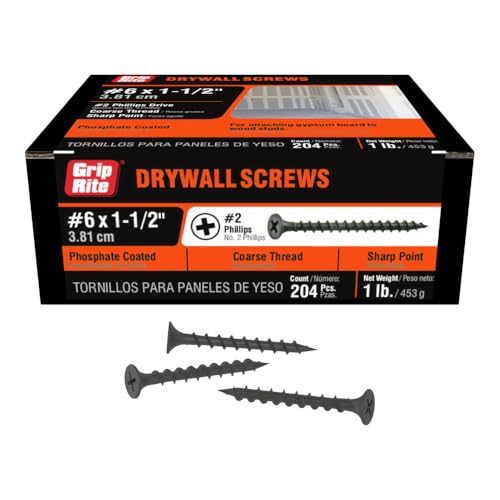
Grip-Rite Coarse Thread Drywall Screws #6 x 1-1/2″
Why These Options Stand Out
If your work involves Simpson Strong-Tie hangers, straps, or joist ties on a steel framing layout, this SD screw is the fastener the brand itself points to. It’s the one the catalog calls out as approved for replacing nails inside specific connector bodies, which matters because not every wood screw is actually rated for that load path.
The 1/4-inch hex drive with an integrated washer head gives you solid bit engagement, so you spend less time chasing a cam-out and more time driving. For most residential and light commercial connector work, it removes the need to swing a hammer into tight stud bays where a nail set is hard to use.
Why It Works Well
- Specifically approved by the brand for use in its own connector bodies, which takes guesswork out of the load path.
- The 1/4-inch hex head with built-in washer reduces bit slippage and distributes clamping pressure evenly.
- Stamped size marking on the head simplifies inspection after the framing is closed up.
- 200-count pack suits a single deck, addition, or small structure without leaving you with half a box.
Worth Noting
- It’s purpose-built for Simpson connector geometry, so it isn’t a general-purpose wood-to-wood screw.
- The hex drive requires the matching bit, which is an extra tool to keep on the belt.
Right Fit For
Contractors and serious DIYers hanging Simpson connectors on a light steel or wood frame and wanting a brand-approved screw in the hole.
Reach For A Different Pick When
The Simpson Strong-Tie SD9112R100 in the 100-count box is the better swap for one-off repairs or smaller connector jobs.
This is the same Strong-Drive SD Connector screw as the 200-count version above, but in a smaller, easier-to-stock 100-count box with the hex bit included. If you’re carrying it in a service van or tossing a box into a remodel bag, the count feels more practical.
The mechanically galvanized Class 55 coating is the part worth understanding: it offers a noticeably thicker zinc layer than standard electrogalvanizing, which is why the brand rates it for many exterior connector applications in addition to interior framing. For covered porches, deck ledgers on a metal frame, or outdoor pergola hardware, that coating choice is the reason to spend a touch more.
The Value In It
- Class 55 mechanically galvanized finish handles most exterior connector scenarios without premature rust bleed.
- Single-fastener load capacity is rated above a 10d common nail, which is reassuring in hanger and strap applications.
- Optimized heat-treated shank improves ductility, reducing the chance of a head snap-off on a hard drive.
- Integrated bit included in the box, so you can start driving without hunting for a hex driver.
Trade Offs
- At 100 count, it isn’t the cheapest path for a full custom home’s worth of connectors.
- Hex drive means slightly slower bit changes if you’re bouncing between Phillips and hex tasks.
Feature Snapshot
Whose Shelf It Belongs On
Remodelers and deck builders who install Simpson connectors occasionally and want a corrosion-rated screw with the right bit in the box.
Where Another Pick Suits Better
For pure volume connector framing on a new build, the Simpson Strong-Tie SD9112R100 in the 200-count box gives you more screws for the same per-box investment.
A 6,500-count bucket of R4 screws is the kind of supply that makes sense when framing a whole house, a multi-unit deck, or a long run of fencing. GRK’s R4 line is what a lot of carpenters reach for when they want one screw to span wood-to-wood framing, blocking, and light structural tie-ins.
The Zip-Tip design is the part to know: it’s a self-starting tip meant to skip the pre-drill step on most dimensional lumber, which adds up over thousands of screws. The star drive recess (a six-lobed Torx-style head) resists cam-out far better than a Phillips, so your bit lasts longer and the screw seats cleanly.
Noteworthy Benefits
- Bulk packaging brings the per-screw cost down on large framing packages.
- Self-starting Zip-Tip cuts a step out of repetitive framing work.
- Star drive design holds the bit under load, reducing stripped heads mid-drive.
Points To Note
- The bulk format is overkill for a one-room remodel or a single weekend project.
- Like most wood-focused framing screws, it isn’t rated as a substitute for Simpson connector screws.
Made For
Production framers and contractors who burn through fasteners by the thousands and want a single reliable screw on the belt for wood-to-wood work.
Skip It When
The BCP Fasteners #8 x 1/2″ Black Modified Truss Head Wood Screws are a smarter buy for short trim or cabinet work where a 1-1/2-inch screw is simply too long.
When the framing is heavy enough that a standard deck screw won’t reach, the 4-3/4-inch R4 steps in. This length is the one GRK codes (under ESR-3201) for structural framing and ledger work, so it carries real weight on paper, not just marketing language.
The Climatek coating is the part to pay attention to. It’s a multi-layer rust-resistant finish designed to handle pressure-treated lumber’s harsh ACQ chemistry, where plain zinc screws can fail in a season or two. The Fast Bite Tip and W-Cut thread work together so each screw starts fast and pulls in with relatively low torque.
Notable Gains
- Code-approved (ESR-3201) for structural framing, not just generic construction use.
- Climatek coating resists the corrosive chemicals in modern pressure-treated lumber.
- W-Cut thread lowers drive torque, so battery tools last longer per charge.
Honest Caveats
- 4-3/4 inches is overkill for fastening thin sheet goods or trim to a stud.
- Heavier screw body means you need a beefier drill or impact driver to seat it cleanly.
Key Attributes
Best Suited To
Builders fastening deck ledgers, multi-ply beams, or structural framing on a metal or wood skeleton where code listing matters.
A Better Fit Elsewhere
For lighter fastening tasks, the GRK R4 #9 x 1-1/2″ Multi-Purpose Framing Screws in 820 count are easier to drive and more forgiving on battery tools.
Sometimes the right screw is a tiny one. BCP’s 1/2-inch modified truss head screw lives in the gap left by full-size framing screws: thin panel work, cabinet backings, light drawer construction, and metal-to-wood brackets where a longer screw would blow through the other side.
The modified truss head is a wider, lower-profile shape than a standard pan or round head. That’s the part that earns it a spot in any finish or trim bag, because it spreads clamping pressure over a small area without leaving an obtrusive bump on visible surfaces. The black phosphate coating keeps the appearance clean in indoor settings where rust streaks would be obvious.
Well-Handled Touches
- Short 1/2-inch length fits confined assemblies where a longer screw would protrude.
- Modified truss head distributes pressure and stays low-profile on visible surfaces.
- Black phosphate finish suits indoor projects where the screw will be visible.
Room For Improvement
- Not a structural fastener; you wouldn’t use it for framing, decking, or load-bearing joins.
- Phillips drive can cam-out under higher torque compared to star-drive alternatives.
Who Will Love This
Cabinetmakers, hobbyists, and finish carpenters who need a clean-looking short screw for indoor trim and assembly work.
Not Your Match When
For structural framing, the GRK R4 #10 x 4-3/4 Inch Multi-Purpose Framing Screws are the right call.
FIXLINK’s tan deck screws exist for a specific scenario: pressure-treated or composite decking where a bright silver or dark screw head would stand out like a polka dot. The tan plating is matched to common lumber tones, so the finished deck reads as one surface rather than a constellation of fasteners.
The reported 1,500-hour salt-spray rating is the meaningful spec here. In plain terms, the coating is designed to hold up through several seasons of wet, sun, and freeze-thaw cycles, which is the kind of timeline a deck or fence actually lives through. The Torx T-25 drive and serrated thread both serve the same goal: clean seating without stripping, even when the screw is being driven into dense composite or wet PT lumber.
Strengths Worth Knowing
- Tan plating visually disappears into common pressure-treated and cedar lumber tones.
- Self-starting thread pattern removes most pre-drilling on standard decking boards.
- T-25 Torx drive resists the cam-out that frustrates Phillips users on long drives.
Soft Spots
- 3-inch length is on the long side for thinner deck boards; you may find thread bite through the bottom face on 5/4 stock.
- Tan color won’t blend with grey-toned composite boards from every brand, so check a sample board first.
Who Should Grab It
Homeowners and contractors building a pressure-treated deck or fence and wanting the screw heads to fade into the wood rather than fight it.
Swap It Out When
The Deck Plus 3 Inch Epoxy Coated Exterior Wood and Fence Screws are the smarter pick for coastal or high-moisture environments where corrosion is the bigger concern.
Deck Plus builds this screw around one job: surviving outside. The four-layer epoxy coating is the headline spec, because the layer count is what separates a basic zinc deck screw from one that won’t bleed rust streaks down a cedar or PT board after a wet winter.
The green tone is a quiet detail. It blends better than silver into the kind of pressure-treated lumber that’s still carrying moisture during install, and it’s less visually loud than black on a freshly oiled deck. The self-drilling point pairs with a coarse thread, so each screw bites and pulls without a separate pilot hole in most board types.
Practical Advantages
- Four-layer epoxy finish holds up in coastal, poolside, and high-rainfall installs.
- Coarse thread bites into softwood framing quickly without pilot holes.
- Torx drive comes included, which removes one small purchase from the parts list.
Points To Keep In Mind
- Green color may not match every wood species; for cedar or redwood, test on a scrap first.
- 3-inch length can blow through thinner deck boards if you’re not careful with driving depth.
Feature Overview
The Right Fit
Homeowners and pros building an outdoor deck or fence in a corrosive environment (salt air, treated lumber, pool splash zones) where rust is the main worry.
Another Choice May Suit
For a smaller, more discreet head on indoor trim, the BCP Fasteners #8 x 1/2″ Black Modified Truss Head Wood Screws are easier to hide.
The #9 x 1-1/2″ R4 sits in a sweet spot that a lot of framers reach for daily: long enough to grab a decent thread bite, short enough to drive without pre-drilling in most dimensional lumber. The 820-count pack sizes it for a serious workshop or a long weekend of structural repairs.
Like the heavier R4, this one carries the ESR-3201 code listing, so it earns its keep on structural framing where the inspector wants documentation. The Fast Bite Tip and Zip-Tip tech do the same job as on the longer model: no pilot hole, faster seating, less battery drain per screw.
Good Reasons To Consider
- Code-listed for structural framing, which simplifies inspection on permitted jobs.
- Self-starting tip eliminates most pre-drilling, even on dense framing lumber.
- Star drive recess keeps the bit engaged under heavy torque.
A Few Limitations
- 820-count is more than a typical one-room remodel needs, so leftovers can pile up.
- 1-1/2-inch length is too short for ledger or multi-ply beam fastening.
Feature Card
Built With In Mind
Framers, remodelers, and serious DIYers who want one code-rated screw on hand for general wood-to-wood framing tasks around the jobsite.
Where A Sibling Pick Shines
For deeper structural fastening, the GRK R4 #10 x 4-3/4 Inch Multi-Purpose Framing Screws reach much further into ledger and beam work.
When the project is hanging gypsum board on wood studs rather than fastening structural steel, a dedicated drywall screw like this Grip-Rite is the honest answer. Coarse thread drywall screws are engineered to bite into wood, and using them where they belong saves you from snapping screws or popping heads in the finished wall.
The bugle head is the defining feature: it tapers to a slight cone that sinks just below the paper face of the drywall without tearing it. The sharp point penetrates quickly, and the 1-pound box is the kind of size that disappears in a weekend room but doesn’t overstock a closet.
Where It Excels
- Coarse thread is purpose-built for wood studs, where fine thread drywall screws strip out.
- Bugle head seats cleanly below the paper surface for a smooth mud finish.
- Compact 1-pound box fits in a remodel bag or a small parts drawer.
Things To Weigh
- Phosphate coating is for interior use only; exterior or high-moisture installs will see early corrosion.
- Not a substitute for framing, decking, or structural screws; using it as one will end in snapped heads.
Quick Facts
Perfect Match For
Homeowners hanging drywall on wood studs in a basement, garage, or interior renovation and wanting a focused, well-priced fastener.
Consider Something Else When
For structural framing instead of drywall, the GRK R4 #9 x 1-1/2″ Multi-Purpose Framing Screws carry the code listing that drywall screws don’t.
Picking The Right Screw For Your Steel Frame
The first thing to sort out is the substrate. Light-gauge steel studs, structural steel, and wood framing all want different threads, points, and coatings, and the wrong match shows up as stripped heads, snapping screws, or rust streaks within a season. Match the screw type to the base material before you look at brand.
Head style matters more than most people expect. A hex or Torx drive survives the high-torque drives that snap a Phillips head, while a bugle or truss head sits flush where a pan head would protrude. Coating is the third leg of the stool: zinc works indoors, mechanical galvanizing handles most exteriors, and a multi-layer epoxy is the move in coastal or pressure-treated environments.
Length and diameter are the final fit checks. A 1-1/2-inch screw is comfortable for connector work and general framing, while ledger and beam joints want 3 to 5 inches of reach. Diameter (#8, #9, #10) affects how cleanly the screw pulls into dense material and how much holding power the joint ends up with. Whenever a building permit is involved, choose a code-listed screw and keep the documentation.
Key Things To Keep In Mind
Pitfalls Shoppers Hit
Buying a screw because the price looks right is the most common way projects go sideways. A cheap zinc screw in pressure-treated lumber will rust through in one or two seasons, and a Phillips-head screw driven with an impact driver can strip out before it seats. The faster path is to match coating to environment and drive type to the tool you’ll actually use.
Where The Extra Money Goes
Higher-tier framing screws earn their price through three things: thicker corrosion coatings, harder heat-treated steel, and code listings that pass inspection on permitted work. The Climatek and four-layer epoxy finishes cost more per box, but they extend the service life of the joint in harsh environments. For one-off indoor projects, a basic screw is fine; for a deck or a permitted addition, the upgrade is the cheaper choice over the life of the build.
Frequently Asked Questions
Do I need a special screw for metal framing?
Yes, steel framing wants self-drilling or fine-thread screws designed for sheet metal, and connector screws are required for specific Simpson hardware. Plain wood screws will not hold reliably in light-gauge steel.
What’s the difference between fine and coarse thread screws?
Coarse thread grips wood quickly and resists pull-out in soft materials. Fine thread works better in metal studs and harder substrates because the tighter pitch bites into thin steel without stripping.
How long should a framing screw be?
Most wood framing uses 1-1/2 to 3 inches, while ledger and multi-ply beam work needs 4 to 6 inches for full engagement. The screw should bite at least an inch into the base material beyond what’s being fastened.
Are coated screws worth the extra cost?
Coated screws are worth it for exterior, coastal, or pressure-treated applications because standard zinc fails quickly in those environments. For interior framing in a dry space, basic phosphate or zinc screws are usually sufficient.
Can I reuse framing screws?
Reusing framing screws is not recommended because the threads deform on first install, which reduces holding power on the second use. For safety and inspection reasons, always start with a fresh screw in load-bearing joints.




