


A deck rebuild in spring rain taught you the hard way: indoor screws in outdoor lumber are a slow-motion disaster. Corrosion creeps under the head, stains bleed across the grain, and that handrail wobbles by next summer. The right fastener for outdoor work depends on the wood, the climate, and how hidden the connection sits. Galvanized steel, ceramic-coated carbon, and 316 stainless each solve a different problem, and the drive style quietly decides how many stripped heads you fight on a Saturday.
The picks below cover deck boards, structural framing, pocket-hole joinery, and connector hardware, so you spend less time on the hardware aisle and more time building. Nine options, each with a clear reason to reach for it.
An Overview Of The Picks
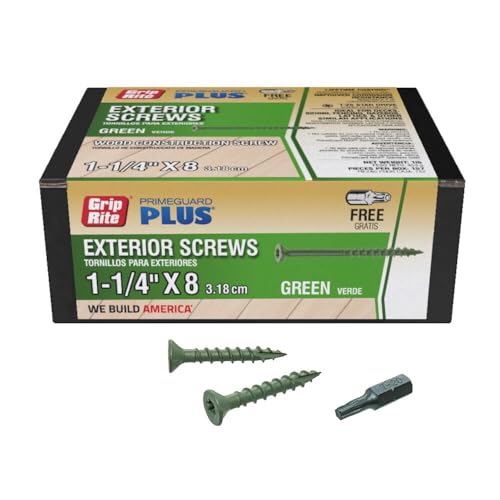
Grip-Rite PrimeGuard Plus Deck Screws 3″ Black (3 lb)

Kreg Blue-Kote Pocket-Hole Screws 1-1/2″ 100 ct

Simpson Strong-Tie SD Connector Screws 2-1/2″ 500 ct

SPAX T-Star Plus Countersunk A2 Stainless 4.5 x 60
Simpson Strong-Tie SDWS22312DBB Outdoor Accents 3-1/2″ Black 50 ct

Grip-Rite #6 x 2″ Fine Thread Drywall Screws 1 lb
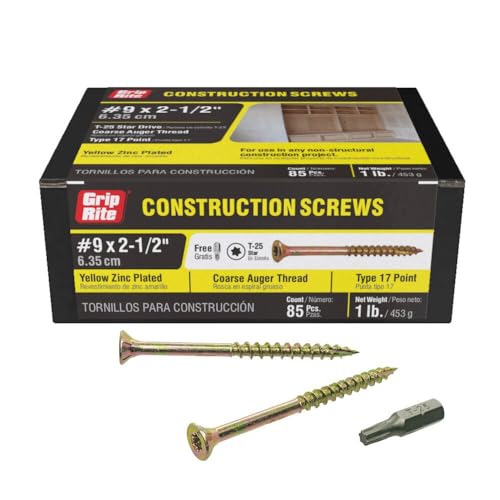
Grip-Rite #9 x 2-1/2″ T25 Gold Construction Screws 1 lb

Simpson Strong-Tie SDWS22600 Timber Screws 6″ Exterior 50 ct

LIONMAX Deck Screws 3″ Tan 25 lb Bulk Pail
The Strengths Of Each Pick
If your spring project is a new pressure-treated deck, the Grip-Rite PrimeGuard Plus nails the most common scenario on the first try. The 3-inch length sinks through 5/4 deck boards into joists without the tip wandering, and the bugle head (the slightly rounded top that flares just under the drive) pulls the board tight to the framing instead of letting it sit proud. Compared to the LIONMAX bulk option later in this list, you trade raw quantity for a coating that blends into dark or painted lumber.
The T-25 star drive resists cam-out (when the bit slips and chews the screw head) far better than a Phillips, so a long day of fastening produces fewer stripped heads. For DIYers rebuilding a backyard deck on a single weekend, that reliability pays off more than any premium spec sheet.
Bright Spots
- Bugle head seats flush without pre-countersinking on most softwoods.
- T-25 star drive holds the bit firmly under load, reducing wrist fatigue on long runs.
- Coarse thread bites into pressure-treated lumber without aggressive pilot holes.
- Black coating hides well against dark stains and composite boards.
Worth Noting
- Three pounds is enough for a small deck but you may run short on a 400-square-foot build.
- The coating handles rain and snow, though it may wear sooner than stainless near saltwater.
Who It Suits Best
First-time deck builders working with pressure-treated lumber in a moderate climate benefit most from the forgiving drive and clean countersink.
Consider Something Else When
If you are framing a full perimeter deck with hidden connectors, the Simpson Strong-Tie SD Connector Screws handle that structural role with more authority.
Building an Adirondack chair or a cedar planter with a pocket-hole jig (a clamped drilling guide that creates angled joinery holes)? Standard interior screws will rust through the joint within a season. The Kreg Blue-Kote screws are built for exactly that situation, with a weather-resistant finish that holds up under dew and rain. Where the Grip-Rite PrimeGuard Plus focuses on flat deck surfaces, this pick handles the angled, glue-reinforced joints that hold outdoor furniture together.
The Maxi-Loc head (a wide, flat underside) spreads clamping force across the pocket-hole shoulder, which means fewer split boards when the joint cures. Coarse threads grip softwood and plywood cleanly, so the screw pulls both pieces tight without a helper leaning on the clamp.
The Practical Payoff
- Blue-Kote finish resists corrosion in joints where moisture lingers.
- Coarse thread pulls softwood tight without aggressive pilot holes.
- Maxi-Loc head seats firmly against the pocket-hole shoulder.
- One-1/2-inch length suits 3/4-inch stock joined at 90 degrees.
Trade Offs
- Not designed for structural framing; the head can snap under shear loads.
- Specialty length means you cannot lean on this box for general repairs.
Right Fit For
Weekend woodworkers assembling outdoor furniture, planter boxes, and cedar yard projects with a pocket-hole jig.
A Better Fit Elsewhere
For ledger boards and beam work, the Simpson Strong-Tie SDWS22600 Timber Screws carry structural loads these pocket screws cannot.
When your project includes engineered metal connectors like joist hangers, hurricane ties, or beam seats, generic deck screws will not satisfy building inspection in many jurisdictions. The Simpson Strong-Tie SD Connector screws are specifically approved for those brackets, replacing 10d common nails with a fastener that resists withdrawal far better. Compared to the PrimeGuard Plus earlier, this pick is less about the wood surface and more about the metal-to-wood connection holding the structure together.
The Type 316 stainless steel (a marine-grade alloy with molybdenum for chloride resistance) shrugs off the salt air that ruins standard galvanized fasteners within a few seasons. The 1/4-inch hex head with an integrated washer seats cleanly into the pre-punched connector holes, and a hex bit ships in the box so you are not hunting for one mid-project.
Notable Upsides
- Engineered and approved for Simpson Strong-Tie connector brackets.
- Type 316 stainless construction handles coastal and high-humidity climates.
- Hex head with integrated washer provides solid bearing against metal.
- 500-count box covers a full deck framing job without restocking.
Honest Caveats
- Specialty sizing means you cannot substitute these for general deck boards.
- Stainless drives a bit slower than coated carbon, so plan extra battery time on a drill session.
Best Suited To
Homeowners and contractors building inspected decks, pergolas, or additions where metal connectors carry structural loads.
Look Elsewhere When
For visible deck board faces where a black finish blends better, the Grip-Rite PrimeGuard Plus is the more practical call.
There is a reason European deck builders gravitate toward SPAX when the project includes a visible hardwood face like ipe or cedar. The A2 stainless body (a chromium-nickel alloy suitable for outdoor use) resists rust streaks, and the T-Star plus drive system locks the bit into the recess without the wobble you get from a generic Torx. Where the Kreg Blue-Kote focuses on hidden pocket joints, this SPAX screw is made to be seen.
The 4CUT tip (a four-sided point that slices wood fibers) reduces splitting near board ends, and the MULTI head mills through wood before stopping cleanly on metal. For most visible outdoor builds, the countersink leaves a near-flush finish that takes stain without telegraphing the screw pattern.
Reasons It Performs
- A2 stainless body holds up to weather without bleeding rust onto the wood.
- 4CUT tip reduces splitting on dense hardwood and near board ends.
- T-Star plus bit engagement stays firm even on overhead installations.
- Countersunk head sits flush for a clean, furniture-grade finish.
Points To Keep In Mind
- Partial thread design is less ideal for joining two thin boards face-to-face.
- Premium stainless pricing adds up across a full deck surface.
Who Will Love This
Detail-oriented builders working on visible hardwood decking, garden gates, or custom outdoor furniture where the fastener finish matters.
Skip It When
For a utilitarian privacy fence, the Grip-Rite gold construction screws deliver a similar grip at a friendlier cost.
There is a category of outdoor project where the fastener itself is part of the design language, and the Simpson Outdoor Accents line speaks directly to that builder. The black DB coating (a double-barrier finish over a corrosion-resistant base layer) pairs with matching decorative washers, so exposed beam brackets read as intentional hardware rather than an afterthought. Compared to the silver stainless SPAX earlier, this screw announces itself in the finished build.
The SawTooth point bites into wood fast, eliminating most pre-drilling and keeping your drill session moving. Under-head nibs grip the washer so the head seats without spinning free, a small detail that matters when you fasten overhead.
Useful Strengths
- Black DB coating coordinates with Outdoor Accents decorative hardware.
- SawTooth point reduces installation torque and starts without pilot holes.
- Under-head nibs lock the washer in place during seating.
- Functions as a wood-to-wood fastener without the washer when preferred.
Factors To Consider
- Decorative washers are sold separately, so total project cost climbs quickly.
- Only 50 screws per pack, which suits post-and-beam rather than deck surfaces.
Perfect Match For
Designers and DIYers building a statement pergola, pavilion, or timber-frame gate where the hardware should be on display.
Another Choice May Suit
For a full deck surface where the fasteners disappear into the boards, the LIONMAX bulk pail offers better coverage per dollar.
Not every outdoor project lives in the lumber pile. A garden shed, an outdoor kitchenette, or a detached workshop still needs interior drywall hung against light-gauge steel studs, and the fine-thread drywall screw handles that job cleanly. The sharp point punches through 25-gauge steel without skating, and the bugle head sinks past the paper face without tearing it. Where the Kreg Blue-Kote targets outdoor wood joints, this pick is the wall-finishing partner for the rest of the build.
Phosphate coating helps paint and joint compound adhere to the head, so a finished wall looks clean after priming. The one-pound box covers a small room’s worth of hanging without paying for a contractor-sized bucket.
The Upside
- Fine thread bites into light-gauge steel without pre-drilling.
- Sharp point starts cleanly on metal stud framing.
- Phosphate finish improves mud and paint adhesion over the head.
Possible Compromises
- Not rated for exterior exposure; the phosphate coating will rust if left unfinished outdoors.
- Fine thread grips poorly in wood, so keep these off the deck framing.
Built With In Mind
Shed builders and garage workshop finishers hanging drywall against steel studs in a sheltered outdoor-adjacent space.
Reach For A Different Pick When
For the framing stage of a shed or pergola, the Grip-Rite gold construction screws handle wood-to-wood fastening with more appropriate thread pitch.
The Grip-Rite gold construction screw is the kind of fastener you reach for without thinking, and that is the point. The 2-1/2-inch length and #9 gauge handle most outdoor framing tasks, from fence rails to sub-structure blocking, without specialized stock. Compared to the PrimeGuard Plus earlier, the yellow zinc finish trades a deck-rated black coating for a more versatile workhorse tone that signals interior-or-sheltered framing.
The T-25 star drive and dual flat head with nibs (small ridges under the head that bite into the wood) keep the bit engaged and the seating clean, which matters when you sink hundreds of screws in a fence build. Yellow zinc adds modest corrosion resistance, enough for fence panels and roof decking under a covered porch.
Everyday Advantages
- Versatile length and gauge fit fence rails, blocking, and sub-structure work.
- T-25 drive reduces cam-out across long fastening sessions.
- Under-head nibs grip the surface so the head seats flush without spinning.
- Gold zinc finish offers light corrosion resistance for sheltered outdoor use.
Things To Weigh
- Not a substitute for a deck-rated screw on horizontal walking surfaces.
- One-pound box may run short on a full perimeter fence.
Made For
Homeowners assembling a fence, gazebo sub-frame, or general outdoor carpentry where a versatile mid-duty screw solves most problems.
Swap It Out When
For visible deck boards where the fastener should blend into the surface, the LIONMAX tan deck screws match common board colors and ship in project-scale quantity.
When the project requires a ledger board (the structural member bolted to a house) or a long beam-to-post connection, a 6-inch screw stops the conversation about whether the joint is adequate. The Simpson SDWS22600 brings the structural engineering reputation of the brand to a timber-scale fastener. The 0.220-inch shank diameter resists shear forces that would snap a thinner screw, and the washer head spreads clamping pressure across the wood face.
Double-barrier coating (a layered zinc-and-polymer finish) gives this screw more weather tolerance than a plain zinc part, though it stops short of full stainless marine grade. The T-40 six-lobe drive (a deeper star pattern that resists stripping under high torque) keeps the bit locked during the harder drives that long fasteners demand.
Features That Help
- 6-inch length reaches through ledger boards and into rim joists.
- Washer head spreads load across the wood face for cleaner seating.
- Double-barrier coating adds outdoor durability over standard zinc.
- T-40 drive holds the bit firmly under high installation torque.
A Few Limitations
- Specialty length means you cannot reach for it on everyday repairs.
- Requires a T-40 bit, which is not as common as T-25 in basic drill sets.
Whose Shelf It Belongs On
Serious DIYers and contractors building deck ledgers, pergola beams, or heavy timber connections that need a long, structural fastener.
Where A Sibling Pick Shines
For general-purpose fastening where you are not chasing structural loads, the Grip-Rite gold construction screws cost less per screw and fit more common bits.
A 500-square-foot deck eats screws by the thousand, and restocking mid-project because you underestimated is a frustrating afternoon. The LIONMAX 25-pound pail ships 1,700 pieces, enough to cover a full deck with a comfortable surplus for fence pickets and trim. The tan coating blends into common cedar-tone and composite decking, so the fastener pattern fades into the surface once the project is done. Compared to the three-pound Grip-Rite box earlier, this is the same job scaled to a serious build.
The T-25 star drive and #10 gauge give the screw enough body to sink cleanly without snapping, and three driver bits ship in the pail so a worn bit does not stall the project. The reusable bucket doubles as a storage container for the leftovers, which matters if you like to keep spare fasteners in the garage.
A Few Strong Suits
- 1,700-count pail covers a full deck build with surplus for trim work.
- Tan coating blends with cedar and composite deck boards.
- Three included T-25 bits extend the working life of the box.
- Reusable bucket keeps leftover screws organized in the shop.
Things To Weigh Up
- 25 pounds is awkward for a small weekend repair, so commit to a full project before opening the pail.
- Coating handles standard climates well, though coastal projects may demand stainless like the SPAX earlier.
The Right Fit
Contractors and ambitious DIYers planning a whole-deck build who want one purchase to cover the entire fastener budget without mid-project runs to the store.
Not Your Match When
For a small repair or a single furniture build, the smaller Grip-Rite box delivers the same star-drive performance in a more practical size.
Picking The Right Fastener For Your Outdoor Build
Choosing the right screw for outdoor work starts with where the joint lives. A deck surface that walks barefoot demands a fastener that countersinks cleanly and resists rust streaks, while a hidden joist connection needs raw holding power. The coating determines the lifespan: zinc handles rain and snow, ceramic-coated carbon adds another few seasons, and 316 stainless shrugs off salt spray near a coast. For most home projects, the right coating matters more than the brand name on the box.
Match the drive system to your bit collection. Phillips strips under torque, while Torx (the six-point star pattern) and square drives hold the bit in place for fewer wasted screws. T-25 covers most deck and construction work, while specialty screws like the Simpson SDWS line require a T-40 that may not live in your current drill kit. Thread pitch (the spacing between thread spirals) also matters: coarse threads bite into softwood cleanly, while fine threads grip plywood and light-gauge metal.
Length and gauge should match the material thickness. A 3-inch screw through 5/4 decking into a 2x joist gives the threads enough bite to pull tight, while a 6-inch structural screw handles ledger and beam work. Head style changes the finished look: bugle heads vanish into deck boards, hex heads anchor connectors, and decorative washer-head screws become part of the visual design.
Finally, buy for the project you have, not the project you might build. A 25-pound pail makes sense for a full deck but a waste of money for a fence gate. Specialty fasteners like pocket-hole or connector screws solve specific problems, so keep a small stock of each type rather than chasing one universal screw for every joint.
Sorting The Noise From The Hardware Aisle
Pitfalls Shoppers Hit
The most common mistake is buying interior screws for exterior joints and assuming the finish will hold. Standard phosphate and black oxide coatings (thin surface treatments meant to reduce screw-on-driver friction, not to fight weather) begin staining wood within a season. Another trap is matching screw length to the visible board rather than the framing underneath, leaving threads without enough bite to hold. Finally, ignoring head style leaves proud screw heads that catch socks and lawn chair legs. Read the coating label, measure for the full material stack, and pick a head that matches the surface you want at the end.
When Paying More Pays Off
Premium stainless and double-barrier coatings cost more per box, and the upgrade pays off in two situations. First, coastal climates and pool decks expose fasteners to chloride that eats standard zinc quickly, so a stainless screw avoids a deck replacement in five years. Second, visible structural projects like timber-frame pergolas and statement posts benefit from a fastener that will not bleed rust down the wood face over time. For a backyard deck in a temperate climate, mid-tier coated screws handle the work without the premium price tag.
Frequently Asked Questions
What coating is best for outdoor screws?
For most climates, a ceramic-coated or double-barrier carbon steel screw balances cost and corrosion resistance well. Coastal or poolside projects benefit from 316 stainless, which handles chloride exposure without bleeding rust stains.
Do I need to pre-drill for outdoor screws?
Most modern deck and construction screws include a self-drilling tip that starts without a pilot hole in softwood and standard lumber. Hardwood species like ipe, dense composite boards, and any near-end fastening still benefit from a pilot hole to prevent splitting.
How long should outdoor screws be?
Match screw length to the combined thickness of both materials plus at least one inch of thread engagement into the base material. A 3-inch screw through 5/4 decking into a 2x joist typically leaves enough thread for a tight joint.
Can I use deck screws for framing?
Deck screws handle light framing and blocking, but structural connections like joist hangers and ledger boards require engineered connector screws like the Simpson SD line. Check local building codes before substituting screws for approved structural hardware.
How many screws per deck board?
Standard 5/4 deck boards on 16-inch centers typically take two screws per joist intersection. A 16-foot board crosses about twelve joists, so plan for roughly 24 screws per board on a typical residential deck.




