


A picket fence only stays straight if the fasteners holding it together do their job. Rain, freeze-thaw cycles, and pressure-treated lumber all push back against the wrong screw, and most yard projects fail at the fastener before the wood ever gives out. Choosing the right exterior wood screws means thinking about length, head style, drive type, and coating all at once, not just grabbing a box off the shelf.
The picks below cover a range of scenarios, from light repair work to structural posts. Each one is sized and coated for outdoor duty, so you spend less time pulling rusty screws and more time enjoying a fence that actually holds its line through the seasons.
A Closer Look At The Lineup

Grip-Rite Exterior Screws #9 x 2 Bugle Head (Gray)

T.K.Excellent Deck Screws #9 x 2-1/2 (Tan)

LIONMAX Pocket Hole Screws #8 x 1-1/2 (Blue)
LIONMAX Pocket Hole Screws #8 x 1-1/4 (Blue)

T.K.Excellent Deck Screws #10 x 3 (Tan)
Deck Plus Wood Screws #8 x 1-5/8 (Tan)

FIXLINK Deck Screws #10 x 3 (Tan)

Grip-Rite PrimeGuard Plus #9 x 3 (Green)
T.K.Excellent #14 x 3 Structural Lag Screws (Zinc)
Inside Each Recommended Option
Pressure-treated lumber eats ordinary fasteners alive, and the PrimeGuard coating on these Grip-Rite screws is built specifically to handle that chemical environment. The #2 Phillips bugle head (a flat, slightly rounded top with a tapered underside) drives flush without pre-drilling in most softwoods, which speeds up weekend fence repairs noticeably.
For picket attachment on a standard 2×4 rail, the 2-inch length and coarse thread give enough bite to hold against wind and gate-slam forces. The steel core and gray PrimeGuard finish also help the heads blend into weathered wood, so the final look stays tidy.
Reasons It Performs
- Coarse thread grips softwood fibers and resists pull-out over time
- PrimeGuard coating stands up to the copper-based preservatives in pressure-treated lumber
- Bugle head countersinks cleanly, leaving a smooth surface that won’t catch on clothing
- 1-pound box is sized right for a single weekend fence project without leftovers rusting in a shed
Things To Weigh Up
- Gray color stands out against cedar or redwood, where a tan fastener blends better
- Phillips drive can cam-out (the bit slips out of the head under torque) more easily than a Torx alternative
Made For
Homeowners attaching pressure-treated pickets to standard 2×4 rails in a typical backyard run.
Consider Something Else When
You want a more concealed look on cedar lumber, in which case the tan T.K.Excellent 2-1/2 inch screws are a better match.
The 2-1/2 inch length on these T.K.Excellent screws makes them a smart middle-ground fastener for picket fences with thicker backer rails or doubled-up 2×4 supports. The Torx T25 drive (a six-point star pattern that grips the bit more securely than Phillips) keeps the bit seated under load, which matters when you’re driving hundreds of screws in one afternoon.
The tan Ruspert coating is designed for outdoor exposure, and the included two T25 bits mean you always have a backup when one wears out. Compared to the Grip-Rite 2-inch option above, the extra half-inch of reach is what you’d want for a sturdier rail-and-picket connection.
What Helps Most
- Tan finish blends naturally with cedar, pine, and most stained fence woods
- Torx T25 drive dramatically reduces cam-out, especially with impact drivers
- Self-attacking point and tail cutting design reduce the chance of splitting near board ends
- Two spare T25 bits included in the box, which is genuinely useful on long builds
Honest Caveats
- Tan coating can leave a small ring on very light woods if the head is overdriven
- 395-piece count may leave you short on larger fence runs, so plan ahead
Who It Suits Best
DIYers building a new cedar or pine picket fence who want clean-looking fasteners without buying a bulk pail.
Look Elsewhere When
You need longer reach for heavy rails, in which case the T.K.Excellent 3-inch deck screws step up to that job.
Not every picket fence is just face-screwed. Many decorative designs use pocket hole joinery (a hidden angled hole drilled into one board so the screw drives into a mating board out of sight) for gate frames, cross rails, or trim caps. These LIONMAX pocket screws are designed for exactly that workflow, with a washer-style head that seats against the pocket without overdriving.
The blue anti-rust coating is rated for outdoor use, and the square drive (Robertson-style) grips the bit firmly to avoid stripping. At 1-1/2 inches, the shank is long enough to pull two fence boards together securely without poking through the face.
Useful Strengths
- Washer head pulls mating boards tight without the screw sinking past the pocket shoulder
- Square drive resists stripping even under heavy driving torque
- Blue anti-rust coating holds up in seasonal wet conditions better than plain zinc
- 600-piece count suits a full gate-and-frame build without mid-project reorders
Worth Noting
- These require a pocket hole jig to drill at the correct angle for the joint to work
- Not designed for face-attaching pickets to rails, so they’re a specialty fastener, not a general one
Right Fit For
Builders constructing hidden-joint gate frames, decorative caps, or assembled fence panels where clean faces matter.
Swap It Out When
You only need to face-fasten pickets, where the T.K.Excellent 2-1/2 inch Torx screws are far more efficient.
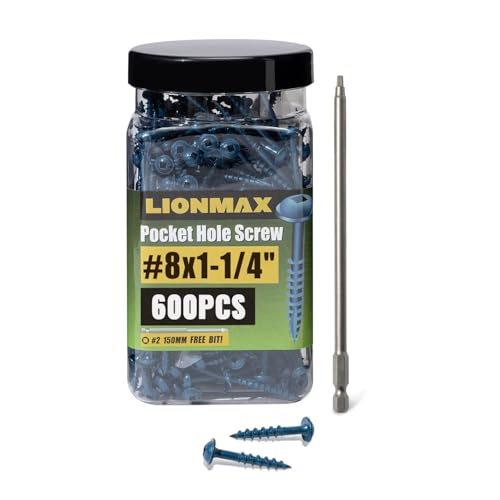
Thin stock is where shorter pocket screws earn their keep. The 1-1/4 inch length on this LIONMAX box is dialed in for joining 3/4 inch nominal boards, which is common in decorative picket caps, lattice inserts, and trim details. Drive them too long and the tip pokes through the face; this length avoids that risk cleanly.
It shares the same blue anti-rust coating and square drive as the longer 1-1/2 inch sibling, so you get the same outdoor durability in a smaller package. For anyone building a picket fence with routed tops or built-up detail boards, this is the right size for the trim work.
Benefits That Matter
- 1-1/4 inch length is the sweet spot for thin trim and lattice without blow-through
- Washer head design prevents the screw from sinking into the pocket shoulder
- Square drive keeps the bit locked in during long production runs
Points To Keep In Mind
- Limited to thinner stock; for 2x material the 1-1/2 inch version above is the safer pick
- Requires a pocket hole jig to function as intended
Best Suited To
Crafters and finish carpenters assembling decorative picket tops, lattice panels, and other detail work on a fence.
Reach For A Different Pick When
You’re joining thicker structural lumber, where the LIONMAX 1-1/2 inch pocket screws provide the extra reach needed.
Fence rails take more abuse than the pickets themselves, especially on a tall privacy-style fence or one that gets climbed by kids. The 3-inch length on these T.K.Excellent #10 screws drives deep into the backer, anchoring rails that would otherwise work loose over time. The #10 gauge is also thicker than the #9 used in shorter picket screws, which means more shear strength where it counts.
Same tan Ruspert coating and Torx T25 drive as the 2-1/2 inch version above, just scaled up for the structural side of the build. You’d typically use these on rails and the T.K.Excellent 2-1/2 inch on the pickets, and that’s a coherent system.
A Favorable Mix
- 3-inch length reaches through stacked rails and into the post face for a true structural hold
- #10 shank is thicker, giving more resistance to bending under wind load
- Tan color keeps the rail connections visually low-profile on natural wood
- Two T25 bits included for the inevitable wear during heavy use
Some Limits To Know
- Overkill for thin 1x picket faces, where the point may exit the back of the board
- 315-piece count works for a moderate run; larger yards will need a second box
Who Should Grab It
Contractors and serious DIYers building taller fences where rail pullout is the main long-term failure point.
Where Another Pick Suits Better
You’re only doing light repair work on a short run, where the Grip-Rite 2-inch screws are easier to drive and less aggressive.
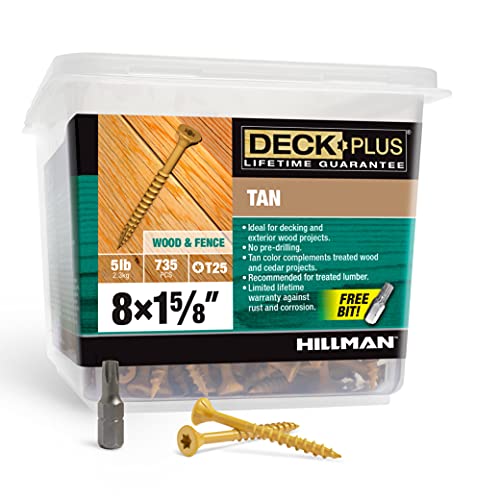
When the project list keeps growing, a 5-pound box of Deck Plus screws means one less trip to the store mid-build. At 735 pieces, this is enough fasteners for a substantial fence without splitting it across multiple orders. The 1-5/8 inch length lands in a versatile middle zone, long enough to anchor pickets firmly but short enough to avoid blow-through on thinner stock.
The tan epoxy coating and Torx drive put it in the same family as the T.K.Excellent options above, just at a different size and in a much larger count. For whole-yard builds, the bulk format is genuinely convenient.
Everyday Wins
- 735-piece count covers a full fence section in a single purchase
- 1-5/8 inch length suits most picket-to-rail connections without over-penetration
- Torx drive reduces bit wear and cam-out across hundreds of screws
Trade Offs
- 5-pound box is heavy to ship and store in a small apartment garage
- 1-5/8 inch may be too short for stacked-rail or doubled 2x connections
Key Specs
Whose Shelf It Belongs On
Shed stock for a property owner who fixes sections of fence every season and wants one reliable box on hand.
Not Your Match When
You only need a handful of fasteners for a tiny patch, in which case a smaller 1-pound Grip-Rite box costs less upfront.
Coastal air and humid climates punish fasteners faster than dry inland conditions, and that’s where the FIXLINK coating earns its keep. The salt-spray rating on these screws puts them in a higher tier of corrosion protection than most general-purpose deck screws at the same size.
At 3 inches long in #10 gauge, this is a rail-and-post fastener, not a picket fastener, and the serrated thread cuts into dense lumber without a pilot hole. The tan tone helps it disappear on natural cedar and pine rails.
Strong Points
- 1500-hour salt-spray rating is a genuine step up for coastal and poolside fences
- Serrated thread starts cleanly without pre-drilling in most softwoods
- Torx T25 drive keeps the bit seated during high-torque driving
Potential Compromises
- More expensive per box than non-rated deck screws, which may not pencil out for dry inland builds
- 3-inch length is excessive for face-attaching pickets
Perfect Match For
Homeowners near the coast or in humid regions where standard coated screws typically stain and streak the wood within a season or two.
Where It Is Less Suited
A small inland repair project on a tight budget, where the T.K.Excellent 3-inch screws deliver similar length at a lower tier.
Professional fence crews don’t run to the store mid-project, and a 25-pound pail of Grip-Rite PrimeGuard Plus screws solves that problem at the source. The polymer coating on these is a genuine upgrade over the standard PrimeGuard on the 1-pound Grip-Rite box above, and the green color helps differentiate them from gray fasteners when sorting inventory.
The Type 17 point design (a notched self-drilling tip that bores a small clearance hole ahead of the threads) reduces the need to pre-drill even in denser boards, and the bugle head still sinks cleanly for a flush finish. At 3 inches long, this is a rail and structural fastener, not a picket face screw.
Practical Advantages
- 25-pound pail keeps a working crew supplied for multiple fence sections
- Polymer coating extends outdoor life beyond standard epoxy finishes
- Type 17 point reduces pre-drilling in harder stock, saving real time on long runs
Points To Note
- 25 pounds is heavy to move and store, and impractical for a one-time small repair
- Green color shows on light woods, which some fence owners dislike visually
Built With In Mind
Active fence contractors and serious property managers who replace sections regularly and want a standing inventory.
Skip It When
You’re patching a single panel, where the 1-pound Grip-Rite box is a far better match in both size and price tier.
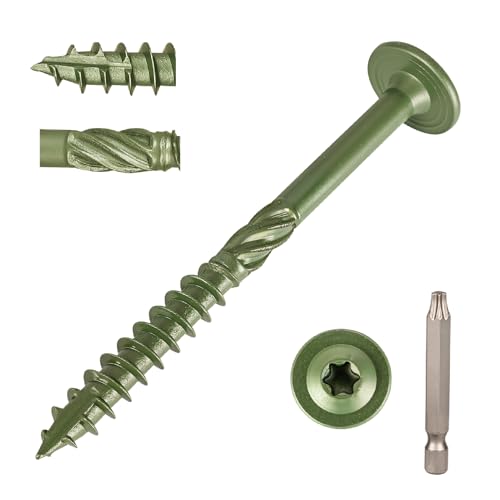
Posts are the foundation of a picket fence, and a #14 gauge screw is in a different weight class than the #8 and #9 fasteners used for rails and pickets. These T.K.Excellent structural lag screws step up to that level, with a 3-inch shank, a knurled shoulder (a textured section that bites into the wood to prevent slip during driving), and a T30 Torx drive that handles the higher torque without stripping.
The washer head pulls the connected member tight without countersinking too far, and the zinc plating is rated for exterior structural work. Think of these as the fasteners for the parts of the fence that absolutely cannot fail: post-to-rail brackets, gate hinges, and heavy cross members.
What Works In Its Favor
- #14 gauge shank offers structural-grade holding power for posts and gates
- Knurled shoulder resists wobble and prevents the screw from over-spinning in dense wood
- T30 Torx drive handles the high torque that #14 fasteners require
- Washer head distributes load across the surface for a tight, lasting connection
Things That May Matter
- 55-piece count suits a small number of structural connections rather than a full picket run
- Overkill for face-fastening pickets, where the screw is far larger than needed
Who Will Love This
Builders working on heavy gate posts, structural brackets, or any connection point where a standard deck screw would be undersized.
A Better Fit Elsewhere
You need to attach flat picket faces, where the Grip-Rite 2-inch exterior screws are a more appropriate scale.
What To Look For In Screws For Picket Fence
Coating comes first. Any exterior wood screw worth using on a fence needs a coating designed for the chemicals in pressure-treated lumber, and ideally for the moisture levels in your region. Epoxy, Ruspert, and polymer coatings all rank differently, and a salt-spray rating becomes a real advantage near the coast.
Length and gauge matter more than people expect. A 1-5/8 to 2-1/2 inch #8 or #9 screw covers most picket-to-rail connections, while 3-inch #10 fasteners are the right size for rails into posts. Anything heavier, like a #14 structural lag, belongs on posts, gates, and load-bearing brackets rather than flat picket faces.
Drive type affects how smoothly the build goes. Torx or square drives grip the bit firmly and reduce cam-out, which saves real time over hundreds of screws. Phillips drives still work, but the bit slips more often, especially with impact drivers.
Head style is mostly aesthetic, though it has functional consequences too. Bugle heads sink flush for a smooth surface, washer heads distribute load for structural joints, and pocket hole heads seat against a jig-drilled shoulder. Pick the head that matches what you’re fastening, not just what’s on sale.
Smart Habits Before You Start
Pitfalls Shoppers Hit
The most common mistake is using interior screws outdoors. The zinc plating on a drywall or wood screw is not designed for weather, and it will corrode within a season, leaving rust streaks down the picket faces that are nearly impossible to remove.
Another frequent miss is buying the wrong length. Too short and the screw pulls out under load, too long and the tip pokes through the back of the board or splits the wood. The right length depends on the combined thickness of the boards being joined, and a quick measurement before ordering saves a return trip.
Where The Extra Money Goes
Higher-tier fasteners like the FIXLINK and Grip-Rite PrimeGuard Plus options cost more per box because their coatings last longer in harsh conditions. The upgrade pays off when the fence sits in coastal air, full sun, or wet soil, all of which accelerate standard coatings into early failure. For an inland fence in a mild climate, mid-tier options like the T.K.Excellent Tan line typically perform well without the premium.
Frequently Asked Questions
How long should screws for a picket fence be?
For most picket-to-rail connections, a 1-5/8 to 2-1/2 inch screw is the right range, depending on the combined thickness of the boards. Rails into posts typically need 3 inches, while structural post connections call for heavier lag fasteners in the 3-inch range or longer.
Do exterior deck screws work on picket fences?
Yes, exterior deck screws are well-suited to picket fences because they’re coated for outdoor moisture and pressure-treated lumber. The key is matching length and head style to the joint, and using a Torx or square drive for the cleanest results.
What coating is best for outdoor fence screws?
Epoxy, Ruspert, and polymer coatings all hold up outdoors, with salt-spray rated versions like the FIXLINK line performing best in coastal or high-humidity regions. Standard zinc plating is the weakest of the common options and tends to fail fastest.
Should I pre-drill holes for picket screws?
Most modern exterior screws with self-drilling or Type 17 points do not require pre-drilling in softwoods like pine or cedar. Hardwoods, dense treated lumber, and board ends within an inch or two of a knot are the cases where a pilot hole prevents splitting.
How many screws does a typical picket fence need?
A standard 6-foot-tall picket with two screws per rail needs roughly 4 fasteners per picket, and a 50-foot fence section with pickets every 4 inches uses several hundred screws. Buying in 1-pound or smaller boxes usually means a second order mid-project, which is why 5-pound pails and contractor pails exist.




