


Pressure-treated lumber chews through ordinary fasteners. The chemicals that protect the wood from rot also corrode unprotected steel, leaving stains around screw heads and weakening the joint over time. Picking the right screw means matching the fastener’s coating and thread design to the treated lumber you’re driving into, and that’s where most weekend builders go wrong. The picks below cover framing, decking surface, and pocket-hole work, so you can match a screw to the job without overspending on features you won’t use.
A Side-By-Side Look

Micnce #14 x 4-1/2″ Heavy-Duty Deck Screws

Kreg Blue-Kote Weather-Resistant Pocket-Hole Screws 1-1/2″

FIXLINK #10 x 3″ Tan Deck Screws 310-Pack
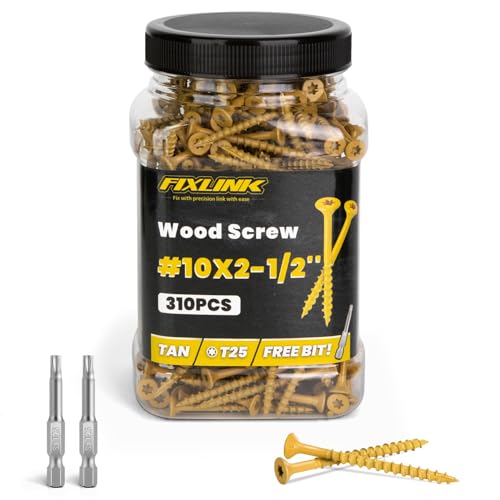
FIXLINK #10 x 2-1/2″ Tan Deck Screws 310-Pack

FIXLINK #10 x 4″ Tan Deck Screws 105-Pack

Micnce #14 x 2-7/8″ Coarse Thread Deck Screws

LIONMAX #10 x 3″ Tan Deck Screws 25 lb Bulk
A Closer Look At Each Pick
Structural framing sits underneath every deck you’ll ever build, and most weekend warriors undersize the screws that hold the joists and beams together. The Micnce #14 x 4-1/2″ screws address that gap with a beefy gauge and length meant for joining two layers of treated lumber totaling 70 to 90mm. The integrated washer-style truss head spreads the clamping load so the head won’t sink into softer boards, and the T30 star drive resists the cam-out that ruins ordinary Phillips screws partway through a long afternoon.
For most home workshops this is overkill on deck surface boards, where the FIXLINK 3-inch pick below makes more sense, but for ledger attachment and beam-to-post connections you want the extra thread engagement. Owners commonly report that the deep coarse thread bites aggressively into Southern Pine and Douglas Fir, which is exactly what you want when the structure carries real weight.
Why It Works Well
- #14 gauge shaft delivers higher pullout and shear strength than standard #10 wood screws
- T30 star drive reduces bit slippage during high-torque runs
- Integrated washer head spreads clamping force across soft lumber
- Coarse thread bites cleanly into treated softwoods like Southern Pine and Douglas Fir
- Long 4-1/2″ reach suits ledger and beam connections where shorter screws won’t sink deep enough
Worth Noting
- Not intended for surface deck boards, so you’ll need a second screw type to finish the floor
- Pre-drilling is recommended on dense hardwoods like oak and maple
Key Specs
Whose Job It Solves
Contractors and serious DIYers building the structural skeleton of a treated-wood deck or pergola, especially where ledger-to-house and beam-to-post connections carry real load.
Where Another Pick Suits Better
If you’re fastening 5/4 surface deck boards and need a screw that disappears into the tan tones of treated lumber, the FIXLINK #10 x 3″ pack is a smarter buy.
Most deck screws ignore the world of pocket-hole joinery, but anyone who has built an outdoor bench, planter, or pergola with a Kreg jig knows that standard pocket screws rust the moment they meet rain. The Blue-Kote screws were developed to solve exactly that problem, with a weather-resistant coating designed for outdoor exposure and the Maxi-Loc flat bottom head that seats squarely in a pocket hole. The coarse thread is optimized for softwoods and plywood, so you get a tight joint without the wood splitting as the screw draws up.
For most deck framing this is the wrong tool, since pocket-hole screws aren’t structural and don’t have the shear strength of a structural lag. But for built-in benches, outdoor cabinets, or any furniture-grade assembly attached to a deck, the Blue-Kote coating resists corrosion much longer than interior-grade pocket screws, depending on your local humidity and exposure.
What Stands Out
- Blue-Kote coating rated for outdoor exposure where standard pocket screws would rust
- Coarse thread holds securely in softwood and plywood without pre-drilling
- Maxi-Loc flat bottom head provides solid seating in standard pocket holes
- 1-1/2″ length fits typical 3/4″ stock joined at 90 degrees
Trade Offs
- Not a structural fastener, so it won’t replace framing screws for ledger or joist work
- Only suited for pocket-hole jigs, limiting its use on a standard deck surface
Who It Suits Best
Woodworkers building outdoor furniture and built-in seating who already use a Kreg jig and want a weather-rated screw that won’t bleed rust on a finished project.
Skip It When
If your project is straightforward deck framing or surface decking, the Micnce structural lag screws or FIXLINK 3-inch deck screws will serve you better.
The 3-inch deck screw is the workhorse length for fastening 5/4 surface boards to a standard 2x joist, and this FIXLINK pack covers that job without making you think too hard about it. The tan coating matches the color of pressure-treated lumber closely enough that the screw heads blend in rather than standing out as bright silver dots, and the serrated thread tip starts into the wood without a pilot hole on most builds.
Unlike the Micnce structural screws above, this pick is sized and coated for surface decking rather than substructure. The T-25 star drive keeps the bit engaged even under the higher torque a cordless impact driver delivers, which matters when you’re sinking hundreds of screws in a single afternoon.
Positive Points
- Tan coating blends with the natural tone of pressure-treated lumber
- Serrated thread tip starts without pre-drilling on most softwoods
- T-25 star drive resists stripping under high-torque runs
- Coating tested to 1500 hours of salt spray for corrosion resistance
Some Limits To Know
- 3″ length is too short for structural framing, so you’ll need a separate screw for joist hangers
- Tan color may darken unevenly on boards that weather faster than the screw head
Right Fit For
DIYers building a standard 5/4 deck surface over pressure-treated framing who want one screw type that handles the bulk of the visible fastening.
Not Your Match When
For whole-deck volume buys, the LIONMAX 25-pound bucket covers the same job with far fewer packaging trips back to the store.
When the deck surface uses 1×4 or thinner nominal boards rather than 5/4 stock, a 3-inch screw is overspec and risks poking through the bottom of the joist. The 2-1/2-inch FIXLINK pack solves that math, giving you the same T-25 star drive, tan coating, and salt-spray-tested corrosion resistance as the 3-inch version in a shorter body that suits thinner profiles. That shorter length also means a slightly lower price per screw, so a 310-pack covers a small resurfacing job without the leftover pile of a bulk bucket.
Compare that to the LIONMAX 3-inch bucket below, which wins on price-per-screw for big jobs but loses when the board is too thin to accept the longer fastener. For most thin-board decks, this 2-1/2″ length is the smarter match.
A Strong Showing
- 2-1/2″ length fits thinner 1×4 boards without bottoming out through the joist
- Tan coating matches standard pressure-treated lumber tones
- Serrated thread starts into softwood without pre-drilling
- T-25 drive system reduces bit wear across long runs
Honest Caveats
- Not long enough for 2x structural framing, so plan on pairing with a longer screw for substructure
- Smaller pack size means more frequent reorders on larger projects
- Coating warranty is for corrosion resistance, not for color stability over decades
Quick Facts
Made For
Homeowners replacing the surface boards on an existing deck frame, where thinner stock and a tighter budget make 2-1/2″ the natural choice.
Another Choice May Suit
For new builds using 5/4 deck boards, the FIXLINK #10 x 3″ pack in pick 3 sinks deeper and holds more securely in the thicker stock.
Some fastening jobs need reach rather than volume, and that’s where the 4-inch FIXLINK comes in. The longer shaft sinks through thick rim joists, stair treads, and double-layer framing where a 3-inch screw simply can’t get enough bite. The trade-off shows up in the pack count, since a 4-inch screw costs more per piece and you don’t need as many of them on a typical deck.
Where the Micnce #14 gauge in pick 1 wins for pure structural framing, this #10 gauge is the better pick when you want the same tan-coated, salt-spray-tested screw family for a thicker fastening job that still falls within reasonable surface-deck use.
Advantages To Know
- 4-inch reach suits thick rim joists and stair tread fastening
- Tan coating maintains the same color profile as the rest of the FIXLINK line
- Same T-25 star drive system for bit compatibility across the brand
Points To Keep In Mind
- Smaller pack size means higher per-job cost on big builds
- Overkill for standard 5/4 deck surface applications
Feature Snapshot
Best Suited To
Builders working on stairs, multi-level decks, or any project that needs a longer screw in the same corrosion-resistant coating as the rest of their deck screws.
Look Elsewhere When
For most deck surface jobs, the FIXLINK #10 x 3″ pack in pick 3 covers the standard reach at a friendlier price per screw.
Not every structural screw needs to be a long 4-1/2″ lag. The Micnce #14 x 2-7/8″ sits in a sweet spot for fence rails, ledger boards, and any joinery where you need a thicker shaft than a standard deck screw but don’t have the depth for a full lag bolt. The T30 star drive and integrated washer head carry over from the longer sibling in pick 1, so you get the same bit engagement and clamping surface in a more compact package.
For most backyard fence builds and short ledger attachments, you may find this length easier to work with than the longer 4-1/2″ version, since the shorter body gives you more control on a drill driver without a stub extension.
Practical Advantages
- #14 gauge provides more shear strength than a standard #10 deck screw
- 2-7/8″ length suits fence rails and compact structural joints
- T30 star drive matches the longer Micnce screw in pick 1
- Washer-style head spreads clamping force on soft lumber
Practical Considerations
- Designed for structural joints, not surface deck boards
- Not suitable for boards under 45mm thick to avoid piercing through
Who Should Grab It
Homeowners building or repairing treated-wood fences, short ledger attachments, and any project where a thicker screw in a moderate length beats a thinner longer one.
Swap It Out When
For surface deck boards, the FIXLINK 3-inch tan pack in pick 3 handles the visible fastening at a lower per-screw cost.
Anyone who has finished a deck only to find they’re 80 screws short knows the pain of mid-project supply runs. The LIONMAX 25-pound bucket ships roughly 1,700 pieces, which covers an entire deck surface for a mid-sized backyard build without leaving you short on the last row. The bucket itself doubles as a storage container so loose screws don’t end up scattered across the garage floor between weekends.
Same story with the coating as the FIXLINK line above: a tan plated finish tested against 1500 hours of salt spray, paired with a T-25 star drive that keeps the bit engaged during high-torque runs. The trade-off is weight, since hauling 25 pounds of screws is a workout, and the bucket takes up more floor space than a slim retail box.
Useful Strengths
- Bulk 1,700-piece count covers a full deck or fence in one buy
- Reusable bucket keeps screws contained between projects
- Tan coating tested to 1500 hours of salt spray
- Includes three T-25 driver bits so you don’t burn through a fresh bit on the first 200 screws
Where It May Fall Short
- 25-pound bucket is heavy to haul home and bulky to store
- Overkill for small repair or resurfacing jobs
The Numbers That Matter
Perfect Match For
Contractors and ambitious DIYers framing and decking an entire treated-wood project who would rather not make three extra trips for more screws.
Where A Sibling Pick Shines
For smaller repair or resurfacing jobs, the FIXLINK 310-pack in pick 3 offers the same coating and drive system without the bulk commitment.
Picking Screws That Match Your Treated Lumber
Pressure-treated lumber uses chemical preservatives (copper-based compounds being the most common) that actively corrode unprotected steel. The fix is a coated or galvanized fastener rated for that chemistry, and skipping that detail is the single most common reason deck screws stain or snap within a few seasons. Look for labels like “exterior,” “ACQ-compatible,” or a salt-spray hour rating when comparing products.
Match Length to the Joint
A screw’s job is to sink through the top board and bite at least an inch into the underlying framing. A 5/4 deck board over a 2x joist calls for a 2-1/2″ to 3″ screw. Thicker assemblies, like double joists or stair stringers, need 4″ or longer. Anything shorter leaves the joint holding with too little thread engagement; anything longer risks poking through the back of the framing or bottoming out before the head seats.
Understand Drive and Head Style
A star (Torx) drive, such as T-20, T-25, or T-30, has six contact points with the bit, which spreads the torque and resists cam-out far better than a Phillips head. For decks, that translates to fewer stripped screw heads and a faster day on the drill. Washer-style or truss heads spread the clamping load so the head doesn’t sink into soft treated lumber, while trim heads sit flush for cleaner visible lines.
Pick a Coating That Survives Your Climate
A 1,000-hour salt-spray rating handles most backyard decks in mild climates. Coastal builds, pool surrounds, and areas with heavy road salt exposure benefit from 1,500-hour or higher ratings. The tan and ceramic coatings common on treated-lumber screws also hide the head visually, so the surface reads as wood rather than a constellation of silver dots.
Plan for More Than One Screw Type
Most decks need at least two screw sizes: a longer structural screw for the framing and a shorter surface screw for the deck boards. A common mistake is buying one bulk box and hoping it covers everything, then finding the screws are too short for the joists or too long for the surface boards. Plan the build in two phases (frame, then surface) and stock each accordingly.
Smart Choices Before You Buy
Pitfalls Shoppers Hit
The most common mistake is buying zinc-plated interior screws because they look the same in the box. The zinc flashes off within a season or two in contact with treated lumber, leaving rust streaks and a weakened joint. Another trap is assuming a 3-inch screw covers every job, when stair treads, rim joists, and ledger attachments all need longer fasteners. Finally, skipping the star drive to save a few dollars per box usually costs more in stripped bits and wasted time than the upgrade would have cost up front.
When Paying More Pays Off
The jump from a basic coated screw to a higher-tier screw with a 1,500-hour salt-spray rating and a Torx drive looks small on the receipt, but it buys years of service life and a faster install. The upgrade pays off most on visible deck surfaces, where stripped screw heads and rust stains are impossible to hide without pulling the board. On hidden structural framing, a mid-tier screw usually does the job, since the joint is protected from view and from direct weathering.
Frequently Asked Questions
What type of screws are best for pressure-treated decking?
Coated or ceramic-plated exterior wood screws with a corrosion-resistant finish, a star (Torx) drive, and a length suited to the joint are the standard match. The coating prevents the chemicals in treated lumber from corroding the steel, and the star drive reduces cam-out during installation.
Can I use regular deck screws on pressure-treated lumber?
Standard zinc-plated screws lack the coating needed to resist the chemicals in pressure-treated wood and will rust and stain within a season or two. Exterior-rated screws with a salt-spray-tested coating are required for any long-lasting build in treated lumber.
How long should screws be for 5/4 pressure-treated deck boards?
A 2-1/2″ to 3″ screw is the standard range for fastening 5/4 deck boards over 2x joists. The screw should sink through the board and bite at least an inch into the underlying joist for a secure hold.
Is a star drive really better than Phillips for deck screws?
A star (Torx) drive engages six points of contact with the bit, which spreads the torque and resists stripping far better than the two cross-points of a Phillips head. On a long deck build with hundreds of screws, that difference adds up to fewer ruined bits and faster driving.
Should I pre-drill for deck screws in pressure-treated lumber?
Pre-drilling is rarely needed for softwoods like Southern Pine, Douglas Fir, or standard treated lumber when using a self-starting thread tip. Dense hardwoods like oak or maple still benefit from a pilot hole to prevent splitting, especially near board ends.




