


Putting together a chair, patching a wobbly cabinet, or building a shelf from scratch all come down to the fastener. Pick the wrong screw and the joint splits, the head strips, or the whole thing loosens within a season. The picks below cover cabinetry, softwood assembly, and exterior projects, with options for pocket-hole jigs, self-tapping work, and corrosion-prone outdoor builds. Whether you’re a weekend DIYer replacing dining-chair rails or a hobbyist building an outdoor bench, the right thread pattern and coating makes the difference between a fix that lasts and one you’ll redo in a year.
The Shortlist At A Glance

Kreg Blue-Kote Pocket-Hole Screws 1-1/2″ Coarse Thread

WoodPro Fasteners CB8X234-1 Cabinet Construction Screws

Wensilon #8×1″ Black Truss Head Wood Screws (250 pcs)

Wensilon #8×3/4″ Phillips Truss Head Screws 410 Stainless (300 pcs)

Wensilon #8×3/4″ Sheet Metal Self-Tapping Screws 410 Stainless (300 pcs)

Deck Plus Wood Screws #10 x 3″ Tan 5lb Box

Wensilon #10 × 3″ Bronze Deck Screws Epoxy Coated (137 pcs)

Wensilon #10 × 3″ Black Deck Screws Epoxy Coated (137 pcs)
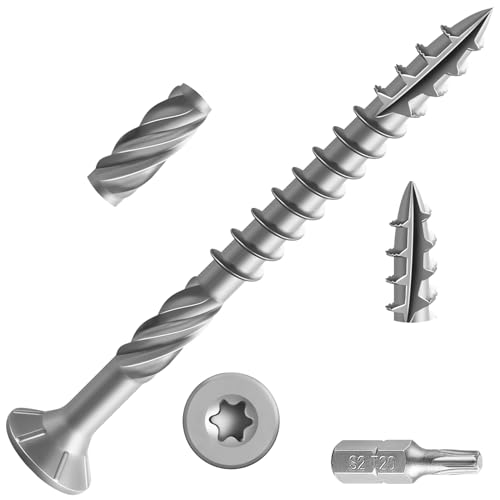
Wensilon #10 × 3″ 304 Stainless Deck Screws (58 pcs)
Inside Each Recommended Option
Pocket-hole joinery has reshaped how casual woodworkers build face frames, cabinet carcases, and knockdown furniture, and the screw that drives the joint matters as much as the jig itself. The Kreg Blue-Kote 1-1/2″ coarse-thread screw is purpose-built for softwoods and plywood, the materials most home shops stock on the shelf. The 100-count pack covers a medium-sized project like a bookcase or a set of built-in closet shelves without running dry mid-build.
Blue-Kote is a weather-resistant finish designed to hold up where plain zinc screws would start staining the wood within a season. For an outdoor planter box or a garden bench that sees morning dew, that finish is the reason these belong in your shop. The Maxi-Loc head sits flush in the pocket and resists wobble, so the drill bit stays engaged even on long production runs. Compared to the WoodPro cabinet screw below, this one is shorter and tailored to a specific jig system, so its appeal narrows to people who already own a Kreg.
Useful Highlights
- Coarse thread pattern bites cleanly into softwood and plywood without needing a pilot hole in most cases.
- Maxi-Loc flat-bottom head provides a wide bearing surface for stronger joint transfer in pocket-hole applications.
- Blue-Kote coating adds weather resistance for projects kept in damp sheds, covered porches, or seasonal outdoor use.
- 100-count sizing is comfortable for mid-range builds like a single bookcase or several cabinet face frames.
Honest Caveats
- These are Kreg-specific screws, so they’re a poor choice for standard Phillips or Torx drivers and for non-pocket-hole projects.
- Coarse threads underperform in dense hardwoods like oak or maple, where fine-thread fasteners grip better.
Key Specs
Who It Suits Best
Shops already running a Kreg jig and building softwood cabinets, bookcases, or outdoor projects where a corrosion-resistant finish matters.
Where Another Pick Suits Better
For long-reach face-frame cabinet assembly, the WoodPro Fasteners CB8X234-1 offers the length and Torx drive a bigger joint demands.
Cabinet face frames ask more from a screw than most furniture joints. The fastener has to reach deep enough to grab the underlying rail without bottoming out, and the drive has to stay put through hundreds of cycles on a drill. The WoodPro CB8X234-1 answers that with a 2-3/4″ reach, a T-20 Torx-compatible star drive, and a Type-17 auger point that bores its own pilot. At about 97 pieces per one-pound box, it’s a focused kit aimed at real shop output rather than occasional tinkering.
The T-20 star drive is the real upgrade over a Phillips head. Star drives (also called Torx) resist cam-out, which is the frustrating slip that chews up a screw head when the bit jumps under torque. Builders driving hundreds of face-frame screws a day notice that difference immediately. The Type-17 point drills through hard maple and birch plywood without a separate pilot hole, which speeds up assembly and reduces the chance of splitting thin rails.
The Upside
- Length of 2-3/4 inches gives enough reach for face-frame attachment to standard 3/4-inch cabinet sides.
- T-20 star drive reduces cam-out, so the bit stays engaged under heavy torque and saves driver bits over time.
- Sharp Type-17 auger point pre-drills its own entry in dense plywood and hardwood, reducing splitting on thin stock.
- Gold epoxy-style coating adds moderate corrosion resistance for shop environments and indoor humidity.
Worth Noting
- Length is overkill for small furniture repairs where a 1-inch screw would do the job more cleanly.
- One-pound pack is heavier and bulkier than a 100-count box, so it’s a commitment to a real workload rather than a weekend fix.
Feature Snapshot
Made For
Cabinet shops and serious hobbyists assembling face frames and large casework where Torx drive and a long reach matter.
Skip It When
For small cabinet-back or thin-plywood repairs, the Wensilon #8×3/4″ 410 stainless pack offers a shorter, more forgiving fastener.
Sometimes the job doesn’t call for a premium screw. It calls for a black-headed fastener that disappears into a dark stain and holds a wobbly chair leg without costing a fortune. The Wensilon #8×1″ truss head is a 250-count bag aimed squarely at hobby work, small furniture repairs, and DIY builds where budget beats brand recognition. The black phosphate finish blends with most stained woods and dark-painted surfaces.
Truss heads sit lower and wider than standard round or pan heads, which is why they’re common on cabinet backs, drawer fronts, and light-duty furniture where the head should look subtle. Self-tapping threads mean the screw cuts its own path into softwood and thin plywood, no pilot hole required in most situations. The Phillips drive is a known quantity, and most people already own a #2 driver bit that fits it.
Useful Touches
- 250-count bag delivers a low unit cost for hobbyists and casual weekend projects.
- Black phosphate finish blends into dark-stained and painted wood, hiding the fastener visually.
- Truss head profile sits low and wide, distributing load across softer materials without pulling through.
- Self-tapping carbon steel body drives cleanly into softwood without splitting thin panels.
Points To Keep In Mind
- Black phosphate offers light corrosion resistance at best, so outdoor or damp-area use will show rust within a season.
- Phillips drive strips more easily than Torx under high torque, especially in dense plywood.
Right Fit For
DIYers stocking a basic shop for occasional chair, shelf, and cabinet-back repairs on interior projects.
Look Elsewhere When
For a wet or marine environment, the Wensilon #10×3″ 304 stainless deck screw provides far better corrosion resistance.
Short screws have a specific job. They hold cabinet backs, secure thin plywood panels, and fasten drawer bottoms without punching through the other side. The Wensilon #8×3/4″ in 410 stainless delivers that short reach in a 300-count box, which is plenty for a kitchen redo or a long stretch of closet shelving. The 410 stainless body is magnetic, which makes these easy to find in a cluttered toolbox drawer with a magnetic pickup tool.
The trade-off for 410 stainless is real. It’s a harder, more magnetic grade than 304 stainless, so it resists rust in most indoor humidity but isn’t suited for salt-air or constantly wet conditions. For interior cabinet work, basement storage, or garage shop furniture, the corrosion resistance is generous. The self-tapping point bores through thin plywood without a separate pilot, and the truss head sits flush against the panel without pulling through soft MDF.
What Makes Sense
- 3/4-inch length is the right size for cabinet backs, drawer bottoms, and thin panel joinery.
- 410 stainless construction adds indoor-grade rust resistance over plain zinc or phosphate screws.
- 300-count bulk pack lowers the per-screw cost for whole-room cabinet or closet projects.
- Truss head profile keeps the fastener low-profile, reducing snag points on drawer slides and cabinet interiors.
Potential Drawbacks
- Short length is wrong for structural furniture joints, frame assembly, or anything that needs deep reach.
- 410 stainless can still discolor and corrode in salt-air or perpetually wet environments, unlike 304 or 316 grades.
Best Suited To
Cabinet builders, closet organizers, and finish carpenters fastening thin panels and drawer components on interior projects.
Consider Something Else When
For structural outdoor benches or deck framing, the Deck Plus #10×3″ tan box offers the longer reach and weather-rated coating those builds need.
Most furniture is wood-only, but plenty of builds mix in a metal bracket, a thin aluminum cleat, or a steel reinforcing plate. Standard wood screws balk at sheet metal and skip across the surface. The Wensilon #8×3/4″ sheet-metal self-tapping screw is engineered for that mixed-material reality, with a thread profile that cuts into light-gauge steel, aluminum, and plastic without snapping. The 410 stainless body adds the same indoor-friendly corrosion resistance as the previous Wensilon pick.
The 3/4-inch length is short on purpose. Sheet-metal screws are meant for thin stock, where a longer shank would punch through the back of the panel. The truss head distributes load over a wider area than a pan head, which keeps thin plywood from splitting when the screw pulls tight against a metal bracket. For a furniture maker building a workbench with steel legs or a cabinet with a metal hanging rail, this is a fastener worth keeping on the bench.
Notable Upsides
- Self-tapping thread profile cuts into light-gauge sheet metal, aluminum, and plastic without pre-drilling.
- 410 stainless body resists rust in indoor humidity and is fully magnetic for magnetic pickup tools and bit holders.
- Truss head spreads clamping force across thin plywood, reducing pull-through on cabinet backs and panel assemblies.
- 300-count pack covers an entire shop restock without breaking the budget.
Trade Offs
- Not designed for thick structural steel; hard-metal applications call for a dedicated self-drilling Tek screw.
- Short length limits use to thin-gauge materials where deeper reach is unnecessary.
Feature Card
Who Will Love This
Mixed-build woodworkers fastening metal brackets, hardware, and thin panels on shop furniture, workbenches, and cabinet interiors.
Another Choice May Suit
For pure wood-to-wood cabinetry, the Wensilon #8×3/4″ Phillips truss head in 410 stainless is purpose-built and less expensive.
Big outdoor builds eat screws by the hundred, and small boxes disappear before the first rail is up. The Deck Plus #10×3″ tan 5-pound box holds around 310 pieces, sized for deck framing, garden bench construction, and large picnic-table builds. The #10 shank is thicker than the #8 screws dominating the rest of this list, and that extra diameter matters when you’re joining pressure-treated 2x lumber.
The four-layer epoxy coating is the headline feature. Pressure-treated lumber holds moisture against the fastener for years, and plain zinc screws corrode through and leave dark stains on the wood. The epoxy layer is engineered to slow that process significantly. The self-drilling point pairs with coarse threads to reduce the need for pre-drilling, even in dense framing lumber. The tan color blends with most outdoor wood tones, so the fastener head isn’t an eyesore on visible faces.
The Good Stuff
- Five-pound bulk box covers an entire deck substructure or several large outdoor furniture builds.
- Four-layer epoxy coating resists corrosion against pressure-treated lumber and outdoor moisture.
- Self-drilling point eliminates most pre-drilling, saving time on long framing runs.
- Tan head finish blends with most outdoor wood tones for a cleaner visible surface.
Practical Considerations
- 5-pound box is heavy and bulky, so it’s overkill for a small repair kit or apartment balcony project.
- For salt-air or coastal settings, 304 stainless still outlasts epoxy-coated carbon steel.
Perfect Match For
Contractors and serious DIYers building deck frames, pergolas, and heavy outdoor furniture where a thick, coated screw is non-negotiable.
Swap It Out When
For visible-face deck boards or fine trim, the Wensilon #10×3″ bronze deck screw delivers a cleaner look with similar protection.
When the visible face of the project matters, plain tan screws look out of place against rich cedar or stained pine. The Wensilon #10×3″ bronze deck screw keeps the same heavy-duty framing capacity as a tan screw but wears a warmer finish that disappears against most wood tones. The 137-piece, 2-pound box is sized for a single bench or a small set of outdoor chairs, which is the realistic workload for a weekend builder.
The four-layer coating is the same corrosion protection that earns the heavier Deck Plus box its place. Serrated threads under the head bite into the top board and pull it tight against the framing, reducing the squeaky loose-board problem common on older decks. The T-25 star drive accepts a common Torx bit and resists cam-out under the higher torque that thick #10 screws demand.
Where It Delivers
- Bronze finish blends with stained cedar, redwood, and warm-tone lumber for cleaner visible faces.
- Serrated threads under the head grip the top board firmly, reducing squeaks and board lift over time.
- T-25 star drive holds up under the higher torque a #10 shank demands, with less bit slippage.
- Four-layer coating protects against the rust cycle in pressure-treated and outdoor environments.
Small Caveats
- 137-piece pack runs out faster than a 5-pound bulk box, so larger deck builds will need multiple purchases.
- Heat-treated steel is more brittle than stainless, and the coating can nick if the bit slips on installation.
Built With In Mind
Homeowners building a couple of outdoor chairs, a planter box, or a small deck where the screw head stays visible.
Reach For A Different Pick When
For high-moisture or coastal locations, the Wensilon #10×3″ 304 stainless deck screw outlasts epoxy-coated steel.
Dark-stained decks, charred-wood furniture (a finishing technique inspired by traditional Japanese shou sugi ban, where the wood surface is flame-charred for a deep black look), and black-painted projects all share a common complaint. Light-colored screw heads look wrong against a black surface. The Wensilon #10×3″ black deck screw is the same fastener as the bronze version above, finished in a dark tone that disappears against ebony stain and matte black paint.
Beyond the finish, the screw does the same heavy work as its bronze sibling. The four-layer epoxy coating handles outdoor moisture, the serrated threads grip the top board, and the T-25 star drive resists cam-out under the high torque a #10 shank needs. For furniture builders working in the popular dark-stained or painted farmhouse look, this is the fastener that keeps the build visually clean.
Strengths Worth Knowing
- Black head finish blends with dark stains, charred finishes, and black-painted outdoor furniture.
- Four-layer epoxy coating delivers the same outdoor corrosion resistance as the bronze Wensilon pick.
- Serrated threads bite into the top board for tight, squeak-free fastening on deck faces and visible furniture surfaces.
- 137-piece, 2-pound pack is manageable for a single project without the bulk of a 5-pound box.
Honest Caveats
- Black coating can chip if the bit slips during installation, exposing the steel underneath.
- For salt-air coastal exposure, 304 stainless still outlasts any epoxy-coated carbon screw.
Whose Shelf It Belongs On
Builders finishing outdoor furniture in dark stain or matte black paint where a bronze or tan head would be visually jarring.
Where A Sibling Pick Shines
For warm-toned cedar or unstained pine builds, the bronze Wensilon #10×3″ disappears more naturally than the black finish.
When the project lives next to the ocean, beside a pool, or under a constant sprinkler spray, epoxy coatings eventually fail. 304 stainless steel is the upgrade that simply doesn’t rust in those conditions, and the Wensilon #10×3″ 304 stainless deck screw delivers that corrosion resistance in a 58-piece, 1-pound pack sized for one or two premium pieces. Coastal homeowners, marine-deck builders, and poolside furniture projects benefit most from the price jump.
The 304 grade is the workhorse of the stainless family, balancing corrosion resistance with the cost. The bronze epoxy coating is a secondary layer over the stainless, adding a warm tone for visible-face fastening. Serrated threads under the head grip the top board tightly, and the T-20 star drive is a slightly smaller bit than the T-25 used on the carbon-steel Wensilon deck screws, so check that the included bit is the right size for your driver before starting.
A Few Strong Suits
- 304 stainless steel resists rust in coastal, poolside, and high-humidity environments far longer than coated carbon steel.
- Bronze epoxy coating over stainless adds warm tone for cleaner visible-face fastening on premium builds.
- Serrated threads grip the top board tightly, reducing squeaks and board lift on outdoor seating and tables.
- Heat-treated stainless body keeps drive strength comparable to the carbon-steel equivalents.
Possible Compromises
- 58-piece pack is the smallest on the list, so larger builds will need multiple boxes at a higher per-screw cost.
- For heavy salt-air environments, 316 stainless offers even more corrosion resistance, though at a noticeable cost premium.
Spec Overview
Who Should Grab It
Coastal homeowners, marine builders, and poolside furniture makers where ordinary coated screws would fail within a season.
A Better Fit Elsewhere
For dry-climate deck framing where 304 stainless is overkill, the Wensilon #10×3″ bronze deck screw delivers comparable holding power at a lower cost.
Picking The Right Fastener For Your Build
The screw that holds a wobbly chair leg rarely belongs in a coastal deck build. Sorting the right fastener starts with three calls: material, environment, and joint type. Material is the easy one. Softwood, plywood, and MDF take coarse-thread screws that bite aggressively. Hardwood and dense plywood want fine threads (where the threads are spaced closer together for a tighter, denser grip) that cut cleanly without splitting. Mixed-material builds (think a wood frame on a metal bracket) call for a self-tapping thread profile designed for sheet metal.
Environment is the second filter. Indoor humidity is forgiving. Plain zinc or phosphate coatings handle the load. Outdoor, pressure-treated, or coastal builds demand either a multi-layer epoxy coating or, for the toughest conditions, 304 stainless steel. The honest read is that epoxy-coated screws serve most homeowners well, and 304 stainless only earns its place when the project lives within sight of salt water or under a constant moisture source.
Joint type ties it together. Pocket-hole joinery needs a screw designed for that specific jig system, with a head that sits flush in the bored pocket. Face-frame cabinetry wants a long-reach screw with a Torx drive to survive hundreds of cycles. Cabinet backs, drawer bottoms, and thin panel work call for short screws that don’t punch through the other side. Visible-face outdoor work benefits from a color-matched head that disappears into the finish. Picking the right category is usually a bigger upgrade than picking a premium brand within the same category.
Key Considerations Across These Picks
Common Shopping Slip Ups
The first mistake is matching screw length to board thickness without thinking about the second board. A 1-inch screw into a single 3/4-inch board leaves almost nothing to bite into the material behind it. Run the numbers on the full joint, not the visible face. The second slip is using indoor zinc or phosphate screws outdoors because they were on the shelf. Coatings matter in weather, and the wrong finish shows rust stains on the wood within a year. The third is reaching for a Phillips drive on long production runs. Star or Torx drives earn their keep the moment you drive more than a few dozen screws in a session.
What The Higher Tier Buys
Premium fasteners, whether that’s the Kreg Blue-Kote or the 304 stainless Wensilon, pay for tighter thread tolerances, more consistent coatings, and stronger drive heads. In practice, that means fewer stripped screws mid-project, cleaner countersinks, and corrosion resistance that lasts a full outdoor service life rather than a couple of seasons. The upgrade is worth it on visible work, on coastal builds, and on any project you’ll see every day for the next decade. For a one-off shed shelf in the backyard, the budget tier is the smarter call.
Frequently Asked Questions
What size screw should I use for a 3/4-inch thick board? A 1-1/2 inch screw gives enough length to pass through the first board and bite firmly into the second, which is the joint configuration most pocket-hole and face-frame builds use. For a single board where the screw point only has its own thickness to grip, a 1-inch screw is the cleaner choice.
Do I really need stainless steel for outdoor furniture? For a covered porch or a patio that stays dry, epoxy-coated carbon steel handles the moisture. For furniture that sits in the open, near a pool, or anywhere with standing water, 304 stainless prevents the rust stains that ruin the wood finish and weaken the joint over time.
What’s the difference between coarse and fine thread screws? Coarse threads (the threads are spaced farther apart) bite aggressively into soft materials like pine, plywood, and MDF, and they resist stripping in those woods. Fine threads (the threads are spaced closer together) grip harder in dense materials like oak, maple, and birch plywood. Match the thread pattern to the wood, not to the project.
Can I use the same screw for wood and metal? Standard wood screws will skate across sheet metal and snap. Self-tapping sheet-metal screws have a thread profile that cuts into light-gauge steel, aluminum, and plastic. The Wensilon #8×3/4″ sheet-metal screw on this list is the right pick for any mixed-material furniture joint.
How many screws do I need for a typical chair repair? For a chair rail, leg, or stretcher repair, 4 to 8 screws cover the work, and a 100-count box leaves plenty of spares. Smaller repair kits rarely make sense, because the cost difference between a 100-count box and a 25-count box is small, and a leftover pack of screws is a quick fix the next time something wobbles.




