


Hanging anything on drywall, from a small photo frame to a heavy mirror or a floating shelf, can go sideways fast without the right hardware. Most screw-in failures trace back to a weak or mismatched anchor, not a weak wall. The right pick depends on the weight you’re carrying, the wall material behind the drywall, and whether you want to pre-drill or skip that step entirely. This roundup covers eight kits that handle everyday picture-hanging chores as well as heavier, furniture-grade jobs, with options for both new construction and apartment repairs.
The Picks In Brief

KURUI Drywall Anchors Assortment Kit with Toggle Bolts (164-Piece)

KURUI 140-Piece #8 Self-Drilling Drywall Anchors Kit

KURUI 140-Piece #8 Self-Drilling Drywall Anchors (Black)

Qualihome Plastic Conical Wall Anchors, 1-Inch, 50-Pack

E-Z Ancor 25310 Twist-N-Lock Drywall Anchors, 50-Pack
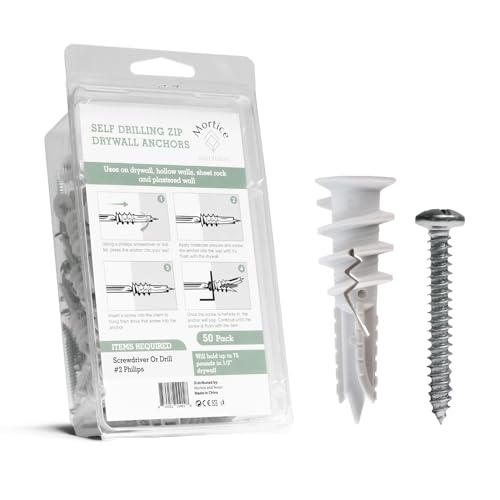
Mortice & Tenon Reinforced Nylon 66 Anchors, 90 lb (50-Pack)

Mortice & Tenon Nylon 66 Repair Anchor Kit, 90 lb (10-Pack)

Mortice & Tenon Nylon 66 Anchors, 90 lb (25-Pack Value)
The Details Behind The Selections
Few kits in this category try to cover every drywall situation in a single box, and the KURUI assortment comes close. You get 164 pieces split between self-drilling plastic anchors, threaded inserts, and metal toggle bolts in 1/4″, 3/16″, and 1/8″ sizes. The mix is genuinely useful: small plastic anchors handle a framed photo, while the toggle bolts step in for heavier ceiling fixtures like chandeliers or hanging planters.
Versatility is the main draw for anyone who doesn’t know exactly which anchor type they need. The included screws match the anchors, so you aren’t left guessing thread sizes. For most homes, this kit covers routine picture hanging and the occasional medium-weight install without a second trip to the hardware aisle.
What Makes Sense
- Wide variety of anchor styles in one box
- Metal toggle bolts included for ceiling and heavy wall loads
- Multiple screw sizes matched to anchors
- Useful when you don’t know which anchor type a job needs
- Plastic self-drill pieces reduce dust compared to traditional plastic expansion anchors
Things To Consider
- With 164 mixed pieces, organization matters; tossing them in a single bin leads to lost time
- Toggle bolts require a drilled hole, unlike the self-drilling plastic anchors
Who It Suits Best
Homeowners stocking a general-purpose kit for mixed drywall and ceiling projects will get the most from the variety.
Where Another Pick Suits Better
The KURUI 140-Piece #8 Self-Drilling Drywall Anchors Kit is a better fit for anyone hanging only framed photos and lightweight decor, since it skips toggle hardware you won’t use.
The learning curve for drywall anchors disappears almost entirely with this kit. The anchors are pointed at the tip, so you press them against the wall and drive them in with a Phillips screwdriver or a drill. No pilot hole, no guesswork about wall thickness, and far less dust than drilling for traditional expansion anchors. Each anchor uses deep, wide threads that bite into the drywall surface for a firm hold.
For a first-time hanger, the experience matters as much as the holding strength. Once you start the anchor, the threads cut in smoothly, and the included #8 screws seat cleanly. Rated for loads up to 75 pounds when properly seated in standard drywall, the kit handles framed art, mirrors, and even small shelving when paired with the included screws.
Strengths Worth Knowing
- No pre-drilling required, which speeds up simple hanging jobs
- Nylon and glass-fiber build resists cracking during install
- Removable and reusable, helpful for renters or rearranging decor
- 70 screws included in matching size
- Wide thread design resists pull-out under moderate loads
Worth Noting
- Best in 1/2″ or 5/8″ drywall; thinner walls may feel the torque during install
- Single size only, so heavy-duty items still need a different solution
Key Specs
Made For
First-time DIYers who want one tool (a screwdriver) and zero drilling to hang framed photos and light decor.
Skip It When
Reach for the Mortice and Tenon Reinforced Nylon 66 Heavy Duty Wall Anchors instead if you’re mounting a TV bracket or a heavy shelf, since they handle higher loads.
Functionally, this black-finish KURUI kit is the same self-drilling concept as the previous entry, with one practical twist. The included screws are flat head Phillips style, and the entire set ships in a dark finish. For curtain rods, dark-framed art, or any hardware where a shiny silver screw head would look out of place, the color matters more than people expect.
Beyond aesthetics, the install story matches the rest of the KURUI self-drill line. You push the anchor tip to the wall, drive it with a screwdriver, then seat the screw. Same wide threads for pull-out resistance and the same 75 lb hold rating in standard drywall. You trade visual flash for visual consistency.
Real-World Strengths
- Dark finish hides the screw head against dark rods and frames
- Self-drilling tip eliminates pre-drilling
- Flat head screws sit flush against mounting plates
- Same 75 lb rated capacity as the silver version
Trade Offs
- Black finish may show scuffs or drywall dust on close inspection
- Same single-size limitation as the silver KURUI kit above
Right Fit For
Anyone hanging curtain rods, dark-framed art, or black hardware where a bright silver screw would clash.
Not Your Match When
The Qualihome Plastic Conical Anchors are a better pick if you need to anchor into concrete, brick, or masonry, not just drywall.
Qualihome’s conical anchors are the classic expansion-style plastic plug, sometimes called Bantam plugs, and they fill a real gap in this list. While most kits in this roundup focus on drywall, these blue #14-#16 plugs work in drywall, hollow walls, concrete, brick, and masonry. For older homes with mixed wall materials, that flexibility is the whole point.
The install process is familiar: drill a hole the right diameter for the anchor, tap the plug flush, then drive a screw. The horizontal fins on the body keep the anchor from spinning in the hole, which is the most common frustration with cheap plastic anchors. Once seated, the anchor sits flush against the wall for a clean look.
Practical Pluses
- Compatible with drywall, hollow walls, and masonry
- Anti-rotation fins prevent spinning during screw install
- Flush finish once seated
- Familiar expansion design that pros have used for decades
Points To Note
- Requires a pilot hole drilled to size, unlike self-drilling kits
- Lower load capacity than threaded self-drill anchors in pure drywall
Feature Snapshot
Best Suited To
Shops, garages, and older homes where the wall behind the drywall might be brick or concrete block.
Look Elsewhere When
The KURUI 140-Piece #8 Self-Drilling Drywall Anchors Kit is faster for pure drywall jobs since it skips the pilot hole step.
E-Z Ancor’s Twist-N-Lock design has been a go-to for years, and the 25310 #8 x 1-1/4″ version continues that run. The arrow-tipped zinc anchor drives straight into drywall with a screwdriver, no pilot hole needed, and locks into place with a satisfying click. That click is the small but useful feature: it tells you the anchor has seated against the back of the drywall surface.
Rated for 75 lb loads in standard 1/2″ or 5/8″ drywall, this anchor handles mid-range jobs like shelving, mirrors, and bathroom accessories. The metal body holds up to repeated use better than plastic in spots where you might need to remove and reinstall the same hardware, such as swapping a towel bar in a kid’s bathroom.
Strong Points
- Audible click confirms correct installation
- Metal body resists stripping during repeated use
- Suitable for 1/2″ and 5/8″ drywall
- 75 lb rating covers medium-duty wall items
Honest Caveats
- Metal construction can chew up Phillips bits if too much torque is applied
- Single pack size and length; not a multi-size kit
Who Should Grab It
Anyone installing or replacing bathroom hardware, mirrors, or shelving where a metal anchor’s reuse value matters.
A Better Fit Elsewhere
Choose the Mortice and Tenon Nylon 66 Drywall Anchors 25-Pack for a quieter install in a nursery or bedroom, since metal-on-metal can feel harsh in tight spaces.
The Mortice and Tenon Reinforced Nylon 66 set targets the upper end of the drywall anchor category. Nylon 66 is a stiffer, more heat-resistant engineering plastic than standard nylon, and the 90 lb load rating puts this kit in the same conversation as small toggle bolts without the need to drill a wide hole. For furniture mounting, TV brackets on wood-stud drywall, and large shelving, the rating gives useful headroom.
The bulk 50-anchor pack is sized for remodels and multi-room projects. You get 50 anchors and 50 matching screws, which covers a whole-home refresh. The self-drilling tip keeps install fast, and the reinforced body reportedly resists the cracking that lighter plastic anchors can show under heavy shear loads.
Features That Help
- 90 lb load rating for heavy furniture and TV brackets
- Nylon 66 body resists cracking and wear
- Self-drilling install with no pilot hole
- Bulk 50-count suits whole-home projects
Small Caveats
- Larger body may not fit compact wall plates with limited hole spacing
- Higher anchor stiffness can make over-torquing feel more punishing on a Phillips bit
Quick Facts
Whose Shelf It Belongs On
Remodelers and homeowners mounting heavier items like floating shelves, mirrors, or mid-size TV brackets will lean on the 90 lb rating.
Swap It Out When
The KURUI assortment kit is a smarter pick if you only need a handful of anchors at a time across varied types.
Not every drywall project needs a 50-anchor bulk pack. The 10-pack version of Mortice and Tenon’s Nylon 66 anchor is sized for one apartment’s worth of quick fixes: a towel rack, a coat hook strip, a small floating shelf, and a few framed pieces. The carbon steel Phillips flat head wood screws are sized to match the anchors, which removes the trial-and-error of pairing hardware.
For renters, the small footprint matters. The same 90 lb rated body holds substantial loads, but the kit is small enough to fit in a junk drawer for the next time a wall hook pulls out of the drywall. The reinforced nylon body reportedly handles removal and reinstallation better than cheaper plastic, which is useful when you move out and patch anchor holes.
Why It Works Well
- Compact 10-anchor count suits a single renter or small apartment
- Carbon steel screws included in matching size
- 90 lb rating handles towel racks and coat hooks with margin
- Stows easily in a small toolbox or drawer
Minor Gripes
- Small pack can run out quickly during a larger project
- Single anchor size limits flexibility across different wall items
Perfect Match For
Renters and apartment dwellers who need just enough anchors to handle towel bars, hooks, and the occasional framed print.
Reach For A Different Pick When
The Mortice and Tenon 25-pack makes more sense if you have several rooms’ worth of work and want a little surplus on hand.
The 25-pack is the middle ground in Mortice and Tenon’s Nylon 66 lineup: more than a quick-fix kit, less than a full remodel supply. You get 25 self-drilling reinforced nylon anchors and 25 sheetrock screws, sized for a couple of rooms of picture and shelf work. The 90 lb rating carries over from the larger pack, so you don’t sacrifice load capacity for a smaller count.
For homeowners in the middle of a refresh, this count hits a sweet spot. You can complete a gallery wall, mount a row of shelves, and still have anchors left for a future project. Compared to the KURUI kits above, the higher load rating and tougher body justify a higher unit cost for jobs that need it.
Standout Benefits
- 25-piece count balances budget and project size
- Reinforced nylon construction handles higher shear loads
- Self-drilling install, no pilot hole needed
- Higher load ceiling than the KURUI self-drill kits
Points To Keep In Mind
- Unit cost is higher per anchor than the 50-pack
- No toggle bolts for the heaviest ceiling or empty-cavity jobs
Built With In Mind
Homeowners tackling a few rooms at once, such as a gallery wall plus a couple of shelves, will use the 25-count without much waste.
Where A Sibling Pick Shines
The 10-pack version is a better fit for a single-room, one-time fix where you won’t need 25 anchors.
What To Weigh Before Picking Sheetrock Anchors
Load rating is the first filter. Match the anchor’s rated capacity to the actual weight of the item you plan to hang, with a safety margin for dynamic loads like a door yanking on a coat hook. Self-drilling anchors skip the pilot hole and speed up install, but they perform best in standard 1/2″ or 5/8″ drywall. Thinner walls or hollow-core construction call for traditional expansion anchors or toggle bolts.
Wall material matters more than most shoppers expect. Pure drywall is the easy case; brick, concrete, or plaster behind a thin drywall layer changes the math. Kits like the Qualihome conical anchors handle mixed walls, while self-drilling nylon anchors assume drywall all the way through. For ceilings, empty cavities, or items over 50 lb, metal toggle bolts earn the extra install effort.
Count and consistency round out the decision. A 140-piece kit saves a second trip to the store but only pays off if you actually use that many. A smaller, focused 10 or 25-pack keeps your toolbox uncluttered. Match the kit size to the scale of your project and your tolerance for leftover hardware.
Pitfalls Shoppers Hit In This Category
Underestimating load is the most common trap. Rated capacity usually refers to static load in ideal drywall, not a dynamic tug from a child swinging on a coat hook. Check the actual weight of the item plus any future use, and choose an anchor rated comfortably above that number.
Picking the wrong anchor type for the wall is the second slip-up. Self-drilling nylon anchors are not designed for brick, plaster, or concrete. If you don’t know what’s behind the drywall, a small test hole or a stud finder with deep scan can save a wasted anchor and a wobbly install.
What The Higher Tier Buys In This Category
Premium anchor kits tend to add two things: stronger body material and a more reassuring install. Nylon 66, glass-fiber blends, and zinc bodies hold up to repeated use, higher torque, and heavier loads than the cheapest plastic expansion plugs. You also tend to get matched screws, color-matched finishes, and better packaging that keeps the parts sorted. For a one-room picture wall, that premium may be hard to justify. For a whole-home refresh, a TV mount, or floating shelves, the upgrade pays off in fewer re-dos and a sturdier result.
Frequently Asked Questions
What weight can a standard drywall anchor hold?
Light-duty plastic expansion anchors typically hold 10 to 25 lb, while self-drilling nylon anchors commonly rate 50 to 75 lb in 1/2″ drywall. Metal toggle bolts can exceed 100 lb, but they require a drilled hole and a hollow cavity behind the wall.
Do I need to drill a pilot hole for self-drilling anchors?
No. Self-drilling anchors have a pointed tip that cuts into drywall as you drive them with a Phillips screwdriver or a drill. Skip the pilot hole and let the threads do the work for cleaner install and less dust.
Can drywall anchors be reused?
Some self-drilling nylon anchors can be backed out and reused in the same or a new hole, especially if the threads stay clean. Expansion anchors and toggle bolts are generally single-use because they deform or fall into the wall on removal.
What’s the difference between drywall anchors and wall plugs?
In common U.S. usage, drywall anchors is the broader term that includes self-drilling threaded anchors, expansion plugs, and toggle bolts. Wall plug often refers to the classic conical plastic expansion style used in masonry or hollow walls.
How do I know which anchor size to use?
Match the anchor to the screw hole on the item you’re mounting, and to the weight of that item. The included screws in any kit are designed to fit the anchor, so using the bundled hardware is the simplest path. For heavier items, step up to a toggle bolt rather than a larger plastic plug.




